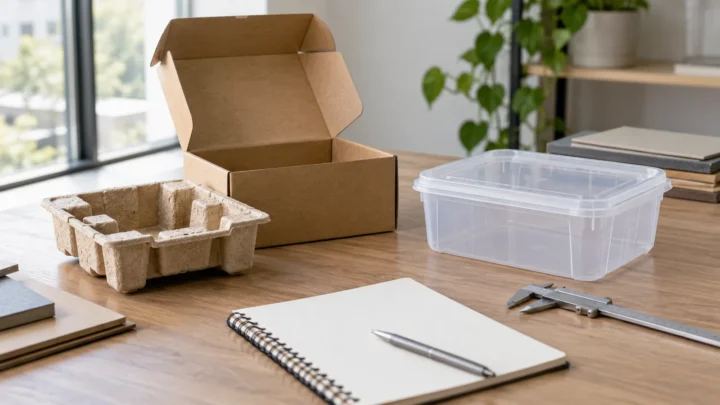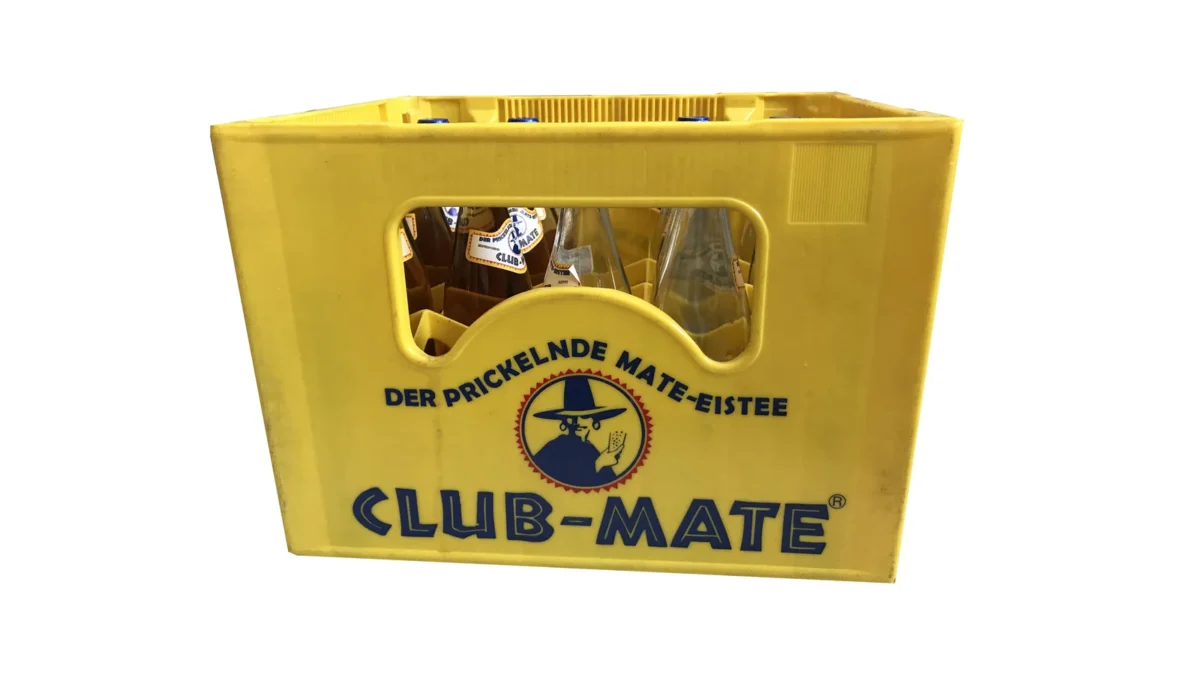
The packaging debate is often framed as a material contest: paper or plastic, fiber or foam, glass or PET, compostable or recyclable. That framing is useful only after a more important question has been answered: what service is the package supposed to deliver, and which parts of the existing system are actually causing the problem?
A bottle can use less plastic without changing how the product is delivered. A concentrate can shrink both the product and its package. A mono-material pouch can simplify recycling while keeping the same single-use business model. A refill cartridge can preserve the expensive dispenser and replace only the product-contact part. A returnable crate can eliminate repeated one-way packaging but add reverse logistics. A QR code can improve information without changing the substrate at all.
These are different redesign patterns. They should not be ranked as if one were universally “more sustainable” than another. They solve different constraints.
A design-pattern atlas is more useful than a material ranking
| Pattern | What changes | Where it often fits | What can go wrong |
|---|---|---|---|
| Reduce | Less material for the same package function | Bottles, tubs, cups, closures, films | Loss of stiffness, barrier, seal integrity or damage protection |
| Right-size | Less empty volume around the product | E-commerce, transit, kits, consumer goods | Under-protection, more SKU complexity, poor automation fit |
| Concentrate | Less product mass/volume transported per use | Detergents, cleaners, personal care, beverages | Dosing error, moisture sensitivity, user-mixing failure |
| Separate | Functions or materials are made separable instead of permanently bonded | Labels, pumps, liners, inserts, decorative shells | Consumer separation never happens or parts still enter wrong streams |
| Mono-materialize | Material families are simplified to fit one recycling stream | Flexible packaging, bottles, tubs, lids | Barrier or mechanical performance requires incompatible layers |
| Fiberize where fit | Selected plastic or foam functions move to paper/fiber structures | Cartons, inserts, foodservice, protective packaging | Coatings, moisture, grease, compression or fiber-recovery constraints |
| Reuse / refill | The durable package stays in service across multiple fills or trips | Beverage, beauty, home care, transit packaging | Low return/refill rate, cleaning burden, loss, reverse freight |
| Digitize / track | Identity and information are added without necessarily changing the core material | Traceability, reuse, authentication, instructions, sorting | Data carrier exists but no useful backend action follows |
| Eliminate components | An unnecessary layer, insert, closure, secondary pack or accessory disappears | Retail packs, e-commerce, grouped packaging, promotional formats | Removed component was performing a real protection or handling function |
| Design for recovery | The package is engineered around collection, sorting and reprocessing conditions | All major packaging formats | “Technically recyclable” design without collection, sorting or end market |
The patterns can be combined. A concentrated cleaner can use a refill pouch; the pouch can be mono-material; the durable spray bottle can use a removable trigger; the label can carry a digital link; the secondary shipper can be right-sized. The best redesign often combines several small system changes rather than one dramatic material substitution. [S5] [S6]
Pattern: Reduce before substituting
Lightweighting is one of the least visible packaging innovations because the pack can look almost unchanged. A thinner bottle wall, lighter cap, optimised rib pattern or reduced film gauge can lower material demand without asking the consumer, retailer or recycler to learn a new format. [S2] [S3]
But reduction has a hard engineering floor. Article 63 in this series examined the point where thin-wall rigid packaging stops being a simple gram-saving exercise and becomes a stiffness, top-load, paneling, creep and filling-line problem. The same principle applies across formats: reduction is useful only while the package continues to protect the product through manufacturing, distribution and use.
The EU Packaging and Packaging Waste Regulation now formalises that logic. From 1 January 2030, Article 10 requires packaging weight and volume to be reduced to the minimum necessary for functionality. The Regulation does not say “use the lightest possible pack”; it preserves functionality as the boundary.
Pattern: Right-size the logistics system, not only the sales pack
An e-commerce package can be lightweight and still inefficient if it transports mostly air. Article 67 showed why fit-to-product boxes, paper mailers and automated right-sizing systems change the shipping cube as well as the packaging mass. [S2] [S3]
PPWR makes that distinction explicit. Article 24 introduces a maximum 50% empty-space ratio for grouped, transport and e-commerce packaging from the applicable 2030-or-later date, with a Commission calculation methodology due before 12 February 2028. Filling materials such as air cushions, bubble wrap, foam and paper cuttings count as empty space for that calculation. Product protection remains part of the methodology rather than being ignored.
This is system redesign because the unit being optimised is no longer “grams of box.” It is the relationship between product geometry, protective space, warehouse cube, parcel dimensions and transport.

Pattern: Change the product so the package can change
Article 76 examined a more upstream move: remove water, increase concentration or convert the product into a tablet, powder or cartridge. Once the product volume changes, the packaging brief changes with it. [S5]
A concentrated detergent may fit in a smaller bottle. A household cleaner can use a small refill dose and a retained spray bottle. A solid or dry format can remove much of the transported water but require stronger moisture protection. The environmental result cannot be inferred from package mass alone because dosing, transport, barrier requirements and consumer mixing become part of the new system.
This is the distinction made in the Ellen MacArthur Foundation’s upstream-innovation framework: packaging can be rethought at the packaging level, the product level or the wider business-model/supply-chain level. Changing the product formulation can eliminate packaging needs that material substitution alone cannot solve.
Pattern: Simplify the material system where recovery needs simplicity
Article 61 examined the shift from multilayer flexible structures toward mono-material designs. The attraction is not that “one polymer is sustainable.” The attraction is that a package built largely within one compatible material family can have a clearer route through a recycling stream than a permanently bonded structure made from incompatible polymers, foil and adhesives. [S7]
That simplification is difficult because the layers being removed were often performing real jobs: oxygen barrier, moisture barrier, heat resistance, puncture strength, stiffness, seal initiation or light protection.
The same logic appears in closures, labels and decoration. Articles 64, 71 and 72 showed that a package can be mostly one recyclable material and still be disrupted by a pump, full-body sleeve, metallised decoration, incompatible adhesive or closure component.
“Mono-materialize” therefore means simplify the complete finished construction without losing the required function, not simply change the resin code on the main body.
Pattern: Separate functions when combining them permanently creates a dead end
Some functions do not need to be bonded permanently to the package. [S7]
A protective insert can be removed from an electronics box. A refill cartridge can separate product contact from a durable decorative case. A label can be designed to detach in a recycling wash process. A transport dunnage set can be repaired without replacing the outer tote. A paper package can use a removable or separable component where permanent lamination would undermine fiber recovery.
This pattern matters because packaging often becomes complex one function at a time. Barrier, decoration, dispensing, tamper evidence and convenience are added until the finished construction no longer fits any recovery route. Designing separability at the start can keep those functions while preventing permanent material lock-in.
Separability is not automatically successful. If the recovery process does not actually separate the component—or if separation depends on a consumer action that rarely occurs—the theoretical design can still fail in practice.
Pattern: Fiberize where the application boundary supports it
Paperisation has moved well beyond folding cartons. Articles 62, 65, 66 and 73 examined coated papers, beauty/home-care cartons, molded-fiber inserts and fiber-based protective alternatives. [S5]
The useful question is not “Can paper replace plastic?” It is “which functions can fiber deliver without adding so much coating, lamination, weight or product loss that the substitution loses its logic?”
Fiber can work well where stiffness, printability, shape retention, compression or molded geometry are important. It becomes more difficult where the package needs long-term moisture barrier, high grease resistance, transparent product visibility, high impact recovery or repeated wet use.
This is why “fiberize where fit” is a pattern rather than a hierarchy. Material choice follows the application boundary.
Pattern: Turn packaging from a consumable into an asset
Reuse changes the accounting unit from one pack to one service cycle. [S8]
Article 74 showed the industrial version: pallets, totes, crates and reusable dunnage only work when there is a closed logistics loop for return, inspection, repair, washing where needed and redeployment. Article 75 showed the consumer version: refill packaging works when the durable bottle, pump, jar or case actually remains in use through multiple refills.
The Ellen MacArthur Foundation’s reuse work makes the same system point. Returnable packaging performance depends on return rates, shared infrastructure, standardisation and the ability to operate at scale—not simply on making a stronger container.
Reuse therefore beats one-way packaging only under the right operating conditions. A durable asset with poor return rates, long reverse transport, excessive washing or high loss can perform badly. “Reusable” is a system state, not a material property.
Pattern: Add information only when it changes a decision
Article 78 treated QR, NFC, RFID, serialisation, GS1 Digital Link and digital watermarks as a data layer rather than as a new packaging material. [S5]
This is an important form of redesign because a package can gain new functions without a wholesale substrate change. A reusable crate can gain trip history. A product can expose updated instructions. A serialized item can support a narrower recall. A digital watermark can help an equipped sorter identify a packaging fraction.
But the carrier is not the result. A QR code does not create recycling infrastructure. RFID does not create correct traceability events. A digital watermark does not make an incompatible laminate recyclable.
The pattern is therefore digitize the decision, not “put a QR code on the pack.”
Pattern: Add complexity only when it prevents a larger loss
Article 77 examined oxygen scavengers, moisture control, ethylene management, antimicrobial functions, desiccants and corrosion inhibitors. These technologies deliberately add chemistry, layers or components. [S5]
That can be rational when the protected product carries a much larger environmental, economic or safety burden than the active component. It can be irrational when an active feature is added without evidence that the relevant failure mode is actually limiting product life.
The same principle applies to protective packaging. Article 73 showed why molded fiber, paper honeycomb, starch foams and other EPS alternatives have to be compared through shock, vibration, compression, humidity and product fragility—not through material identity alone.
Sometimes the least-material package is not the lowest-system-impact package if it allows expensive products to break or food to spoil. Protection is part of circular design because preventing product loss is one of packaging’s core functions.
Pattern: Design for the recovery system that exists—or build the system
A recyclable package is not simply a package whose material can theoretically be recycled in a laboratory. [S2] [S3]
Articles 61, 62, 71 and 72 repeatedly returned to the same boundary: finished construction has to be compatible with collection, sorting and reprocessing in the target geography. Labels, coatings, closures, pigments and small components matter because recovery systems see the complete package.
PPWR is moving EU regulation in the same direction. Its recyclability framework distinguishes design for recycling from later “recycled at scale” performance. Design-for-recycling grades apply from 1 January 2030 or 24 months after the relevant delegated acts take effect, whichever is later; recycled-at-scale criteria apply from 1 January 2035 or five years after the relevant implementing acts take effect, whichever is later. The Regulation therefore treats physical design and real recovery infrastructure as related but distinct tests.
This also explains why compostability, refill and water-soluble packaging need their own systems. A compostable article requires an appropriate organic-waste route. A refill pack requires a user and dispenser system. A PVOH dose pack requires a use environment where dissolution serves a real function and a defensible fate pathway afterward.
The patterns interact—and sometimes conflict
| Design move | Possible gain | Possible conflict |
|---|---|---|
| Lightweight a bottle | Less material | Lower top-load, higher damage or line instability |
| Switch multilayer film to mono-material | Better recycling compatibility | Barrier or shelf-life loss |
| Switch plastic insert to molded fiber | Different recovery route / fiber use | More mass, humidity sensitivity or lower impact recovery |
| Make package reusable | Amortise package across cycles | Reverse logistics, washing, asset loss |
| Add RFID/NFC | Tracking or authentication | Added electronic/adhesive component |
| Add active layer | Less product spoilage/failure | More chemistry and recovery complexity |
| Concentrate product | Less freight and smaller pack | Higher dosing/compatibility requirements |
This is why a material-first brief often produces poor decisions. It asks the designer to optimise one variable before the product, logistics and recovery constraints are known. [S5] [S7]
A better packaging brief starts with six system questions
Before choosing a substrate, packaging teams can define the system in six steps: [S5]
- Service: What must the package contain, protect, dispense, communicate or transport?
- Failure: What currently drives product damage, waste, excess material, poor recovery or user friction?
- Pattern: Is the strongest intervention reduction, right-sizing, concentration, separation, material simplification, fiber substitution, reuse, digitisation or another redesign?
- Infrastructure: What filling, retail, logistics, return, collection, sorting, washing or treatment infrastructure actually exists?
- Functional unit: What should be compared—one package, one delivered product, 100 doses, one successful shipment or one achieved reuse cycle?
- Scale: Can the redesigned system operate reliably beyond a laboratory prototype or limited pilot?
The last question is the one material debates usually miss. A redesign that requires perfect consumer separation, a reverse-logistics network that does not exist or a sorting technology installed in only one demonstration facility may be technically clever but commercially incomplete.
Packaging innovation is moving from substrate choice to constraint redesign
The common thread across mono-material films, lightweight bottles, right-sized e-commerce boxes, refill systems, returnable transit packaging, concentrates, connected labels and active packaging is not one preferred material. [S2] [S5]
It is a change in the unit of design.
Instead of asking only what the package is made from, the designer asks how much material is needed, whether the product itself can change, whether components can separate, whether an asset can return, whether information can replace printed complexity, whether protection prevents a larger loss and whether the package fits the recovery system that will actually receive it.
That is also why the final answer is not “paper wins,” “plastic wins” or “reuse wins.”
The most effective redesign depends on what service the package must deliver, what infrastructure exists after use, and whether the new system can operate at commercial scale.
Methodology and editorial note
This atlas is an original editorial synthesis of the Packaging Trends series, official EU law and independent packaging-system frameworks. The patterns are not ranked, and none is a universal environmental winner or compliance checklist. Evidence and source scope checked 21 October 2026. The main image is a disclosed generic editorial illustration or original concept diagram, not a named company, real facility or tested product. Editorial Team human review remains pending after publication.
Sources and reference notes
- [S2] European Union. Regulation (EU) 2025/40 on packaging and packaging waste. PPWR full legal text. Handoff access record: 21 October 2026.
- [S3] European Commission. Commission Notice — Guidance document for Regulation (EU) 2025/40 on packaging and packaging waste. Commission PPWR 2026 guidance. Handoff access record: 21 October 2026.
- [S4] EUR-Lex. Packaging and packaging waste — summary of Regulation (EU) 2025/40. EU PPWR legal summary. Handoff access record: 21 October 2026.
- [S5] Ellen MacArthur Foundation. Upstream Innovation: a guide to packaging solutions — overview. “Rethinking the packaging / product / business model”; elimination/reuse/material circulation. Handoff access record: 21 October 2026.
- [S6] Ellen MacArthur Foundation. Upstream Innovation: Elimination. EMF elimination framework. Handoff access record: 21 October 2026.
- [S7] Ellen MacArthur Foundation. Flexible packaging: Strategy summary. EMF flexible-packaging strategy. Handoff access record: 21 October 2026.
- [S8] Ellen MacArthur Foundation with Systemiq/Eunomia input. Unlocking a reuse revolution: scaling returnable packaging. EMF scaling returnable packaging. Handoff access record: 21 October 2026.
The public corrections channel is currently inactive. Read our corrections policy.