A QR code on a carton can open a webpage. An NFC tag can launch a product experience with a tap. An RFID tag can be read without line of sight. A digital watermark can help an equipped sorting line identify packaging. A serialized code can distinguish one product instance from another. None of those functions is the same thing.
“Connected packaging” becomes useful only when the data carrier is tied to a specific operational job. The technology on the pack is the front door; the value comes from the identifier, data model, backend system and action that follow the scan.
The right audit therefore begins with a harder question than “Should we add a QR code?” It asks: what changes after this package is read?
Audit the data layer by the action it enables
| Technology | What the package can carry or expose | Strong use cases | What it does not guarantee |
|---|---|---|---|
| QR / 2D barcode | Identifier, URL, batch/lot, serial or other encoded data | Consumer instructions, product information, recycling guidance, recall/status lookup | That anyone scans it, that data are authentic, or that the package is recyclable |
| GS1 Digital Link | A standards-based web URI built around GS1 identifiers | Route one identifier to different online resources and services | Traceability without event data, or compliance without the required underlying records |
| NFC | Tap-readable identifier/data or link; potentially authentication functions depending on tag/system | Premium engagement, product information, authentication workflows, refill/reorder interactions | That every NFC tag is secure or impossible to clone |
| RFID / EPC | Machine-readable identity readable at distance, often in bulk | Inventory, logistics visibility, reusable-asset tracking, chain-of-custody events | Consumer-readable information by itself or correct event data without a backend |
| Serialized code | Unique item-level identity | Authentication, traceability, warranty, recall scoping, duplicate detection | Authenticity if the code can simply be copied |
| Digital watermark | Machine-readable pattern distributed through artwork | Advanced sorting and packaging identification in equipped facilities | Material recyclability or deployment across all sorting facilities |
| Smart label / sensor label | Identity plus sensed state where sensors are present | Condition monitoring, cold-chain or tamper/status applications | That the sensed data are required, interoperable or actionable |
The table shows why “smart packaging” is too broad to be a specification. A package that links to a multilingual instruction page is connected, but it is not necessarily traceable. A serialized RFID tag can support traceability, but it does not automatically authenticate the physical product. A digital watermark can support sorting, but it does not tell a consumer whether the package is accepted in their local recycling system. [S1] [S4]
QR codes provide access; they do not create the information
A QR code is a data carrier. It can hold a web address, identifier or other structured data. Its main packaging advantage is that a small printed area can open a much larger information space. [S1] [S2]
GS1’s current 2D-barcode guidance describes QR Codes using GS1 Digital Link syntax as capable of carrying a GTIN plus data such as batch/lot or expiry information while also linking consumers and business users to online resources. That can move multilingual instructions, ingredient information, manuals, recycling guidance or updated product information off the limited printed surface.
But the code itself does not make that information accurate. If the destination page is outdated, the QR code delivers outdated information more efficiently. If the code only points to a generic homepage, it may add almost no operational value.
The audit question is therefore: what identifier is encoded, who maintains the destination, and what happens when the underlying information changes?
See the current GS1 2D barcode guidance.
GS1 Digital Link separates the identifier from the destination
GS1 Digital Link is useful because it is not simply a branded QR campaign. It defines how GS1 identifiers can be expressed in web addresses and resolved to one or more online resources. [S1] [S3]
A resolver can direct the same identifier to different resources: product information for a consumer, an instruction manual in the appropriate language, traceability information for a business partner or a recall-status service. The destination can change without reprinting the physical identifier, provided the resolution infrastructure is maintained.
This is a significant architectural change. Instead of printing a different QR code for every digital service, the package can expose a stable identity and let the resolver determine which service is requested.
It is still not a traceability system by itself. GS1 explicitly describes Digital Link as an extension of the existing Identify–Capture–Share system, not a new identification system. Traceability requires event data about what happened to identified objects.
The current standard is maintained in the GS1 Digital Link repository.

Traceability starts when identity is joined to events
A serial number tells you which item you are looking at. Traceability needs to record what happened to it, where, when and why. [S4]
GS1 EPCIS is designed for that second layer. The current standard enables organisations to create and share visibility-event data about products and assets across supply chains. An event can record that an item was commissioned, packed, shipped, received, transformed, inspected or otherwise observed within a business process.
That distinction matters for recall. A package with a serialised QR code can identify an individual product. But a narrow, fast recall requires reliable records showing which lots or serials went to which locations and trading partners. The data carrier helps capture identity; the event history provides the trace.
EPCIS 2.0.1, published in July 2025, is the current version listed in GS1’s standards archive. It supports interoperable visibility data rather than prescribing one hardware carrier. Barcode, RFID and other capture technologies can feed the event layer.
See the current GS1 EPCIS standard.
RFID changes the economics of reading many packages
Barcode and QR scanning usually require optical visibility and deliberate alignment. UHF RFID changes that capture model: readers can identify tagged objects without optical line of sight and can read multiple tags in a suitable environment. [S5]
That makes RFID particularly relevant for inventory, logistics units, reusable transport packaging and high-throughput asset tracking. GS1 maintains EPC/RFID standards for tag identity and air-interface interoperability, while EPCIS can carry the resulting business-event data.
The package-design cost is physical. A printed QR code can add almost no material beyond ink. An RFID inlay adds an antenna and chip, plus a substrate/adhesive construction. That can create cost and end-of-life questions that a printed data carrier does not have.
RFID should therefore earn its hardware through a capture advantage: bulk reads, automated inventory, asset visibility or another workflow that optical codes cannot perform efficiently.
Reusable packaging is a strong connected-packaging use case because the asset has a history
A one-way package may only need product-level information. A reusable crate, tote, keg, pallet or durable refill asset accumulates events across many rotations. [S6]
GS1’s Global Returnable Asset Identifier (GRAI) is designed for reusable transport items and can identify an asset by type and, when required, individually. That identity can then be tied to custody, location, inspection, repair or trip events.
The EU PPWR is also moving reusable-packaging information in this direction. Article 12 requires reusable packaging covered by the provision to carry reusability information from the applicable date, with further information made available through a QR code or another standardised, open digital data carrier. The Regulation explicitly links that digital carrier to tracking packaging and calculating trips and rotations where feasible.
This is a case where the data layer changes an operational metric. The code does not create reuse, but it can help measure whether reuse is actually happening.
NFC is strongest when the tap needs to feel intentional
NFC packaging has a different interaction model from camera-scanned QR codes. A consumer brings a compatible phone very close to the package and taps the tag. That can make NFC useful for premium products, refill/reorder interactions, product instructions and brand engagement. [S8] [S9]
The NFC Forum describes customer-engagement uses that include connecting users to product information, reordering and recycling/disposal guidance. Passive NFC tags can operate without a battery and can provide a persistent interaction point on a durable product or package.
Authentication is possible in some NFC systems, but “NFC” is not itself an authentication claim. Security depends on the tag, protocol, cryptography and backend verification. A simple NFC tag containing a URL may offer little more protection against copying than a printed code.
In 2026 the NFC Forum is continuing work on security specifications and authentication protocols, which reinforces the same point: secure NFC is a system property, not a consequence of adding an NFC antenna.
Serialisation improves authentication only when copying is addressed
Giving every package a unique serial number is a major step beyond batch-level identification. It enables item-level history and makes duplicate observations detectable. But a visible serialised barcode can still be photographed and copied onto counterfeit packaging. [S7]
GS1’s Digital Signatures guidance is unusually explicit on this point: GS1-conformant barcodes can be copied, so stronger anti-counterfeit systems can combine unique serialisation with digitally signed data and additional physical or cryptographic authentication factors.
This creates an authentication ladder:
- Static product code: identifies the product class.
- Serialized code: identifies one product instance.
- Backend duplicate / route analysis: detects implausible reuse of the same serial.
- Digitally signed data: helps verify that data have not been tampered with and come from a trusted source.
- Physical or tag-specific authentication factor: raises the barrier to copying the code onto a counterfeit object.
A QR code can therefore participate in anti-counterfeit packaging, but the printed square itself is not anti-counterfeit technology.
Digital watermarks target sorting, not consumer engagement
Digital watermarks are often grouped with QR and NFC because all three are machine-readable. Their job can be very different. [S10] [S11]
In the HolyGrail 2.0 programme, imperceptible or low-visibility watermark patterns are embedded repeatedly across packaging artwork. Sorting equipment fitted with the appropriate detection modules can identify the encoded information as packs move through a material-recovery facility.
Industrial trials reported by the initiative in 2025 used real post-household rigid packaging at the Hündgen Entsorgung MRF in Germany with added detection hardware. The work demonstrates that digitally watermarked packaging can be detected and sorted in that equipped environment.
It does not demonstrate that digital-watermark detection is installed across all MRFs, and it does not turn an incompatible multilayer structure into a recyclable package. The watermark can improve identification; the physical construction still determines whether the resulting fraction can be reprocessed.
See the HolyGrail 2.0 industrial-trial update.
Recycling instructions are information, not collection infrastructure
Connected packaging can solve a genuine information problem in recycling. A QR code can tell a consumer how the components separate, which bin is intended, whether a cap stays attached or where a reusable package can be returned. That information can be updated by geography or language without redesigning the entire printed pack. [S12] [S13]
The PPWR recognises digital data carriers as part of the EU packaging-information framework. It allows QR codes or other standardised, open digital carriers for certain packaging information and requires digital information for reusable-packaging systems covered by Article 12. It also allows additional digital sorting information for separate package components.
But a correct instruction does not create a collection programme. If the municipality does not collect the material, if the MRF cannot sort it or if there is no viable reprocessing route, a QR code cannot change those physical constraints.
This is the central connected-packaging boundary:
provides recycling information ≠ guarantees recycling.
A Digital Product Passport is a regulated data system, not another name for a QR code
The EU Ecodesign for Sustainable Products Regulation (ESPR) defines a Digital Product Passport as a set of product-specific data made accessible electronically through a data carrier. The Regulation requires the passport to connect through that carrier to a persistent unique product identifier and establishes requirements for interoperability, access rights and data structure. [S14] [S15] [S16]
In July 2026, Commission Implementing Regulation (EU) 2026/1778 established the implementation arrangements for the DPP registry. That is an important infrastructure milestone, but it does not mean every product sold in the EU now needs a DPP.
The European Commission’s current DPP guidance is explicit: ESPR DPP obligations are introduced product by product through product-specific delegated acts. The 2025–2030 Working Plan sets indicative regulatory timing for priority groups such as iron and steel, textiles, tyres, aluminium, furniture, mattresses and ICT products.
The practical consequence for packaging teams is simple. A QR code, NFC tag or GS1 Digital Link can be part of a future DPP implementation, but the carrier alone does not establish DPP compliance. The applicable product rule determines which data are required, whether the passport is model-, batch- or item-level, access rights and the required implementation date.
See the current European Commission DPP FAQ.
One carrier can support several services—but combining them creates governance work
The attraction of a standards-based connected package is consolidation. Instead of printing separate QR codes for marketing, instructions, recycling, recall and authentication, one persistent identifier can potentially route different users to different resources. [S1] [S4]
That reduces visual clutter, but it creates data-governance questions:
- Who owns the identifier?
- Who can update the destination or product data?
- What happens when a URL, brand owner or service provider changes?
- Which information is public and which requires authorised access?
- How long must the identifier remain resolvable?
- What happens when the physical package is reused or transferred?
- How are false scans, cloned serials or duplicate events handled?
- How is personal data kept out of the product record unless there is a lawful reason and consent where required?
A data carrier can survive longer than a campaign webpage. Connected-packaging projects should therefore be designed as information infrastructure, not as temporary artwork.
The data-layer audit ends with five questions
| Question | Why it matters |
|---|---|
| 1. What is being identified? | Product class, batch, individual item, reusable asset or package component require different identifiers. |
| 2. What event or decision follows the read? | A scan should trigger information, verification, inventory, sorting, recall or another defined action. |
| 3. What backend data make that action possible? | The code cannot invent traceability, authenticity, recycling acceptance or compliance records. |
| 4. Does the carrier add physical complexity? | Printed QR may add little material; NFC/RFID/sensor labels add hardware that needs cost and end-of-life review. |
| 5. What evidence shows the action actually occurs? | Scan counts, traceability events, recall performance, return rotations or sorting trials matter more than the presence of the code. |
Connected packaging is most valuable when it closes an information gap that already blocks a real task. It can identify an item, retrieve instructions, record custody, verify signed data, count reuse rotations or help equipped sorting systems recognise packaging. [S1] [S4] [S14]
What it cannot do is substitute information for physical reality. A QR code does not make a consumer recycle. An RFID tag does not create accurate traceability events. A watermark does not make a laminate recyclable. A serial number does not authenticate itself. A data carrier does not create a Digital Product Passport merely by existing.
The package becomes meaningfully connected when the identifier, data and downstream action remain connected after the scan.
Methodology and editorial note
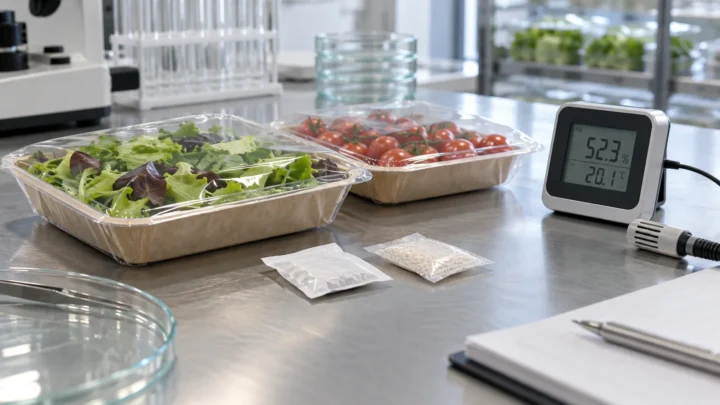
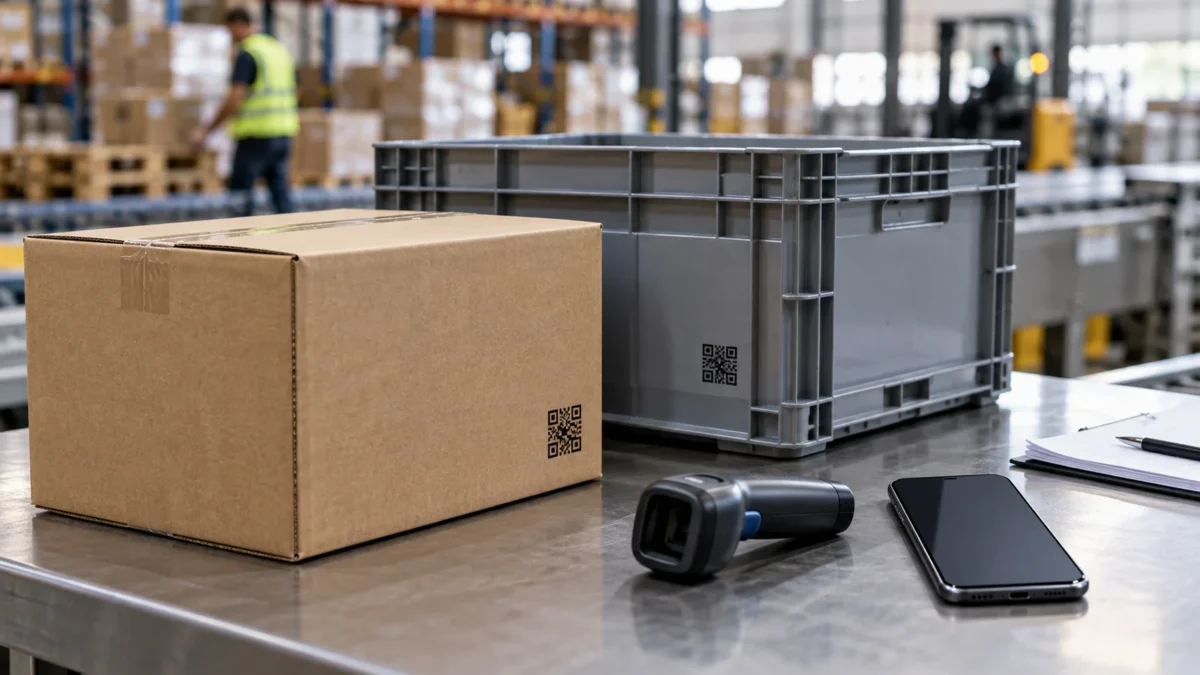
This audit distinguishes identifiers, data carriers, recorded events and operational outcomes. Standards and consortium trial results are attributed; a code or watermark does not by itself establish traceability, recycling or legal compliance. Evidence and source scope checked 21 October 2026. The main image is a disclosed generic editorial illustration or original concept diagram, not a named company, real facility or tested product. Editorial Team human review remains pending after publication.
Sources and reference notes
- [S1] GS1. GS1 Digital Link. URI Syntax; resolver architecture. Handoff access record: 21 October 2026.
- [S2] GS1. 2D Barcodes — Consumer Engagement / 2D Barcodes at Retail Point-of-Sale Implementation Guideline. QR Code with GS1 Digital Link syntax; encoded data examples; web resources. Handoff access record: 21 October 2026.
- [S3] GS1. GS1 Resolver service / Why is a resolver needed?. Resource routing examples. Handoff access record: 21 October 2026.
- [S4] GS1. EPCIS Standard / EPCIS and CBV Linked Data Model. Scope / visibility-event data / object events. Handoff access record: 21 October 2026.
- [S5] GS1. RFID / EPC Tag Data Standard / UHF Gen2 Air Interface. RFID identity, air-interface and implementation overview. Handoff access record: 21 October 2026.
- [S6] GS1. Global Returnable Asset Identifier (GRAI). Use for reusable transport items/assets. Handoff access record: 21 October 2026.
- [S7] GS1. GS1 Digital Signatures Technical Implementation Guideline / current standard. Executive summary; anti-counterfeit motivation; serialisation/authentication sections. Handoff access record: 21 October 2026.
- [S8] NFC Forum. Customer Engagement with NFC. Consumer engagement / product info / authenticity / disposal use cases. Handoff access record: 21 October 2026.
- [S9] NFC Forum. Roadmap: Security Advancements / Technology Roadmap Series 2026. Authentication/security roadmap. Handoff access record: 21 October 2026.
- [S10] Digital Watermarks Initiative HolyGrail 2.0 / AIM. Digital Watermarks Technology demonstrates effectiveness in HolyGrail 2.0 Industrial Trials on real post-household rigid packaging waste. Industrial MRF trial description. Handoff access record: 21 October 2026.
- [S11] Digital Watermarks Initiative HolyGrail 2.0. Use of digital watermarks validated for advanced sorting of flexibles through industrial trials. HolyGrail 2.0 flexible-packaging trial. Handoff access record: 21 October 2026.
- [S12] European Union. Regulation (EU) 2025/40 on packaging and packaging waste. Article 12; manufacturer identification provisions; reusable-packaging digital carrier; component sorting information. Handoff access record: 21 October 2026.
- [S13] European Commission. Commission Notice — Guidance document for Regulation (EU) 2025/40 on packaging and packaging waste. Packaging labelling; reusable transport packaging guidance. Handoff access record: 21 October 2026.
- [S14] European Union. Regulation (EU) 2024/1781 establishing a framework for the setting of ecodesign requirements for sustainable products. – Article 2 definitions. Handoff access record: 21 October 2026.
- [S15] European Commission / European Union. Commission Implementing Regulation (EU) 2026/1778 laying down the implementation arrangements for the digital product passport registry set up under Regulation (EU) 2024/1781. Entire regulation / registry implementation arrangements. Handoff access record: 21 October 2026.
- [S16] European Commission, DG GROW. Explore our FAQs — Digital Product Passport. Questions on milestones, products in scope and technical implementation. Handoff access record: 21 October 2026.
- [S17] European Commission. Economic operators — Digital Product Passport. Priority product-group timeline / other legislation. Handoff access record: 21 October 2026.
The public corrections channel is currently inactive. Read our corrections policy.