Short answer: Biodegradable, compostable and recyclable are not interchangeable packaging claims. Biodegradable describes a biological breakdown process under specified environmental conditions. Compostable is a narrower, controlled end-of-life claim that requires the complete item to meet defined composting criteria. Recyclable refers to a recovery route in which a used package can be collected, processed and made into material for new products. None of the three terms proves that the package will actually follow that route where it is sold.
The confusion comes from treating all three words as synonyms for “better for the environment.” They answer different questions. Biodegradability asks what microorganisms can do to a material under particular conditions. Compostability asks whether an item can break down appropriately in a managed composting system without undermining the resulting compost. Recyclability asks whether a package can move through a collection, sorting and reprocessing system and return as material for another product.
Those distinctions affect product design, disposal instructions and environmental marketing. A compostable cup may not belong in a household compost pile. A technically recyclable pouch may not be accepted by local collection. A material described as biodegradable may persist for a long time if it reaches the wrong environment. The receiving system matters as much as the label.
The three terms answer different end-of-life questions
| Term | Core question | Typical evidence needed | What the term does not prove |
|---|---|---|---|
| Biodegradable | Can microorganisms break the material down under a specified environment and timeframe? | Defined receiving environment, test method or certification route, material or complete-item scope, timeframe and relevant conditions. | That it will disappear quickly in landfill, ocean, soil, home compost or any other environment. |
| Compostable | Can the complete item break down appropriately in a defined composting process without unacceptable effects on the compost? | Applicable compostability standard or certification, complete-item scope, disintegration/biodegradation criteria, conditions and current certification status. | That every composter accepts it, that it is suitable for home composting, or that composting is the preferred route everywhere. |
| Recyclable | Can the used package enter a collection and reprocessing pathway that turns it into feedstock for new products? | Exact construction, compatible process, collection/sorting access, reprocessor acceptance and relevant market/geography. | That it contains recycled content, that it is collected locally, or that it is actually recycled at high rates. |
Editorial synthesis; use the named scheme, jurisdiction and receiving system for a specific item. Sources: [R1] [R2] [R3] [R6].
The categories can overlap. A package can be both compostable and biodegradable under the conditions of its composting system. A package can contain bio-based material yet be neither compostable nor recyclable in a particular market. Some materials can be recyclable in one system and biodegradable under a separate test environment. The terms describe different evidence, not mutually exclusive identities.

What does biodegradable mean?
Biodegradation is a biological process. Microorganisms convert material into simpler substances, but the rate and completeness of that process depend on the material and the receiving environment. Temperature, moisture, oxygen, microbial activity, pH and other conditions can change the outcome.
The European Commission’s policy framework on bio-based, biodegradable and compostable plastics treats biodegradation as a system property: the material, the environmental conditions and the risk of the item reaching another environment all matter. The framework also says biodegradable plastics should not be treated as a solution to littering or poor waste management. [R1]
“Biodegradable” without an environment is incomplete
A claim that a material biodegrades in industrial composting does not establish that it will biodegrade at the same rate in soil, freshwater, the marine environment or a landfill. A test performed at warm, moisture-controlled conditions cannot simply be generalized to a cooler or oxygen-limited environment.
The Commission therefore recommends that a biodegradable-plastic claim identify the intended receiving environment and the required timeframe. [R1] This is an important discipline even outside the EU: the word becomes more useful when it says where and under what conditions the claimed breakdown occurs.
Biodegradable does not mean “safe to litter”
Biodegradation is not a license for uncontrolled disposal. A material can fragment or persist when it reaches conditions that do not support the claimed biodegradation pathway. The EU framework explicitly warns against presenting biodegradable plastics as a solution to littering. [R1]
In the United States, the Federal Trade Commission’s published Green Guides take a marketing-claim approach. The Guides say an unqualified degradable claim for a solid product should be supported by evidence that the entire item will completely break down and return to nature within a reasonably short period after customary disposal; for solid waste, the Guides use one year as that period and note that items customarily destined for landfill, incineration or recycling generally do not meet that unqualified claim. [R2]
That is U.S. advertising guidance, not a global scientific definition of biodegradability. It illustrates why technical biodegradation evidence and consumer-facing disposal claims must remain separate.
What does compostable mean?
Compostability is a more specific claim. In the European Commission’s terminology, compostable plastics are a subset of biodegradable plastics designed to biodegrade under controlled conditions, typically in industrial composting. [R1]
For packaging, compostability normally asks more than whether a polymer can biologically degrade. A complete item may also need to disintegrate appropriately and avoid unacceptable effects on the resulting compost under the applicable standard or certification scheme.
Industrial composting and home composting are different
Industrial composting uses controlled operating conditions that can differ substantially from a backyard compost pile. The European Commission notes that industrial systems commonly use elevated temperatures and controlled moisture, while home composting depends much more on local climate and user practice. Compliance with an industrial-compostability route therefore does not automatically establish home-compostability performance. [R1]
BPI now operates separate Commercial Only and Commercial & Home certification routes in North America. Its public certification information states that the commercial route uses ASTM D6400 as the base standard, while the home route applies different test conditions and certification requirements. [R3]
That separation is useful for buyers: “compostable” should never be treated as enough information by itself. The intended composting environment must be clear.
Our industrial versus home composting guide explains the certificate, finished-item and facility checks in more detail.
A current standard is not the same thing as a current certificate
ASTM currently lists D6400-26 as the active edition of its specification for plastics designed to be aerobically composted in municipal or industrial facilities. Its public scope states that it covers plastics and products designed for those controlled facilities. [R4]
But a standard number on a specification sheet does not prove that a specific cup, bag, coated paper item or other finished package is currently certified. Certification requires checking the relevant scheme and the exact product scope. BPI’s searchable catalogue, for example, is designed to let users verify certified items by company and item number. [R5]
This distinction matters whenever a packaging construction changes. Thickness, colour, coating, ink, adhesive, component or formulation can affect whether an existing certification applies to the finished item.
Compostable does not mean accepted by every composting facility
Certification answers whether the item meets a defined certification route. Facility acceptance answers whether a real operator wants that item in its feedstock. Those are different decisions.
The European Commission’s framework states that industrially compostable plastics need a compatible biowaste collection and treatment system, and it notes that acceptance and operating approaches differ across regions. [R1] A certificate alone does not establish that this collection and treatment system is available to the intended user.
So the correct disposal instruction is not simply “compostable.” It is closer to:
Certified for a specified composting route; check whether the local collection program and receiving facility accept this item.
What does recyclable mean?
Recycling is a recovery process. EPA defines recycling as collecting and processing materials that would otherwise be discarded and turning them into new products. Its explanation separates collection and processing, manufacturing with recovered material, and purchasing products made with recycled content. [R6]
For packaging, that means recyclability is not just a molecular or material property. A finished pack has to interact with a real system.
Five stages sit between “designed for recycling” and “recycled”
- Collection: the package must be accepted in a collection program or other recovery route.
- Sorting: the system must identify and separate it into an appropriate stream.
- Reprocessing: the construction must be compatible with the recycler’s actual process.
- Yield and quality: the recovered material must meet a usable quality level.
- End market: there must be a practical use for the resulting secondary material.
A package can pass one stage and fail another. For example, a multilayer structure may use recyclable constituent materials but be incompatible with the local separation or reprocessing route. A coated paper package may enter paper collection yet perform differently at a mill depending on coating, adhesive, wet strength, food residue and process conditions.
For coated fiber constructions, see the paper-packaging recyclability evidence guide. The broader sustainable-packaging framework places recovery alongside protection, material use and reuse.
Recyclable and recycled content are different claims
A package made with recycled content uses recovered material as an input. A recyclable package is designed for a recovery pathway after use. One does not imply the other.
EPA makes this distinction explicitly: products containing recycled material are not necessarily recyclable in the consumer’s community, and recyclable products do not necessarily contain recycled content. [R6]
Technical recyclability is not the same as local access
The FTC’s Green Guides again illustrate the gap between technical potential and consumer access. For U.S. environmental marketing, the Guides say recyclable claims should be qualified when appropriate recycling facilities are not available to at least 60% of the consumers or communities where the product is sold. [R2]
That 60% threshold is a U.S. marketing-guidance concept. It is not a universal recyclability standard. The broader principle is that a recyclable claim should be bounded by geography and system access rather than treated as an abstract material property.
Biodegradable, compostable and recyclable are not a hierarchy
It is tempting to rank the three terms as though one were environmentally superior: recyclable < biodegradable < compostable, or the reverse. That is the wrong model.
They describe different pathways. The preferred route depends on the package’s function, construction, contamination profile, local infrastructure and the environmental result of keeping the material in use versus biologically processing it.
| Route | Can be useful when… | Key checks before relying on the claim |
|---|---|---|
| Biodegradation in a specified environment | A defined test or tightly specified application calls for evidence of biological breakdown. This describes behaviour; it is not permission to dispose of packaging in the open environment. | Receiving environment, complete material scope, timeframe, test/certification basis and risk of escape to another environment. |
| Industrial composting | The item is intentionally associated with organics and the collection/treatment system accepts certified compostable items. | Applicable certification, complete construction, collection route, facility acceptance and contamination controls. |
| Recycling | The material can be collected, sorted and reprocessed into useful secondary material in the target market. | Finished construction, collection, sorting, process compatibility, yield and end market. |
| Reuse | The package can complete enough real cycles through an operating return/refill system. | Durability, return rate, washing, loss, logistics and actual cycle count. |
Editorial synthesis; use the named scheme, jurisdiction and receiving system for a specific item. Sources: [R1] [R7].
The best route can also change by application. A food-soiled item that helps capture organic waste may have a stronger composting rationale than a clean bottle that already fits a mature recycling stream. BPI’s current eligibility rules reflect this system thinking: items seeking BPI certification must be associated with desirable organic wastes, and the program excludes some items that are considered a better fit for established recycling routes. [R7]
That is one certification body’s program logic, not a universal rule for every market. It shows why end-of-life design should begin with the intended system rather than with a preferred label.
Bio-based is a separate question
One of the most common terminology mistakes is to assume that bio-based, biodegradable and compostable mean the same thing.
Bio-based describes feedstock origin: some or all of the carbon comes from biological resources rather than fossil feedstock. It does not by itself tell you how the material behaves at end of life.
A material can therefore be:
- bio-based and non-biodegradable;
- fossil-based and biodegradable;
- bio-based and compostable under a defined scheme;
- recyclable under one system while also containing bio-based feedstock.
The European Commission’s framework explicitly separates these concepts for this reason. [R1] Procurement teams should therefore ask two different questions: Where did the feedstock come from? and What verified end-of-life pathway does the finished package have?
How the same package can be described correctly—or misleadingly
PLA cup
A PLA cup may be made from bio-based feedstock and may be designed for industrial composting. That does not mean every PLA cup has a current finished-item certification, that it will compost at home, or that a local organics program accepts it. “Biodegradable cup” without the intended environment and disposal route is therefore much less informative than a scoped industrial-compostability statement backed by current product evidence.
Coated paper food bowl
A paper bowl may be mostly fiber yet use a polymer or other barrier layer. Whether it is recyclable depends on the complete construction and the receiving paper-recovery system. Whether it is compostable depends on a different evidence route. Describing the bowl simply as “paper” does not settle either end-of-life question.
Mono-material plastic pouch
A pouch designed around one polymer family may improve compatibility with a particular recycling route compared with a difficult multilayer structure. But “mono-material” does not automatically mean the pouch is collected, sorted and reprocessed in the market where it is sold. The local system still decides whether the design advantage becomes actual recovery.
Molded-fiber tray
A molded-fiber tray can be fiber-based and potentially compatible with paper recovery or organics treatment depending on its additives, coatings, contamination and local infrastructure. If the tray uses a barrier coating, the finished construction—not the uncoated fiber substrate—must be evaluated for the claimed route.
What evidence should a buyer request?
A useful packaging review separates the claim from the document that supports it.
| Claim | Useful evidence | Common evidence gap |
|---|---|---|
| Biodegradable | Defined environment, test method or scheme, complete material/item scope, test conditions and timeframe. | A generic resin statement with no receiving environment or finished-package scope. |
| Industrially compostable | Current certificate or scheme record for the actual item/construction, plus local collection/facility acceptance where disposal guidance is given. | A material certificate presented as finished-item certification, or certification presented as guaranteed local acceptance. |
| Home compostable | Home-compost-specific certification or evidence under the relevant scheme and product scope. | Industrial compostability treated as proof of backyard composting. |
| Recyclable | Construction details, design-for-recycling or process assessment where relevant, collection/sorting information and target-market acceptance. | Resin code or base material used as the entire recyclability argument. |
| Recycled content | Defined percentage, component scope, chain-of-custody or supplier documentation appropriate to the claim. | Recyclability evidence substituted for recycled-content evidence. |
Editorial synthesis; use the named scheme, jurisdiction and receiving system for a specific item. Sources: [R1] [R2] [R3] [R4] [R5] [R6].
The exact document depends on jurisdiction, claim and risk. The principle is stable: the evidence should match the finished item and the claim actually being communicated.
Five disposal mistakes these terms can create
- Putting certified industrial-compostable packaging into home compost. Industrial and home conditions are not interchangeable.
- Putting a compostable plastic into conventional plastics recycling without program approval. A material designed for another route can become contamination in a recycling stream.
- Putting a technically recyclable composite into a bin because its main material is recyclable. The complete construction and local program matter.
- Assuming “biodegradable” means the item can be littered or buried. The intended receiving environment and timeframe remain essential.
- Assuming a recycling symbol or resin code guarantees local recycling. Identification is not the same thing as collection and reprocessing access.
A better way to specify end-of-life claims
Instead of asking a supplier, “Is this eco-friendly?” use a claim-specific brief.
For biodegradation:
Identify the receiving environment, test or certification route, complete material or item covered, conditions and timeframe.
For compostability:
Provide the current finished-item certification or applicable scheme record, state whether it is industrial or home compostable, and identify the intended collection/treatment system.
For recyclability:
Provide the complete construction, applicable recycling assessment or design guidance, target geography, collection/sorting route and evidence of process compatibility or operator acceptance where relevant.
Those questions are less attractive than a single green label, but they are far more useful for packaging selection, compliance review and disposal communication.
Methodology and editorial note
This article is an editorial comparison of public regulatory, standards, certification and waste-system sources. It does not present an original biodegradation test, composting trial, recycling trial or product-specific legal determination. ASTM public catalogue information is used only for visible standard metadata and scope; paid clauses were not read or reproduced.
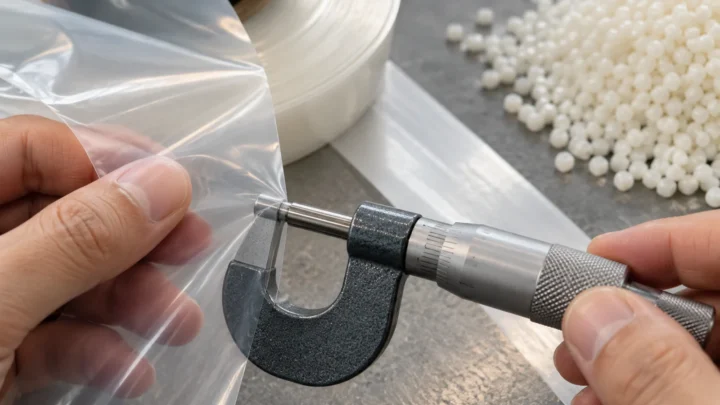
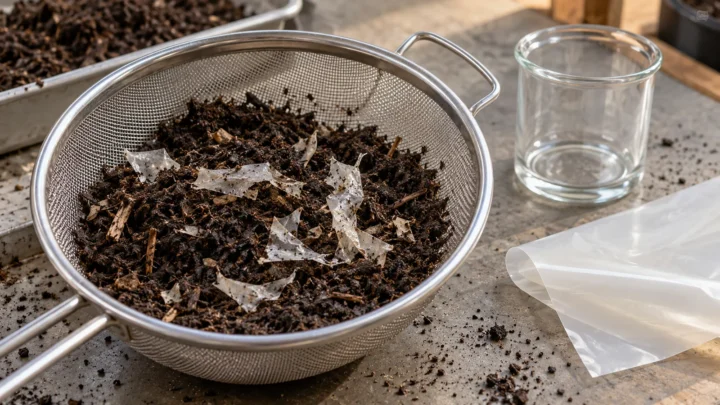
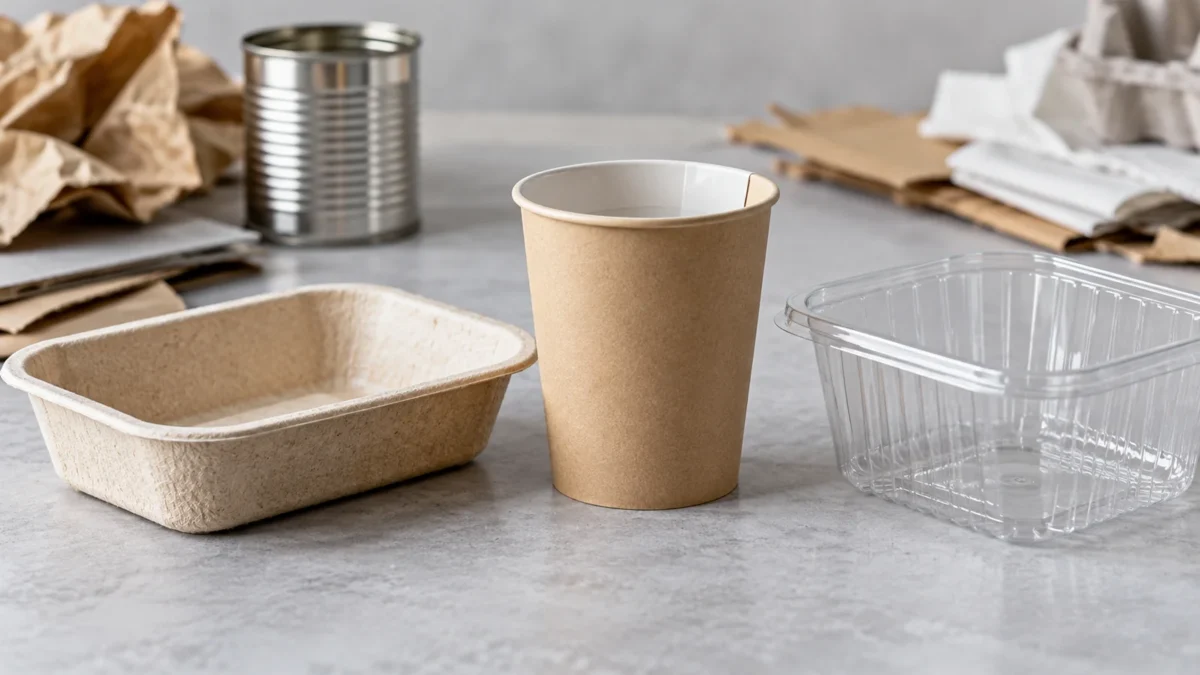
Sources checked 17 October 2026. The photographic-style main image is an AI-generated editorial illustration; the explanatory figure is an original editorial diagram. Neither is a product test, facility inspection or measured environmental result.
Official sources and reference notes
- R1 — European Commission. EU policy framework on biobased, biodegradable and compostable plastics, COM(2022) 682 final, 30 November 2022. Relevant sections: concepts on pp. 2–3; biodegradable plastics on pp. 8–11; industrially compostable plastics on pp. 11–12. Used as a non-binding EU policy framework, not as a comprehensive current EU law. Accessed 17 October 2026.
- R2 — U.S. Federal Trade Commission. Guides for the Use of Environmental Marketing Claims, 16 CFR Part 260. Relevant sections: §260.1, §260.7, §260.8 and §260.12. Used for U.S. environmental-marketing guidance and claim qualification, not as global material-performance standards. Accessed 17 October 2026.
- R3 — Biodegradable Products Institute. Compostability Certification. Current public certification overview reviewed 17 October 2026. Used for the distinction between Commercial Only and Commercial & Home certification and BPI’s use of ASTM D6400 as the commercial base standard. Accessed 17 October 2026.
- R4 — ASTM International. ASTM D6400-26 — Standard Specification for Labeling of Plastics Designed to be Aerobically Composted in Municipal or Industrial Facilities. Public catalogue metadata and scope only; paid full clauses not accessed. Accessed 17 October 2026.
- R5 — Biodegradable Products Institute. Find BPI-Certified Products. Used to establish that certification is verified at product/item level and that commercial and home certification are separately identified in the catalogue. Accessed 17 October 2026.
- R6 — U.S. Environmental Protection Agency. Recycling Basics and Benefits, updated 22 June 2026. Used for the recycling process and the distinction between recyclable products and recycled content. Accessed 17 October 2026.
- R7 — Biodegradable Products Institute. Compostability Certification: Before You Start. Used for BPI’s current eligibility logic linking compostable items with desirable organic-waste streams and excluding some items better suited to established recycling systems. Accessed 17 October 2026.
The public corrections channel is currently inactive. Read our corrections policy.