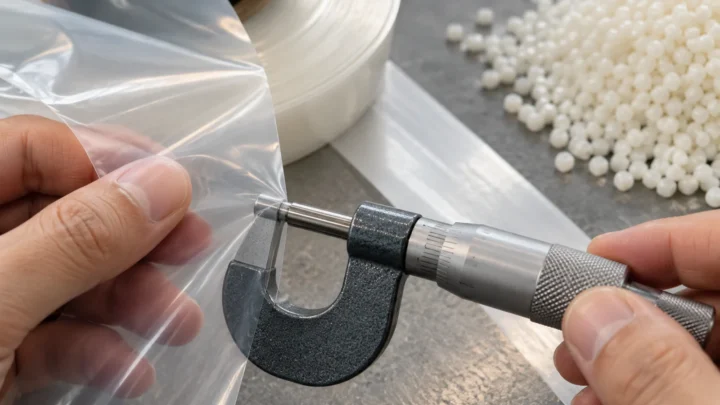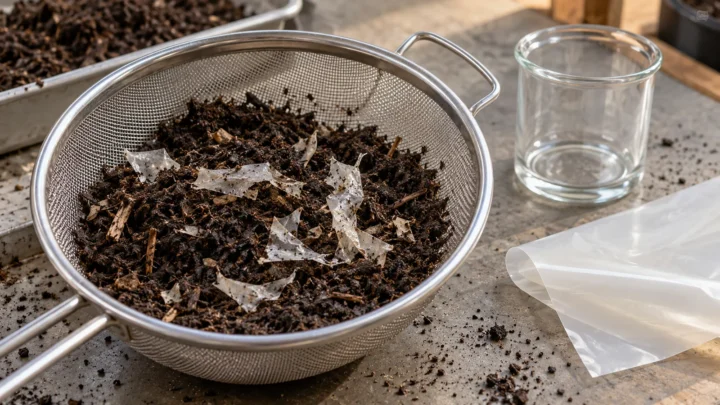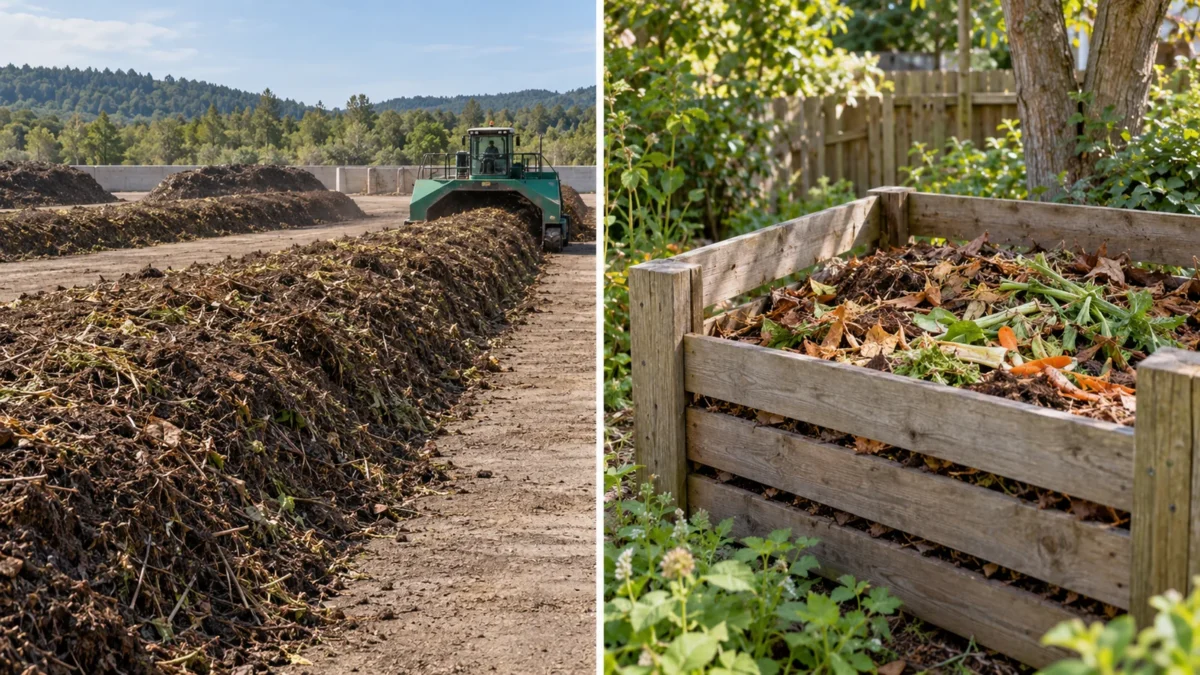
Short answer: Compostable packaging is packaging designed to break down within a defined composting system and meet the applicable requirements for biodegradation, disintegration and compost quality. The claim is only meaningful when the intended environment is clear. Industrial or commercial compostability refers to controlled facilities; home compostability refers to lower-temperature, less-controlled household systems. Certification for one route does not automatically prove suitability for the other, and neither guarantees that a local program will accept the item.
That distinction is more important than the word “compostable” on its own. A certified industrial-compostable cup may need sustained thermophilic conditions that a backyard bin does not provide. A home-compostable item may still be excluded from a municipal organics program. A paper-based package may contain coatings, inks, adhesives or other components that change whether the complete item qualifies for a particular compostability route.
Composting is also not simply “biodegradation somewhere.” The U.S. Environmental Protection Agency defines composting as the managed, aerobic biological decomposition of organic materials into a biologically stable soil amendment. [R1] Compostable-packaging claims therefore need to be tied to a managed system, a complete construction and an evidence route—not just to the biodegradability of one ingredient.
If you are comparing competing end-of-life claims, start with biodegradable versus compostable versus recyclable packaging. For material and life-cycle trade-offs beyond disposal, use our sustainable-packaging decision framework.
What compostable packaging actually means
Compostable packaging is packaging intended to enter a composting process and break down under the conditions of that process without leaving unacceptable effects on the finished compost. Depending on the standard or certification scheme, the assessment can include biodegradation, physical disintegration, limits on regulated substances or ecotoxicity, and requirements for the complete finished item.
In North America, ASTM D6400 is a key specification for plastics and plastic-containing products designed for municipal or industrial aerobic composting. ASTM currently lists D6400-26 as the active edition. Its public scope states that it covers plastics and products made from plastics that are designed for aerobic composting in municipal and industrial facilities where thermophilic conditions are achieved. [R2]
That scope matters. A compostable claim should not be inferred from the base resin alone. A finished package can include inks, labels, adhesives, coatings, lids or other components that change the evidence needed for the complete item.
| Layer | Question | Why it matters |
|---|---|---|
| Material | What is the substrate, polymer, fiber, coating, adhesive and ink system? | A compostable resin or fiber does not automatically make the finished pack compostable. |
| Environment | Industrial/commercial composting, home composting, or another specified environment? | Temperature, moisture, oxygen, residence time and process control differ. |
| Standard or scheme | Which standard, certification program and edition apply? | Different markets and constructions can follow different routes. |
| Finished-item scope | Does the evidence cover the actual thickness, colour, print and components? | Certification or testing of a resin or component may not cover every finished SKU. |
| Collection and acceptance | Will the item actually enter an organics stream and be accepted by the receiving operator? | Certification and local operational acceptance are separate questions. |
Editorial synthesis; use the named scheme, jurisdiction and receiving system for a specific item. Sources: [R1] [R2] [R5] [R8].
Industrial composting and home composting are different systems
The central difference is not a marketing label. It is the biological and operating environment.
Industrial or commercial composting
Large-scale composting facilities are designed to process substantial volumes of organic material under managed conditions. EPA notes that commercial and industrial composting facilities can differ in scale, feedstocks, methods and equipment, but they operate as managed systems rather than household piles. [R3]
ASTM D6400’s current public scope specifically refers to aerobic municipal and industrial facilities where thermophilic conditions are achieved. [R2] In practice, facility design and operating residence times can still vary, which is one reason a certification result should not be treated as a promise that every operator will accept the item.
Home composting
Home composting is typically a backyard pile, bin or other small residential system. EPA describes home composting as a process that depends on the mix of carbon-rich and nitrogen-rich materials, moisture, oxygen and maintenance. Its home-composting guidance lists compostable foodservice ware and compostable bags among materials to avoid in a backyard pile, explaining that these piles generally do not get hot enough to decompose them fully. The page does not give an exception for home-certified products; a specific home-compostability claim needs its own applicable evidence. [R4]
The difference is visible in certification testing as well. BPI’s current certification program separates Commercial Only from Commercial & Home certification. BPI states that its commercial route uses ASTM D6400 as the base standard, while its home-compostability program is based on the French standard NF T 51-800. Within BPI’s scheme, commercial certification is a prerequisite for the additional home certification. [R5]
BPI also publishes different testing conditions for the two environments. Its current program information states that commercial disintegration testing is conducted at 58 ±2°C for up to 84 days, while home disintegration testing is conducted at 25 ±2°C for up to 180 days. It likewise lists different biodegradation timeframes for the two routes. [R5] These are BPI certification-program test conditions, not a promise that packaging will disappear within those times in an operating facility or backyard bin, and not universal definitions for other schemes.
| Dimension | Industrial / commercial composting | Home composting |
|---|---|---|
| System | Managed large-scale facility or municipal/regional process. | Household pile, bin or other small residential system. |
| Temperature | Can include sustained thermophilic conditions, depending on process. | Typically lower and more variable; performance depends strongly on climate and management. |
| Process control | Feedstocks, aeration, moisture, turning and residence time are managed operationally. | Controlled by the user and often much less consistent. |
| Evidence route | Examples include ASTM D6400-based certification in North America and industrial-compostability routes in Europe. | Requires a home-compost-specific route; industrial certification alone is not enough. |
| Acceptance | Operator decides whether certified packaging is allowed in the facility’s feedstock. | User needs an item actually verified for home composting; not every “compostable” product qualifies. |
Editorial synthesis; use the named scheme, jurisdiction and receiving system for a specific item. Sources: [R3] [R4] [R5].
What happens to compostable packaging in a composting process?
A compostability assessment should not be reduced to “does it disappear?” Several different outcomes matter.
Biodegradation
Biodegradation concerns the biological conversion of organic carbon by microorganisms under defined conditions. It is not the same as visual fragmentation. A material can become small pieces without demonstrating the required biological conversion.
Disintegration
Disintegration concerns whether the item physically breaks down during the composting process so that unacceptable visible remnants do not remain. This is especially relevant for thicker items and finished packaging structures.
Compost quality and restricted constituents
Certification programs can also apply limits intended to protect compost quality. BPI, for example, states that its certification program includes requirements beyond the base ASTM assessment and maintains separate rules on eligible items and restricted chemistry. [R5]
The key editorial distinction is that these are different evidence questions. A biodegradation result for one polymer cannot by itself establish that a printed, coated, assembled package meets the complete requirements of a certification scheme.

Does “certified compostable” mean a facility will accept it?
No. Certification and facility acceptance are related but separate.
A certification body evaluates whether an item meets the requirements of its certification scheme. A composting operator manages a physical process, feedstock quality, contamination risk, residence time and the quality of the finished compost. The operator can therefore decide not to accept a certified item.
EPA’s current composting guidance states that accepted feedstocks vary by facility. [R1] Its home-composting page similarly tells users to check whether their specific commercial facility accepts compostable foodservice ware and bags. [R4]
BPI makes the same system distinction. Its certification FAQ explains that composters can face contamination risk from look-alike non-compostable products, even when certified compostables are technically suitable for composting. [R6]
For a buyer, the correct chain of evidence is therefore:
- verify the finished item and certification scope;
- identify the collection program;
- confirm the receiving facility or program accepts the item category;
- make disposal instructions match that real route.
Skipping the last two steps turns a technical claim into a disposal promise the evidence may not support.
Not every compostable item belongs in every organics stream
Composting infrastructure is designed primarily to process organic feedstocks such as food scraps, yard trimmings and other biodegradable organic materials. Packaging can support that system when it helps move those feedstocks into composting, but it can also create contamination challenges when compostable and conventional items look similar.
BPI’s current eligibility rules illustrate this principle. The organization says it limits certification eligibility to items associated with desirable organic feedstocks and excludes some products that it considers a better fit for established recycling routes. [R7]
That is BPI’s program policy, not a universal environmental rule. The broader lesson is more useful: compostability should solve a real collection or contamination problem, not simply add another disposal label to an item that already has a practical material-recycling route.
Paper and fiber packaging still need finished-construction evidence
Fiber packaging is often assumed to be naturally compostable because cellulose is biologically degradable. But a commercial package can also contain wet-strength chemistry, barrier coatings, polymer laminates, inks, adhesives, labels and other components.
BPI’s current commercial-certification program reflects this construction issue. It uses ASTM D6400 as the base standard for certification and offers optional assessment routes including ASTM D6868 and, for eligible cellulosic-fiber substrates, ASTM D8410. BPI states that D8410 assessment is limited to cellulosic-fiber-based substrates and excludes items where thermoplastic polymer is laminated to the fiber substrate. [R5]
The specific route therefore depends on the finished construction. “Made from paper” is not a finished-package compostability certificate.
Standards, certification and law are three different layers
Compostability is one of the areas where technical standards, certification schemes and legal labeling requirements are frequently mixed together.
A standard defines a technical route
ASTM D6400-26 is the current active ASTM specification for plastics and products designed for aerobic municipal or industrial composting. [R2] A standard describes requirements or methods; it does not itself certify every product that cites its number.
A certification scheme applies rules to a specific item
BPI uses ASTM D6400 as the base standard for its commercial certification program and maintains a searchable product catalogue. BPI states that all items listed in the catalogue are certified for commercial compostability, while only those separately identified as home compostable hold that additional status. [R8]
Law can reference a specific edition or impose additional conditions
The active technical standard and the standard edition referenced by law are not always the same. California provides a clear example. CalRecycle’s truth-in-labeling guidance lists ASTM D6400-19 for compostable plastic products and ASTM D6868-19 for plastic-coated fiber products. For “Home Compostable,” the guidance names the OK compost HOME certification; it also lists further labeling and eligibility conditions. This is an example from agency guidance, not a complete California compliance checklist. [R9]
ASTM, meanwhile, currently lists D6400-26 as the active edition. [R2] A newer catalogue edition should not be substituted for the edition named in the applicable rule. BPI’s home scheme and the particular home certification named in CalRecycle’s guidance must also be kept distinct. This is exactly why packaging compliance work needs to record both the active standard and the edition referenced by the applicable rule.
How does EU guidance distinguish industrial and home compostability?
EU standardisation and packaging requirements are evolving, which makes the date and legal status of each source important.
The original PPWR’s recital 56 explicitly distinguishes industrial compostability from home composting. It discusses revising industrial-compostability requirements and developing a similar standard for home composting. A recital supplies context; it is not, on its own, a product compliance determination. [R10]
In its notice published on 10 June 2026, the Commission explained that existing EN 13432 could serve as guidance pending the new industrial standard. Section 8 also described national home-compostability standards and schemes as possible supporting evidence, while distinguishing them from a presumption of conformity arising from harmonised standards cited in the Official Journal. That dated explanation is non-binding guidance; it does not establish whether a later harmonised standard now applies. [R11]
This article does not reconstruct all PPWR compostability obligations. The practical point is that “EN 13432 compliant” and “home compostable in the EU” should not be treated as equivalent statements, and current EU requirements need to be checked against the PPWR, Commission guidance and the specific packaging category.
The PPWR timeline explains why the general application date should be separated from later provision-specific dates.
Five common compostable-packaging mistakes
- Assuming industrial compostable means home compostable. The operating conditions and evidence routes differ.
- Using a resin certificate for the finished package. Ink, coating, adhesive, thickness and other components can change the applicable scope.
- Assuming certification guarantees local acceptance. The receiving operator still controls its feedstock.
- Putting compostable packaging into plastics recycling. Unless the local program explicitly accepts the material in that stream, compostable plastics can create contamination or sorting problems.
- Using “compostable” as a general environmental-superiority claim. Compostability describes an end-of-life route; it does not establish lower impacts across every life-cycle category.
How should a buyer verify compostable packaging?
A useful verification process is more specific than asking for “a compostable certificate.”
| Check | What to request | Why it matters |
|---|---|---|
| 1. Intended environment | Industrial/commercial or home composting? | Determines the operating conditions and evidence route. |
| 2. Finished-item identity | Exact SKU, dimensions, thickness, colour, print, coating, lid or accessory scope. | A material-level claim may not cover the final pack. |
| 3. Standard and edition | Exact standard number, edition and any legal edition referenced in the target market. | The latest active standard may differ from the version referenced by law or certificate. |
| 4. Certification | Current certificate and searchable registry entry where available. | Confirms the scheme, holder and product scope rather than relying on a logo alone. |
| 5. Collection | Organics collection route available to the intended user. | A technically compostable pack has little practical route if it never enters organics collection. |
| 6. Facility acceptance | Current acceptance policy of the receiving composter or program. | Operators can exclude certified products because of contamination or process constraints. |
| 7. Disposal wording | On-pack instructions that match the real route. | Reduces contamination of recycling, compost and residual-waste streams. |
Editorial synthesis; use the named scheme, jurisdiction and receiving system for a specific item. Sources: [R1] [R2] [R5] [R6] [R8] [R9].
When can compostable packaging make the most sense?
Compostability is most credible when the package is connected to a real organics-management problem.
Examples can include applications where packaging is difficult to separate from food residues and where the organics collection system intentionally accepts certified compostables. The PPWR’s recitals similarly recognize that limited packaging applications can have an environmental benefit when compostable packaging actually enters composting or anaerobic-digestion systems under controlled conditions. [R10]
That does not mean all food packaging should become compostable. If a clean package already has a well-functioning recycling route, or if the target market lacks composting infrastructure, a compostable redesign may simply replace one end-of-life problem with another.
The decision should therefore start with the waste system:
Will this package reliably travel with compostable organic material into a facility that accepts it, or is another recovery route more credible?
How should disposal instructions be written?
Disposal language should be specific enough that the consumer does not have to infer the receiving system.
Better instructions distinguish:
- Commercially compostable: check for an accepting commercial/municipal organics program.
- Home compostable: use only when the complete item has evidence for a home-compost route applicable to the target market.
- Not for recycling: where mixing the item with conventional plastics or another recycling stream would be inappropriate.
- Local acceptance: provide market-specific instructions when facility or collection acceptance is not broadly available.
FTC guidance in the United States reinforces this principle by requiring compostable claims to be substantiated and qualified when appropriate composting facilities are not available to a substantial majority of consumers or communities where the item is sold. [R12]
Again, that is U.S. marketing guidance rather than a universal technical rule. The general editorial lesson remains: a disposal claim should describe a route that actually exists for the intended user.
Methodology and editorial note
This article is an editorial synthesis of current public government, standards and certification sources. It does not present an original composting test, laboratory biodegradation study or product-specific compliance determination. ASTM public catalogue information is used only for visible metadata and scope; paid clauses were not accessed. Facility-acceptance statements are framed as operational questions because acceptance varies by operator and location.
Sources checked 17 October 2026. The photographic-style main image is an AI-generated editorial illustration; the explanatory figure is an original editorial diagram. Neither is a product test, facility inspection or measured environmental result.
Direct EUR-Lex retrieval displayed browser verification, so relevant official indexed text was used for the limited EU references. CalRecycle’s linked statute was not accessible; the California paragraph reports its agency guidance and is not a statutory audit. No product-specific compliance verdict or comprehensive check of later implementing measures is provided.
Official sources and reference notes
- R1 — U.S. Environmental Protection Agency. Composting. Used for EPA’s definition of composting and the statement that accepted feedstocks vary by facility. Accessed 17 October 2026.
- R2 — ASTM International. ASTM D6400-26 — Standard Specification for Labeling of Plastics Designed to be Aerobically Composted in Municipal or Industrial Facilities. Active version metadata and public scope reviewed; paid clauses not accessed. Accessed 17 October 2026.
- R3 — U.S. Environmental Protection Agency. Approaches to Composting. Used for distinctions among backyard, community, commercial/industrial and other composting systems. Accessed 17 October 2026.
- R4 — U.S. Environmental Protection Agency. Composting At Home. “Materials to Avoid” and the compostable foodservice ware/bags footnote. EPA advises avoiding these items in backyard piles and checking commercial facility acceptance; no home-certification exception is stated. Accessed 17 October 2026.
- R5 — Biodegradable Products Institute. Compostability Certification. Used for current Commercial Only vs Commercial & Home certification structure, ASTM D6400 base standard, NF T 51-800 home program and published test-condition differences. Accessed 17 October 2026.
- R6 — Biodegradable Products Institute. Frequently Asked Questions. Used for BPI’s explanation of composter contamination concerns and why certification does not remove operator acceptance decisions. Accessed 17 October 2026.
- R7 — Biodegradable Products Institute. Compostability Certification: Before You Start. Used for BPI’s program-specific eligibility logic linking compostable products to desirable organic-waste streams. Accessed 17 October 2026.
- R8 — Biodegradable Products Institute. Find BPI-Certified Products. Used for item-level catalogue verification and separate home-compostability identification. Accessed 17 October 2026.
- R9 — CalRecycle. Truth-in-Labeling Laws: Protecting California Consumers from False Marketing Claims. Agency guidance listing D6400-19, D6868-19 and OK compost HOME, alongside further conditions. Linked statute inaccessible; not a complete legal audit. Accessed 17 October 2026.
- R10 — European Union. Regulation (EU) 2025/40 on packaging and packaging waste. Original Regulation (EU) 2025/40, OJ 22 January 2025. Original-act recitals 54–56; no reconstruction of Article 9 obligations. Official indexed relevant text checked; direct retrieval displayed browser verification. Original-act context only. Accessed 17 October 2026.
- R11 — European Commission. Commission Notice — Guidance document for Regulation (EU) 2025/40 on packaging and packaging waste. C/2026/3084, 10 June 2026, section 8. Relevant official indexed guidance checked; direct retrieval displayed browser verification. Non-binding and dated; not a later-standard status audit. Accessed 17 October 2026.
- R12 — U.S. Federal Trade Commission. Guides for the Use of Environmental Marketing Claims, 16 CFR Part 260. Relevant section: §260.7 Compostable Claims. Used for U.S. claim substantiation and facility-availability qualification; not treated as a global compostability standard. Accessed 17 October 2026.
The public corrections channel is currently inactive. Read our corrections policy.