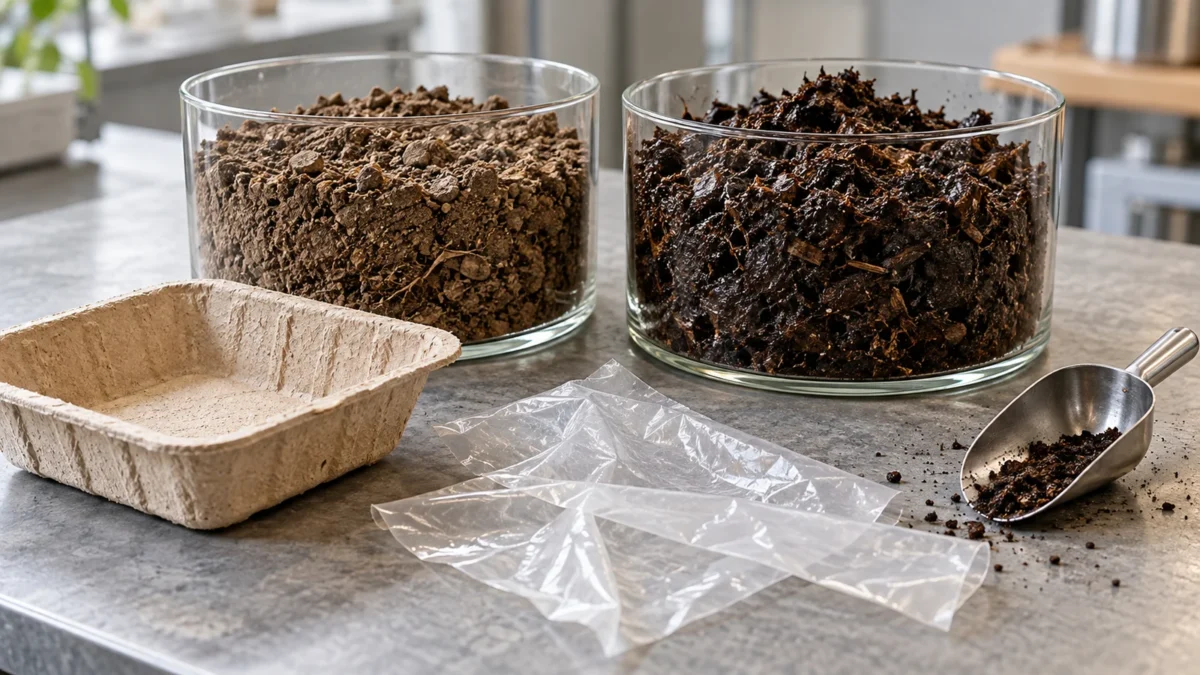
Short answer: Biodegradable packaging is packaging whose organic constituents can be broken down by microorganisms and ultimately converted into substances such as carbon dioxide, water, mineral salts and new biomass — or methane under anaerobic conditions — but only when the material and the receiving environment provide the conditions needed for that process. “Biodegradable” is therefore not a universal disposal instruction, a guaranteed decomposition time, or proof that a package is compostable, recyclable, plastic-free or environmentally preferable. [R1]
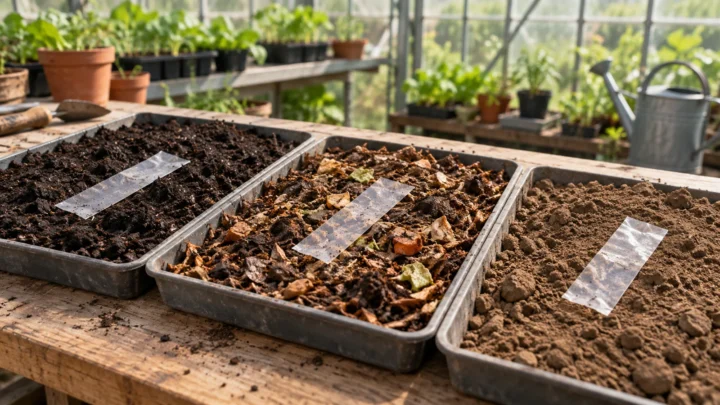
The most useful way to understand biodegradability is as a system property. The polymer or fiber matters, but so do temperature, moisture, oxygen, microorganisms, pH, product thickness, crystallinity, additives and the length of time available. A package that biodegrades under industrial composting conditions may persist much longer in soil, freshwater, seawater, a home compost pile or landfill conditions. [R1] [R3]
What does “biodegradable packaging” actually mean?
The European Commission’s policy framework draws a useful boundary: plastics described as biodegradable are designed so that their organic constituents can be converted by microorganisms into carbon dioxide and water, new microbial biomass and mineral salts, or into methane where oxygen is absent. The same framework stresses that suitable environmental conditions and sufficient time are necessary. [R1]
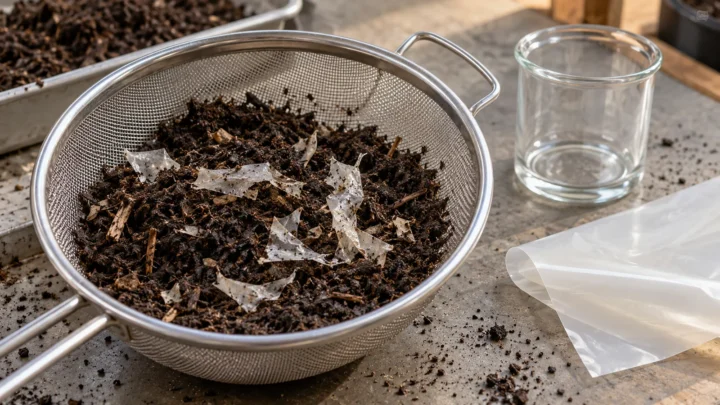
Biological conversion is different from physical disintegration. A material can lose visible form without that observation establishing the final extent of biodegradation. Afshar and colleagues’ review distinguishes test endpoints and warns that material, method and environment complicate comparison. [R3]
For packaging, a useful biodegradability claim therefore needs at least three elements:
- the exact finished material or product being described;
- the environment in which biodegradation is expected to occur; and
- the rate and extent of the biodegradation that the evidence actually supports.
Biodegradable, compostable and bio-based are different claims
| Term | What it describes | What it does not prove |
|---|---|---|
| Biodegradable | Biological conversion of the material under specified environmental conditions and over sufficient time. | Industrial compostability, home compostability, marine biodegradation, recyclability, bio-based content or rapid breakdown everywhere. |
| Compostable | A subset of biodegradable materials designed to biodegrade and disintegrate under defined composting conditions while meeting the applicable compostability criteria. | Home compostability, acceptance by every composting facility or biodegradation in soil, rivers or oceans. |
| Bio-based | The feedstock used to make the material comes partly or wholly from biological resources. | Biodegradability. Bio-based PE, for example, can have the same polymer structure and end-of-life behaviour as fossil-based PE. |
| Recyclable | The package can meet the relevant design, collection, sorting and reprocessing conditions for a recycling system. | Biodegradability or compostability. |
| Plastic-free | A composition claim whose meaning depends on the applicable definition and finished construction. | Biodegradability, compostability or lower overall environmental impact. |
Editorial synthesis of the identified source provisions and evidence boundaries; illustrative examples are not product test results or compliance determinations.
These distinctions matter because the feedstock and the end-of-life mechanism are separate questions. A biodegradable polymer can be made from fossil feedstock, while a bio-based polymer can be non-biodegradable. The Commission’s framework explicitly separates those two axes. [R1]
See the comparison of biodegradable, compostable and recyclable claims.
How does biodegradation happen?
For many biodegradable polymers, degradation is a sequence rather than a single event. Water, heat, oxidation or enzymes may first reduce polymer chain length or make the material more accessible. Microorganisms and their enzymes can then use smaller molecules, with biological metabolism ultimately converting the organic carbon into simpler end products.
The mechanism and rate vary by polymer. A 2024 critical review of biodegradable plastics found that comparisons across studies are difficult because researchers use different materials, geometries, test environments and measurement methods. The review also found major gaps in data for several widely discussed polymers, particularly outside controlled waste-management environments. [R3]
Afshar and colleagues describe environment-dependent results across the material families reviewed. For PLA, controlled treatment and ambient release should not be treated as equivalent routes; a polymer name alone cannot establish one universal decomposition time. [R3]
What controls how fast packaging biodegrades?
Two finished products made from the same named polymer can behave differently. Important variables include:
- polymer chemistry and molecular structure — the bonds available for hydrolysis or enzymatic attack;
- molecular weight and crystallinity — which can affect how easily water and enzymes reach susceptible regions;
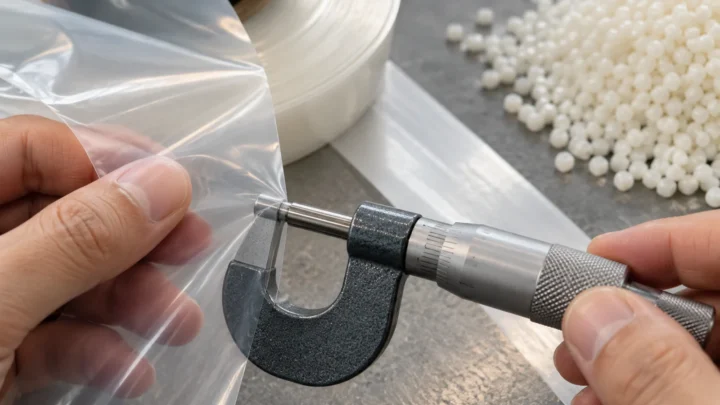
- thickness, shape and surface area — a thin film and a thick rigid article are not equivalent specimens;
- blends, fillers, coatings, pigments and additives — which can change both performance and degradation behaviour;
- temperature and moisture — often decisive for hydrolysis and microbial activity;
- oxygen level — which changes the biological pathway and final products;
- microbial community — not every environment contains organisms or enzymes that can attack a given polymer efficiently;
- pH and other local conditions; and
- time — laboratory tests and real waste systems operate on different residence times. [R3] [R3]
This is why “100% biodegradable” is incomplete information when it is detached from environment, test conditions and time.

Biodegradable where? The environment changes the answer
| Environment | Typical condition | What a packaging claim must not assume |
|---|---|---|
| Industrial composting | Managed temperature, moisture, aeration and residence time; thermophilic conditions may be used. | Passing an industrial compostability route does not establish home, soil or marine biodegradation. |
| Home composting | Lower and more variable temperatures and management than industrial facilities. | “Compostable” without a home-compost basis does not mean suitable for a backyard compost pile. |
| Soil | Temperature, moisture, organisms and exposure vary widely. | Industrial compost evidence should not be extrapolated to soil. |
| Freshwater or marine environment | Often cooler, dilute and biologically different from composting systems. | Biodegradability in compost or soil does not create a licence to litter or imply rapid marine biodegradation. |
| Anaerobic treatment | Low-oxygen or oxygen-free biological treatment under controlled conditions. | Aerobic compost evidence does not automatically establish anaerobic digestion performance. |
| Landfill / ordinary mixed waste | Conditions vary and are not managed as a biodegradation standard for the package. | A “biodegradable” label should not be interpreted as proof of rapid decomposition after ordinary disposal. |
Editorial synthesis of the identified source provisions and evidence boundaries; illustrative examples are not product test results or compliance determinations.
Afshar and colleagues review controlled waste-management and open-environment studies separately. Their synthesis supports keeping those environments distinct; this article does not convert individual laboratory results into a guaranteed field degradation time. [R3]
The European Commission therefore warns against treating biodegradable plastic as litter-safe. Its policy framework says a plastic designed to biodegrade in one receiving environment may fail to do so after leakage into another environment. [R1]
Which materials are used in biodegradable packaging?
“Biodegradable packaging” is not one material family. It can refer to natural-fiber structures and to several different polymer systems. The finished package — including coatings, binders, inks, adhesives and lids — is more important than a broad substrate name.
| Material family | Typical packaging use | What can reasonably be said | What still needs verification |
|---|---|---|---|
| Paper, cellulose and molded plant fiber | Cartons, trays, clamshells, cups, wraps and molded-fiber foodware | The fiber substrate is biologically degradable under suitable conditions. | Coatings, wet-strength chemistry, adhesives, inks and the complete finished-item compostability or biodegradability. |
| PLA | Cups, films, coatings, thermoforms and blends | PLA can be biodegradable/compostable under appropriate controlled conditions and is frequently used in industrially compostable packaging systems. | Finished-item certification, thickness, industrial versus home conditions, and actual local collection/acceptance. |
| PHA family | Films, coatings and emerging rigid/flexible packaging | PHAs are a family of microbial polyesters; reported degradation varies with the particular polymer and receiving conditions. | Exact PHA chemistry, formulation, specimen, environment and timeframe; one PHA result cannot be assigned to all PHA products. |
| PBAT | Flexible bags and films, often in blends with starch or PLA | PBAT is a biodegradable polyester and can be fossil-based; biodegradability and bio-based content are therefore separate claims. | Blend composition, environment, thickness and complete-package performance. |
| PBS / PBSA | Films, blends and some packaging applications | These polyesters may be made from bio-based or fossil-derived feedstocks and can biodegrade under suitable conditions. | Specific polymer grade, blend, receiving environment and applicable test evidence. |
| Starch-based blends | Bags, films and molded or flexible compostable products | Starch is readily biodegradable, but commercial “starch-based” plastics are often blends rather than pure starch. | The other polymers/additives in the blend and evidence for the finished product, not merely the starch fraction. |
Editorial synthesis of the identified source provisions and evidence boundaries; illustrative examples are not product test results or compliance determinations.
The reviewed evidence does not support a universal degradation time for a polymer family. Material formulation and receiving conditions remain part of the claim. [R3]
How is compostable packaging different?
Compostability is a narrower claim. The European Commission describes compostable plastics as a subset of biodegradable plastics designed to biodegrade under controlled composting conditions. PPWR similarly defines compostable packaging by biological decomposition under industrially controlled conditions, while separately defining home-compostable packaging. [R1] [R11]
In the United States, ASTM D6400-26 is the current active ASTM specification for plastics and plastic-containing end items designed to be composted in municipal or industrial aerobic composting facilities. Its published scope is about identifying items that will compost satisfactorily under those controlled conditions; it is not a universal biodegradability specification for soil, home compost or marine environments. [R7]
EPA likewise advises that commercially compostable plastic is not automatically home compostable and should not be placed into conventional plastic recycling unless the local program specifically directs otherwise. Local composting programs and facilities can also decline items even when they carry compostability evidence. [R6]
See industrial versus home composting and facility acceptance.
Fragmentation is not the same as biodegradation
A package can break into smaller fragments without completing biological conversion. This distinction is especially important for so-called oxo-degradable plastics, which use additives intended to accelerate oxidation and fragmentation of conventional plastic.
The EU Single-Use Plastics Directive defines oxo-degradable plastic around additives that lead to fragmentation into micro-fragments or chemical decomposition, and Article 5 prohibits products made from oxo-degradable plastic. The Commission’s updated 2026 guidance states that the ban applies to oxo-degradable plastic products whether or not they are marketed as biodegradable. [R10]
The practical lesson is broader than oxo-degradable plastics: evidence that a package becomes brittle, loses tensile strength, loses mass or fragments does not by itself prove complete biodegradation.
Does biodegradable mean the package is no longer “plastic”?
No. A biodegradable polymer can still be legally and technically classified as plastic.
The EU Single-Use Plastics Directive explicitly includes bio-based and biodegradable plastics within its plastic scope where the polymer meets the Directive’s definition. The Commission’s 2026 updated guidance continues to apply that interpretation. A biodegradable PLA cup, for example, does not escape a plastic rule merely because the polymer is bio-based or intended to biodegrade. [R10]
PPWR makes the same policy direction visible for packaging. Article 9 provides specific compostability routes for certain packaging, but also states that, by 12 February 2028, other packaging — including packaging made of biodegradable plastic polymers and other biodegradable materials — is to be designed for material recycling in accordance with Article 6, subject to the Article 9 structure and Member State provisions. [R11]
So “biodegradable” is not a general legal exemption from recycling, EPR, single-use or other packaging rules.
What does a credible biodegradable claim need to show?
A credible claim connects the wording on the package to evidence for the actual finished product.
| Question | Why it changes the claim |
|---|---|
| What exactly was tested? | Raw resin, film, coating and finished printed package can behave differently. |
| In which environment? | Industrial compost, home compost, soil, freshwater, marine and anaerobic systems are not interchangeable. |
| What endpoint was measured? | Disintegration, weight loss, molecular-weight change and carbon conversion are different endpoints. |
| How much degradation and over what time? | “Eventually biodegradable” is different from a claim tied to a defined rate and extent. |
| Which standard or test method applies? | A method designed for one environment cannot automatically substantiate another environmental claim. |
| Does a certification cover the finished SKU? | A resin certificate or a sibling product does not prove the complete package is certified. |
| Where will the package actually go after use? | A technically supported claim may still be poor disposal guidance if the relevant collection/treatment route is unavailable. |
Editorial synthesis of the identified source provisions and evidence boundaries; illustrative examples are not product test results or compliance determinations.
This is the difference between a material attribute and a useful end-of-life claim. The first says something about what can happen under certain conditions. The second tells the user what evidence applies to the product they actually hold and the waste system they actually use.
Marketing rules make vague “biodegradable” claims risky
In the United States, the FTC’s current Green Guides say an unqualified degradable claim should be supported by competent and reliable scientific evidence that the entire item will completely break down and return to nature within a reasonably short period after customary disposal. For solid-waste products, the Guides use one year as the benchmark for an unqualified claim and caution against such claims where customary disposal is landfill, incineration or recycling. The guidance applies to biodegradable as well as other degradable claims. [R8]
Directive (EU)2024/825 requires Member States to apply their transposing measures from 27 September 2026. It identifies “biodegradable” and “biobased” as examples of generic environmental claims, subject to its recognised-excellent-performance condition. A clear and prominent specification on the same medium changes whether a claim is generic; other substantiation duties remain. This is not an audit of each country’s implementation or a verdict on an individual advertisement. [R9]
For packaging teams, the safer communication model is therefore specific rather than absolute: identify the environment, the finished construction, the applicable evidence and the disposal route instead of printing a standalone “BIODEGRADABLE” claim and leaving the user to infer the rest.
Is biodegradable packaging automatically more sustainable?
No. Biodegradability describes one end-of-life behaviour; it does not measure the entire environmental performance of a packaging system.
A biodegradable package still uses material and energy, still has to protect the product, still needs an appropriate collection or disposal route, and can still create environmental problems if it escapes into an environment where it does not fully biodegrade. The European Commission’s policy framework therefore positions biodegradable and compostable plastics as targeted tools rather than default substitutes, particularly where reducing, reusing or recycling is not feasible and where the intended end-of-life route creates a genuine benefit. [R2]
The correct sustainability question is not “Does it biodegrade?” alone. It is whether the complete package performs its required service and whether its intended end-of-life pathway exists and works in the market where the package is used.
How to read “biodegradable” on a package
Five questions usually expose whether the claim is meaningful:
- Biodegradable material or biodegradable finished package?
- Biodegradable in which environment?
- To what extent and within what time?
- According to which applicable test, standard or certification scope?
- Is that end-of-life route actually available where the package will be discarded?
If those questions cannot be answered, “biodegradable” is too vague to tell a buyer or user what will actually happen to the package. The term becomes useful only when the material, environment, evidence and real disposal system are specified together.
Methodology and editorial note
This article is an evergreen technical and claims explainer. It uses official EU and U.S. sources for definitions, legal/marketing boundaries and composting guidance, together with peer-reviewed reviews for environment-specific degradation behaviour. It does not assign universal decomposition times to polymer families, treat laboratory disintegration as complete biodegradation, or infer product certification from a resin or material name.
Sources checked 18 October 2026. The main image is an AI-generated editorial illustration; the explanatory figure is an original editorial diagram. Neither is a photograph of an identified product or facility, a laboratory result or an independent environmental assessment.
Legal discussion is limited to the identified provisions and dated source explanations. No product-specific compliance determination, comprehensive audit of subsequent measures or universal laboratory procedure is provided.
Official sources and reference notes
- [R1] European Commission. EU policy framework on biobased, biodegradable and compostable plastics. 30 November 2022. Sections2 and4; concepts, system property, environment/time and composting boundaries. Relevant full official Communication read. Nonbinding 2022 policy framework; later legal requirements cited separately. Accessed 18 October 2026.
- [R2] European Commission, DG Environment. Bio-based, biodegradable and compostable plastics. Live source. Current Commission framing; use in relation to reduce/reuse/recycle; sustainability trade-offs; no general EU marine biodegradation standard. Relevant public text checked 18 October 2026; source scope retained. Accessed 18 October 2026.
- [R3] Afshar et al. Degradation of biodegradable plastics in waste management systems and the open environment: A critical review. Journal of Cleaner Production434,2024,140000; DOI 10.1016/j.jclepro.2023.140000. Sections2–4; Table 1; environment-specific degradation discussion and limitations. Relevant full author-repository text read. Review synthesis, not original DP testing or certification of a product. Accessed 18 October 2026.
- [R6] U.S. EPA. Frequently Asked Questions about Plastic Recycling and Composting. Live source. Biodegradable/compostable distinction; commercially compostable vs home composting; local facility acceptance; compostable plastic should not enter conventional plastic recycling without appropriate program. Relevant public text checked 18 October 2026; source scope retained. Accessed 18 October 2026.
- [R7] ASTM International. ASTM D6400-26 — Standard Specification for Labeling of Plastics Designed to be Aerobically Composted in Municipal or Industrial Facilities. ASTM D6400-26; updated15 June 2026. Public active-edition metadata and scope. Public catalogue/scope only; paid clauses not accessed. Not home/soil/marine certification or a legal edition substitution. Accessed 18 October 2026.
- [R8] U.S. Federal Trade Commission. 16CFR§260.8—Degradable claims. Current eCFR text checked 18 October 2026. §260.8(a)–(d); customary disposal and unqualified solid-waste claim guidance. Relevant current public text read. Administrative guide, not a universal technical biodegradability specification. Accessed 18 October 2026.
- [R9] European Union. Directive (EU) 2024/825 on empowering consumers for the green transition. Directive (EU)2024/825,28 February 2024. Recitals9–12, Article 4, Annex amendments to UCPD. Relevant full OJ text read. Member-State application date does not establish transposition/enforcement status in every country. Accessed 18 October 2026.
- [R10] EU Single-Use Plastics law + 2026 Commission guidance. Directive (EU) 2019/904; Commission Notice updating SUP guidelines (C/2026/4813). Live source. Article 3 definition; Article 5 oxo-degradable scope; Article 6(5) beverage-bottle targets as relevant. Relevant original official Directive text read; national implementation and product-specific conclusions not audited. Accessed 18 October 2026.
- [R11] European Union. Regulation (EU) 2025/40 on packaging and packaging waste (PPWR). Regulation (EU)2025/40, OJ22 January 2025. Article 3(50)–(53), Article 9. Relevant original OJ provisions read in full via official PDF; dated Commission guidance checked separately. Not a comprehensive audit of all secondary or national measures. Accessed 18 October 2026.
The public corrections channel is currently inactive. Read our corrections policy.