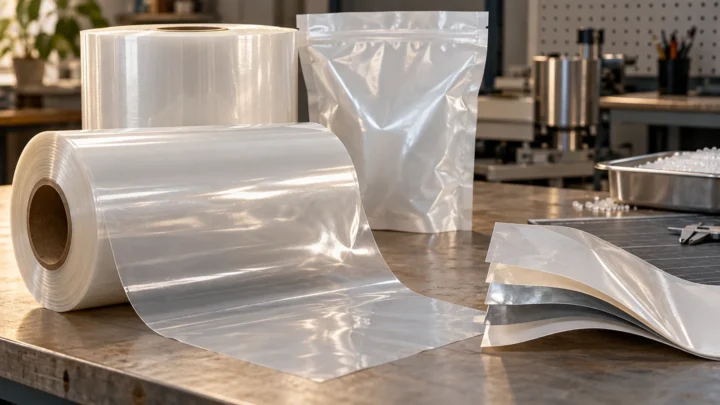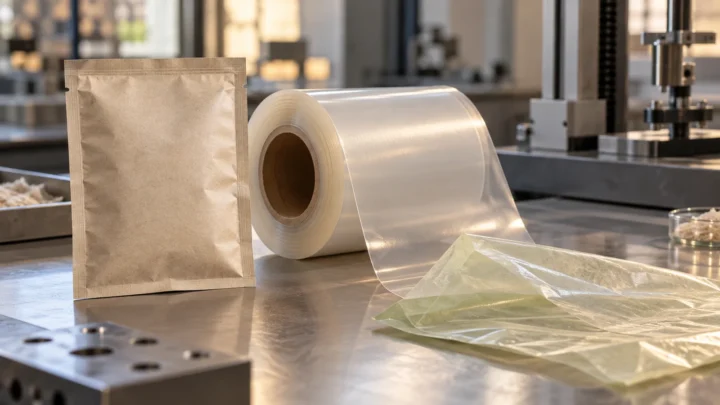

The important change in paper-based flexible packaging is the composition of the development team. The PaperFlex Consortium announced in September brings consumer-goods companies together around unresolved packaging requirements. Two October UPM collaborations connect paper and functional chemistry with either sealing expertise or application machinery. These are different projects at different stages, but they place the interfaces between businesses near the centre of development.
That is a more useful signal than another increase in paper content. A brand cannot qualify a wrapper by purchasing a promising substrate alone. The finished package has to protect its contents, run through converting and packing, and fit an identified recovery route. The recent announcements suggest a more coordinated route toward those outcomes. They do not show that paper flexibles have already reached the necessary performance, cost or commercial scale.
Collaboration changes what has to be developed
On 16 September 2026, the Ellen MacArthur Foundation announced PaperFlex, convened with (RE)SET and six founding consumer-goods members: Colgate-Palmolive, Mars, Nestlé, PepsiCo, Procter & Gamble and Unilever. Its programme includes collaborative trials of coatings, product protection and performance on manufacturing lines. The Foundation explicitly says responsible alternatives do not yet meet the required combination of performance, scale and cost. [1]
The distinction is consequential. A consortium can establish shared research questions and make demand visible; it does not create a jointly approved specification for every participating brand. Different contents, markets and filling systems still produce different decisions. Nor does the membership list establish purchase commitments, common commercial pricing or an already functioning supply chain.
What cooperation can change is the order in which problems are discovered. If a coating developer learns about sealing conditions only after a brand has selected the paper, an apparently successful material can require another development cycle. Bringing the relevant parties into the brief earlier makes it possible to ask whether the proposed construction can survive the next operation before resources are committed to it. That is the engineering value of the pattern, even before market uptake can be measured.
Small formats remain a system problem
PaperFlex is directed particularly toward markets where small flexible packs are widely used and collection or recycling is inadequate. Its background work treats paper substitution as one possible intervention alongside reduction, reuse and better collection. The responsible-design framework includes recyclability, biodegradability and responsible sourcing; none can be inferred from the word paper alone. [2]
This scope matters when interpreting a wrapper or sachet proposal. A pack that loses product protection can shift loss into the contents. A pack that protects well but cannot enter the intended recovery system leaves another part of the problem unresolved. And a biodegradation claim needs its own defined environment and evidence: it is neither permission to litter nor proof that collecting the item has become unnecessary.
Product protection also has several jobs. Grease resistance is not oxygen resistance, and neither is a seal specification. A dry ingredient, an aromatic product and a moist food can impose quite different demands even when their packs look similar. The practical brief therefore begins with the product and its storage, distribution and use conditions. Paper content becomes one design variable inside that brief rather than the answer to it.
The coating stack is the development unit
In its 20 October release, UPM describes work with Ingredion and Paramelt combining a starch-based grease barrier with heat-seal functionality on paper. The companies report that one Solide Lucent-based construction passed Part 1 recyclability testing at Western Michigan University. That is a result for an identified development structure and test stage, not a blanket approval for every substrate or finished pack. [3]
The useful analytical unit is the complete functional stack: substrate, barrier, sealing chemistry, printing and any adhesive or additional layer. Each ingredient can affect more than its named function. A development programme needs to establish how the final combination behaves, rather than assemble separate supplier assurances as though they automatically describe one tested article.
There is also an interface between performance evidence and recovery evidence. A grease test answers a service question; a recyclability assessment answers a different process question. Passing one cannot fill a missing result in the other. Once the paper is converted, printed, sealed and exposed to its contents, the relevant question is whether the assessed construction still represents what will be placed on the market.
This makes a selective qualification sequence more credible than a universal material claim. A developer can establish the required barrier for a bounded application, assess the converted construction, then obtain evidence for the intended recovery route. If a later change alters the coating or construction materially, the scope of the earlier evidence has to be checked again. The commercial attraction is a usable development path, not a promise that every layer has become environmentally interchangeable.
A coating name does not identify the finished barrier
A manufacturer-side technical example from foodservice paper packaging illustrates this problem of vocabulary. Bioleader’s explanation of water-based barrier coating structure distinguishes the liquid carrier used during application from the functional solids remaining after drying. It does not treat water-based as automatic proof of a polymer-free finished layer. [5]
Related-party disclosure: Bioleader is a disclosed industry/commercial related party of Degradable Packaging. This reference is a manufacturer-side explanation from paper-cup production, not independent performance evidence for flexible packaging.
The cross-sector lesson is about specification language. Buyers need the identity and proportion of relevant dry constituents, the construction in which they are used and the evidence supporting the proposed claim. A foodservice cup result cannot establish a wrapper’s shelf life or recyclability. It can, however, expose why selecting by a coating’s marketing category leaves important questions unanswered.
That distinction also prevents a false shortcut in supplier comparison. Two materials sold under the same broad coating label may represent different constructions and application windows. Comparing them requires a common service brief and suitable evidence, not a preference for whichever name sounds most natural.
Industrial trials test the interfaces
A separate October announcement from UPM, Siegwerk and Uteco describes a secondary-packaging development combining paper, coating and flexographic application. Its reported production trial integrates coating, printing and heat sealing. Crucially, the primary pack continues to protect the product. The secondary format therefore does not prove that the same construction can replace a primary food barrier. [4]
The contribution of equipment expertise is nevertheless important. Material development has to meet a production sequence: unwinding, tension control, application, drying, printing, forming and sealing. A structure that works as a sample still needs a reproducible operating window. Changes in substrate handling or coating application can affect how the next operation is specified and controlled.
For a converter, the relevant commercial question is what happens to saleable output. Rated machine speed alone cannot describe start-up waste, rejected seals, changeovers or the proportion of production meeting specification. A proposed paper conversion should therefore be evaluated against sustained qualified operation, with the source of any efficiency claim kept clear. The recent release does not supply a common measured cost or yield comparison for all paper-flexible applications.
The two UPM projects are complementary examples, not independent measurements of an industry-wide transition. One combines barrier and sealing technologies; the other brings coating application into a converting trial. Together with PaperFlex they support an observation about the organisation of development. They cannot establish a market share, adoption rate or inevitable replacement of plastic flexibles.
What would demonstrate scale?
Announcements become much more informative when their next evidence requirements are made explicit. The following matrix is an editorial qualification framework, not a certification scheme or a score for the named projects.

| Development stage | What it can establish | Next decision-changing evidence |
|---|---|---|
| Collaborative research programme | Participants and shared technical questions | Application-specific construction and trial results |
| Tested material construction | A reported result within the test’s scope | Converted, filled and sealed package qualification |
| Industrial converting trial | Operation in an identified process | Sustained saleable output, rejects and operating window |
| Commercial SKU | A product sold in an identified market | Recurring volume, shelf-life performance and actual recovery acceptance |
A useful scale-up record would connect a real SKU to repeated production, validated protection and an identified recovery destination. It would distinguish announced capacity from output and explain the cost comparison, including any changed line requirements. A multi-market rollout would add evidence of transferability, but only if differences in collection and processing were also addressed.
The strongest near-term signal may therefore be an unusually complete operational record rather than the most ambitious material percentage. Paper-based flexibles are moving into a more coordinated development phase. Whether that becomes sustained commercial scale depends on solving protection, converting, economics and end-of-life together, application by application.
Sources
- Ellen MacArthur Foundation. PaperFlex Consortium launch, 16 September 2026. Membership, planned trials and performance/scale/cost qualification.
- Ellen MacArthur Foundation. Paper as one part of the solution to flexible packaging pollution, 9 March 2026. Responsible-design and infrastructure discussion.
- UPM. Starch-based barrier collaboration with Ingredion and Paramelt, 20 October 2026. Construction and Part 1 test statement; company-reported.
- UPM. UPM, Uteco and Siegwerk introduce a paper-based solution for secondary packaging, 20 October 2026. Primary/secondary distinction and production-trial account; company-reported.
- Bioleader. Water-Based Coating Paper Cups: The Eco-Friendly, Plastic-Free Solution for Sustainable Packaging. Sections on dry barrier composition; manufacturer-side context only. Sources checked 26 October 2026.
Found an error? Read our corrections policy and contact the editors.