PBAT shows why feedstock origin and biodegradability must be treated as separate material properties. Commercial PBAT has traditionally been produced mainly from fossil-derived monomers, yet its polyester backbone contains chemical bonds that microorganisms and enzymes can attack under suitable conditions. That makes PBAT biodegradable without making it inherently bio-based.
This distinction is easy to miss because packaging discussions often use “bio-based,” “biodegradable,” “compostable” and “bioplastic” as if they described the same thing. They do not. The European Commission explicitly notes that biodegradable plastics can be made from either biological or fossil raw materials, while bio-based plastics are not necessarily biodegradable. PBAT sits directly in that gap. [S1]
For packaging buyers, however, the useful question is not simply whether PBAT is biodegradable. The useful questions are: under what conditions, at what rate, in what formulation, and for which finished product? Neat PBAT, a PBAT/PLA film and a PBAT/starch shopping bag should not be assumed to behave identically.
What is PBAT?
PBAT stands for poly(butylene adipate-co-terephthalate). It is an aliphatic-aromatic copolyester commonly synthesized from adipic acid, terephthalic acid and 1,4-butanediol through polyester-forming reactions.
The word copolyester matters. PBAT combines flexible aliphatic butylene-adipate segments with more rigid aromatic butylene-terephthalate segments. A 2026 review in Frontiers in Chemistry describes this molecular architecture as the reason PBAT can combine substantial flexibility with greater structural and thermal stability than many purely aliphatic biodegradable polyesters. [S4]
The same structure also helps explain its degradation behaviour. Ester linkages in the polymer backbone can be hydrolysed. Enzymes such as esterases, cutinases and lipases have been reported to participate in PBAT depolymerisation, producing smaller molecules that microorganisms may subsequently assimilate. The aromatic portions are generally more resistant than the aliphatic portions, so biodegradation is neither instantaneous nor independent of environmental conditions. [S3]
Why can a fossil-derived plastic be biodegradable?
Because biodegradability is governed primarily by chemical structure and environmental conditions, not by whether the carbon originally came from petroleum or biomass.
Polyethylene provides a useful contrast. Conventional PE and bio-PE can be produced from different feedstock routes, but the finished polyethylene chemistry is essentially the same. Changing fossil ethylene to renewable ethylene does not automatically create a biodegradable polymer.
See feedstock origin versus biodegradation for the related distinction.
PBAT works the other way around. Its conventional production route has historically relied mainly on fossil-derived monomers, but its polyester structure contains bonds susceptible to hydrolysis and biological attack. European Bioplastics therefore classifies PBAT among plastics that are based on fossil resources yet biodegradable, while the European Commission’s broader framework makes the same conceptual point: feedstock origin and biodegradation are different axes.
| Material example | Typical feedstock position | Biodegradation position | What the example proves |
|---|---|---|---|
| Bio-PE | Can be bio-based | Not made biodegradable simply by renewable feedstock | Bio-based does not mean biodegradable |
| PBAT | Commercially mainly fossil-derived; bio-based monomer routes are under development | Biodegradable under suitable conditions | Biodegradable does not mean bio-based |
| PLA | Commonly bio-based | Biodegradation is strongly condition-dependent; industrial composting is the main managed route for many compostable applications | A material may be both bio-based and biodegradable, but conditions still matter |
Editorial synthesis of the cited sources. Examples are not product test results; methods, construction and conditions remain part of every claim.
How PBAT biodegradation actually happens
“Biodegradable” should not be interpreted as “disappears quickly.” PBAT degradation involves a sequence of physical, chemical and biological processes.
- Water and environmental exposure begin to alter the polymer. Hydrolysis, weathering and other abiotic processes can reduce molecular weight or increase access to susceptible bonds.
- Microorganisms colonise the surface. Biofilms can form where environmental conditions support microbial activity.
- Extracellular enzymes attack ester bonds. Published studies have identified esterases, cutinases, lipases and specialised hydrolases capable of cleaving PBAT-related bonds.
- The polymer is converted into smaller fragments and molecules. Depolymerisation is not the same as complete biodegradation.
- Microorganisms assimilate degradation products. Under aerobic conditions, complete mineralisation ultimately involves conversion to carbon dioxide, water and microbial biomass.
That final distinction is important. Cracking, embrittlement, mass loss or visible fragmentation alone does not prove complete biodegradation. A study has to measure an appropriate endpoint if it intends to demonstrate biological conversion rather than only physical deterioration.

Industrial composting and natural environments are not equivalent
A 2025 open-access review in Applied Microbiology and Biotechnology concluded that PBAT is degradable under thermophilic industrial-composting conditions but that biodegradation becomes much more challenging at lower temperatures in natural environments. The review also found that blend composition, polymer properties, microbial communities and environmental conditions can materially change the result. [S3]
This is why “PBAT is biodegradable” is technically incomplete when used as a disposal instruction.
Industrial composting normally provides a combination of elevated temperature, moisture, oxygen and high microbial activity that can accelerate hydrolysis and biological conversion. Soil, freshwater and marine settings do not reproduce those conditions consistently. Even within soil studies, temperature, moisture, microbial community, film thickness, polymer composition and experimental method can produce very different rates.
The same 2025 review reported that some neat PBAT soil studies showed only partial biodegradation over periods around several months. The exact percentages differed substantially between studies, which is precisely why a single universal “PBAT degrades in X days” claim would be misleading.
For packaging, the practical rule is simple: industrial-compostability evidence should not be rewritten as a promise of rapid degradation in ordinary soil, freshwater, the ocean or littered environments.
See industrial and home compostability for the related distinction.
Biodegradable is not the same as compostable
PBAT’s polymer chemistry can support biodegradation, but a finished PBAT-containing package should not automatically be called compostable.
Compostability applies to a material, package or component under specified composting conditions and performance criteria. The finished construction may contain other polymers, fillers, inks, pigments, coatings, adhesives or labels. Thickness and geometry can also affect disintegration and biodegradation.
That means a resin-level statement such as “PBAT is biodegradable” cannot substitute for evidence covering the actual package. A PBAT blend intended for industrial composting should be evaluated as that finished formulation and construction under the applicable certification or testing route.
Local infrastructure is another layer. Even a certified compostable package does not automatically belong in every municipal organics stream. Collection programs and composting operators still decide which product categories they accept.
Why PBAT is frequently blended with PLA and starch
PBAT is unusually flexible for a biodegradable polyester. Recent reviews describe mechanical behaviour that can approach low-density polyethylene in some respects, particularly its ductility and high elongation. That makes PBAT useful as a toughness or flexibility component in materials that would otherwise be too brittle for film applications.
PLA is a common example. PLA offers stiffness and processability but can be brittle in many formulations. Adding PBAT can increase ductility, which is useful for bags, flexible films and other applications that need deformation rather than brittle fracture.
Thermoplastic starch is another common partner. Starch brings renewable content and can reduce material cost, but it is sensitive to moisture and often lacks the mechanical robustness required on its own. PBAT can help provide flexibility and processability in a blended system.
These blends also demonstrate why the polymer name alone is insufficient. A 2025 review specifically notes that blending PBAT with other materials changes its biodegradation potential. The phase structure, compatibility, blend ratio, crystallinity, fillers and additives can all alter water access, enzyme access and mechanical breakup. [S3]
So “contains PBAT” does not tell a buyer whether two films will perform or biodegrade in the same way.
PBAT vs PLA: they solve different material problems
| Property / question | PBAT | PLA |
|---|---|---|
| Typical feedstock origin | Primarily fossil-derived in conventional commercial production, with bio-based monomer routes being researched | Commonly produced from renewable carbohydrate feedstocks |
| Mechanical tendency | Flexible and ductile | Relatively stiff and often brittle without modification |
| Why used in blends | Adds flexibility and toughness | Adds stiffness and structural strength |
| Biodegradation | Condition-dependent; efficient industrial-composting routes are documented, while cooler natural environments can be much slower | Also strongly condition-dependent; elevated composting temperatures are important for many applications |
| Finished-product claim | Must be supported for the actual blend / package | Must be supported for the actual blend / package |
Editorial synthesis of the cited sources. Examples are not product test results; methods, construction and conditions remain part of every claim.
The table is not a sustainability ranking. A PBAT-rich flexible film and a rigid PLA thermoformed tray perform different packaging functions. Environmental comparison requires the same functional unit, product-protection requirement, material mass and end-of-life scenario.
Is PBAT always fossil-derived?
No. “PBAT is fossil-derived” describes the dominant conventional production route, not an immutable requirement of the polymer.
PBAT’s polymer identity should be separated from the sourcing of its monomers. The reviewed literature discusses conventional fossil-derived production and work on renewable precursors; it does not establish the bio-based share or current commercial availability of a named grade. Request grade-specific substantiation rather than assuming either zero or complete renewable content. [S4]
If renewable routes scale commercially, a PBAT grade could contain a higher bio-based share without changing the basic reason the polymer is biodegradable. Buyers should therefore ask for the actual bio-based content of the grade being purchased rather than assuming all PBAT is either 0% or 100% bio-based.
What PBAT does not prove
The presence of PBAT in a package does not by itself prove any of the following:
- that the finished package is certified compostable;
- that it will rapidly biodegrade in home compost;
- that it will disappear quickly in ordinary soil;
- that it is marine biodegradable;
- that it is bio-based;
- that it is accepted by a local composting facility;
- that it has a lower overall environmental impact than a conventional plastic alternative.
Each of those is a separate claim requiring separate evidence.
A buyer checklist for PBAT packaging
| Question | Why it matters |
|---|---|
| What is the exact formulation? | PBAT is frequently blended with PLA, starch, PBS, fillers or other components. |
| What is the PBAT percentage? | Blend ratio can change flexibility, stiffness, processing and degradation behaviour. |
| Is any bio-based content being claimed? | Conventional PBAT is primarily fossil-derived; renewable monomer routes should be substantiated rather than assumed. |
| What end-of-life environment is claimed? | Industrial compost, home compost, soil and aquatic environments are not interchangeable. |
| Does evidence cover the finished package? | Resin properties do not automatically establish performance of a printed, coated, filled or multilayer product. |
| What does the local waste operator accept? | Technical compostability does not guarantee collection or facility acceptance. |
Editorial synthesis of the cited sources. Examples are not product test results; methods, construction and conditions remain part of every claim.
What to put in the specification
For procurement, separate four questions: What is the polymer? Where did its carbon come from? Under what conditions has the finished product been shown to biodegrade or compost? And does the target waste system actually accept it? PBAT only looks contradictory when those questions are collapsed into one.
Methodology and editorial note
This technical explainer synthesises the identified official guidance, public standard scopes and research records. Study findings remain specific to their reported materials and conditions. Sources checked 18 October 2026; no product testing, factory inspection or independent certification assessment was performed for this article.
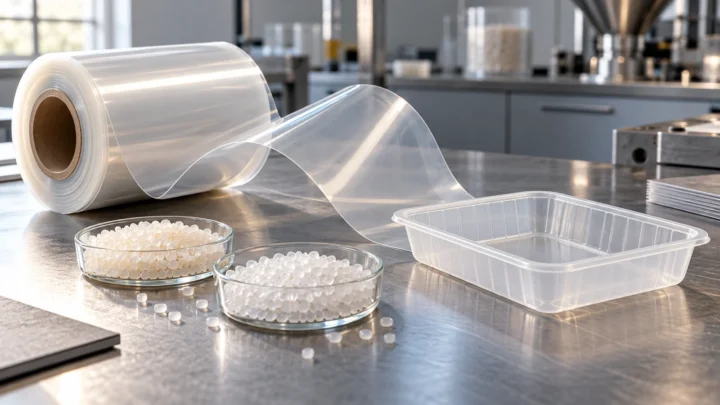
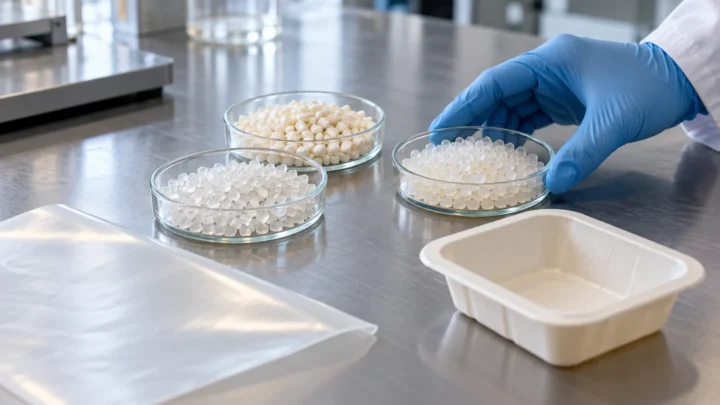
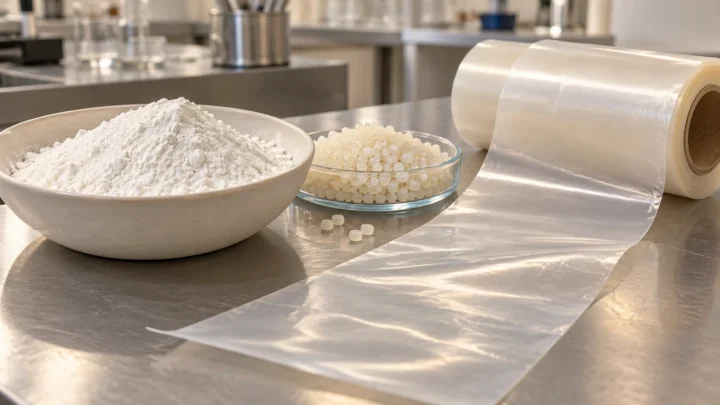
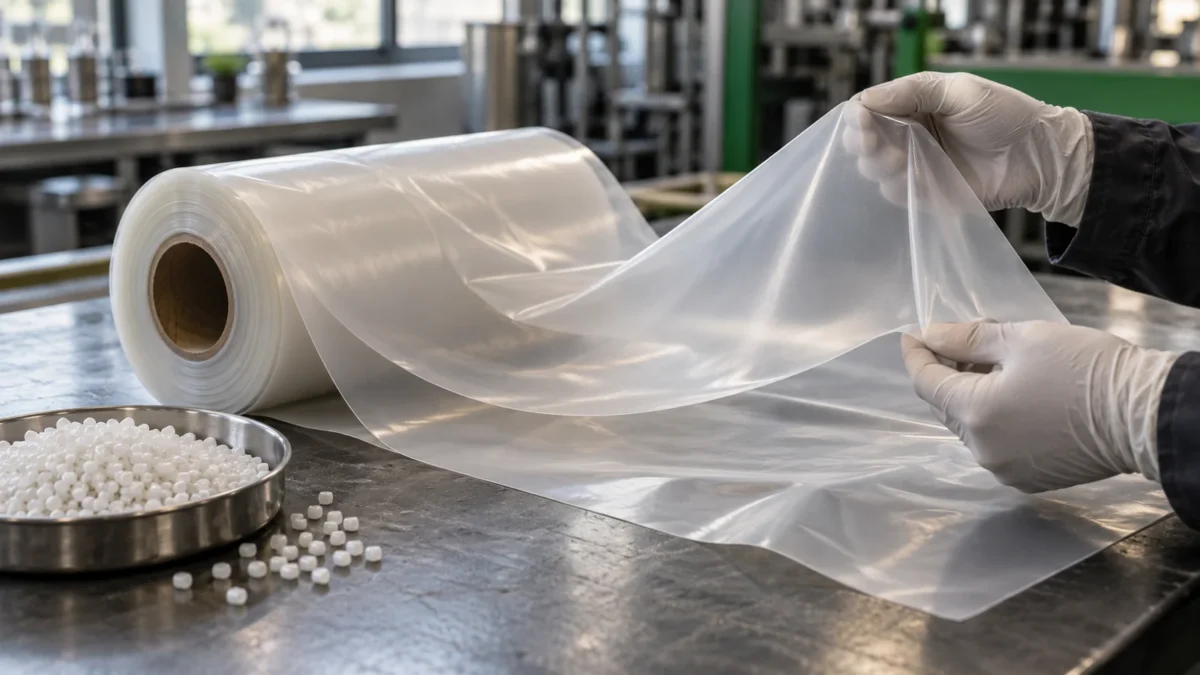
The main image is an AI-generated editorial illustration of an unnamed conceptual scene. The explanatory figure is an original editorial synthesis, not a photograph of an experiment, microscopic structure or measured result.
Official sources and reference notes
- [S1] European Commission — Directorate-General for Environment. Bio-based, biodegradable and compostable plastics. Current page accessed 18 October 2026; policy framework adopted 30 November 2022. “What are these plastics?”; “Implementation — Standards”. Relevant public sections checked; source-specific scope retained. Accessed 18 October 2026.
- [S3] Miguel Fernandes; António A. Vicente; Andreia F. Salvador. Microorganisms and enzymes involved in polybutylene adipate terephthalate biodegradation. Published 7 October 2025. Abstract; PBAT synthesis, characteristics and applications; Biocatalysts in PBAT biodegradation; PBAT biodegradation in the environment — soil. Relevant public sections checked; source-specific scope retained. Accessed 18 October 2026.
- [S4] Xinyue Wang; Jintang Guo. Recent advances in poly(butylene adipate-co-terephthalate) (PBAT): structure, modification strategies, degradation, and sustainable applications. 28 July 2026. Chemical structure and composition; Mechanical properties; Biodegradability; Blends; Packaging. Identified public record/section access only; detailed experimental or paid-method claims require the underlying text. Accessed 18 October 2026.
The public corrections channel is currently inactive. Read our corrections policy.