
Short answer: The most consequential sustainable-packaging changes heading into 2027 are not a new material winner or a sudden shift to one format. They are changes in how packaging is measured, charged, documented and proven: EPR is moving into operating systems, recyclability is being tied to real collection and reprocessing, source reduction is becoming quantifiable, design-for-recycling rules are becoming component-specific, reuse is being treated as a logistics system, and environmental claims require more precise evidence.
The ten changes below are not ranked predictions and they are not forecasts of market share. They are an editorial outlook based on regulatory actions, operating EPR programs, technical design methods and recovery initiatives already visible by 18 October 2026. A trend is included only where there is more than a single product announcement behind it.
Compliance is becoming an operating system
1. EPR moves from legislation to fees, plans and daily data
For many packaging teams, extended producer responsibility (EPR) is no longer a policy document to monitor from a distance. It is becoming an operating process that affects reporting, fee calculations, packaging classification and internal data ownership.
The United Kingdom illustrates the change. PackUK’s 2026–27 operational plan identifies fee setting with eco-modulation, deployment of the Recyclability Assessment Methodology (RAM), producer-data validation and continued development of the digital service as core Year 2 work. PackUK describes that digital service as infrastructure for data submission, validation, fee calculation and payments. [R2]
See the UK fee-year and RAM guide.
California is moving through a different but comparable implementation stage. Its permanent SB 54 regulations took effect in May 2026, and CalRecycle received Circular Action Alliance’s first producer responsibility plan on 13 October 2026. At the source cutoff, the plan was under a 75-day review. [R3]
See the dated California SB 54 explainer.
Editorial expectation for 2027: packaging decisions increasingly need a named data owner, a regulatory category and an evidence trail. The practical question is no longer only “Which package should we buy?” but also “Which entity reports it, under which category, using which data, and how does that affect the fee or plan?”
2. “Recyclable” shifts from material theory to real-system performance
Recyclability claims are becoming harder to support with a material name or laboratory compatibility result alone.
PackUK’s RAM 2027 explicitly assesses whether household packaging can move through existing operational infrastructure. After classification, it examines collection, sortation, reprocessing and application of the resulting recyclate. To be treated as recycled at scale, the package must move through proven infrastructure with sufficient capacity for the relevant market volume. [R4]
The EU Packaging and Packaging Waste Regulation (PPWR) takes the same distinction into law at a broader level: its recyclability framework separates design for material recycling from the later requirement that packaging be recycled at scale. [R5]
The Sustainable Packaging Coalition (SPC) identified the same direction in its 2026 trends work: regions and EPR systems are increasingly formalising what counts as recyclable, while shared recovery data is becoming part of the evidence. [R1]
Editorial expectation for 2027: brands and suppliers will need to keep design compatibility, collection access, sorting, reprocessing and actual end markets separate. “Technically recyclable” will be less useful as a standalone commercial answer.
3. Source reduction becomes something companies have to measure
Material reduction has long been presented as good packaging practice. The next phase is more specific: regulations are increasingly defining what reduction means and how it will be measured.
California SB 54 uses a 2023 baseline for plastic covered material and requires source reduction to be tracked by both weight and number of plastic components. That makes lightweighting only one possible route; eliminating a component, changing a delivery system or moving into reuse can affect a different part of the target. [R3]
PPWR brings another measurable form of minimisation. Article 24 sets a future maximum 50% empty-space ratio for grouped, transport and e-commerce packaging from 2030 or the later conditional date, while an implementing methodology is due by 12 February 2028. [R6]
Editorial expectation for 2027: packaging-reduction projects are likely to require better baselines: grams, component counts, pack-fill ratios, units per shipment and the functional reason for retained material. “We reduced packaging” will increasingly need a denominator.
Material design gets more evidence-specific
4. Recycled content becomes an auditable compliance field, not just a percentage on a slide
Recycled content remains a major circular-packaging objective, but the evidence behind the percentage is becoming more important than the headline number.
PPWR Article 7 sets future minimum post-consumer recycled-content requirements for plastic packaging by category. The regulation ties the calculation to packaging type and format and an average per manufacturing plant and year. The legal framework therefore requires more than a generic supplier statement that a product “contains recycled plastic.” [R5]
That creates a data task well before the future minimums become applicable: companies need to distinguish post-consumer from other recycled material, identify which component the percentage applies to, preserve the calculation basis and connect it to the correct production site and packaging format.
See PCR, calculation bases and recycled-content evidence.
Editorial expectation for 2027: procurement specifications will increasingly ask for traceable source stage, denominator, plant or production basis and regulated-use evidence rather than accepting one undifferentiated recycled-content percentage.
5. Design for recycling moves down to inks, adhesives, barriers and closures
The main substrate is no longer enough to describe recycling compatibility.
RecyClass updated multiple Design for Recycling Guidelines in March 2026 using new laboratory findings. The updates cover details such as printing inks for PE and PP flexible packaging, barriers for PP rigid packaging, additives and inks for HDPE and PP, closure materials for PET bottles and sealants for PET thermoforms. [R7]
CEFLEX’s current flexible-packaging guidance makes the same engineering point. It favours mono-PE or mono-PP structures where possible, while separately treating barrier layers, coatings, size and shape, inks, adhesives, varnishes, spouts, zips and other features because those elements influence sorting, recycling yield and recyclate quality. [R8]
See the mono-material design guide.
Editorial expectation for 2027: “mono-material,” “PE pouch” or “PP tray” will increasingly be starting descriptions rather than complete recyclability specifications. Technical files will need the whole construction.
6. Fiber substitution continues — but “paper” needs recovery evidence too
Fiber-based substitution remains visible across packaging, but the evidence standard is becoming more demanding. A paper appearance or high fiber share does not prove that the finished package works in the intended recycling process.
SPC’s public 2026 recovery discussion calls for shared acceptance and end-market data. That is an industry perspective on evidence needs, not proof of market adoption or a product-specific California classification. [R1]
At the same time, the fiber value chain is making assessment more process-specific. Cepi’s Version 3 laboratory test method models pulping, screening and sheet formation in a conventional paper-mill process, while 4evergreen’s Recyclability Evaluation Protocol extends evaluation across conventional, flotation-deinking and specialised recycling routes. [R10] [R11]
Editorial expectation for 2027: “paperisation” will face the same question plastics increasingly face: which finished construction, in which recovery process? Fiber substitution will remain a design direction, but stronger packages will be the ones that can document coating, repulping, reject and process compatibility rather than relying on the substrate name.
Reuse and chemistry become system-level design questions
7. Reuse shifts from a package format to a rotations-and-logistics problem
Calling a container reusable says little about whether a reuse system will actually work. Return rate, number of rotations, cleaning, reverse logistics, breakage and consumer participation determine the system.
PPWR makes that distinction operational. Article 11 requires reusable packaging to satisfy functional conditions and instructs the Commission to establish minimum numbers of rotations for frequently used reusable formats by 12 February 2027, taking hygiene and logistics into account. Article 32 also requires certain HORECA takeaway businesses, from that date, to provide systems allowing consumers to bring their own containers for beverages and ready-prepared food. [R5]
Editorial expectation for 2027: reuse programs will increasingly be specified with system metrics — rotations, collection points, washing capacity, loss rates and return logistics — rather than a durable-container claim alone.
8. Material health moves from formulation claims to finished-package evidence
Chemical requirements are becoming a packaging-design and documentation issue, not only a raw-material declaration.
PPWR’s PFAS restriction for food-contact packaging began applying on 12 August 2026. The regulation sets separate targeted-PFAS and broader PFAS thresholds, and the Commission’s 2026 guidance discusses a stepwise analytical approach and technical-documentation evidence. [R12]
This matters beyond one chemical family. A converter may know that a formulation does not intentionally use a substance, but a buyer or regulator may need evidence about the finished structure, analytical scope, detection limits, coatings, recycled feedstock or other contributors.
See the distinctions in PFAS claim evidence.
Editorial expectation for 2027: claims such as “PFAS-free,” “no intentionally added” and “non-detect” will increasingly need to remain distinct. Procurement and product-development teams will have to align formulation controls with finished-package documentation rather than treating one supplier declaration as the entire chemical file.
Claims and data become part of packaging infrastructure
9. Vague green language becomes a higher-risk packaging strategy in the EU
Directive (EU)2024/825 requires Member States to apply their transposing measures from 27 September 2026. This is the Directive-level timetable; implementation and enforcement in each country have not been audited here. [R14]
The Directive adds a prohibition on generic environmental claims without demonstrated recognised excellent environmental performance relevant to the claim. Its recitals name “biodegradable” and “biobased” among the examples. A clear, prominent specification on the same medium changes whether a claim is generic, but does not remove other accuracy duties. It also addresses unqualified labels and specified offsetting-based climate claims. [R14]
Editorial expectation for 2027: packaging marketing will need to move from broad adjectives toward specific attributes with a defined basis — material composition, recycled content, reuse system, certification scope, tested property or another claim that can survive scrutiny in the destination market.
10. Packaging data becomes a shared operating asset
The common thread across many of these changes is data.
PackUK is building producer data, RAM assessments, fee calculations and payments into a digital operating system. California SB 54 relies on producer registration, covered-material classifications, baseline data and recycling determinations. SPC’s 2026 recovery trend focuses on shared data for recyclability under EPR. And PPWR’s future labelling framework includes harmonised material-composition information and, for reusable packaging, digital carriers supporting information about reuse systems and rotations. [R2] [R3] [R1] [R5]
The PPWR label and reusable-packaging digital-carrier requirements mostly apply later than 2027; they should not be described as a universal QR-code mandate next year. Their significance for the 2027 outlook is preparatory: packaging data is being designed for exchange across compliance, recovery and reuse systems rather than stored only in a supplier specification sheet.
Editorial expectation for 2027: brands and suppliers that can connect a package identifier to construction, material weights, recycled content, recovery classification, chemical evidence and market-specific status will have a stronger operating position than companies that keep those records in disconnected files.

The 10 changes in one evidence matrix
| Change | Observable 2026 signal | What to watch in 2027 | Main uncertainty |
|---|---|---|---|
| 1. EPR becomes operational | UK fee/RAM operations; California permanent regulations and PRO plan review | Fee outcomes, approved plans, reporting workflows | Program details and fee structures continue to change |
| 2. Recyclability becomes system-based | RAM 2027 uses collection, sortation, reprocessing and application | Market-specific evidence and automatic-red / exclusion rules | Infrastructure and capacity differ by geography |
| 3. Source reduction becomes measurable | California baseline by mass/components; PPWR empty-space rules | Reduction baselines and design metrics | Methods and implementation details are still developing |
| 4. Recycled content becomes auditable | PPWR category- and plant-based PCR framework | Calculation/verification methods and procurement evidence | Future implementing rules matter to exact compliance |
| 5. DfR becomes component-specific | 2026 RecyClass updates; detailed CEFLEX thresholds/guidance | Inks, adhesives, barriers, closures and format testing | Industry methods are not identical to future legal methods |
| 6. Fiber needs recovery proof | Process-specific Cepi/4evergreen methods; California evidence gaps highlighted by SPC | Repulpability, sorting and mill-route evidence for coated formats | Acceptance varies by construction and process |
| 7. Reuse becomes system engineering | PPWR rotation and HORECA refill provisions | Rotation criteria, return logistics and wash systems | Real environmental performance depends on actual use cycles |
| 8. Chemical evidence moves downstream | PPWR PFAS restriction and 2026 analytical guidance | Finished-package documentation and test scope | Methods and chemical rules differ by jurisdiction |
| 9. Generic green claims face tighter controls | EU consumer green-transition rules apply from 27 September 2026 | Specific claim wording, labels and substantiation | National enforcement practice will develop over time |
| 10. Packaging data becomes infrastructure | EPR portals, RAM data, CMCs and emerging digital-carrier rules | Shared identifiers, interoperable evidence and traceability | Technical standards and legal formats are still evolving |
Editorial synthesis of the identified source provisions and evidence boundaries; illustrative examples are not product test results or compliance determinations.
The pattern across the table is more important than any single row: sustainability is becoming less dependent on a broad material story and more dependent on construction-specific, jurisdiction-specific and system-specific evidence.
What evidence would confirm or weaken this outlook?
Several 2027 developments will show whether these directions are becoming durable operating changes or remain uneven regional signals.
The strongest confirmation would come from final or revised EPR fee structures that materially reward recoverable designs; wider publication of format-level collection and recycling data; PPWR secondary legislation that turns broad requirements into measurable methods; stable design-for-recycling criteria across industry and regulatory systems; documented reuse systems achieving meaningful rotations; and brands changing specifications because claim, chemical or recovery evidence demands it.
The outlook would weaken if rules are repeatedly delayed, if technical methods diverge so far that packaging teams cannot use common evidence, or if announced reuse/recycling systems fail to achieve operating scale.
For 2027, the most useful question is therefore not “Which sustainable packaging material will win?” It is: which packaging systems can demonstrate performance, compliance and recovery with evidence that survives the market where the package is actually used?
Methodology and editorial note
This article is an editorial outlook based on regulatory texts and implementation records, current government EPR guidance, industry design-for-recycling methods and an industry trend report checked through 18 October 2026. It does not treat a regulation as evidence of market adoption, a company or coalition announcement as proof of operating scale, or one regional development as a global rule. The ten changes are an editorial selection, not a ranking or a forecast model.
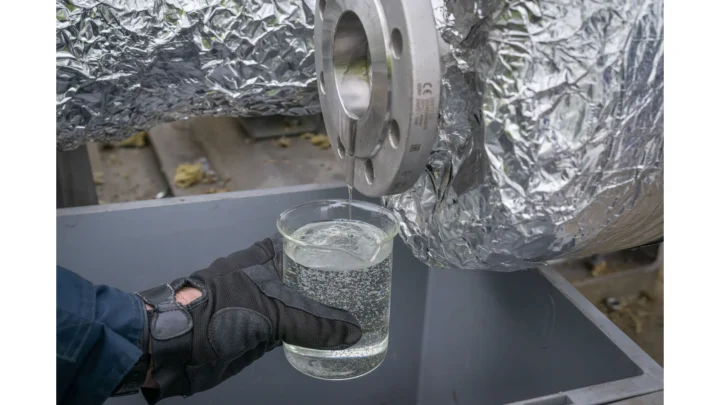
Sources checked 18 October 2026. The main image is an AI-generated editorial illustration; the explanatory figure is an original editorial diagram. Neither is a photograph of an identified product or facility, a laboratory result or an independent environmental assessment.
Legal discussion is limited to the identified provisions and dated source explanations. No product-specific compliance determination, comprehensive audit of subsequent measures or universal laboratory procedure is provided.
Official sources and reference notes
- [R1] Sustainable Packaging Coalition / GreenBlue. 2026 Sustainable Packaging Trends Report. April 2026. Industry framing around formalised recyclability definitions, maturing EPR and shared recyclability data. Relevant public report landing-page explanation read; linked full PDF inaccessible. Industry perspective, not measured market adoption. Accessed 18 October 2026.
- [R2] PackUK. PackUK operational plan: 2026 to 2027. 10 August 2026. EPR Year 2 fee/RAM operations, data validation, digital-service role in submission/validation/fee calculation/payments. Relevant public text checked 18 October 2026; source scope retained. Accessed 18 October 2026.
- [R3] CalRecycle. Plastic Pollution Prevention and Packaging Producer Responsibility Act — SB 54. Live source. Permanent-regulation implementation context; CAA plan submission 13 Oct 2026 and 75-day review; source-reduction/recovery data context. Relevant public text checked 18 October 2026; source scope retained. Accessed 18 October 2026.
- [R4] PackUK / Defra. RAM 2027: overview. 20 August 2026. 2027 reporting-year RAM; classification + collection/sortation/reprocessing/application; existing infrastructure/capacity requirement; recycled-at-scale evidence. Relevant public text checked 18 October 2026; source scope retained. Accessed 18 October 2026.
- [R5] European Union. Regulation (EU) 2025/40 on packaging and packaging waste. Regulation (EU)2025/40, OJ22 January 2025. Articles 6, 7, 11, 12, 32; related Annexes. Relevant original OJ provisions read in full via official PDF; dated Commission guidance checked separately. Not a comprehensive audit of all secondary or national measures. Accessed 18 October 2026.
- [R6] European Union. Regulation (EU) 2025/40, Article 24 — excessive packaging. Regulation (EU)2025/40, OJ22 January 2025. Future 50% maximum empty-space ratio for grouped/transport/e-commerce packaging; methodology act due 12 Feb 2028; sales-packaging minimum-necessary empty space. Relevant original OJ provisions read in full via official PDF; dated Commission guidance checked separately. Not a comprehensive audit of all secondary or national measures. Accessed 18 October 2026.
- [R7] RecyClass. Design for Recycling Guidelines — March 2026 update. 11 March 2026. New laboratory-driven updates for inks, barriers, additives, closures and sealants across PE/PP/PET/PS packaging. Relevant public industry guidance/protocol sections read; voluntary stream-specific methods, not PPWR legal grades or product certification. Accessed 18 October 2026.
- [R8] CEFLEX. Designing for a Circular Economy — Design Principles / Design Choices. Live source. Mono-PE/mono-PP preference and component-level treatment of barriers, coatings, inks, adhesives, construction and fitments. Relevant public industry guidance/protocol sections read; voluntary stream-specific methods, not PPWR legal grades or product certification. Accessed 18 October 2026.
- [R10] Cepi. Paper and Board — Recyclability Laboratory Test Method — Part I: Recycling mill with Conventional process. 3, February 2025. Conventional-mill laboratory evaluation via pulping, screening and sheet formation. Relevant public text checked 18 October 2026; source scope retained. Accessed 18 October 2026.
- [R11] 4evergreen. Recyclability Evaluation Protocol. 2025. Process-specific evaluation including conventional, flotation-deinking and specialised recycling. Relevant public text checked 18 October 2026; source scope retained. Accessed 18 October 2026.
- [R12] European Commission / European Union. Commission Notice — Guidance document for Regulation (EU) 2025/40. C/2026/3084,10 June 2026. PFAS / Article 5(5) guidance section. Relevant full official notice sections read. Dated nonbinding Commission interpretation, not a product compliance conclusion. Accessed 18 October 2026.
- [R14] European Union. Directive (EU) 2024/825 — Empowering Consumers for the Green Transition. Directive (EU)2024/825,28 February 2024. Recitals9–12, Article 4, Annex amendments to UCPD. Relevant full OJ text read. Member-State application date does not establish transposition/enforcement status in every country. Accessed 18 October 2026.
The public corrections channel is currently inactive. Read our corrections policy.