A technology announcement is easy to publish.
Commercial readiness is harder to prove.
In the 1 April–19 October 2026 source window, several packaging technologies crossed meaningful thresholds: one fibre-bottle platform opened a commercial factory; a plant-based polyester precursor produced its first batch at commercial scale; dry-moulded-fibre projects moved into machine orders and industrialisation; a PET depolymerisation process reached production-scale demonstration; seaweed barrier coatings entered converter evaluation; and a water-dispersible flexible substrate was described by its developers as reaching commercial scale.
Those events do not belong in the same bucket.
A customer trial is not a factory. A machine order is not qualified output. A first commercial-scale batch is not steady-state production. A partnership with a global converter is not by itself a purchase order.
This tracker therefore asks one question of every technology:
What changed in its readiness status between 1 April and 19 October 2026?
Readiness labels describe different kinds of proof
The labels are editorial descriptions of the public evidence, not formal TRL scores or a sustainability ranking. A developer-reported scale claim may overlap a physical stage; it is kept separate because the public proof differs.
Our commercialization framework separates technical readiness from manufacturing, compliance, supply and adoption readiness. This update applies that discipline to current events.
The labels used here are intentionally conservative:
- Commercial operation: a production asset is running and product can be supplied at commercial volume.
- Commercial start-up / qualification: commercial-scale equipment is operating, but product qualification, ramp-up or customer release is still incomplete.
- Industrialisation: equipment, site or manufacturing commitment has moved beyond lab/pilot work, but recurring commercial output is not yet demonstrated.
- Production-scale demonstration: the process has run on equipment intended to inform commercial design, but a commercial plant is not yet operating.
- Converter/customer evaluation: a downstream packaging company is testing integration into real applications.
- Commercial-scale claim: the developer says the material has reached commercial scale, but public output, repeat-order or installed-capacity evidence remains limited.
The point is not to score winners. It is to stop very different milestones from being reported as the same thing.
Pulpex: fibre bottles crossed from pilot production into a commercial factory
Pulpex’s 8 October announcement reports the opening of its first commercial fibre-bottle factory near Glasgow. In this selected tracker it represents a factory-opening milestone, rather than an independently measured ranking of all 2026 technologies. [S1]
The company says the plant is fitted for initial capacity of up to 40 million bottles per year and will act as the reference model for a wider manufacturing-under-licence network. [S1]
Pulpex also said more than 90% of the site’s initial available capacity for the current financial year had been sold, with customer commitments across food-grade and non-food applications. [S1]
That is substantially stronger evidence than a prototype or pilot.
The company describes the facility as operational and names initial customers. We did not inspect the plant or audit shipments; those statements are stronger stage evidence than a prototype image, but are still company-reported. [S1]
But two boundaries still matter.
First, “up to 40 million units” is installed or intended annual capacity, not evidence that 40 million bottles have already been produced or sold.
Second, the company’s claim that more than 90% of initial capacity is sold is a company statement; public shipment volumes and repeat-order history are not yet mature.
Readiness status: commercial operation, early ramp.
Avantium: first commercial-scale FDCA batch, but qualification still sits between plant start-up and sales
Avantium’s PEF story advanced materially in September.
On 7 September, the company said all major process units at its Delfzijl FDCA Flagship Plant had been commissioned. On 28 September it announced the first batch of FDCA from the plant. [S3b] [S3]
That is a real status change.
The plant is designed to make FDCA, the key building block for PEF, at commercial scale. Producing the first batch moves the project beyond construction and commissioning into operational start-up.
It is not yet the same as stable commercial production.
Avantium said it would continue producing additional batches, complete product qualification and move toward continuous operation, with commercial sales anticipated toward the end of 2026. The company expects ramp-up to full design capacity to take roughly 12–24 months after start-up. [S3]
Avantium’s 14 September capacity-reservation agreement with Klöckner Pentaplast concerns evaluation of PEF for thermoformed food packaging. It is a downstream qualification signal, not a purchase order for a finished package. [S5]
The reservation strengthens the adoption case, but remains a downstream qualification and market-development signal rather than proof of recurring package sales.
Financing remains part of readiness. On 30 September, Avantium disclosed a material uncertainty related to going concern, dependent in part on additional funding, successful start-up and anticipated sales/licensing receipts. It also reported progress on construction close-out and preparations for deliveries. The first batch does not remove those conditions. [S4]
Readiness status: commercial-scale start-up and customer qualification.
Dry Molded Fiber: the strongest signal was equipment commitment
Dry Molded Fiber has been discussed for years as an alternative forming route for fibre packaging. In 2026, some of the evidence shifted from technology demonstration toward manufacturing commitment.
On 28 April, Future Materials Sweden ordered two Scala machines for a new production site in Ljungby, initially focused on fibre-based snus cans. [S6]
That matters because equipment orders and a production site are harder commercialization evidence than a prototype.
On 4 May, Zipform Packaging became a new PulPac licensee and said it was developing a Dry Molded Fiber meat tray. The first proof of concept had been tested with selected industry participants, but the project was still described as development and industrialisation rather than commercial rollout. [S7]
The two verified examples establish equipment orders and an application-development license. This tracker does not add capacity for other ecosystem projects whose status was not independently checked here.
The technology therefore shows a widening industrial ecosystem—licensees, machine suppliers and product-specific development—but the status differs by project.
A machine order is not installed output. A proof of concept is not a qualified SKU. A license is not sales volume.
Readiness status: industrialisation, with project-level readiness varying.
Kirin and JSW: PET chemical recycling moved beyond laboratory throughput
On 2 September, Kirin and The Japan Steel Works reported a production-scale demonstration of an alkaline PET depolymerisation process using a twin-screw extruder. [S8]
The test achieved more than 95% depolymerisation and stable throughput of at least 250 kilograms per hour. [S8]
The important part is not the percentage alone.
The companies said the run generated equipment specifications and operating knowledge needed to design a commercial-scale process.
That places the technology beyond laboratory validation.
It does not place it in commercial operation.
No operating commercial plant, commercial annual capacity or recurring output was disclosed in the September announcement. The companies said further work would integrate collection, depolymerisation and resource recovery and would test a broader range of PET feedstocks. [S8]
This is exactly the kind of milestone that often gets overstated in technology coverage.
A production-scale demonstration can de-risk plant design without proving plant economics, feedstock availability, food-contact qualification or long-run uptime.
Readiness status: production-scale demonstration.
Kelpi and Amcor: a seaweed coating entered a much more demanding kind of test
Seaweed-based coatings have strong laboratory appeal because they offer a route to bio-derived barrier layers for fibre packaging.
The commercialization question is whether they can survive industrial coating, converting, line speed, storage, food-contact requirements and the performance envelope of real packaging.
Kelpi’s June partnership with Amcor therefore matters even though it is not a commercial launch.
Amcor said its R&D teams were evaluating Kelpi’s seaweed-derived coating platform for possible integration into its AmFiber fibre-packaging portfolio. The target applications require barrier performance, high running speed and compatibility with recycling streams. [S10]
That is a step closer to market than a standalone laboratory result because a major converter is testing the technology against actual platform requirements.
But the public evidence at the cutoff does not establish a qualified Amcor SKU, a commercial purchase order or installed production volume.
Readiness status: converter evaluation / application qualification.
PureNil 0: a commercial-scale claim that still needs volume evidence
In September, Lactips and SmartSolve said their PureNil 0 flexible packaging substrate had advanced from early-stage development to commercial scale in less than two years. [S12]
The material combines a functionalised paper substrate with a bio-based, water-dispersible polymer system and is intended for flexible-packaging applications. [S12]
The companies also stated that customers were already using the material. [S12]
That is a stronger commercialization claim than “pilot ready.”
But the public announcement did not disclose installed annual capacity, current production volume, customer shipment volume or repeat-order data.
For an evidence-led tracker, the correct status is therefore not simply “commercialised.”
It is:
developer-reported commercial scale, with public volume evidence still limited.
This distinction is important because commercial-scale language can refer to process capability, available supply or actual recurring market volume—and those are not the same thing.

The tracker
| Technology / platform | 2026 status change | Readiness at cutoff | Strongest evidence | What is still missing |
|---|---|---|---|---|
| Pulpex fibre bottles | Commercial factory opened near Glasgow | Commercial operation / early ramp | Operating site; up to 40 m units/year stated initial capacity; initial customer commitments | Mature output, shipment and repeat-order history [S1] |
| Avantium FDCA / PEF | All major units commissioned; first FDCA batch produced | Commercial start-up / qualification | Commercial-scale plant operating; first batch; capacity-reservation activity | Continuous stable operation, completed qualification, recurring commercial sales [S3] |
| Dry Molded Fiber | New machine orders, production-site commitment and licensee projects | Industrialisation | Two-machine order; licensee expansion; application proof of concept | Installed output and recurring commercial volumes for tracked projects [S6] |
| Kirin alkaline PET depolymerisation | Production-scale demonstration | Production-scale demo | >95% depolymerisation; stable ≥250 kg/h run | Commercial plant, economics, long-run uptime and qualified outputs [S8] |
| Kelpi seaweed barrier coating | Entered Amcor converter evaluation | Application qualification | Evaluation by a global packaging converter | Qualified SKU, commercial order and production volume [S10] |
| PureNil 0 | Developers report move to commercial scale | Commercial-scale claim | Stage-gate development completed; company reports customer use | Public installed capacity, shipment volume and repeat-order data [S12] |
Editorial synthesis. The metric, period, unit, evidence type and limitations accompany this asset.
The most important progression was not “bio-based” or “fiber-based”
The selected technologies do not share one material family.
They include fibre forming, plant-based polyester chemistry, chemical recycling, seaweed coatings and water-dispersible flexible substrates.
What changed in 2026 was the type of evidence.
Some technologies moved from equipment planning to installed manufacturing. Others moved from laboratory work to production-scale demonstrations. Others entered the qualification systems of global converters.
That progression matters more than the sustainability label attached to the technology.
Three readiness traps to avoid
Funding is not commercialization. Capital can keep a technology alive long enough to commercialize, but money raised does not prove output, qualification or customer demand.
A famous partner is not a purchase order. A collaboration with a major converter or brand is meaningful because it increases the quality of the test environment. It still has to become a qualified product and recurring sale.
Commercial-scale equipment is not full commercial output. Avantium’s first FDCA batch and Pulpex’s factory opening are major milestones, but both still require ramp, quality consistency and recurring customer deliveries before the market can treat nameplate or installed capability as mature supply.
What to watch next
By the next review, the strongest evidence will not be another partnership announcement.
For Pulpex, it will be actual production and repeat customer launches.
For Avantium, it will be qualified commercial deliveries, continuous operation and ramp progress.
For Dry Molded Fiber, it will be machines installed, commissioned and producing qualified customer SKUs.
For Kirin’s depolymerisation process, it will be a commercial plant decision and demonstrated economics.
For Kelpi, it will be a converter-qualified application or commercial order.
For PureNil 0, it will be disclosed output, customer volume or repeat business that makes “commercial scale” measurable.
Six-month conclusion
The 2026 technology story is not that one new packaging material has won.
It is that several technologies moved into harder forms of proof.
Factories, commissioned process units, equipment orders, production-scale runs and converter qualification are stronger evidence than prototypes.
But the commercialization ladder still has another step after all of them:
repeatable production that meets specification, reaches customers at acceptable cost and is ordered again.
That is the threshold this tracker will use when it is updated.
Methodology and editorial note
Selected original company announcements dated 1 April–19 October 2026 were read and compared with their later available status records at publication. Readiness labels are editorial descriptions, not formal TRL scores, an exhaustive tracker or independent verification of production, demand, financing or sustainability. No plant inspection, purchase-order audit, full financial audit or certification check is claimed. Missing public volume evidence remains explicit. Sources checked 20 October 2026. No supplier audit, factory inspection or independent market census was performed for this article.
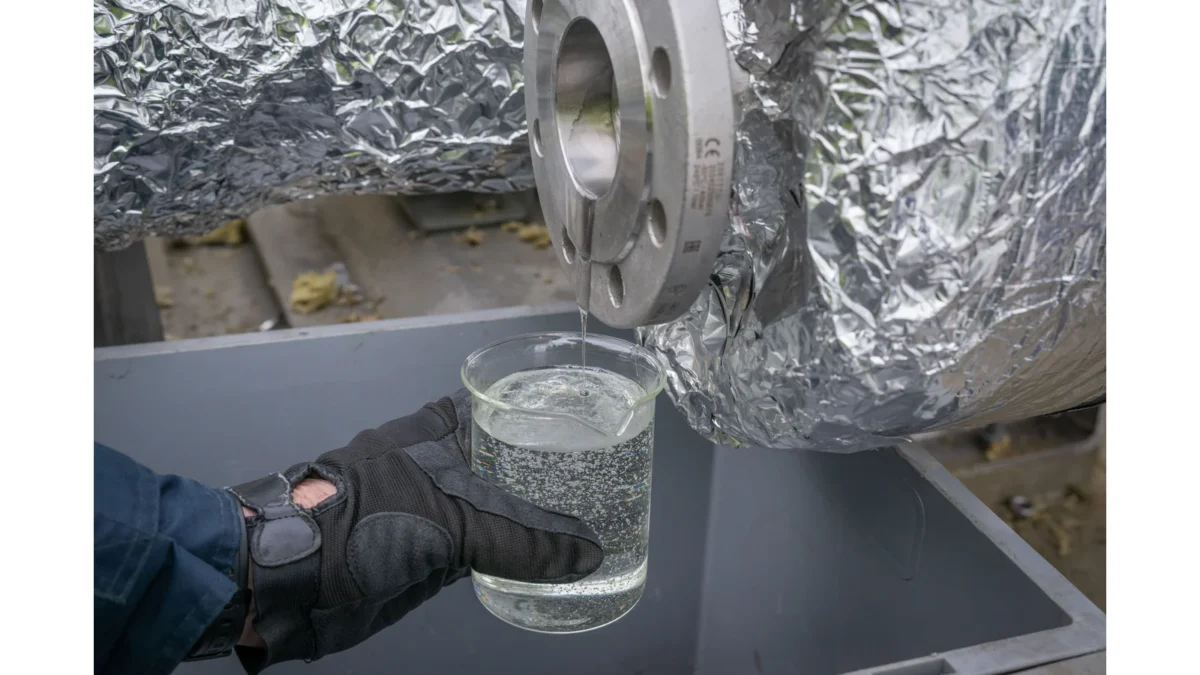
The main photograph comes from Avantium’s downloadable official media library and is identified there as sugar unloading in February 2025. It is historical plant context, not an image proving the September 2026 first batch or current output. The body figure is an original record synthesis.
Official sources and reference notes
- [S1] Pulpex. Pulpex opens first commercial fibre bottle factory in Glasgow. 8 October 2026. Opening; initial capacity; Commercial demand established before opening. Full company account read. Capacity sold, output, shipments and utilization are different; no factory visit. Accessed 20 October 2026.
- [S3] Avantium. Avantium announces the start-up of its Flagship Plant, with the first batch of FDCA produced. 28 September 2026. First batch; qualification, continuous operation and 12–24-month ramp expectations. Full relevant release read; company expectations, not independently verified sales. Accessed 20 October 2026.
- [S4] Avantium. Half-Year 2026 Financial Statements and Worley contractual close-out. 30 September 2026. Going-concern assessment, financing assumptions and preparation for commercial deliveries. Issuer financial-summary release read; not a full independent financial audit or solvency verdict. Accessed 20 October 2026.
- [S5] Avantium. Avantium and Klöckner Pentaplast advance food packaging with PEF capacity reservation agreement. 14 September 2026. Capacity reservation; thermoforming/lidding evaluation. Full relevant company release read; not a qualified finished SKU. Accessed 20 October 2026.
- [S6] PulPac. Scaling Dry Molded Fiber: New machinery order for snus can production. 28 April 2026. Two Scala machines and planned Ljungby site. Company announcement; order not installed output. Accessed 20 October 2026.
- [S7] PulPac. Zipform Packaging becomes new PulPac licensee. 4 May 2026. License, meat-tray development and proof of concept. Full relevant company statement read; six days after 28 April, not four. Accessed 20 October 2026.
- [S8] Kirin Holdings / JSW. Alkaline Depolymerization Technology for PET Using Twin Screw Extruder TEX αIII series. 2 September 2026. Research Results, Key Achievements and Future Outlook. Company-reported production-scale demonstration: over 95% and at least 250kg/h. No run duration, annual output, economics or food-contact approval inferred. Accessed 20 October 2026.
- [S10] Amcor. Amcor partners with Kelpi to advance next-generation barrier materials for fiber packaging. 29 June 2026. R&D evaluating coating; possible AmFiber application. Full relevant partner release read; evaluation and target attributes, not independently verified barrier/recyclability performance. Accessed 20 October 2026.
- [S12] Lactips / SmartSolve. Lactips and SmartSolve Announce Major Plastic-Free Packaging Partnership. 18 September 2026. Stage-gate development, commercial-scale claim and stated customer use. Full relevant developer text read. Environmental/food-contact superlatives are not adopted or independently verified. Accessed 20 October 2026.
- [S3b] Avantium. Avantium Completes Commissioning of Purification Unit at FDCA Flagship Plant. 7 September 2026. All major process units commissioned; remaining start-up/qualification. Full relevant issuer account read; commissioning not commercial sales. Accessed 20 October 2026.
The public corrections channel is currently inactive. Read our corrections policy.