Short answer: Mono-material packaging is packaging designed so that the main structure belongs to one material or recycling stream rather than combining several materially incompatible layers. In plastic flexible packaging, the most common examples are mono-PE and mono-PP structures. “Mono-material” does not necessarily mean one layer, one resin grade or zero additives: a package can use several PE or PP layers plus compatible inks, adhesives, coatings or barrier technologies and still be designed for the same recycling stream.
Mono-material design targets a practical recycling problem: identifying and reprocessing packaging into a coherent stream. CEFLEX’s guidance favours mono-PE or mono-PP over mixed-polyolefin and multilayer-multimaterial structures, while retaining the need to protect the product. This is a scoped design preference, not a universal proof of recyclability. [R3]
But mono-material is not a synonym for recyclable, and the EU Packaging and Packaging Waste Regulation (PPWR) does not impose a blanket rule saying that all packaging must become mono-material. PPWR Article 6 requires packaging to meet harmonised design-for-recycling and, later, recycled-at-scale criteria. Mono-material design is one way to improve compatibility with those criteria; collection, sorting, minor components, recycling infrastructure and the quality of the resulting secondary material still matter.
What does “mono-material packaging” actually mean?
The term is used more consistently in packaging engineering than in law. There is no single global percentage threshold that turns every package into “mono-material.” The exact definition depends on the material family, recycling stream and assessment scheme.
In practice, the concept means that the package is designed around one predominant material system so that its major components can enter one intended recycling route without incompatible materials undermining the process.
| Term | What it normally describes | Example | What it does not prove |
|---|---|---|---|
| Mono-layer | A film or wall made as one physical layer. | A single PE film. | That the complete package, including closure, label or coating, is recyclable. |
| Mono-material | A package designed mainly around one material/recycling stream, even if several functional layers are present. | A PE pouch using different PE grades for stiffness, sealing and toughness. | Automatic collection, sorting or recycling in every market. |
| Mono-polymer family | Several layers or components based predominantly on one polymer family. | LDPE/LLDPE/MDO-PE layers in a PE-oriented laminate. | That every minor barrier, ink, adhesive or fitting is compatible with the PE recycling process. |
| Multi-material | A structure combining materially different substrates or polymer families. | PET/PE, PA/PE, paper/plastic or aluminium/plastic laminate. | That the pack is necessarily unrecyclable; the real result depends on design, separation and the target process. |
Editorial synthesis of the identified source provisions and evidence boundaries; illustrative examples are not product test results or compliance determinations.
This distinction is especially important for flexible packaging. A “mono-PE” pouch can still be a multilayer laminate. The layers may use different polyethylene grades because the outer surface, seal layer and structural layer do different jobs. The package is called mono-material because those major layers are intended to remain compatible with the PE recycling stream, not because the film contains only one molecular formulation.
Why multilayer packaging became common in the first place
Multi-material packaging exists because different materials provide different functions efficiently.
PET can contribute stiffness and heat resistance. Polyamide can provide puncture resistance and oxygen barrier. Aluminium foil can block light, oxygen and moisture. PE can provide moisture resistance and heat sealing. PP can provide stiffness, clarity and higher-temperature performance. Combining them can produce a thin package that protects sensitive food or other products extremely well.
CEFLEX explains why flexible packaging combines materials: some products need gas and moisture barriers, others stiffness. Its guidance treats functional requirements alongside circular-design choices. This article does not claim that removing every dissimilar layer is feasible for every application. [R3]
So mono-material redesign is not simply a matter of deleting a layer. The package still has to protect the product.
Why mono-material design can improve mechanical recycling
Most mechanical recycling systems depend on producing a sufficiently coherent input stream. The recycler needs to sort packaging into a target material, clean and prepare it, melt or otherwise reprocess it, and create secondary material with enough quality for a useful end market.
When inseparable packaging contains several incompatible materials, those materials can remain mixed through reprocessing. Depending on the combination, this can cause:
- phase separation or weak interfaces in the recycled polymer;
- gels, specks or other defects;
- changes in color or odor;
- lower mechanical performance;
- lower yield because more material must be rejected;
- downgrading into lower-value applications.
Current CEFLEX Designing for a Circular Economy (D4ACE) guidance therefore prefers mono-PE and mono-PP flexible structures where possible. Its 2025 update treats barriers, coatings, adhesives, inks, metallisation and tie layers as design variables whose amount and compatibility can change sortability, recycling yield and recyclate quality. [R3] [R4]
RecyClass follows the same basic logic from another methodology. Its current Design for Recycling Guidelines assess whether package features are compatible with specific recycling streams, and its PE-film evaluation protocol tests pre-treatment, extrusion and conversion performance rather than assuming that a package is recyclable because its marketing description says “mono-material.” [R5] [R6]
Mono-material does not mean “one ingredient”
A functional package usually contains more than the main structural polymer.
A flexible pouch can contain:
- several film layers;
- printing inks;
- laminating adhesive;
- tie layers;
- oxygen or aroma barrier;
- metallisation;
- varnish;
- zipper or spout;
- label;
- sealant.
The design question is whether those elements remain compatible with the target recycling stream at their actual concentration and construction.
| Illustrative structure | Design logic | Main recyclability question |
|---|---|---|
| PE / PE | Different PE grades provide print surface, stiffness, toughness and sealing while targeting a PE stream. | Are inks, adhesives, barriers, labels and fitments compatible with the intended PE process? |
| PP / PP | Multiple PP layers can combine stiffness, clarity and seal performance while targeting a PP stream. | Do barriers, coatings and attached components remain compatible with PP sorting and reprocessing? |
| PE structure with a thin functional barrier | Predominantly PE, with a minor barrier layer used to protect the product. | Is that barrier type and amount accepted under the relevant DfR guidance/test? |
| PET / PE laminate | PET provides outer-layer stiffness/temperature performance; PE provides sealing. | Can the inseparable PET and PE be handled without materially degrading the target recycling stream? |
| PA / PE laminate | PA adds puncture/oxygen-barrier performance while PE provides sealing. | Does the PA concentration and construction fall within a tested compatibility route? |
| Aluminium / plastic laminate | Foil supplies very high light/gas/moisture barrier. | Can the metal/plastic structure be separated or processed through an established recycling route? |
Editorial synthesis of the identified source provisions and evidence boundaries; illustrative examples are not product test results or compliance determinations.
The table is deliberately not a pass/fail list. A material combination that is problematic in one mechanical-recycling stream may be accepted under a different process, concentration or future technology. Current DfR guidance should be checked against the exact structure.
See collection, sorting and actual recovery evidence.
Barrier layers are the central mono-material engineering problem
The hardest redesigns are usually not simple dry-goods packs. They are packages that need strong oxygen, moisture, aroma, grease, light or puncture protection.
Traditional multilayer packaging solves these requirements by assigning each function to a different material. A mono-material redesign tries to keep the package within one dominant recycling stream while replacing or minimizing incompatible layers.
Current approaches include:
- using higher-performance grades of the main polymer;
- orienting PE or PP films to improve stiffness and mechanical performance;
- using thin compatible or conditionally compatible barrier layers;
- using coatings or metallisation within tested limits;
- changing adhesive chemistry or coat weight;
- redesigning labels, zippers, spouts and closures to align with the main stream.
CEFLEX’s current guidance is useful here because it does not treat “mono-material” as a magic word. It provides separate compatibility guidance for PE, PP and mixed-polyolefin structures and evaluates the minor materials that remain in the finished package. [R3]
Product protection sets the boundary
A mono-material design that cannot protect the product is not a successful packaging redesign.
Removing a high-barrier layer can increase oxygen or moisture transmission. Changing the outer web can alter stiffness, printability or heat resistance. Changing the sealant can narrow the sealing window or affect line speed. A film that performs well as an empty laboratory sample may still fail after filling, sealing, transport or storage.
That means a redesign should validate the functions that made the original multilayer structure necessary:
- oxygen and water-vapor barrier;
- light protection;
- aroma retention;
- puncture resistance;
- seal strength and seal initiation;
- hot-tack behavior where relevant;
- drop and transport performance;
- shelf life;
- machine compatibility.
The objective is not “maximum mono-material purity at any cost.” It is sufficient package performance with the best achievable compatibility for the intended recycling stream.
Mono-material packaging is not automatically recyclable
This is the most important limitation.
A mono-PE pouch can still fail in practice if flexible films are not collected in the market, if the pack is too small to be captured, if dark or metallised decoration interferes with sorting, if a spout redirects the item into another stream, or if inks and adhesives materially impair reprocessing.
RecyClass defines recyclability through more than material composition: the product must be collected for recycling or supported by a mandated program, sorted into a defined stream, processed through commercial recycling and turned into secondary material used in new products. [R7]
That distinction is consistent with PPWR. Design compatibility is only one part of the regulation’s definition of recyclable packaging.

What PPWR actually requires
PPWR Article 6 says that all packaging placed on the EU market shall be recyclable. The Regulation then defines recyclable packaging through two linked conditions:
- the packaging is designed for material recycling so that the resulting secondary raw material is of sufficient quality to substitute primary raw material; and
- when it becomes waste, it can be separately collected, sorted into specific waste streams without harming other streams, and recycled at scale. [R1]
PPWR does not say: “packaging must be mono-material.” Instead, Article 6 requires the Commission’s future design-for-recycling criteria to be developed on the basis of the predominant material and to account for separation, sorting, recycling and secondary-material quality. [R1]
Mono-material design matters because reducing incompatible material combinations can make those requirements easier to satisfy. It is a design strategy, not a standalone legal compliance label.
The PPWR timeline matters more than a simple “2030 deadline”
The June 2026 Commission notice distinguishes the general Article 6(1) duty from the later harmonised design criteria. Article 6(4) instructs the Commission to adopt delegated acts by 1 January 2028; Article 6(2)(a) uses1 January 2030 or24 months after those acts enter into force, whichever is later. This reports those identified provisions and the dated guidance, not an audit proving that no subsequent measure exists. [R1] [R2]
| Milestone | Requirement | What it means for mono-material design |
|---|---|---|
| By 1 January 2028 | Commission is to adopt delegated acts establishing design-for-recycling criteria and recyclability performance grades. | Today’s industry DfR guidelines help preparation but do not replace the final harmonised criteria. |
| 2030 / later-of date | Article 6 design-for-recycling requirements apply from 1 January 2030 or 24 months after the relevant delegated acts enter into force, whichever is later. | A mono-material claim alone will not establish compliance; the finished pack must meet the applicable category criteria and grade. |
| 2035 / later-of date | Article 6(2)(b) uses1 January 2035; for the recycled-at-scale requirement,1 January 2035 or five years after the relevant implementing acts enter into force, whichever is later. | Good design is not enough if the packaging category is not actually collected, sorted and recycled at the required scale. |
| From 2038 | Packaging generally may not be placed on the market unless it reaches recyclability grade A or B, subject to the Regulation’s exceptions and innovation provisions. | Designs sitting at the lowest compliant grade become a longer-term commercial risk. |
Editorial synthesis of the identified source provisions and evidence boundaries; illustrative examples are not product test results or compliance determinations.
The timing qualifiers matter. Saying “PPWR bans multimaterial packaging in 2030” is incorrect. Saying “PPWR requires mono-material packaging in 2030” is also incorrect.
PPWR grades are based on recyclability performance, not a mono-material badge
Annex II Table 3 establishes the future recyclability performance bands:
- Grade A: at least 95%;
- Grade B: at least 80%;
- Grade C: at least 70%;
- technically non-recyclable: below 70%. [R1]
From the applicable 2030 stage, packaging generally must reach A, B or C. From 2038, grade C generally cannot be placed on the market. The detailed weighting rules will depend on the Article 6 delegated acts.
These percentages should not be confused with “percentage mono-material.” A package containing 95% PE is not automatically PPWR Grade A. The grade will come from the harmonised DfR assessment for its packaging category, not from a simple polymer-content calculation.
See the PPWR framework for the related obligations and exceptions.
Components matter under PPWR
Article 6 also prevents manufacturers from looking only at the main body.
Where a package contains integrated components, compliance assessment includes those components. Separate components are assessed separately. All components must be compatible with established collection, sorting and recycling processes and must not hinder the recyclability of the main body. [R1]
For a flexible package, that can make the following details material to the assessment:
- spout and cap;
- zipper;
- label;
- laminating adhesive;
- printing;
- metallisation;
- barrier coating;
- tear strip or other attached feature.
A pouch can therefore be “mostly PE” while still having a component that materially affects sorting or recycling.
Flexible packaging is not one PPWR category
PPWR Annex II separates packaging into categories based on predominant material, packaging type and design. Plastic films and flexible packaging appear across multiple plastic categories rather than being treated as one universal flexible-plastics stream. [R1]
This is another reason not to use a generic mono-material certificate as a substitute for the future PPWR assessment. A specific PE or PP flexible construction has to be mapped to the correct packaging category and then evaluated under the applicable design criteria.
How CEFLEX and RecyClass should be used before the PPWR criteria are final
Industry design-for-recycling frameworks are useful preparation tools, but their legal role needs to stay clear.
CEFLEX D4ACE
CEFLEX’s updated 2025 D4ACE guidance focuses on polyolefin-based flexible packaging and explicitly favors mono-PE and mono-PP structures. It includes current guidance for barriers, coatings, adhesives, inks, metallisation, tie layers and sortability. CEFLEX states that its guidelines are voluntary and are intended to support circular flexible-packaging design; they are not themselves a legal requirement. [R3] [R4]
RecyClass
RecyClass maintains polymer- and format-specific Design for Recycling Guidelines and testing protocols. Its guidelines were updated again in March 2026 for PE and PP flexible packaging, including printing inks and other technologies. [R5]
The value of both systems is that they force the design team to examine the complete structure. Their thresholds and test results should not be rewritten as final PPWR legal thresholds before the Commission adopts the Article 6 secondary legislation.
What should a mono-material specification contain?
| Specification field | What to record | Why it changes the recyclability conclusion |
|---|---|---|
| Target recycling stream | PE film, PP film, PET, HDPE, paper or another defined stream | “Mono-material” is meaningless without a destination recycling process. |
| Complete layer structure | Every structural, sealant, barrier and tie layer with material identity and weight/thickness | The minor layer may be the compatibility problem. |
| Inks / coatings / adhesive | Chemistry, coat weight and coverage where relevant | Small constituents can affect yield, odor, color, processing or recyclate quality. |
| Fitments and components | Caps, spouts, valves, zippers, labels and sleeves | They can alter sorting or contaminate the main stream. |
| Package size and format | Filled/empty geometry and dimensions | Sortability depends on more than polymer composition. |
| Performance requirements | OTR/WVTR where relevant, sealing, puncture, heat, shelf-life and line-speed requirements | A recycling redesign must still perform the package’s core function. |
| DfR assessment | Current applicable CEFLEX, RecyClass or other market-specific methodology/test | Provides a defined compatibility basis while PPWR criteria continue to develop. |
| PPWR category / evidence | Predominant material, components, proposed category and future technical-documentation route | PPWR compliance will depend on the harmonised category-specific assessment, not the marketing term. |
| Real recovery route | Collection, sorting and commercial recycling in the destination market | Mono-material by design can still fail to be recycled in practice. |
Editorial synthesis of the identified source provisions and evidence boundaries; illustrative examples are not product test results or compliance determinations.
Methodology and editorial note
This article synthesises the identified PPWR provisions and dated Commission guidance with public CEFLEX/RecyClass methods. The methods are not law or proof of actual local recovery.
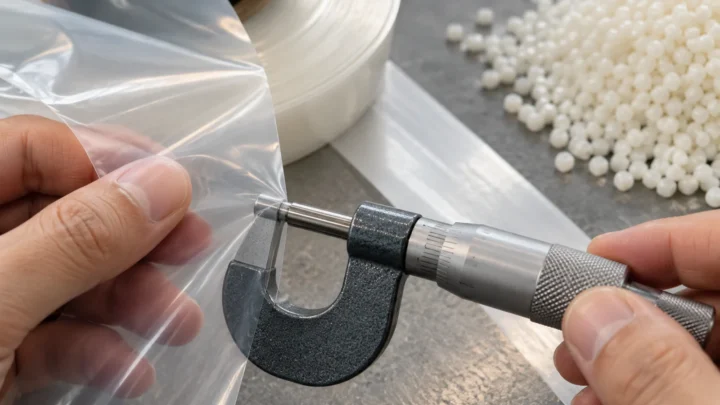
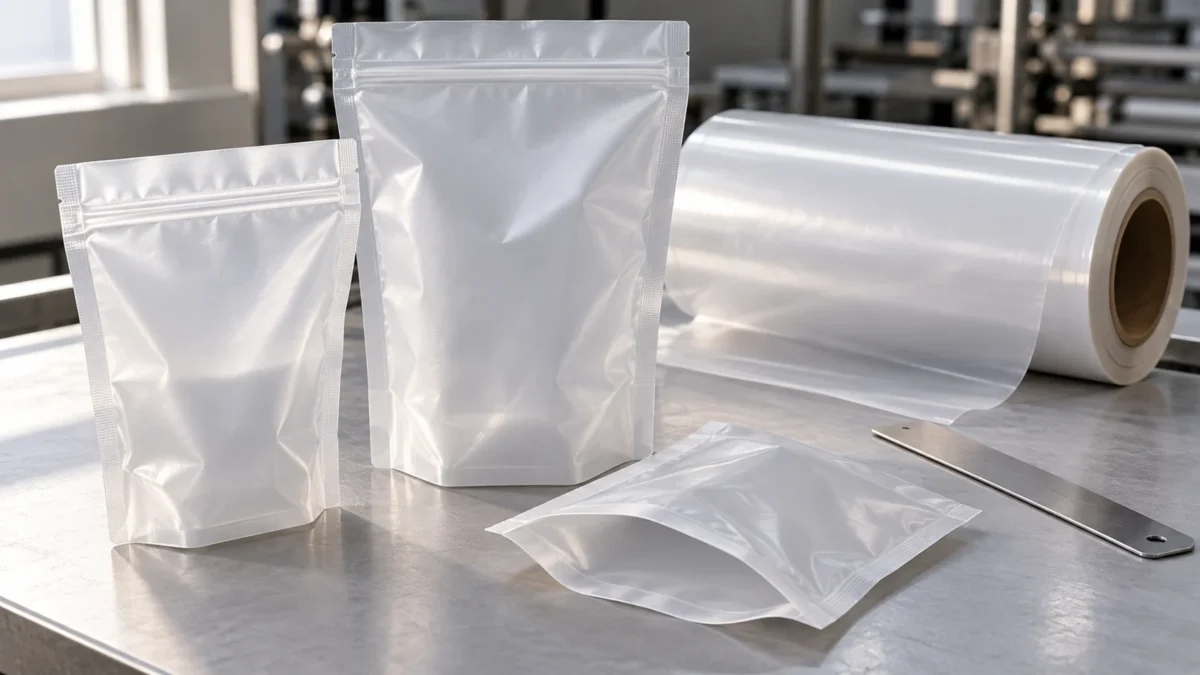
Sources checked 18 October 2026. The main image is an AI-generated editorial illustration; the explanatory figure is an original editorial diagram. Neither is a photograph of an identified product or facility, a laboratory result or an independent environmental assessment.
Legal discussion is limited to the identified provisions and dated source explanations. No product-specific compliance determination, comprehensive audit of subsequent measures or universal laboratory procedure is provided.
Official sources and reference notes
- [R1] European Union. Regulation (EU) 2025/40 on packaging and packaging waste. Regulation (EU)2025/40, OJ22 January 2025. Article 3(37)–(43); Article 6(1)–(12); Annex II Tables 1–4. Relevant original OJ provisions read in full via official PDF; dated Commission guidance checked separately. Not a comprehensive audit of all secondary or national measures. Accessed 18 October 2026.
- [R2] European Commission. Commission Notice — Guidance document for Regulation (EU) 2025/40 on packaging and packaging waste. C/2026/3084,10 June 2026. Section 6, pp.13–14 in official PDF. Relevant full official notice sections read. Dated nonbinding Commission interpretation, not a product compliance conclusion. Accessed 18 October 2026.
- [R3] CEFLEX. Designing for a Circular Economy — Design Principles. Live source. Preference for mono-PE and mono-PP; role of barriers, coatings, inks, adhesives, dimensions and fitments in sortability/recyclability/recyclate quality. Relevant public industry guidance/protocol sections read; voluntary stream-specific methods, not PPWR legal grades or product certification. Accessed 18 October 2026.
- [R4] CEFLEX. D4ACE — Design Choices / Resources / 2025 Executive Summary. Live source. Current polyolefin flexible-packaging scope; treatment of adhesives/coatings/barriers/inks/metallisation; voluntary status; updated evidence-based compatibility approach. Relevant public industry guidance/protocol sections read; voluntary stream-specific methods, not PPWR legal grades or product certification. Accessed 18 October 2026.
- [R5] RecyClass. Design for Recycling Guidelines — March 2026 updates. 11 March 2026. Current PE/PP flexible guidance; 2026 updates to inks and other technologies based on laboratory findings. Relevant public industry guidance/protocol sections read; voluntary stream-specific methods, not PPWR legal grades or product certification. Accessed 18 October 2026.
- [R6] RecyClass. Recyclability Evaluation Protocol for PE Films. 6.1. Laboratory-scale PE-film compatibility route through pre-treatment, extrusion and conversion; evaluation of effect on recycled-PE quality. Relevant public industry guidance/protocol sections read; voluntary stream-specific methods, not PPWR legal grades or product certification. Accessed 18 October 2026.
- [R7] RecyClass. What is recyclability? / RecyClass Packaging Recyclability Methodology. Live source. Recyclability requires collection, sorting, commercial recycling and an end market; DfR is only one layer of the recyclability assessment. Relevant public industry guidance/protocol sections read; voluntary stream-specific methods, not PPWR legal grades or product certification. Accessed 18 October 2026.
The public corrections channel is currently inactive. Read our corrections policy.