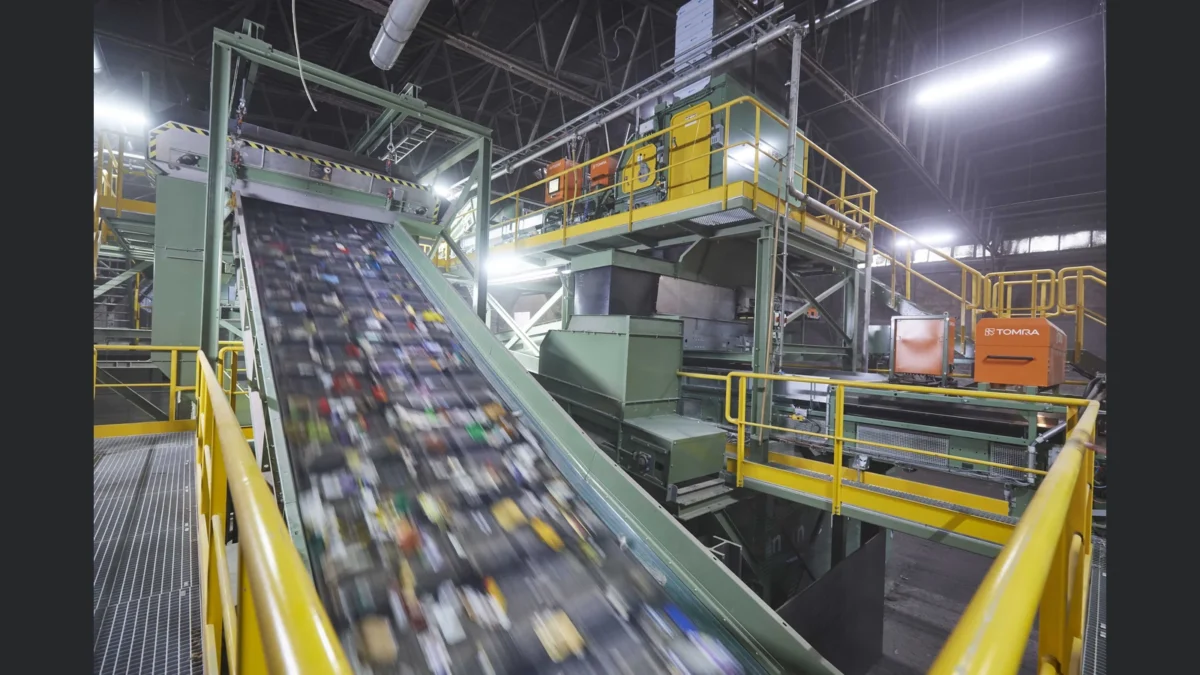
TOMRA said on 24 November 2026 that it had started a strategic review of TOMRA Feedstock. The group’s Capital Markets Day update also set financial targets for its separate Recycling business area. For packaging buyers, the developments raise a question about how much recovered plastic projects can supply at a grade buyers can qualify. [S1]
Tove Andersen, TOMRA’s chief executive, told Reuters that the company was considering outside partners or a sale to help fund expansion of the venture. Reuters reported the review against weak demand for recycled plastics in Europe. TOMRA’s 24 November update described the review as ongoing. [S2]
TOMRA’s financial targets and business scope
TOMRA targets 7–9% annual compound organic revenue growth and a 22–24% EBITA margin for Recycling over its 2030–2032 medium-term horizon. It expects growth to be weighted towards the later part of that period. The group puts maintenance and R&D first, followed by core organic growth and dividends, before putting surplus capital towards higher-return opportunities. [S1]
These are Recycling business-area targets. TOMRA discusses the Feedstock venture under Horizon, a separate business area. Buyers need separate figures for installed sorting capacity, actual annual throughput and the tonnes of resin that clear a purchase specification. [S1]
From recovered waste to a buyer’s resin grade
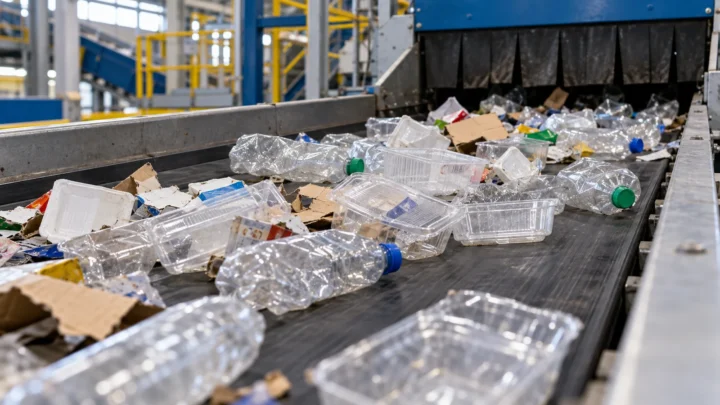
A waste stream can contain several polymers, colours, labels, closures and residual product. Sorting can separate some of these materials into commercially useful fractions. Further processing may remove contamination, reduce moisture, alter particle size or produce pellets. Each stage has its own yield, operating cost and quality limits.
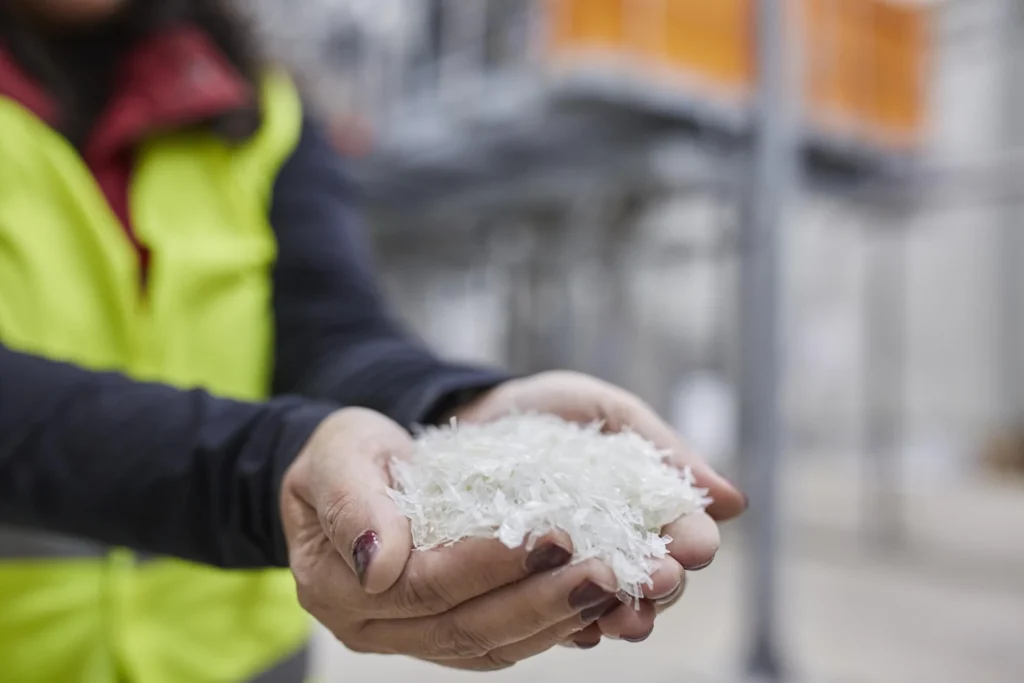
A buyer needs the quantity of resin that meets the purchasing specification and applicable requirements. A non-food injection-moulding grade, a clear bottle resin and a food-contact grade can have different acceptance criteria. The guide to recycled content in packaging explains how material origin and grade qualification affect purchasing.
The commercial challenge is to connect the recycler’s input availability with stable demand for its outputs. A facility can have access to large amounts of waste while struggling to sell a particular output grade at a price that covers operation and capital costs. Conversely, a converter can face a shortage of one highly specified grade even when lower-grade recyclate is widely available.
A simple capacity-to-output model
This hypothetical example converts annual tonnes of incoming material into annual tonnes of output that meet a buyer’s grade specification.
| Stage | Illustrative annual quantity | Assumption |
|---|---|---|
| Input handled | 10,000 tonnes | Starting amount |
| Relevant sorted fraction | 8,000 tonnes | 80% of input |
| Reprocessed output | 6,000 tonnes | 75% of sorted fraction |
| Output meeting a specified buyer grade | 5,400 tonnes | 90% of reprocessed output |
Illustrative calculation. 10,000 × 0.80 × 0.75 × 0.90 = 5,400 tonnes. Every input is hypothetical.
In the example, output that meets the grade specification accounts for 54% of input. The remaining 4,600 tonnes includes separated material, processing losses and out-of-spec output. In a project model, assign a commercial or disposal route to each of those fractions and document downtime and changes in feedstock composition.
From policy milestones to purchasing commitments
The European Commission’s implementation timeline for the EU Packaging and Packaging Waste Regulation lists 31 December 2026 for the Article 7(8) methodology on calculating and verifying recycled content. The timeline lists a milestone for the implementing act. For investment, buyers and recyclers still need to agree a purchasing specification, price and volume. [S3]
A financeable investment normally needs clarity about its input contracts, operating costs and ability to sell the output over time. Long-term offtake agreements can help to reduce one type of uncertainty, provided that price, grade, quantity and qualification requirements are realistic. Where market prices are volatile, the allocation of that risk between recycler and buyer becomes part of the investment decision.
A buyer can make the difference between capacity and supply explicit in an offtake negotiation. Ask how many tonnes have cleared the same specification in recent production, how much of that output is available to contract and how off-spec deliveries will be handled.
What packaging procurement should watch in 2027
| Signal | What to verify |
|---|---|
| A new capacity announcement | Commissioning date, operating input and actual saleable output |
| A resin offtake agreement | Grade specification, volume commitment, pricing basis and qualification |
| A recycled-content claim | Traceability, calculation boundary and evidence for the finished pack |
| A plant or business review | Ownership, operating status, continuity of supply and contract changes |
| A new legal methodology | Actual adoption, application date and relevant verification rules |
Use the outcome of the Feedstock review, documented output and supply contracts to update procurement plans. Start with grade qualification and actual deliveries, then use new capacity and corporate targets to flag developments worth checking.
Sources
Found an error? Read our corrections policy and contact the editors.