
A reusable parcel can carry a readable identifier and still be refused at a return point. Conversely, a shop can agree to receive it without knowing which operator owns the asset. Our analysis treats physical acceptance and asset identity as two separate parts of a shared-return design. [packaging]
A documented cooperation case
New ERA’s October 2026 announcement describes an industry initiative to connect reusable e-commerce return infrastructure and develop common labelling. It lists several participating operators and sets out shared infrastructure, digital identification and cooperation priorities. These are the initiative’s stated aims, not measured proof that every listed network is interoperable. [packaging]
That distinction changes the reporting task. A joint announcement establishes an intention to cooperate. Operational evidence would identify participating return points, accepted formats, responsibility after collection and the event records returned to the asset owner. None should be assumed simply from a common label. [packaging]
Identity is a tool inside the agreement
GS1 Australia describes the Global Returnable Asset Identifier, or GRAI, as a way to identify returnable assets by type and, where required, individually. A barcode or EPC/RFID tag can register movements, including return of an empty asset; serialized identity can also support maintenance records. [packaging-context]
This is independent identification-system context, not evidence that New ERA has chosen GRAI. The useful distinction is between what the object is, which particular asset it is and what event has happened to it. An identifier supplies a key; receiving, sorting and routing still require agreed operations. [packaging-context]
A cross-operator handover specification should therefore connect three questions: will this point accept the format, can the receiving system resolve its identity, and which party receives the return event and the physical asset? This is an editorial design framework, not a claim that one technology has solved the return economics. [packaging-context]
Related reading: From One-Way Box to Returnable Mailer: When Reusable E-Commerce Packaging Can Actually Work.
A retail return route makes acceptance concrete
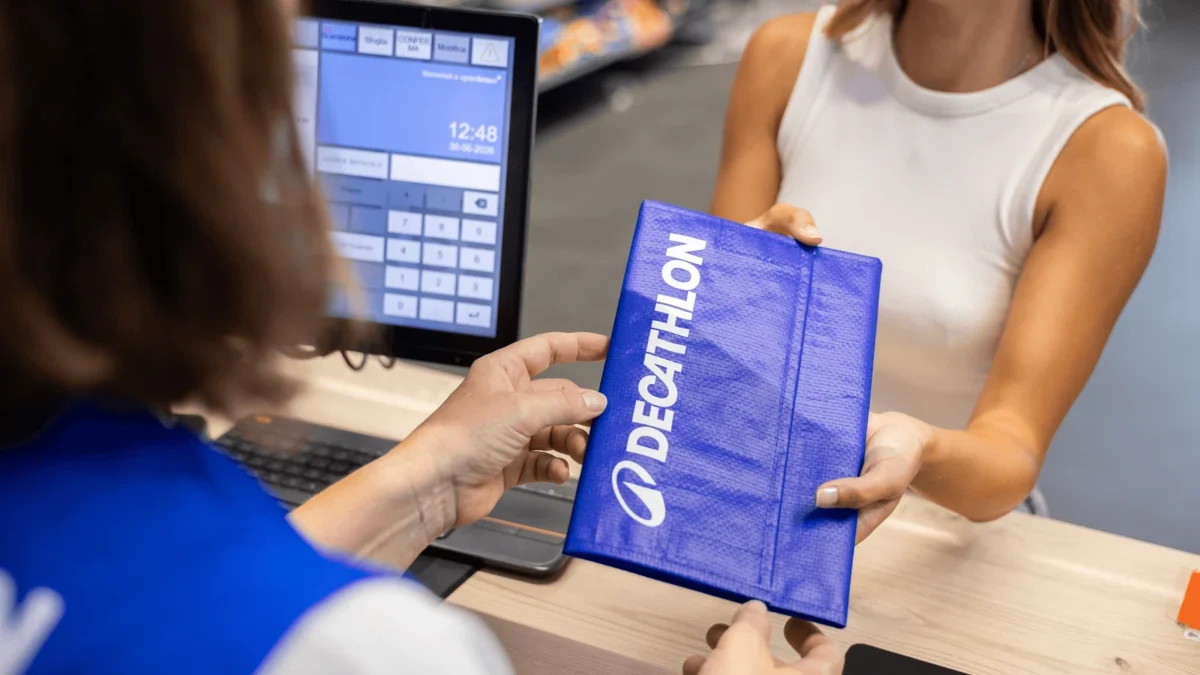
Movopack’s 8 September 2026 announcement describes a specific retail route: customers could select its reusable packaging at Decathlon Italia’s online checkout and return it through Decathlon stores in Italy, alongside the stated postal route. The release also describes a gift-card incentive. These are the operator’s reported service arrangements, not a return-rate audit or proof that unrelated operators accept one another’s packaging. The photograph shows the actual branded parcel used to illustrate that case. [retail-route]
The operational distinction is useful even without accepting the release’s environmental or satisfaction claims. A parcel can have an identifier before a shop agrees to receive it; this case adds a named receiving channel and a customer incentive. A retailer comparing shared-return proposals can therefore request three separate records: the formats each location accepts, the identity-and-event handover, and the onward-routing responsibility. Only a demonstrated handover between different operators would establish the additional interoperability sought by New ERA.
Commercial use and continuity are separate evidence
A retailer’s own account supplies a different kind of evidence from an industry intention. SAINT JAMES describes having offered Hipli reusable parcels over several years and explains the earlier checkout and return process. The page presents that option as a past arrangement and says the retailer is considering offering reusable parcels again. This is a documented retail-use case, not confirmation that its former option is available now or that it participates in New ERA’s shared network. [retailer-case]
Read alongside the identification guidance, the practical consequence is a third handover question: who remains responsible for a circulating asset when the service arrangement changes? A retailer evaluating a shared-return offer should ask for an active acceptance list, the identity-to-owner lookup, the recipient of the return event and the party responsible for onward routing. Those checks connect the retail offer, collection point and asset operator; a label by itself answers none of the commercial-responsibility questions.
The case and initiative support analysis of a design problem; they do not establish a measured European adoption trend. The next signal is an observed return through a named cross-operator route, with an accountable handover, rather than another list of organizations interested in cooperation. A historical commercial service and a current coordination plan must remain different entries in the evidence record.
Sources and scope
New Reuse Alliance. Reuse operators join forces to make reusable e-commerce packaging mainstream across Europe. 2026-10-14. Dated announcement; Connecting systems; Three priorities. One coordinated case, not independent uptake measurements or proof that a Europe-wide network is already operating.
GS1 Australia. Global Returnable Asset Identifier (GRAI). Accessed 2026-10-22. Definition; How are GRAIs used?. Identification guidance, not proof that New ERA adopted GRAI or that every operator accepts every parcel.
SAINT JAMES. La livraison eco-responsable avec Hipli. Undated retailer account, accessed23October2026; opening and former checkout/return process. Historical use and contemplated reinstatement, not confirmation of a current shared network.
Movopack / Decathlon Italia. Decathlon Italia and Movopack: checkout and in-store packaging returns. 8 September 2026. Operator-reported retail service and official press photograph; no independent return-rate or environmental audit.
The public corrections channel is currently inactive. Read our corrections policy.