
A reusable parcel can be durable, identifiable and still difficult to return. A refillable bottle can survive another trip yet remain outside the collection arrangements of a neighbouring retailer. These gaps explain why recent reuse initiatives are putting more emphasis on shared return infrastructure, common operating rules and the information that connects one participant to another.
October’s European e-commerce initiative, a French multi-retailer parcel experiment and Citeo’s latest ReUse development programme concern different markets and stages. They should not be combined into a fictional completed European network. Their common direction is narrower and more interesting: the reusable package is increasingly being developed together with the network that must recover and circulate it.
The return offer is part of the package
Container design answers whether an object can withstand its intended service. A reuse offer must also answer who accepts it, how it gets back, who checks its condition and how it becomes available for another use. The package’s physical life is useful only when those operations connect.
This is where a brand-specific pilot can encounter a different problem at expansion. A customer may purchase from several businesses whose return arrangements do not match. An operator may receive a package that it can identify but is not contracted to collect. A wash facility may be capable of cleaning a format without having predictable volumes or an agreed route to redistribute it.
Shared infrastructure aims to reduce some of those discontinuities. The proposition is not that every container should become identical. It is that different businesses can agree enough common rules for acceptance, information and onward handling to make a wider return offer credible. The resulting benefit has to be demonstrated in use; easier access on a network map alone does not establish higher returns.
European operators are working on the connections
New ERA’s October account of its reusable e-commerce initiative identifies interoperable return infrastructure, common labelling and identification, and a European deployment roadmap as priorities. It envisages compatible packages moving through connected collection networks while companies retain their own technologies and customer relationships. These are development objectives, not proof that all participating systems already accept one another’s parcels. [1]
The distinction between a shared foundation and a shared business is important. Operators can continue competing on packaging and service while agreeing how an item should be recognised and transferred. Compatibility does not require surrendering every proprietary design, but it does require agreement about the point at which another participant becomes responsible.
There are at least three interfaces to settle. A customer needs a recognisable return instruction. A collection point needs an acceptance rule and a way to route the item. The network needs an operational and commercial arrangement for what happens after receipt. A common label can support the first two; it does not by itself settle responsibility for transport, damage or redistribution.
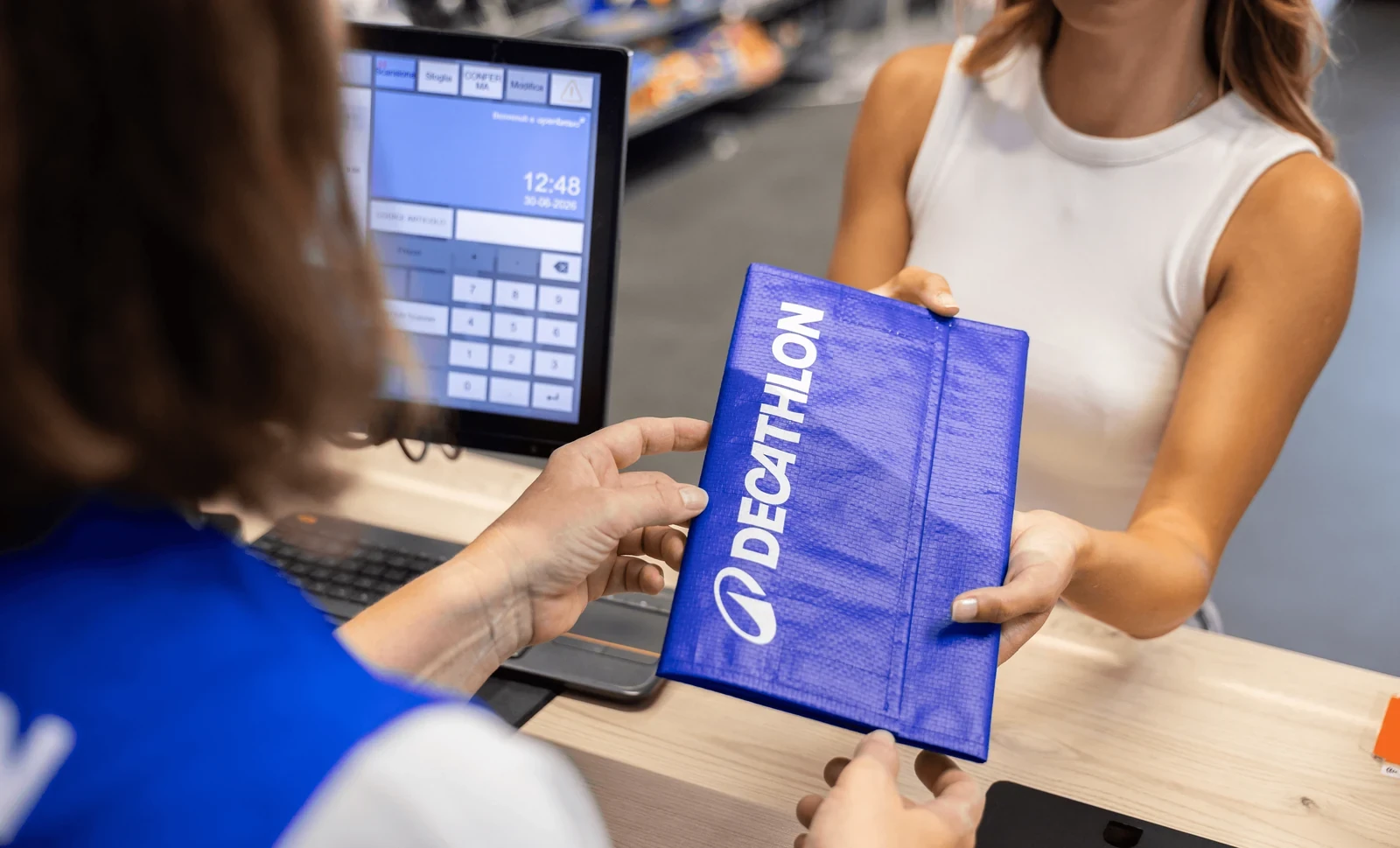
A concrete retailer example shows the boundary of shared infrastructure. Movopack’s 8 September 2026 announcement says its Decathlon Italia service added returns at Decathlon stores in Italy alongside postal returns. That is a company-reported retailer route, not proof that another operator will accept the same asset. It illustrates the difference between an agreed store network and the cross-operator arrangements New ERA proposes. [6]
French parcel trials test an operating proposition
Circul’R’s active e-commerce coalition describes merchants trialling reusable delivery packaging with postal and Pickup return routes, while participating-store returns are presented as a later extension. Its planned assessment includes return outcomes, logistics costs, consumer response, economic modelling and life-cycle analysis. The current page distinguishes coalition membership from the merchants described in the rollout paragraph; the two counts should not be treated as the same participation measure. [2]
That experiment is valuable because it asks whether a shared offer functions across merchants rather than merely whether a reusable mailer exists. It can expose where instructions, consumer effort and the operator’s collection arrangements fail to align. It can also test whether the existing parcel network carries the reverse flow as assumed.
The unanswered question is the combined outcome. Return rate without a time window can hide slow recovery. A high proportion returned does not reveal how many items are fit for another use. A low delivery cost can omit inspection or repositioning. Until the operating and environmental results are available on a clear basis, the experiment supports a direction of development rather than an established economic advantage.
Retail reuse is building similar foundations
Citeo’s 24 September 2026 statement describes a new development phase for French food-packaging reuse, including harmonised packaging, wider participation and support for washing infrastructure. It also says experimentation in the four original regions will continue through 2027. National ambition and wider availability of standardised formats should not be confused with a completed nationwide return system. [3]
The retail context differs from parcel returns, but the coordination problem is recognisable. A retailer’s acceptance point, a brand’s filling operation and a washer’s equipment have to handle compatible formats under workable rules. Standardisation can create more opportunities to share those operations; it cannot guarantee that volumes arrive at the right place and time.
Network density matters because the service has a geography. A system needs enough relevant use and return activity to support the operations between them. Adding collection points may improve convenience while adding handling obligations. Increasing the number of formats can widen the offer while making sorting or washing more complex. Those are design choices to test, not reasons to assume that bigger is automatically better.
Identity and acceptance are different layers
GS1 in Europe’s reuse materials describe asset identification through the Global Returnable Asset Identifier and data carriers such as 2D barcodes or RFID. This is a framework for identifying and tracking reusable assets, not evidence that a particular operator has deployed it throughout a network. [4]
An identifier can make an object legible to a receiving system. It cannot establish that the receiving business has agreed to take it. The operating design must connect the identity to the permitted action: accept, redirect, inspect, clean, quarantine or retire. Otherwise, the same code may produce reliable information without producing a usable return service.
Some records also concern different entities. A packaging-format code is not necessarily an individual asset’s history. An ownership record is not a record that cleaning occurred. A wash event, where a system records one, is not automatically proof of the required cleaning outcome. Data should identify what happened under an agreed process without promising more assurance than that process provides.
This makes governance as relevant as the data carrier. Participants need an agreed interpretation of events and responsibility for correcting errors. A technically interoperable database can still leave a business dispute unresolved if no one has agreed which event transfers custody or triggers a payment.
Regulation adds a systems question
The European Commission’s August 2026 PPWR FAQ discusses reuse systems separately from the design of reusable packaging. Its reuse chapter addresses participation, system coverage, rotations and differences between operating arrangements. This guidance helps explain why an operational network is becoming part of packaging development; it is not a substitute for checking the binding provisions for a particular pack and business. [5]
The boundaries matter. E-commerce packaging, business-to-business transport packaging and beverage formats should not acquire one universal target or timetable through a broad statement about reuse. Nor should the existence of a digital-identification framework be presented as a requirement that every item already carries the same code. Specific obligations, exceptions and relevant implementing measures need a provision-level check before a compliance decision.
For the industry trend, a more defensible observation is that businesses are developing arrangements capable of answering system-level questions. Who is responsible for circulation? What defines a completed trip? What happens when a package leaves the expected route? Those questions remain commercially important even when a particular legal target is not the immediate trigger.
A shared network still needs working economics

| Shared layer | Potential function | Evidence still needed |
|---|---|---|
| Return points | Offer compatible drop-off routes | Actual acceptance, returns within a stated period and onward routing |
| Identification | Recognise a format or individual asset | Operational data exchange and a clear interpretation of each event |
| Collection and washing | Pool handling or reconditioning operations | Quality, utilisation, transport distances and suitable process capacity |
| Settlement and redistribution | Allocate costs and move usable packs to demand | Agreements covering custody, loss, payment and available inventory |
A useful economic unit is a successfully completed service, not a container’s theoretical maximum lifetime. Manufacturing cost is spread over the uses actually achieved, with collection, cleaning, inspection, replacement and repositioning added. A package lost early cannot contribute the unused rotations appearing in its design specification.
Environmental comparison needs the same discipline. Return transport, washing conditions, energy, weight and replacement affect the result, along with the service being delivered. A shared route could improve utilisation in one setting and add avoidable movement in another. Without a defined functional unit and route assumptions, neither an environmental winner nor a break-even number is established.
Watch the agreements behind the network
The most informative next announcements would identify which operators now accept which packages, where that service operates and how responsibility passes between them. Published return and recirculation results would then show whether the network functions beyond its technical design.
Different systems may converge on compatible interfaces without converging on one container. That is why the emerging competition can concern the reach and reliability of an operating network as much as the package itself. The current initiatives point toward that possibility; verified acceptance, circulation and economics will determine whether they deliver it.
Sources
- New ERA. Reusable e-commerce packaging European initiative, October 2026 account. Objectives and three work priorities; not a completed-network claim.
- Circul’R. Coalition Réemploi E-commerce, active programme page checked 26 October 2026. Rollout routes and intended evaluation; future store route distinguished.
- Citeo. Réemploi: une ambition nationale commune, 24 September 2026, pages 1–3. Shared infrastructure and continuing regional experimentation.
- GS1 in Europe. Reuse. Asset-identification framework; no network-wide deployment independently verified.
- European Commission, DG Environment. PPWR Frequently Asked Questions, second edition, August 2026; reuse chapter, PDF pages 49–51. Guidance context only, not a package-specific legal conclusion.
- Movopack / Decathlon Italia. Retail and digital reusable-packaging service announcement, 8 September 2026. Company-reported store-return route; not demonstrated cross-operator interoperability.
Found an error? Read our corrections policy and contact the editors.