There is no single global sustainable-packaging market moving at one speed.
In late 2026, the regional signals examined here come from different mechanisms.
The selected records point to different pressures: EU compliance work, U.S. state EPR, UK disposal fees, China’s parcel activity, Philippine recovery obligations, Brazilian reverse logistics and Dubai’s specified single-use restrictions. They do not demonstrate how much packaging buyers have already switched or purchased.
Those are not the same kind of “growth.”
This outlook therefore does not rank regions from best to worst. It asks:
What mechanism is changing packaging demand in each market, and what evidence shows that the mechanism is real?
How to read this outlook
This outlook compares demand drivers rather than claiming that all seven markets have accelerating sales or package volumes.
It can mean:
- buyers must switch materials or constructions to remain compliant;
- producers face new recovery or recycled-content obligations;
- packaging volumes grow because the application itself is expanding;
- fees change the relative economics of one design versus another;
- an existing package category is removed from the market, creating substitution demand.
That distinction matters because a regulation can accelerate demand for a compliant package even when total packaging consumption is flat.
European Union: compliance redesign, with volume growth unmeasured
The clearest EU packaging signal in 2026 is regulatory implementation, not a continent-wide volume boom.
The Packaging and Packaging Waste Regulation began to apply on 12 August 2026. For food-contact packaging, the same date activated PFAS limits that immediately changed the compliance boundary for products placed on the EU market. [R2]
The Commission’s application announcement identifies the food-contact PFAS restriction and later phases for recyclability, recycled content and reuse. This outlook does not reproduce chemical thresholds, stock-transition advice or test procedures from an incompletely accessed legal guidance text. [R2]
For a buyer, these rules can create qualification needs such as:
- PFAS-controlled fiber foodservice packaging;
- better supplier declarations and analytical evidence;
- finished-package rather than raw-material compliance files;
- recycled-content documentation;
- designs that can survive future recyclability, labelling and reuse requirements.
The EU market signal is therefore strongest in qualification and redesign.
It is weaker as evidence of broad packaging-volume growth.
Recovery pathways remain specific to material, Member State and local collection system. A package that meets a design rule at EU level can still face different collection and end-market conditions after use.
Main constraint: implementation complexity. Buyers are dealing with PPWR obligations while several methodologies, delegated acts and implementing rules continue to mature. [R1]
12–18 month watchpoint: recycled-content calculation and verification rules, additional labelling implementation, EPR harmonisation work and how Member States translate PPWR obligations into procurement practice.
United States: state-level EPR changes the evidence buyers need
The United States remains difficult to describe with one sustainable-packaging demand curve.
State-level producer responsibility is the U.S. mechanism examined here.
California’s permanent SB 54 regulations became effective on 1 May. On 13 October, CalRecycle received the producer responsibility organization’s revised plan describing how producers intend to meet the law’s requirements for packaging and single-use plastic foodservice ware. [R3] [R3b]
Oregon DEQ says non-exempt producers of covered packaging, paper and foodservice ware must work with a producer responsibility organization, report supply data and pay fees. Its 28 August release reports a district-court decision allowing implementation to continue. That agency account is not a complete audit of all litigation or appeal status. [R4] [R4b]
These systems can alter the questions buyers and producers must resolve.
Packaging is no longer only a unit-cost decision. Producers increasingly have to ask:
- Is this format covered?
- What fee category will it enter?
- Can we demonstrate responsible end markets?
- Does recycled content or an impact-reduction action affect fees?
- Will the same package work in California, Oregon and other EPR states?
That is a real commercial demand signal for recyclability documentation, lifecycle data, PCR strategies and state-compatible packaging design.
But it is not a uniform U.S. standard.
Main constraint: fragmentation. A supplier selling nationally can face different producer definitions, covered products, reporting structures and fee mechanisms by state.
12–18 month watchpoint: California plan implementation, Oregon fee and life-cycle disclosures, and whether more state systems converge—or create a more expensive compliance patchwork.
United Kingdom: EPR is turning recyclability into a visible cost line
The UK’s 2026 signal is unusually financial.
PackUK’s operational plan for 2026–27 forecasts approximately £1.47 billion in chargeable packaging-disposal costs and about £1.558 billion in total fees when administration and impairment are included. [R5]
The scheme’s second year also introduces recyclability-based fee modulation. [R5] [R6]
Illustrative estimates published ahead of the year showed how large the design incentive can become. For example, plastic packaging was modelled around an amber base of roughly £455 per tonne, with a higher red fee for less recyclable material and a lower green fee for more recyclable material. Those figures were planning estimates rather than final producer liabilities. [R6]
The commercial mechanism is straightforward:
recyclability is becoming part of packaging cost, not only a sustainability claim.
That can accelerate demand for mono-material constructions, design changes that improve RAM classification, better packaging-data systems, closed-loop reporting where applicable and supplier evidence that supports material classification.
The UK therefore has a documented fee mechanism that can encourage packaging redesign even if aggregate consumption is not accelerating.
Main constraint: fee uncertainty and data quality. PackUK has already had to manage resubmissions and changing producer data, and year-two liabilities are sensitive to reported tonnage and recyclability classification.
12–18 month watchpoint: actual year-two producer liabilities and how quickly fee modulation changes specifications rather than simply becoming another cost passed through the supply chain.
China: enormous parcel growth makes packaging efficiency a scale problem
For China, this outlook examines express delivery rather than claiming to measure all packaging demand.
By the end of June, the country had already exceeded 100 billion express parcels for the year, according to State Post Bureau data reported by the State Council. [R7]
That volume creates one of the world’s largest packaging-efficiency problems. It also creates a powerful adoption channel.
Chinese authorities reported that express-packaging standardisation had reached 86% and that recycled and reusable cartons had been used more than 1.6 billion times since revised express-delivery regulations took effect in 2025. [R7]
The 1.6-billion figure is cumulative reported uses, not 1.6 billion unique cartons, a 2026-only flow or an actual recycling rate. The 86% standardization measure and 2030 green-standard target have different definitions.
In July, China’s postal-industry plan for 2026–2030 set a target for 80% of packaging used by express-delivery companies to meet green standards by 2030. [R8]
China is therefore different from the EU or UK.
The demand mechanism is not primarily EPR fee modulation. It is massive logistics volume plus government-led standardisation, reduction and reuse.
That favors technologies and formats that can remove secondary packaging, standardise dimensions, reduce material weight and circulate reusable transport packaging at very high throughput.
It does not automatically imply equal growth for compostable foodservice packaging, bioplastics or every “green” material category.
Main constraint: scale itself. Small per-parcel material increases become enormous when multiplied across hundreds of billions of shipments, so low-cost reduction and standardisation may outcompete premium material substitution.
12–18 month watchpoint: implementation of the 15th Five-Year postal plan, reusable logistics packaging and whether “green standards” translate into measurable procurement requirements across the largest carriers and platforms.
Philippines: rising EPR recovery obligations
Southeast Asia should not be treated as one regulatory market.
The Philippines is the Southeast Asian case selected here; this is not a comparison of every country in the region.
Republic Act 11898 requires obliged enterprises generating rigid or flexible plastic packaging to recover or offset the relevant footprint. Section 44-F sets 60% by 31 December 2026,70% by 31 December 2027 and 80% from 2028, measured against the immediately preceding year’s plastic product footprint. Section 44-G requires independent third-party audit of reported performance. [R10]
An August 20 Presidential Communications Office release reports DENR enforcement activity, including 155 show-cause letters to potential obliged enterprises. A show-cause letter is a request to explain possible noncompliance, not a final finding against every recipient. [R11]
Detailed 2024 audit percentages from the draft are not reproduced here because the underlying audit and complete official briefing could not be examined in this review. They should not be used to infer a national recycling rate.
The packaging-market implication is still clear: compliance demand for recovery services, auditable documentation and plastic-footprint management is increasing.
Main constraint: proving high-quality recovery rather than only meeting a mass-accounting target. The economics and quality of flexible-plastic recovery remain particularly challenging.
12–18 month watchpoint: 2027’s 70% recovery target and whether enforcement becomes stricter as obligations rise.
Brazil: the framework makes plastic packaging a traceable reverse-logistics obligation
Brazil’s plastic-packaging market entered 2026 with a much more explicit national reverse-logistics framework.
Decree No. 12,688, issued in October 2025, established recovery and recycled-content targets and became an important operating rule for producers and importers in 2026. [R12]
The decree sets a national plastic-packaging recovery target of 32% for 2026 and a 22% national recycled-content target for plastic packaging. [R12]
Article 34 phases in recycled-content targets from January 2026 for large companies and July 2026 for small and medium companies. The food-contact qualification is narrower than a blanket exemption: Article 33(3) recognizes specifically regulated packaging, while MMA’s corrected 20 May guidance says legally permitted PCR use must meet the targets even in food-contact packaging. [R12] [R13]
Where sanitary or equivalent rules restrict PCR use, the guidance allows relevant mass to be excluded and requires the applicable restriction to be identified in reporting. Brazil’s 22% figure is therefore neither a universal food-package rule nor a universal food-package exemption. [R13]
For covered packaging, however, the market mechanism is strong: producers and importers must support reverse-logistics systems; recovered mass must be documented; PCR content becomes a procurement variable; regional recovery targets matter; and returnable packaging can affect recovery obligations under specified rules.
The 32% recovery and 22% recycled-content figures are distinct target indices in Annexes I and II, not measured 2026 outcomes. The corrected MMA guidance distinguishes their base/target/reporting years; it identifies 30 July 2027 for the relevant first reporting. It is nonbinding implementation guidance, not an amendment to the decree. [R12] [R13]
Brazil therefore creates demand not only for recycled resin but also for traceability, collection partnerships and verifiable recovery.
Main constraint: geography. Brazil’s national system has to function across very different regions, collection densities and recycling infrastructures.
12–18 month watchpoint: implementation quality, traceability and how the 2027 national targets—33% recovery and 24% recycled content—affect resin sourcing and packaging design. [R12]
Dubai: specified foodservice restrictions create substitution pressure
The strongest Middle East example in 2026 is Dubai, not the region as a whole.
From 1 January, Dubai’s final phase of its single-use plastic restrictions prohibited specified plastic plates, food containers, tableware and beverage cups and lids, with defined exemptions. [R14] [R15]
Resolution 124/2023 applies within Dubai, including free zones. Article 6 exceptions include specified thin bag rolls and garbage bags, plus marked export/re-export goods subject to its conditions. The export exception does not permit domestic UAE sale. An alternative material still needs its own applicable use and safety evidence. [R15]
That is a direct substitution mechanism.
A foodservice operator that previously bought a prohibited single-use plastic format cannot solve the problem with better recycling documentation. It needs another allowed format or a reusable system.
This creates commercial openings for fiber and paper foodservice formats, reusable serviceware, alternative-material cups and containers where permitted, and suppliers able to document heat, oil, leak and food-contact performance.
But “Dubai ban = Middle East market shift” would be too broad.
Main constraint: substitution performance. Hot food, sauces, beverages and delivery require alternatives that can replace plastic operationally, not merely legally.
12–18 month watchpoint: enforcement experience, buyer standardisation around approved alternatives and whether similar restrictions deepen elsewhere in the Gulf.

Seven markets, seven different demand mechanisms
| Region / market | Documented policy or sector signal | Primary mechanism | Main constraint | Watchpoint |
|---|---|---|---|---|
| EU | PPWR application and food-contact PFAS limits | Compliance-driven redesign and qualification | Implementation complexity / local recovery variation | Recycled-content and labelling methods [R2] |
| United States | California/Oregon EPR implementation | State-level producer fees and recovery obligations | Regulatory fragmentation | California plan / Oregon disclosures [R3b] |
| United Kingdom | £1.47 bn forecast disposal-cost system and fee modulation | Recyclability affects producer cost | Data/fee uncertainty | Actual year-two liabilities [R5] |
| China | >100 bn express parcels by end-June; green-packaging targets | Scale + logistics standardisation + reuse | Very low unit-cost tolerance at massive volume | 2030 green-standard implementation [R7] |
| Philippines | 60% plastic-packaging recovery target in 2026 | Audited EPR recovery compliance | Recovery quality / flexible plastics | 70% target in 2027 [R10] |
| Brazil | 32% recovery / 22% recycled-content targets for 2026 | Reverse logistics + PCR procurement | Regional infrastructure / traceability | 2027 target step-up [R12] |
| Dubai | Ban on specified single-use plastic foodservice formats | Direct material/format substitution | Alternative performance and approved use | Enforcement and buyer standardisation [R15] |
Selected jurisdictions and different metrics: no comparable market-growth ranking. Brazil’s PCR target has conditional sanitary restrictions, not a blanket food-package exemption; Philippine percentages concern obliged-enterprise prior-year footprints. China’s parcel/standardization/use measures are not sustainable-packaging revenue. [R10] [R12] [R13]
Which demand driver fits which packaging application?
The answer depends on what is being purchased.
For PFAS-controlled and PPWR-ready food-contact packaging, Europe has one of the clearest compliance-driven demand signals.
For EPR-ready designs, lifecycle evidence and recyclability data, California, Oregon and the UK are making packaging economics more explicit.
For high-volume lightweight, standardized and reusable logistics packaging, China’s reported express-delivery volumes create a very large application base, without measuring the sustainable-packaging share.
For recovery services and audited plastic-footprint management, the Philippines and Brazil are raising obligations in ways that directly affect producers.
For plastic-to-alternative foodservice substitution, Dubai offers a concentrated, regulation-driven market.
Those are different demand pools. They should not be combined into one global CAGR.
Regional outlook conclusion
The most important 2026 trend is not that sustainable-packaging sales or package volumes are accelerating everywhere.
It is that more markets are attaching packaging decisions to an operating mechanism: EU compliance, U.S. state EPR, UK fee modulation, Chinese logistics scale, Philippine recovery targets, Brazilian reverse logistics and PCR, and Dubai substitution rules.
For suppliers, the opportunity is therefore regional and application-specific.
The winning question is not: “Which country has the biggest sustainable-packaging market?”
It is:
“Which rule, cost, infrastructure constraint or application trend is forcing the buyer to change packaging—and can we supply the format that solves that exact problem?”
That is the regional demand signal worth tracking into 2027.
Methodology and editorial note
Seven selected jurisdictions are compared through documented policy and sector mechanisms; purchasing-power, supply and cost data are not sufficiently aligned to rank them. Relevant Brazil decree/annexes and the corrected MMA guidance, Dubai resolution, and the Philippine statute reproduced by Lawphil were read. The official Supreme Court indexed record corroborated the Philippine target but direct access failed. The PCO enforcement release was accessible as indexed official text, not its underlying audits; detailed audit percentages were omitted. EU coverage is limited to accessible Commission announcements/overview, not an unread full threshold, stock-transition or analytical-method interpretation. Oregon litigation is attributed to the agency release. These are not individualized compliance opinions or measured cross-region sales effects. Sources checked 20 October 2026. No supplier audit, factory inspection or independent market census was performed for this article.
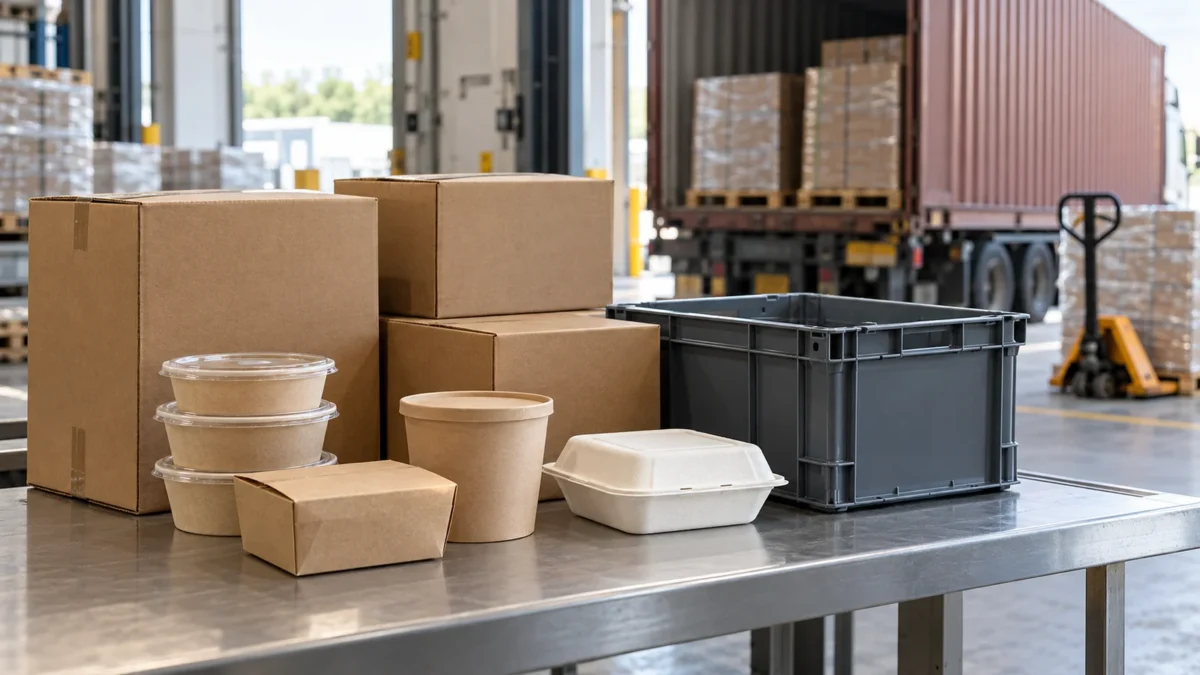
The main image is a visibly disclosed AI-generated editorial illustration of a generic scene, not a real named company, product, shipment, experiment or facility. The body figure is an original source-grounded explanation.
Official sources and reference notes
- [R1] European Commission. Packaging and Packaging Waste Regulation Implementation. Live implementation overview. Resources, Actions and timeline. Official overview read; timeline deadlines are not proof every listed measure was adopted. Accessed 20 October 2026.
- [R2] European Commission. New EU rules on packaging enter into application. 11 August 2026. Application date, food-contact PFAS restriction, Next steps. Full relevant official announcement read. Detailed thresholds, stock-transition and test procedures deliberately not reproduced without a full provision check. Accessed 20 October 2026.
- [R3] CalRecycle. SB54 permanent regulations / Packaging EPR. Live state record. Permanent regulations effective1 May 2026. Official rulemaking record read; separate plan receipt is not plan approval. Accessed 20 October 2026.
- [R3b] CalRecycle. Packaging EPR program. Live program record. 13 October 2026 revised CAA plan receipt. Official program status read at source cutoff; no approval inferred. Accessed 20 October 2026.
- [R4] Oregon DEQ. Producers of Covered Products. Live producer guidance. Obligations, exemptions and implementation. Official guidance read. Coverage/size exemptions apply; not every supplier is automatically obligated. Accessed 20 October 2026.
- [R4b] Oregon DEQ. Oregon Recycling Modernization Act Upheld as Constitutional. 28 August 2026. Agency account of district-court decision. Official release read via web reader; not a complete court judgment or appeal-history audit. Accessed 20 October 2026.
- [R5] PackUK / Defra. PackUK operational plan:2026 to 2027. Updated 10 August 2026. Financial forecasts and total forecast fee table. Full relevant plan read; GBP 1.47bn disposal+28m administration+60m impairment=1.558bn forecast, not collected revenue. Accessed 20 October 2026.
- [R6] PackUK / Defra. Year 2 illustrative waste disposal fees. 19 December 2025 illustration. Table 1 plastic green/amber/red; Year 2 fee method. Original official table read; rounded planning model, not final individual liability. Accessed 20 October 2026.
- [R7] State Council / Xinhua citing State Post Bureau. China’s express delivery volume tops100 billion parcels by end June. 5 July 2026. End-June milestone,86% standardization and cumulative carton uses. State-reported sector data; repeats/uses not unique cartons or recycling rate. Accessed 20 October 2026.
- [R8] State Council / Xinhua. China unveils postal industry plan for 2026–2030 period. 29 July 2026. 2030 green-packaging expectation. Official state announcement;80% is a target, not achieved share or independent environmental certification. Accessed 20 October 2026.
- [R10] Philippines Congress. Republic Act No 11898, inserting Sections 44-C–44-G in RA9003. 23 July 2022. Sections 44-D,44-F and 44-G: obliged enterprises, prior-year footprint and audit. Relevant original statute reproduced by the Lawphil Project read. Official Supreme Court record corroborates title/target but direct retrieval failed. Not a national recycling statistic. Accessed 20 October 2026.
- [R11] Presidential Communications Office. Marcos admin warns companies of their obligations under EPR Act 2022. 20 August 2026. Opening and 155 show-cause letters reported from DENR. Official indexed release text read; direct page unavailable. Detailed audit percentages omitted; no finding that every recipient violated the law. Accessed 20 October 2026.
- [R12] Presidency of Brazil. Decreto nº12.688, de21 de outubro de 2025. 21 October 2025. Articles 2,4,33–34; AnnexesI–II,2026/2027 columns. Portuguese official act and relevant annexes read; scope/metrics not translated into measured outcomes. Accessed 20 October 2026.
- [R13] Brazil MMA / SINIR. Comunicado LR-DGR/MMA nº002/2026 — Retificado. Corrected 20 May 2026. Sections 6.1–6.2,7.1,7.5–7.7 and 8.1; PDF pp 12–16. Relevant 16-page official clarification read; nonbinding guidance. Food-contact exception is conditional; legally permitted PCR remains within targets. Accessed 20 October 2026.
- [R14] Dubai Municipality. Dubai to enforce final phase of single-use plastic ban from 2026. 24 December 2025. Final phase from 1 January 2026. Official announcement read; not proof every restricted product has disappeared from sale. Accessed 20 October 2026.
- [R15] Government of Dubai. Executive Council Resolution No 124 of 2023. 2023 official English rendition. Articles 3,5(d) and 6: territorial scope, listed products and exceptions. Relevant primary text read. Export/re-export exceptions require marked exports and do not permit domestic sale; no general GCC conclusion. Accessed 20 October 2026.
The public corrections channel is currently inactive. Read our corrections policy.