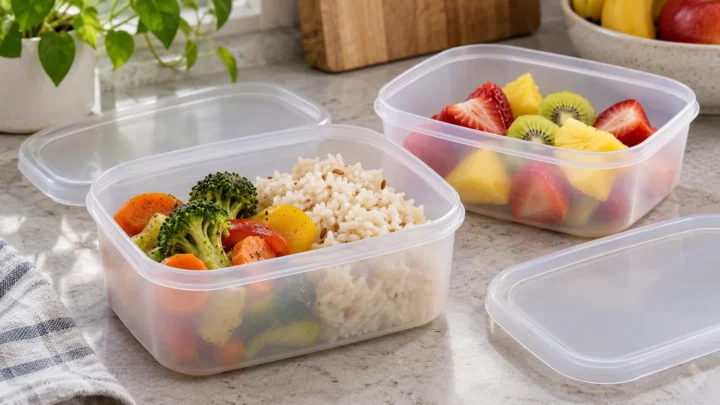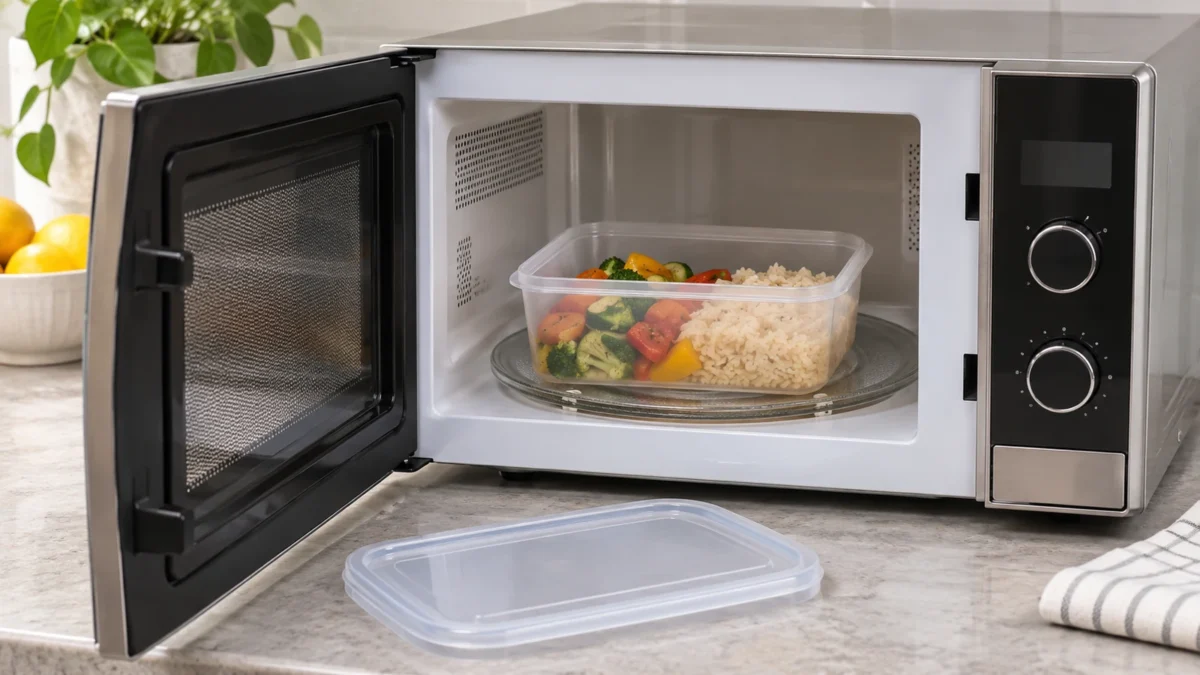
Short answer: Some plastic containers can be used in a microwave, but not all of them. Use a container only when the finished product is identified as microwave-safe for the way you intend to heat food. A plastic takeout tub, yogurt pot or storage box is not automatically suitable for reheating simply because it once held food. If the instructions are missing or unclear, transfer the food to suitable glass or ceramic cookware.
The difference matters because the label describes an intended use; the word plastic describes an enormous family of materials. Container resin, additives, wall thickness, lid construction, food type and heating conditions can all affect whether a particular item is appropriate.
How can you tell whether a plastic container is microwave-safe?
Start with the manufacturer’s actual instructions. Look for a microwave-safe statement or an unambiguous microwave-use symbol on the container, its packaging or an official product specification. Read restrictions about heating time, food temperature, lid position and whether the item can be reused. A general food-contact claim or recycling symbol answers a different question.
The USDA Food Safety and Inspection Service advises using utensils labeled microwave-safe. It also identifies cold-storage tubs such as margarine and whipped-topping containers as unsuitable for microwave cooking. That advice is more useful than guessing from the appearance of a clear or opaque box.
| Container or packaging | What to check | Practical decision |
|---|---|---|
| Reusable box explicitly labeled microwave-safe | Manufacturer’s limits; lid instructions; condition of the box | Use only as directed. |
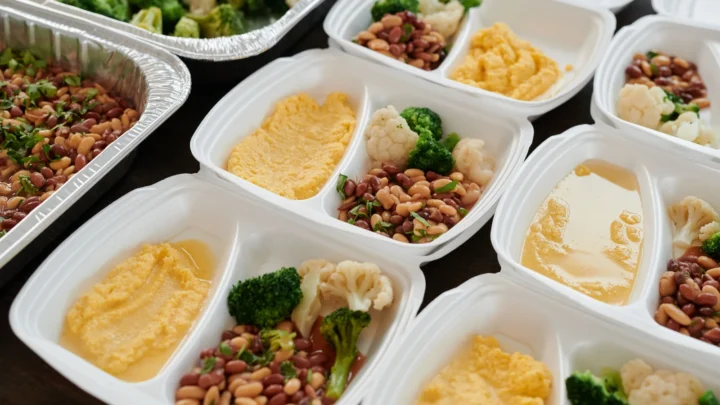
| Takeout container with no heating instructions | Whether the restaurant or maker identifies it as suitable for reheating | Transfer food if suitability cannot be confirmed. |
| Yogurt, margarine or whipped-topping tub | Originally made for chilled storage, not cooking | Do not use for microwave heating. |
| Foam food tray | Whether it was intended for microwave cooking | Do not microwave an ordinary foam tray. |
| Plastic film or wrap | Product instructions, venting and whether the film may contact food | Use only a specified microwave-suitable wrap as directed; prevent direct food contact when required. |
| Unknown plastic lid | Lid material and manufacturer’s separate heating instructions | Remove or replace if its microwave suitability is not established. |
This table is a screening guide, not a laboratory assessment or authorization of any named product.
Why can a microwave damage a plastic container?
A microwave oven heats food primarily through interaction of microwave energy with components of the food, especially water. The container can then absorb heat from the hot food, even if it is not itself strongly heated by microwave energy. The US Food and Drug Administration explains that some plastic containers may melt from the heat of their contents.
That is why a container may appear stable when heating a small amount of water yet deform when used for a different meal. Very hot food, steam buildup and prolonged heating can create conditions the package was never designed to withstand. Visual stability also cannot prove chemical suitability: a container can look normal without supplying evidence about the exact contact substances and intended conditions of use.
The relevant question is not simply whether the polymer can withstand a high temperature in a material data sheet. The package also has seams, molded corners, closures, inks, pigments and possibly multiple different components. Each can impose a separate limitation.
Does the recycling number tell you whether a container can go in the microwave?
No. A resin identification number helps identify a broad plastic family for sorting and material identification. It is not a microwave-use instruction.
For example, number 5 generally denotes polypropylene (PP), a polymer frequently used in food containers. As explained in our polypropylene food-safety guide, some finished PP containers are designed for reheating, but that does not establish microwave suitability for every PP item. Likewise, a container without a visible code should not be assumed unsafe or safe solely on that basis: the decisive information is the finished-product guidance.
Food-contact compliance and microwave suitability must also be kept separate. A package intended for cold salad can be suitable for contact with that food without being qualified for hot leftovers. US food-contact regulatory evaluations use defined food types and conditions of use, including a distinct category for certain chilled or frozen foods reheated in their containers.
Changing to disposable paper is not an automatic solution either: paper plates need their own microwave-use checks.
Can you microwave a plastic takeout container?
Only if the finished takeaway container is intended for microwave reheating, and only within its instructions. A restaurant may package food in a vessel selected for transport, leak resistance, refrigeration or shelf display. None of those functions is proof that the same vessel can withstand reheating.
Before heating a takeaway meal, check the base, lid and any separate sauce cup individually. A microwave-suitable base may have a clear lid that is intended for cold display only. Do not assume that a hinged lid, snap-on lid or sealing film has the same rating as the bottom tray.
When no clear instructions exist, use microwave-suitable glass or ceramic cookware and a suitable cover. Avoid tightly sealed vessels; follow the cookware and oven manufacturer’s instructions for safe venting. Keep the food-heating guidance separate from food-storage rules: even a suitable container does not guarantee that leftovers have reached an appropriate serving temperature throughout.
Is it safe to microwave plastic marked BPA-free?
“BPA-free” does not mean “microwave-safe.” It addresses the absence or use of one particular substance, not the temperature range, finished formulation, migration behavior or approved use conditions of the container. The same distinction applies to marketing claims such as “food grade,” “non-toxic” or “reusable.”
The FDA’s food-contact materials guidance explains that the regulatory status of a material depends on the individual substances that make up the article and their applicable specifications and use limitations. No single reassuring word on a package replaces that assessment.
What about hot, fatty foods and longer heating times?
Foods differ in composition, and a microwave may heat unevenly. Regulatory evaluations of food-contact materials distinguish among food categories and heating conditions because exposure cannot be reduced to a single universal test. Fatty meals, dense leftovers and long heating intervals should not be treated as equivalent to warming water in a short demonstration.
Do not invent your own temperature threshold for a container whose manufacturer provides none. If the instructions specify limits, follow them. If the item warps, melts, develops cracks or no longer closes normally, stop using it for that purpose. Do not rely on an informal “water test” to prove that an unknown food package meets food-contact requirements.
Can you reuse disposable plastic containers in the microwave?
Do not assume a single-use container becomes a reusable microwave container after washing. Intended service life matters. Some products are designed for repeat heating and washing; other packaging is intended for a particular first use or for cold food only.
Reused containers should be checked against the manufacturer’s instructions and their physical condition. Strong discoloration, cracking, distortion or damaged closures are reasons to stop using the item for heating. Switching to dedicated microwave cookware is a straightforward option when provenance or use limits are uncertain.
Quick checklist before reheating food
- Identify the actual product. Find the brand, model or manufacturer instructions rather than relying only on a recycling code.
- Confirm microwave suitability. Look for an explicit microwave-use statement for the finished container and the intended task.
- Check every component. The lid, film, valve and base may use different materials.
- Follow limits and venting directions. Do not override instructions on heating duration, temperature or lid position.
- Inspect condition. Never continue heating a container that is cracked, distorted or visibly deteriorating.
- When uncertain, transfer the food. Microwave-suitable glass or ceramic cookware avoids guessing about an unknown takeout pack.
Frequently asked questions
Can I microwave a plastic container for 30 seconds?
Short heating time alone does not establish suitability. The food, container construction and manufacturer’s instructions still matter. If no microwave-use guidance exists, transfer the food.
Is polypropylene plastic always microwave-safe?
No. PP is a polymer family, not a finished-product microwave rating. Use a PP container only when its own instructions confirm the intended heating use.
Does a microwave-safe container make all leftovers safe to eat?
No. The container rating addresses the suitability of the item for an intended use. Food must still be stored, reheated and handled appropriately, including avoiding cold spots from uneven heating.
Sources / References
- USDA FSIS, Are utensils microwave safe?
- USDA FSIS, Can chemicals from packaging migrate into food?
- FDA, Microwave Ovens
- FDA, Determining the Regulatory Status of Components of a Food Contact Material
- FDA, Food Types & Conditions of Use
Sources checked 7 November 2026. This explanatory guide does not test or certify a particular product. Human specialist review is not claimed.
Found an error? Read our corrections policy and contact the editors.