Short answer: Polypropylene (PP) can be used to make food-contact containers, lids and utensils that comply with applicable safety requirements. But a product is not automatically safe for every food or temperature simply because it is made from PP or carries recycling code 5. The finished article—including its additives, colorants and coatings—must be suitable for the intended food and conditions of use.
The useful question is not whether all polypropylene is “food safe.” It is whether this PP container is appropriate for this food, at this temperature, for this length of time, in the country where it will be sold or used.
What is polypropylene, and why is it used for food containers?
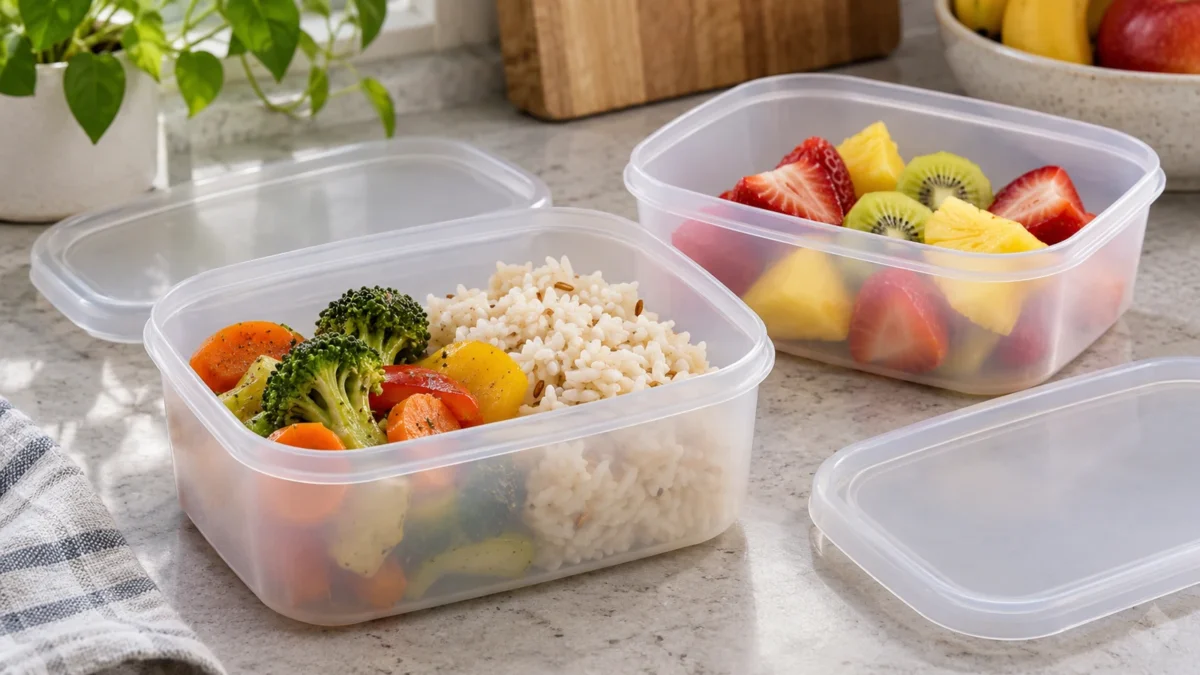
Polypropylene is a thermoplastic polymer made from propylene. It can be processed into rigid tubs, takeaway boxes, cups, caps, lids, films and other articles. Packaging makers choose different PP grades and constructions for stiffness, toughness, shape retention, sealing or other performance needs.
Those properties help explain why PP is widespread in food packaging. They do not prove that all PP grades and products have identical regulatory status. A printed, filled or multilayer finished article is more than its base resin. This is the distinction behind what food grade means.
Is polypropylene approved by the FDA for food contact?
Specific forms and uses of polypropylene are addressed under US food-contact regulations, including 21 CFR § 177.1520, Olefin polymers. The regulation describes eligible polymer types and relevant specifications and limits. It is not a blanket approval for every container marketed as “PP.”
The FDA explains that determining the regulatory status of a finished food-contact material requires looking at the individual substances making up the article. The applicable authorization route, identity and specifications of substances, and conditions of use must all be checked. An effective Food Contact Substance Notification, for example, is limited to the identified manufacturer, substance and intended use described in that notification.
For consumer copy, “FDA approved PP plastic” is therefore an overly broad shortcut. More useful documentation identifies a specific formulation, legal basis and intended food-contact use. If a supplier claims FDA compliance, ask exactly which regulation or notification covers the relevant components and what restrictions apply.
Does polypropylene meet European food-contact rules?
PP food-contact articles sold in the EU must be assessed against the relevant EU legal framework, not only US requirements. The general rule in Regulation (EC) No 1935/2004, Article 3, addresses transfer of constituents to food under normal or foreseeable use, including protection of health and food characteristics.
For plastic materials and articles within its scope, Commission Regulation (EU) No 10/2011 sets requirements concerning authorized substances, restrictions and migration, along with compliance documentation and other provisions. The linked consolidated version is dated 14 July 2026; the consolidated text is a documentation aid, so the applicable authentic acts and amendments should be checked for a formal legal decision.
Commission Regulation (EC) No 2023/2006 addresses good manufacturing practice for food-contact materials. These are separate layers of compliance: a food-contact polymer formulation, a finished molded article and the conditions in which the article is used all matter.
What makes one PP container suitable and another unsuitable?
Two containers may both be PP but have different fillers, pigments, processing aids, wall thicknesses or attached materials. One may be intended for chilled sauce; another for hot-fill service or reheating. The polymer family alone does not tell you which use was evaluated.
| Claim or marking | What it may indicate | What it does not establish by itself |
|---|---|---|
| PP or recycling code 5 | The identified base-polymer family. | Food-contact compliance or microwave suitability of the finished item. |
| Food grade | A supplier’s description of intended food-contact use. | Which legal requirements and conditions have actually been met. |
| Food-contact declaration | A compliance statement for a defined product, jurisdiction and scope. | Permission to use it outside the stated conditions. |
| Microwave-safe label | Suitability for the manufacturer’s specified microwave use. | Unlimited heating time, oven use or suitability of every lid and accessory. |
| Reusable container | Intended repeat service under defined directions. | Indefinite reuse when cracked, distorted or used contrary to instructions. |
The table distinguishes evidence types; it is not a compliance determination for an individual SKU.
Is polypropylene safe for hot food?
Some PP packages are designed for hot-food applications, but their suitability depends on the actual article and intended exposure. “Hot food” can mean a brief hot fill, a prolonged hold, steam exposure, a reheating cycle or cooking. Those are not interchangeable conditions.
FDA food-contact guidance distinguishes food types and conditions of use, including different hot-fill, refrigeration and reheating scenarios. A supplier should therefore provide a temperature/time/food-contact basis that matches the intended application, rather than citing PP’s melting point as proof of food-contact suitability.
Heat performance is also a mechanical question: a package may soften, distort, leak at a seam or lose lid fit before any dramatic melting is visible. Such performance checks are not the same thing as regulatory migration testing, and both may be relevant to an actual foodservice use.
Can you microwave polypropylene containers?
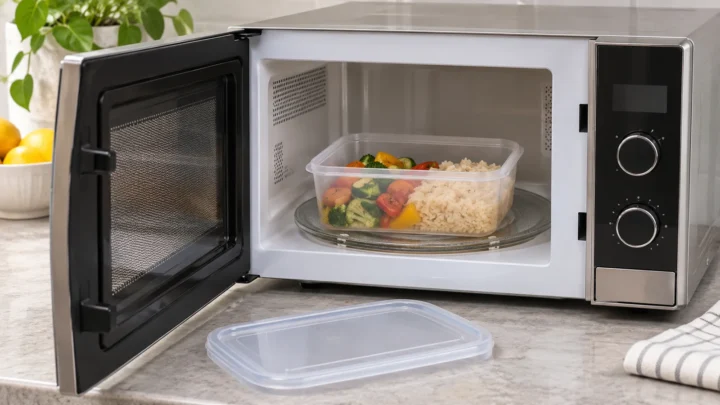
Only when the finished container is identified as microwave-suitable for the intended use. The recycling code “5” does not grant microwave permission.
The USDA Food Safety and Inspection Service advises using microwave-safe utensils and warns against heating foods in cold-storage tubs not intended for microwave cooking. A PP base and its lid may also have different use instructions. If a takeaway container has no reliable heating guidance, transfer the food to appropriate microwave cookware.
Food-contact compliance for room-temperature or refrigerated storage should never be silently extended to cooking or prolonged reheating. The intended conditions have to match. Our guide to microwave use of plastic containers applies that check to bases, lids and reheating instructions.
Does BPA-free mean a polypropylene container is food safe?
No. BPA-free addresses a particular chemical claim; it does not replace an assessment of other substances, restrictions, migration or intended use. The FDA’s food-contact framework examines the status of components of a material, not whether a marketing label happens to mention one chemical.
Likewise, phrases such as “non-toxic” or “eco-friendly” should not be read as legal proof of suitability for a hot oily meal. A food-contact claim needs an identified destination jurisdiction and defined use conditions.
What about recycled polypropylene in food packaging?
The presence of recycled content introduces further questions about feedstock history, contamination control, process qualification, traceability and the legal pathway applicable to the destination market. A recycled PP article should not be presumed suitable for food contact just because virgin PP of a similar appearance is often used in containers.
Nor is a product automatically unsuitable merely because it contains recycled material. The appropriate conclusion depends on the actual recycling process, finished formulation and applicable requirements. For purchasing decisions, request evidence specific to the recycled input and converted finished article.
What documents should a buyer request for a PP food container?
- Finished-product identity: exact SKU, resin grade or grades, color and relevant additives or coatings.
- Destination market: which country’s food-contact requirements are being claimed.
- Regulatory basis: relevant US regulation/notification or EU declaration and supporting basis, as applicable.
- Food types: intended use with aqueous, acidic, fatty, dry or other relevant foods.
- Time and temperature: cold storage, hot fill, reheating or another defined condition.
- Finished-article testing: migration or other supporting data appropriate to the claimed market and construction.
- Accessories: separate confirmation for lids, seals, liners, printing and assembled sets.
- Change control: what must be rechecked if resin supplier, colorant, recycled content or processing changes.
A declaration without a meaningful product identity or intended-use scope is much less useful than one tied to a specific construction.
Frequently asked questions
Is PP plastic safe for storing leftovers?
It can be, when the container is intended for that food-storage use and is used according to its instructions. Do not assume cold-storage suitability also means microwave suitability.
Is plastic number 5 food safe?
Number 5 identifies polypropylene. It is not a certificate, laboratory result or unconditional food-contact authorization for the finished article.
Are all polypropylene takeout boxes microwave-safe?
No. Confirm the specific container and lid instructions. Different grades, designs and intended uses may have different limitations.
Does EU compliance mean FDA compliance?
No. The regulatory systems and evidence requirements are not interchangeable. A manufacturer selling in both markets must consider the applicable requirements in each.
Sources / References
- 21 CFR § 177.1520, Olefin polymers
- FDA, Determining the Regulatory Status of Components of a Food Contact Material
- FDA, Food Types & Conditions of Use
- Regulation (EC) No 1935/2004
- Regulation (EU) No 10/2011, consolidated 14 July 2026
- Regulation (EC) No 2023/2006, consolidated 16 March 2025
- USDA FSIS, Are utensils microwave safe?
Sources checked 7 November 2026. This explanatory guide does not test or certify a particular product. Human specialist review is not claimed.
Found an error? Read our corrections policy and contact the editors.