BW Converting announced on 23 November 2026 that it had acquired Expert Srl, a flexographic press manufacturer near Verona, Italy. BW says the deal adds Expert’s central-impression (CI) and stack flexo presses to its flexible-packaging portfolio for film, paper and laminates. Osborne Clarke, which acted for BW Converting’s parent Barry-Wehmiller, confirmed its role in the acquisition on 25 November. The buyer’s announcement gave no transaction value. [1] [2]
The deal broadens the equipment range. For a converter, its value depends on which configurations fit the order book and who can service the press through a difficult job or a breakdown. The announcement gives buyers no comparable production-trial data for evaluating those decisions.
Why add both CI and stack flexo?
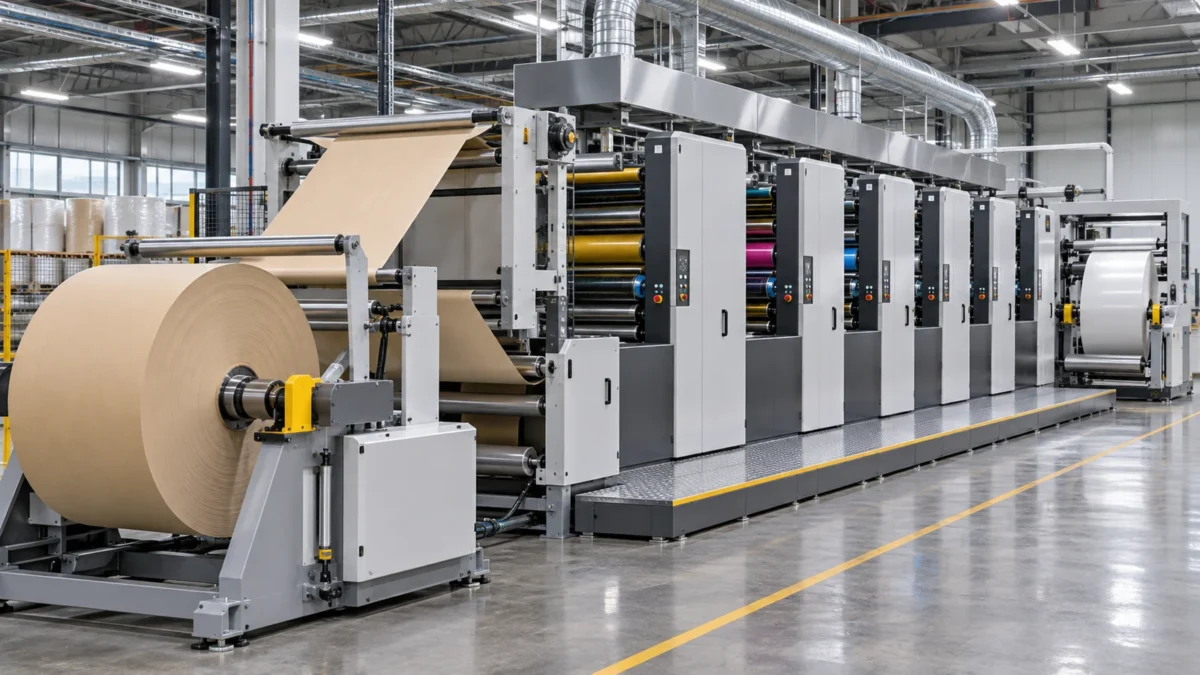
Flexography transfers ink from a raised printing plate to a moving substrate. A CI press groups print stations around one impression drum, which supports the web as successive colours are applied. A stack press uses individual impression cylinders in vertically arranged stations. For a stretch-sensitive film, the useful comparison is whether each proposed line holds register at the intended speed and across the substrate range. Access, drying and downstream converting can also affect which layout fits the plant. [3]
The investment case changes with the order book. Short repeat orders and frequent artwork changes put more weight on setup and waste. Longer, stable runs may put more weight on sustained output. Our guide to flexographic, offset and digital printing compares how those conditions affect printing-method choice.
What the service promise means for buyers
BW Converting group president Stan Blakney presents the acquisition as a way to match equipment to different applications and operating scales. Expert founder and director Michele Bonizzato expects the wider network to help Expert reach new customers while supporting its installed base. BW says existing Expert customers will continue receiving support during the transition. The release does not specify response times, spare-parts stocks or a transition timetable for particular machines. [1]
An installed press owner can ask for the named support contact, warranty responsibility and the local availability of critical spares. A new press buyer can also request commissioning arrangements, operator training and a support commitment for the controls it will install. For either buyer, the ability to recover from downtime affects how much saleable output the press can deliver.
How to assess the wider portfolio
| Acceptance question | Evidence worth requesting |
|---|---|
| Does register stay within tolerance? | Results on the intended web and repeat length, with the target colour count at sustained speed |
| What happens during frequent job changes? | Timed changeovers through the first accepted reel, with start-up rejects measured separately |
| Does drying suit the ink and substrate? | Ink, drying and energy measurements under agreed production conditions |
| Can the downstream line use the output? | Capacity in rewinding, lamination, curing, slitting and inspection for representative jobs |
| What support follows installation? | Written service scope, escalation route, spare-parts lead times and training |
For a food pack, agree in advance how to qualify the printed construction and its intended use if the press, ink or drying conditions change. Keep food-contact qualification separate from the press’s output and changeover trial.
Compare the cost of accepted output
Run the trial on a real order mix. Include the most demanding film the plant regularly prints, a representative paper or laminate job if relevant, and enough job changes to measure the cost of reaching an accepted reel. Use the plant’s normal inspection limits and log production lost to setup, rejects and downstream stoppages separately.
Compare cost on the same accepted-output basis for each press, including tooling, consumables, labour, utilities, maintenance and expected waste. For a converter with many short orders, an uninterrupted demonstration run leaves out a major part of the cost. The next evidence worth watching is how BW assigns service responsibilities and what representative customer trials show about output and cost.
Sources
Found an error? Read our corrections policy and contact the editors.