Ontario’s 23 October 2026 Blue Box announcement proposes greater oversight of producer responsibility organisation (PRO) contracts, costs and governance. For packaging producers, the immediate task is to distinguish those proposed powers from a separate RPRA consultation on reporting and audits. The two processes address different business records. [1] [2]
Proposed contract powers have a different decision point
The province says proposed amendments to the Resource Recovery and Circular Economy Act would, if passed, allow it to regulate terms between PROs and producers, including collection and processing fees. It also describes planned consultation on cost transparency, collection service requirements and flexible plastics, alongside exploration of administrator changes. These are proposed measures and policy work, rather than a completed contract or governance handover. [1]
That distinction matters when a producer receives a new invoice or renewal proposal. A policy intention to improve predictability does not identify which line in that company’s bill is wrong, establish a replacement rate or settle how an existing agreement operates. Finance and procurement can prepare a dated comparison of the contract, fee notice and explanation received from the PRO. The announcement gives them questions to investigate; it does not supply the answers for an individual contract.
The reporting consultation asks for a different file
RPRA’s separate consultation runs from 2 October to 16 November 2026. It covers draft performance-audit procedures and supply-reporting guidance intended for the 2027 reporting cycle. Its summary proposes six regulated gross-supply categories for SMEs and 62 harmonised categories for non-SME large producers, with different unit, brand-list and sign-off requirements. RPRA defines an SME here as an obligated business with fewer than 100 employees in Canada. The documents remain drafts. [2]
The practical difference is between explaining a charge and reconstructing the data behind a report. A clearer cost statement cannot correct an inconsistent material category. Equally, a well-organised packaging register does not establish whether a fee or contractual change is justified. Keep both investigations visible rather than asking one spreadsheet or one external adviser to answer them as a single question.
Assign the record to the decision it supports
| Task | Working record and boundary |
|---|---|
| Costs | Retain the dated agreement, fee notice, charge basis and the PRO’s explanation. Compare those documents; proposed provincial powers do not establish an agreed tariff. |
| Data | Keep the pack revision, material mapping, supply period, brand information and approval owner. Compare the proposed fields with current records; a draft is not a final filing instruction. |
| Roles | Record the current counterparty and responsibilities, then any formally announced replacement arrangements. Governance exploration does not document a completed transfer. |
The table is our recommended internal review structure, not a new statutory form. It lets the contract owner identify an unexplained cost while the reporting owner tests whether a packaging record can survive a category or sign-off change. Suppliers can help with construction and component evidence; the producer still needs to connect that information to its own reporting scope.
Watch for the documents that actually change the task
For the provincial proposal, the next useful evidence is the legislative or regulatory text, its actual status and any implementation provisions. For the RPRA consultation, it is the final procedure and guidance after comments have been considered. Record those as separate review triggers. Do not promise a fee reduction or change collection instructions on the strength of either announcement.
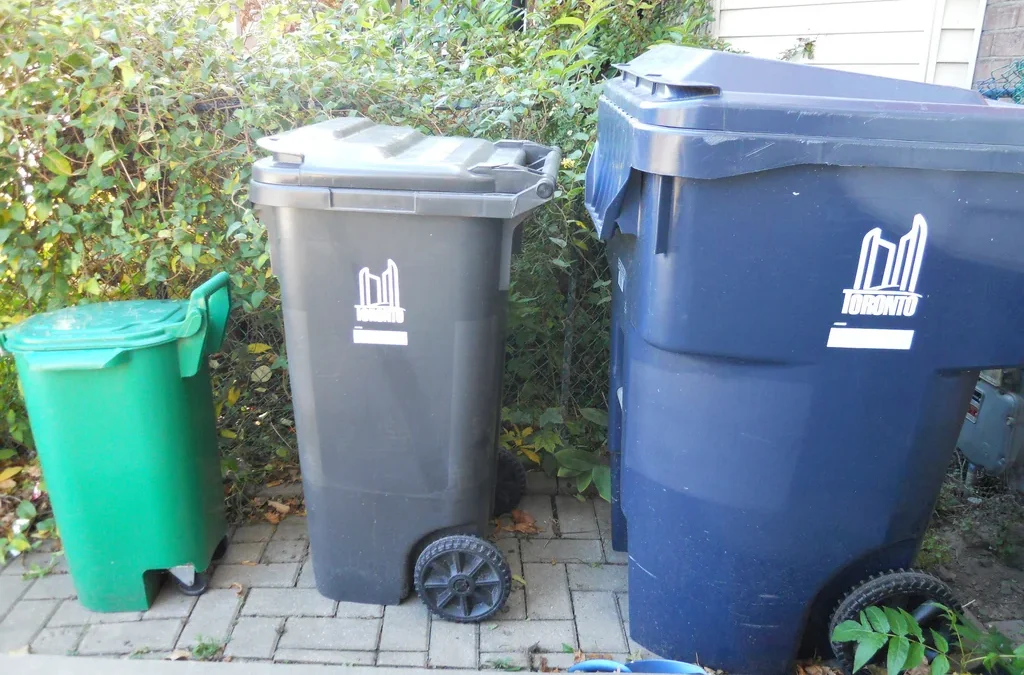
Our packaging EPR guide explains the broader separation between responsibilities, information and money. This Ontario case adds a specific contract-versus-reporting distinction. The historical Toronto containers in the photograph show physical collection equipment; their appearance cannot establish today’s accepted materials, contract terms or proposed governance arrangements.
Sources and scope
[1] Ontario Ministry of the Environment, Conservation and Parks. Ontario Introducing Changes to Improve Blue Box Program, 23 October 2026, official release 1008189: lead and proposed legislative, regulatory and governance measures. Checked 26 October 2026.
[2] RPRA. Draft Blue Box Verification and Audit Procedure and Supply Reporting Guideline: consultation dates, intended reporting cycle and SME/non-SME comparison. Checked 26 October 2026. This article analyses the identified announcements; it does not determine a producer’s individual liability.
Photograph
Michalis Famelis, Toronto waste 2010, 17 October 2010. CC BY-SA 2.0. Full composition retained and converted to WebP; the image derivative retains that licence. Archival Toronto context, not a photograph of the 2026 proposal or evidence of current collection rules.
Found an error? Read our corrections policy and contact the editors.