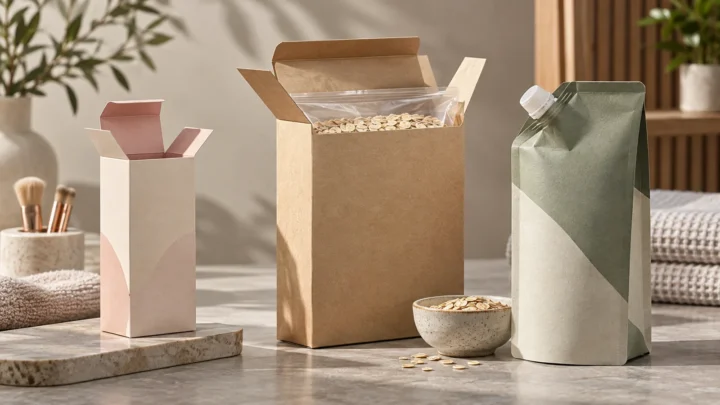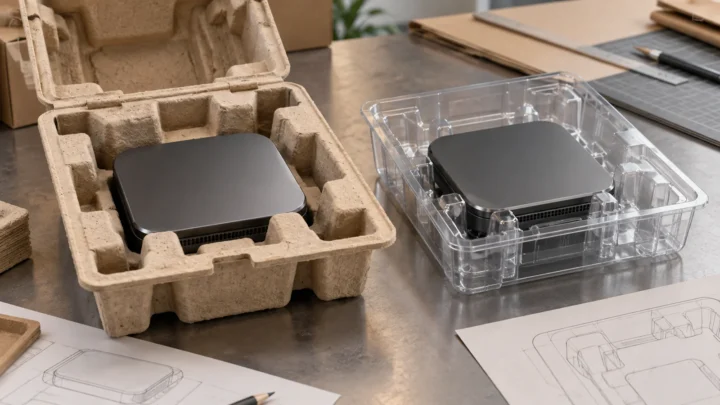
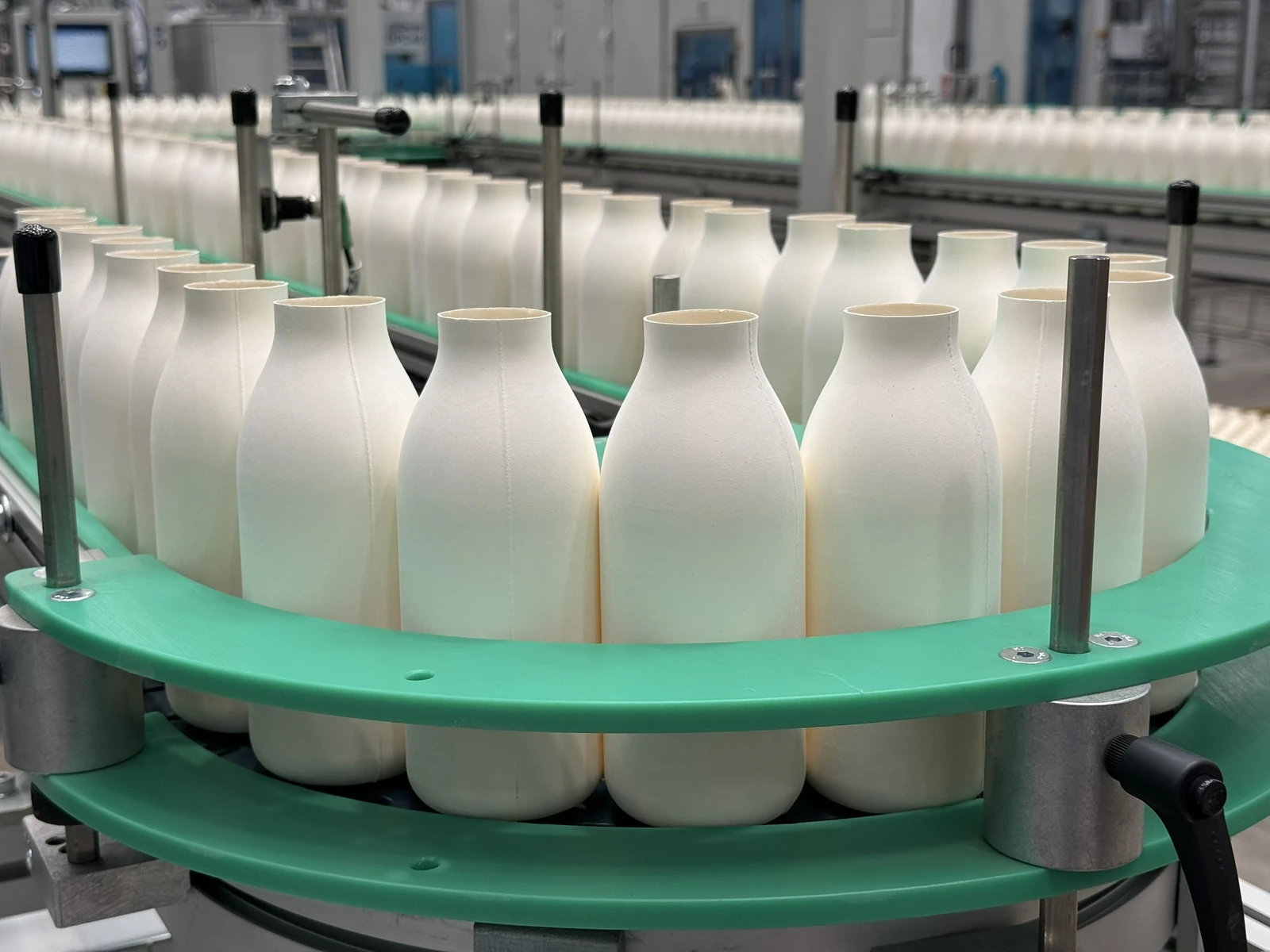
A fibre-bottle factory and a paper-capsule withdrawal can both belong in the same packaging trend. Pulpex’s October factory announcement signals investment in commercial manufacture. Nespresso’s decision to discontinue its Paper-Based Collection signals a brand’s decision about a particular coffee system. Neither event settles the prospects of paper across other applications.
Read alongside recent flexible-packaging collaborations, the contrast suggests a more selective phase of paperization. The industry question is becoming less useful when framed as whether paper can replace plastic in general. It becomes more useful when framed around the protection required, the production system available and the evidence that a particular construction fits both.
Capital investment and material trials prove different things
On 8 October 2026, Pulpex announced the opening of its first commercial fibre-bottle facility near Glasgow, fitted for an initial annual capacity of up to 40 million units. That is a company-reported capacity statement. It is not a verified total of bottles already manufactured, sold or successfully recovered. [1]
The distinction does not make the investment unimportant. A manufacturing facility places process consistency, commissioning, customer qualification and recurring production near the centre of the story. It gives a different kind of signal from an isolated sample bottle. But the existence of the plant cannot complete those operating records in advance.
The PaperFlex Consortium and the UPM–Ingredion–Paramelt collaboration occupy other stages. The consortium is a research programme responding to unresolved performance, cost and scale requirements. The coating collaboration reports a tested construction, not a general commercial rollout. Treating all three as equivalent evidence of market penetration would exaggerate what the announcements establish. [3] [4]
Together they show several kinds of commitment to fibre-based development: organised demand, complementary technical work and manufacturing investment. The evidence supports that range of activity. It does not supply a representative market census, a common cost comparison or proof that each proposed application is ready for substitution.
The Nespresso decision is an application signal
Nespresso‘s current German-market English FAQ says it will discontinue the Paper-Based Collection and focus on aluminium. It refers to customer feedback and its judgement about preserving coffee taste, aroma and quality. The FAQ is an official account of the company’s decision, not a public technical investigation proving that every paper capsule fails. It also does not establish one final withdrawal date for every market. [2]
That limit is central to the interpretation. A brand can decide that another packaging system better meets its own product and experience brief without establishing a universal material ranking. The decision should not be translated into a claim that paper cannot protect coffee, nor into a finding that a specific physical failure mechanism has been independently demonstrated.
It is nevertheless a consequential counterweight to a simple substitution narrative. A new format has to continue delivering the qualities for which customers buy the product. Material development, processing, storage, distribution and the final use experience are linked. A format can be environmentally attractive in principle and still need a different construction or application to meet a particular brand’s requirements.
The reporting task is to separate the decision from explanations not supported by its public record. This article therefore does not assign a numerical shelf-life penalty, identify an unpublished coating defect or claim a comparative carbon advantage for aluminium. Those findings would require evidence beyond the FAQ’s stated rationale.
Paperization changes a system, not just a substrate
A fibre-dominant package can still require a barrier, sealant, closure, printing or adhesive. Those components are not incidental when they provide protection or make the pack manufacturable. Replacing the main substrate can move functions into different layers or change how the package is assembled.
The useful engineering question is where each required function now resides. If a liquid container needs a different closure interface, that interface belongs in the qualification brief. If a wrapper needs a different sealing window, line performance belongs in the assessment. A material-percentage claim does not answer either question.
UPM’s October starch-barrier project illustrates why complementary functions are being developed together. The paper, grease barrier and heat-seal contribution are considered as a construction. Its reported Part 1 recyclability result remains limited to the identified structure and test stage. This is evidence of a development method, not evidence that functional chemistry has become irrelevant once fibre dominates the mass. [4]
It follows that paperization can involve substantial process development even when the finished pack looks familiar. The construction may need to pass through equipment differently, interact with the contents differently or produce different rejects. The significance lies in the service and operating outcome, rather than in the visual similarity to the previous pack.
The protection brief sets the technical bar
A secondary sleeve that does not carry the primary protection duty presents a different development problem from an oxygen-sensitive food pack. A short distribution interval differs from a long shelf-life brief. A dry-use description also has to be read with the actual humidity, handling and storage conditions, rather than treated as a promise that no barrier is needed.
These distinctions are reasons to select applications carefully, not a fixed hierarchy in which all secondary packs are easy and all liquid packs are impossible. Geometry, process, contents and the proposed construction can change the difficulty within each category. A meaningful comparison must name those conditions.
The same caution applies to the maturity axis. An announced plant establishes a different milestone from a laboratory specimen, but it does not make every intended application equally mature. One commercial SKU can demonstrate a bounded use without establishing that the underlying platform is qualified for another product.

| Application family | Protection difficulty axis: the question to resolve | Commercial maturity axis: what the selected evidence shows |
|---|---|---|
| Secondary packaging | Which duties remain with the primary pack? | Separate converting trials can inform scale-up; do not transfer primary-barrier claims |
| Flexible food packaging | Can barrier, sealing and storage needs coexist? | Consortium research and tested structures; no blanket maturity finding |
| Moulded-fibre bottles | Does the complete bottle/closure system suit the contents? | Pulpex reports a commercial facility and initial capacity; output still needs measurement |
| Coffee capsules | Can the format deliver the required quality and use experience? | Nespresso’s particular collection is being withdrawn; other systems are not assessed here |
| Pharmaceutical or sterile applications | Which exact product-protection and qualification duties apply? | Do not transfer consumer-food evidence; each specified application needs its own record |
The matrix deliberately avoids placing entire sectors at precise coordinates. Its horizontal dimension is a set of protection questions and its vertical dimension is the stage of the evidence, not an invented numerical index. In practice, the useful plot would contain individual constructions and applications, each with a documented basis for its position.
Recovery is another application test
The pack’s use conditions do not end the analysis. Fibre content cannot establish that a collection system accepts the item or that a mill can recover useful fibre from it. An identified recovery process needs to deal with the finished construction, including the non-fibre components that made the package perform.
That creates a design tension worth making explicit. Functional additions can help a package meet its service brief, while their compatibility with the intended recovery process requires separate evidence. The answer need not be to eliminate every addition. It is to understand what the final combination does in both use and recovery, and to avoid turning a component-level result into a whole-pack claim.
A practical assessment therefore connects the proposed construction to collection, processing and an accepted output. A laboratory repulpability result is valuable within its method. It cannot demonstrate all the sorting, acceptance and commercial conditions that determine what happens to a discarded item in a particular market.
This is also why a material change should not automatically carry a lower-impact conclusion. A comparison needs equivalent protection and a common functional unit, with manufacturing and end-of-life assumptions stated. The announcements reviewed here do not establish a cross-application environmental ranking of paper, plastic and aluminium.
Selectivity is a sign of a more demanding market
The optimistic and cautionary evidence are compatible. A factory can move a fibre platform toward recurring commercial manufacture while a brand withdraws one application. Collaborative projects can reduce development gaps without removing the need for selection. A market that retains successful uses and changes unsuitable ones is not well described by a single direction of substitution.
The next useful signals would link capacity to actual qualified output, connect products to recurring demand and identify what their recovery systems accept. Where a format is withdrawn, a clear explanation of the application decision is more useful than industry-wide claims derived from it.
Paperization may become more technically disciplined rather than simply larger. The important measure is whether a fibre-dominant construction delivers a defensible packaging service at an acceptable operating cost, with a credible end-of-life route. Recent decisions make that application-level test more visible; they do not settle it for the entire material category.
Sources
- Pulpex. First commercial fibre-bottle factory announcement, 8 October 2026. Company-reported initial capacity, not measured annual output.
- Nespresso. German-market English FAQ on discontinuing the Paper-Based Collection, checked 26 October 2026. Company rationale and feedback; no universal withdrawal date established.
- Ellen MacArthur Foundation. PaperFlex launch, 16 September 2026. Collaborative research and unresolved requirements.
- UPM. Starch-based barrier collaboration, 20 October 2026. Identified construction and reported Part 1 assessment.
Found an error? Read our corrections policy and contact the editors.