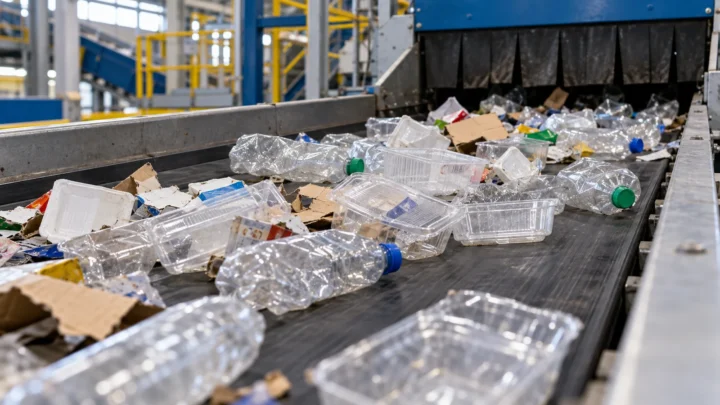
Ireland’s 2024 plastic-packaging figures describe a different recovery picture from the all-material headline. The EPA reports a 60% recycling rate for packaging overall, but its plastic tonnages show substantially more material going to energy recovery than to recycling. For a packaging team assessing recovery services, that distinction changes which destination records matter. [1]
Keep the plastic denominator visible
The EPA records 349,990 tonnes of plastic packaging generated, 106,797 tonnes recycled and 237,810 tonnes sent to energy recovery. Dividing each treatment quantity by plastic waste generated gives approximately 30.5% recycled and 67.9% energy recovery. These are Degradable Packaging calculations from the published table values, rounded to one decimal place. [1]
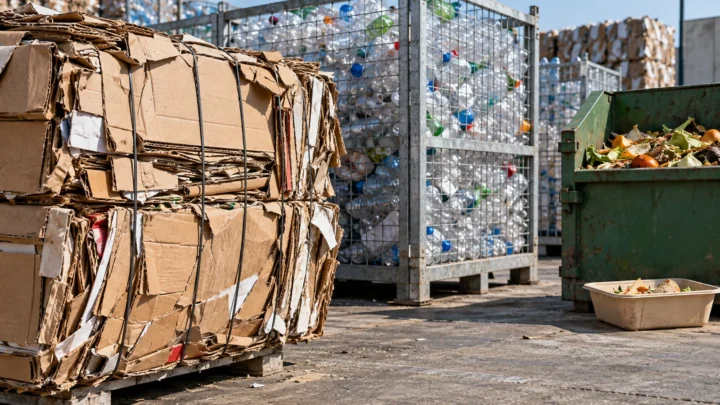
The 60% headline has a different denominator: packaging across all material groups. The reference photograph illustrates the mix of glass, metal, paper, plastic and composite formats behind such aggregates; it is not an Irish statistical sample. A successful result for one heavy material stream cannot be read as the plastic stream’s result.
A recovery route is not a recycled-material supply
Energy recovery and recycling appear as separate treatment categories in the EPA compilation. Combining them into a single success percentage would hide the destination difference. For a buyer of recycled polymer, material used for energy recovery does not establish the quantity of recycled resin available to purchase. [1]
The national totals also do not reveal a particular operator’s spare capacity, polymer mix, output quality or delivered price. A service offer therefore needs its own chain of evidence: the packaging accepted, sorting losses, destination and material output. Keep receipts for energy recovery separate from evidence supporting a recycled-output claim.
Observed year, release date and forecast are different
These are 2024 observations released in July 2026, not a new measurement of waste arising this October. The EPA compiles information from operators, local authorities, brokers and Repak, using characterisation factors and cross-checks; the submission remains subject to validation. Its forecast section explicitly distinguishes observed, fitted and projected figures. [1]
That timing matters when building a recovery-market plan. Use the observations to identify a material-specific question, then obtain current operator and end-market evidence. Do not turn the treatment split into a forecast of next year’s resin price, a claim that collection capacity is full, or a verdict on an individual pack’s recyclability.
The next useful signal is a destination-specific record
For an Irish plastic-packaging brief, record generated tonnage, recycled tonnage and energy-recovery tonnage separately, with the year and source vintage. Compare the next observed release on the same basis. Before approving a supplier claim, reconcile its actual destinations and usable material output rather than borrowing an all-packaging national rate.
Sources and image credit
- Ireland Environmental Protection Agency — Packaging waste statistics:2024 observations. ReleasedJuly2026; Tables1–2, Forecasts disclaimer and Data compilation. Accessed 24 October 2026.
- Zentrale Stelle Verpackungsregister — Press images and terms of use. Packaging from all material groups; Terms of use. Accessed 24 October 2026.
Reference packaging collection from Germany’s Central Agency Packaging Register (ZSVR), accessed24October2026; photography date not supplied. The different material groups illustrate the denominator distinction discussed here; this is not a sample of Irish waste or evidence of any item’s recycling outcome. Image: Zentrale Stelle Verpackungsregister. Full composition and colours retained; resized and converted to WebP. Image source.
Found an error? Read our corrections policy and contact the editors.