Poly(vinyl alcohol), usually written PVOH and often also called PVA, can be water-soluble and can biodegrade under some conditions. It can also be compatible with paper repulping in some coated-paper constructions. But none of those properties is universal. Degree of hydrolysis, molecular weight, crystallinity, crosslinking, coating formulation, coat weight and the recycling or biological environment can all change the result.
That is why three common statements—“PVOH dissolves in water,” “PVOH is biodegradable,” and “PVOH-coated paper is recyclable”—should not be treated as equivalent evidence.
For packaging, the correct question is not simply “Is PVOH sustainable?” It is: which PVOH grade, in which coating structure, exposed to which water conditions, tested by which biodegradation method, and processed in which recycling route?
First, a terminology problem: PVA can mean two different polymers
Packaging and polymer literature frequently uses PVA as an abbreviation for poly(vinyl alcohol). However, PVA is also used for poly(vinyl acetate). To avoid ambiguity, this article uses PVOH for poly(vinyl alcohol) and PVAc for poly(vinyl acetate). [S1]
The distinction is chemically important. PVOH is manufactured by hydrolyzing poly(vinyl acetate); its properties depend strongly on how completely those acetate groups are converted to hydroxyl groups.
That manufacturing route is also the reason the phrase “degree of hydrolysis” appears so often in PVOH datasheets.
What is PVOH?
PVOH is a synthetic, hydrophilic polymer with many hydroxyl groups along its chain. Those hydroxyl groups create strong hydrogen bonding, which gives PVOH several useful packaging properties:
- good film formation;
- strong adhesion to cellulosic surfaces;
- very good dry oxygen barrier in many formulations;
- oil and grease resistance;
- compatibility with aqueous coating processes.
The same hydroxyl groups also create the main limitation: PVOH interacts strongly with water. Moisture can swell and plasticize the polymer, changing its mechanical and barrier behavior.
So PVOH’s strength and weakness come from the same chemistry.
Water-soluble does not mean instantly soluble
PVOH is commonly described as water-soluble, but that phrase hides major grade differences.
Solubility depends particularly on:
- degree of hydrolysis;
- molecular weight;
- crystallinity;
- temperature;
- film thickness;
- crosslinking;
- other polymers or fillers in the formulation.
Partially hydrolyzed grades generally contain more residual acetate groups and lower crystallinity, which can make them easier to dissolve in cooler water. More highly hydrolyzed PVOH has stronger hydrogen bonding and higher crystallinity, so rapid dissolution may require hotter water.
This means the statement “PVOH dissolves in water” needs conditions. One grade can dissolve rapidly at moderate temperature while another requires prolonged hot-water exposure. A crosslinked PVOH coating may be intentionally designed to resist water.
Crosslinking deliberately changes water behavior
Packaging researchers often crosslink PVOH precisely because unmodified PVOH is too moisture-sensitive for many barrier applications.
Crosslinking is used in research to reduce the water sensitivity of PVOH-containing layers. The resulting coating must be described as that modified formulation, rather than assuming it retains the dissolution behavior of an unmodified resin.
The important lesson is not that every PVOH coating behaves this way. It is that the same polymer can move from readily water-sensitive to much more water-resistant when its chemistry and network structure are changed.
So “PVOH is water-soluble” is not a complete description of a crosslinked paper coating.
Why PVOH can be an excellent oxygen barrier but a weak moisture barrier
PVOH can form dense hydrogen-bonded films with few free pathways for oxygen molecules. Under dry or moderate-humidity conditions, this can produce very low oxygen transmission.
Water changes that structure. Moisture absorbed by the polymer can act as a plasticizer, increasing chain mobility and opening diffusion pathways. As relative humidity rises, oxygen-barrier performance can decline sharply.
The water-borne-coatings review describes the dependence of hydrophilic barrier layers on moisture. Dry-state oxygen performance cannot be transferred automatically to high-humidity service. [S4]
This is why PVOH is frequently combined with:
- hydrophobic topcoats;
- crosslinkers;
- nanoclays;
- nanocellulose;
- starch or other polymers;
- multilayer coating architectures.
Those additions can improve moisture resistance, tortuosity or mechanical stability, but they also change biodegradation and recycling behavior.

Water-soluble is not the same as biodegradable
Dissolution is a physical process. Biodegradation is a biological process.
If a PVOH film dissolves, the polymer chains become dispersed in water. They have not necessarily been converted into carbon dioxide, water, biomass or other ultimate biodegradation products.
PVOH is unusual among synthetic vinyl polymers because microorganisms capable of degrading it have been identified. Research has described enzymatic oxidation and chain-cleavage pathways, and several reviews classify PVOH as susceptible to biodegradation under suitable conditions. [S6]
But the phrase under suitable conditions matters. PVOH-degrading microorganisms are not uniformly present at the same activity in every soil, river, compost pile or wastewater-treatment system.
Older and newer literature therefore reaches different results depending on grade, inoculum, acclimation, wastewater process and endpoint. That variation is not necessarily a contradiction; it shows that PVOH biodegradation is environment- and method-dependent.
A wastewater result does not prove universal environmental biodegradation
For packaging claims, the correct wording is therefore not “PVOH disappears in water.” It is closer to: specified PVOH grades can biodegrade under defined biological conditions, and the finished coating should be evaluated using the relevant method for the intended end-of-life claim.
Biodegradable does not mean compostable
Compostability requires more than evidence that a polymer can biodegrade somewhere.
A compostability assessment can include disintegration of the finished article, biodegradation under specified composting conditions, ecotoxicity and limits on other constituents depending on the applicable standard or scheme.
Crosslinkers, pigments, mineral fillers, hydrophobic layers and other additives can change the behavior of a PVOH-coated paper package. That means a polymer-level biodegradation statement cannot automatically be converted into a finished-package compostability claim.
The 2026 BioResources review of water-borne barrier coatings makes this point more broadly: coating formulations need to be evaluated case by case for repulpability, biodegradability and compostability because modern coatings are usually multicomponent systems. [S4]
Can PVOH-coated paper be repulped?
Yes, some PVOH-coated paper structures have shown very high repulpability in laboratory testing.
A 2026 ACS Omega study used PVOH with laponite or montmorillonite nanoclays to make high-oxygen-barrier coated paper. The authors reported that the tested coated paper was repulpable and recyclable under the Fiber Box Association protocol used in the study. [S9]
Those results are encouraging, but they do not establish a universal rule that “PVOH is recyclable.”
Repulpable is not the same as recyclable in practice
Repulpability is a technical property of a construction under a defined recycling test or mill process. Recycling in practice requires more:
- the package must be collected;
- it must be sorted into the appropriate paper stream;
- the coating must not create unacceptable rejects, stickies or sheet-quality problems;
- the receiving mill must accept the construction;
- the recovered fiber must have a useful destination.
Cepi’s 2025 Recyclability Laboratory Test Method Version 3 simulates pulping, screening and sheet formation in a conventional paper-recycling mill. That kind of construction-level test is more meaningful than assuming compatibility from the chemistry name alone. [S10]
A PVOH coating can support a repulpable design, but the package still has to be evaluated as a package.
See technical recyclability versus recycling in practice for the related distinction.
Degree of hydrolysis is one of the most important specification fields
PVOH is produced by hydrolyzing poly(vinyl acetate). The percentage of acetate groups converted to alcohol groups is reported as the degree of hydrolysis.
This parameter affects:
- water solubility;
- crystallinity;
- hydrogen bonding;
- film strength;
- adhesion;
- barrier performance;
- processing temperature.
A buyer who receives only “PVOH coating” therefore does not have enough information to compare two systems.
Molecular weight matters as well. Higher-molecular-weight grades can produce different viscosity, film strength and dissolution behavior. Crosslinking can then change the system again.
Why PVOH is often used in multilayer systems
PVOH’s dry oxygen barrier can be excellent, while its moisture sensitivity is a weakness. Multilayer design lets each material perform the function it handles best.
Examples include:
- PVOH as an oxygen-barrier layer with a hydrophobic outer coating;
- PVOH combined with nanoclay to create a more tortuous gas-diffusion path;
- PVOH/starch blends for film formation and barrier;
- PVOH combined with biodegradable polyester top layers;
- crosslinked PVOH under a water-resistant dispersion coating.
The identified experimental paper on PVOH/nanoclay-coated paper provides a construction-specific example of combining components for barrier function. It does not demonstrate every PVOH multilayer, coating or local recycling route.
But every added component makes end-of-life evaluation more construction-specific.
A buyer checklist for PVOH-coated paper
| Question | Why it matters |
|---|---|
| Is the polymer PVOH or PVAc? | “PVA” is an ambiguous abbreviation. |
| What is the degree of hydrolysis? | It strongly affects solubility, crystallinity and barrier behavior. |
| What is the molecular-weight / viscosity grade? | Processing and film properties vary by grade. |
| Is the PVOH crosslinked? | Crosslinking can substantially reduce water sensitivity and alter biodegradation. |
| What other components are in the coating? | Nanoclays, acrylics, starch, hydrophobic layers and additives change performance and end-of-life. |
| What OTR/WVTR conditions were used? | PVOH barrier performance is strongly humidity-dependent. |
| What repulpability test covers the finished construction? | Paper-recycling compatibility is construction-specific. |
| What biodegradation or compostability method was used? | Water solubility is not a biodegradation test. |
| Which recycling stream is intended? | Paper repulping and PE/PP melt recycling are different systems. |
Editorial synthesis of the cited sources. Examples are not product test results; methods, construction and conditions remain part of every claim.
What to put in the specification
For paper packaging, some PVOH coatings have demonstrated very high repulpability. That is useful evidence—but still construction-specific. The right procurement approach is to verify the exact grade, coating formulation, humidity-dependent barrier performance, repulpability method and biological end-of-life evidence separately.
Methodology and editorial note
This technical explainer synthesises the identified official guidance, public standard scopes and research records. Study findings remain specific to their reported materials and conditions. Sources checked 18 October 2026; no product testing, factory inspection or independent certification assessment was performed for this article.
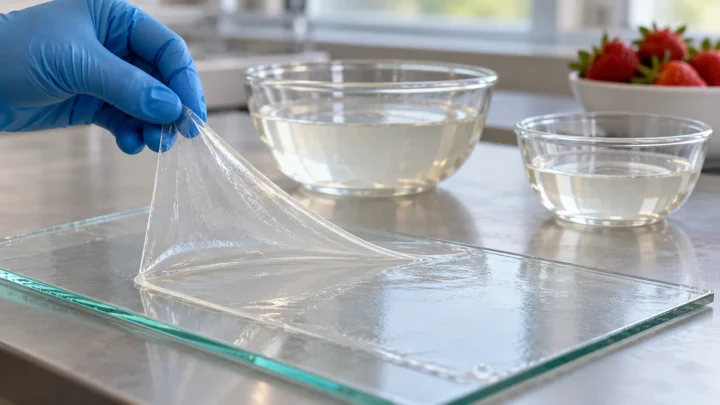
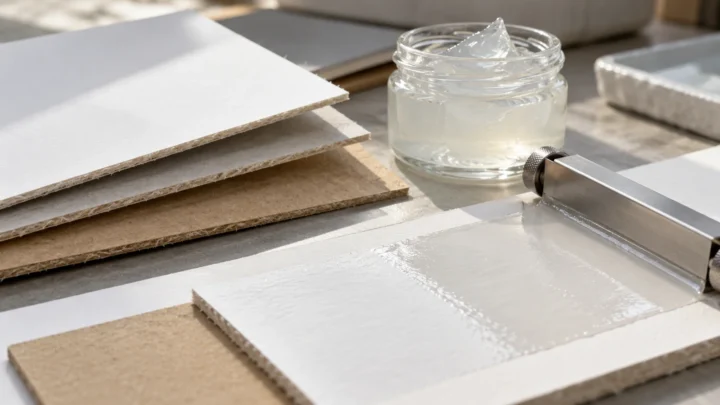
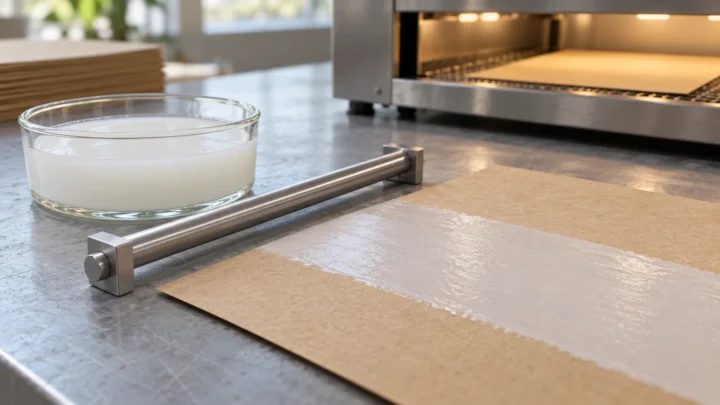
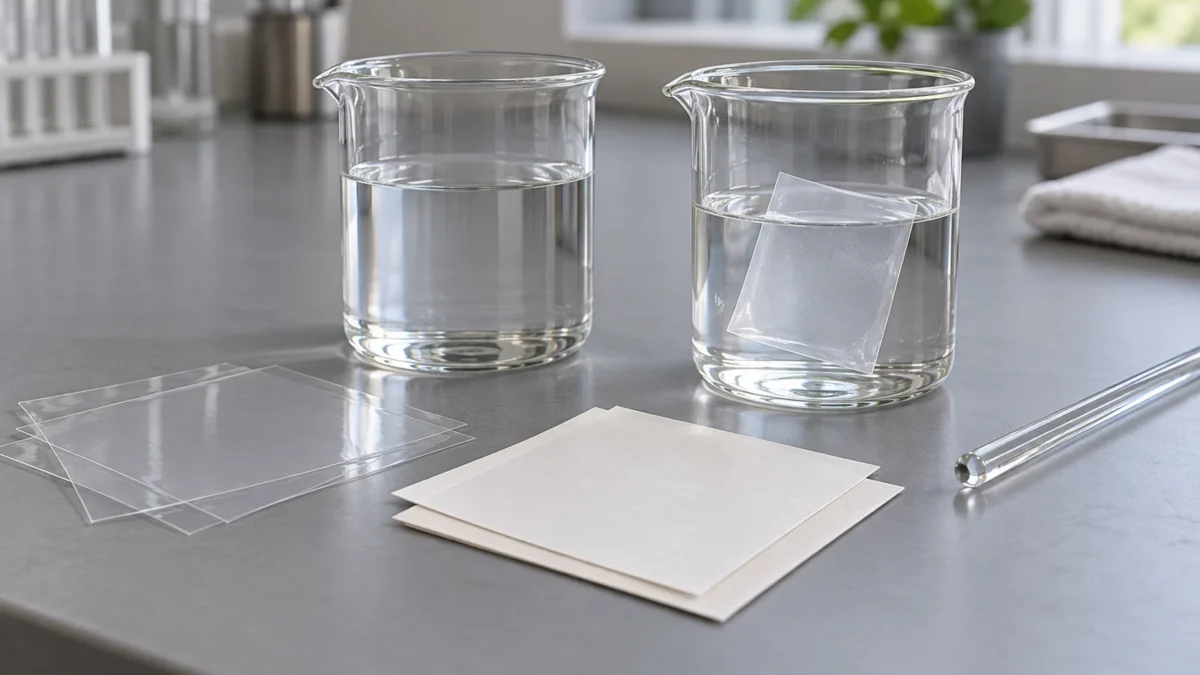
The main image is an AI-generated editorial illustration of an unnamed conceptual scene. The explanatory figure is an original editorial synthesis, not a photograph of an experiment, microscopic structure or measured result.
Official sources and reference notes
- [S1] Office québécois de la langue française. alcool polyvinylique / polyvinyl alcohol terminology record. Updated 2024. Terminology definition: polyvinyl alcohol and associated abbreviation. Identified public record/section access only; detailed experimental or paid-method claims require the underlying text. Accessed 18 October 2026.
- [S4] Chisom C. Umeileka; Martin A. Hubbe. Repulpability and biodegradability of paper-based packaging products with water-borne barrier coatings: A review. BioResources 21(4), 2026. Hydrophilic coating polymers, repulpability and dissolved-material considerations. Identified public record/section access only; detailed experimental or paid-method claims require the underlying text. Accessed 18 October 2026.
- [S6] Fusako Kawai; Xiaoping Hu. Biochemistry of microbial polyvinyl alcohol degradation. Applied Microbiology and Biotechnology 84(2), 2009. Public abstract: two-step microbial degradation and dependence on molecular structure. Identified public record/section access only; detailed experimental or paid-method claims require the underlying text. Accessed 18 October 2026.
- [S9] Authors as listed in ACS Omega. Moving Toward Paperization of Packaging Industry: Use of Laponite and Montmorillonite Nanoclays for Recyclable and Biodegradable High-Barrier Paper. ACS Omega 2026. Abstract; experimental paper coating formulation and FBA repulpability method. Relevant public sections checked; source-specific scope retained. Accessed 18 October 2026.
- [S10] Confederation of European Paper Industries (Cepi). Cepi Recyclability Test Method Version 3. February 2025; page published 13 March 2025. Version 3 method overview; test results distinguished from collection/access. Relevant public sections checked; source-specific scope retained. Accessed 18 October 2026.
The public corrections channel is currently inactive. Read our corrections policy.