Grease resistance, liquid-water resistance, oxygen transmission rate (OTR) and water-vapor transmission rate (WVTR) measure different failure modes. A paper coating can resist oil but still absorb water. It can resist liquid water but still transmit water vapor. It can have low OTR and poor WVTR, or the reverse. One “barrier” result should never be used as proof of all the others.
This distinction matters in fiber food packaging because barrier claims are often compressed into one phrase: “good barrier performance.” That phrase is too vague for engineering or procurement. A hot noodle bowl, a dry snack pouch and an oxygen-sensitive coffee package expose the material to different substances and different driving forces.
The useful question is not “Does this coating have a barrier?” It is: barrier to what, measured by which method, at what temperature and humidity, on what construction, and for how long?
Four barrier questions that should stay separate
| Barrier question | What is moving or interacting? | Typical result | What it does not prove |
|---|---|---|---|
| Grease resistance | Oil/grease or test liquids interacting with or penetrating the structure | Kit rating, penetration time or other grease-resistance result | Water resistance, WVTR, OTR or real hot-food lifetime |
| Liquid-water resistance | Liquid water wetting, absorbing into or penetrating paper/fiber | Cobb value, contact angle or application-specific soak/leak result | Low WVTR or oxygen barrier |
| WVTR | Water vapor passing through a specimen under a humidity gradient | g/(m²·day) under stated conditions | Resistance to liquid water, oil or oxygen |
| OTR | Oxygen gas passing through a specimen under stated test conditions | cm³/(m²·day) or equivalent standard units under stated conditions | WVTR, liquid-water resistance or grease resistance |
Editorial synthesis of the cited sources. Examples are not product test results; methods, construction and conditions remain part of every claim.
For all four, the test conditions are part of the result. A number without temperature, relative humidity, specimen construction and method can be difficult or impossible to compare with another number.
See barrier and recycling evidence for the related distinction.
Grease resistance: a surface test is not the same as a package lifetime
Oil and grease resistance is especially easy to oversimplify in paper packaging.
TAPPI T 559 is commonly known as the Kit test. The current TAPPI method describes a series of test liquids with different aggressiveness. The highest numbered solution that remains on the paper surface without causing the defined failure is reported as the kit rating. [S3]
But the scope matters. TAPPI states that the method was developed primarily for paper and paperboard treated with fluorochemical sizing agents. The current method also warns that use on film-like barriers or nonfluorochemical treatments has to be evaluated. [S3]
That warning is increasingly important for PFAS-free food packaging. A water-based dispersion coating, a biopolymer film and an internal sizing system may resist oil through different mechanisms. A high or low Kit value should not automatically be treated as a complete ranking of those systems.
See the limits of PFAS-free claims for the related distinction.
ASTM F119 asks a different grease question: it measures the rate of grease penetration through flexible barrier materials under standardized conditions. ASTM notes that pinholes can increase the measured penetration rate and that absorbent structures such as coated kraft paper can show variable failure times depending on porosity and thickness. [S4]
So even within “grease barrier,” two methods may be measuring different aspects of failure.
Why a Kit rating cannot substitute for a hot-oil or food-service test
A Kit test is useful when it is appropriate to the material and question, but it does not reproduce every food-service condition.
- hot oil rather than room-temperature reagent;
- mixed oil, water, salt, acid and surfactants from food;
- hours of contact instead of a short laboratory exposure;
- fold lines, rims and formed corners rather than a flat sheet;
- mechanical stress during filling, transport and eating;
- condensation and temperature cycling.
For a takeaway bowl, the engineering question may therefore be “Does the complete container resist a specific hot, oily food for the intended service time?” That application test complements—not replaces—a standardized material test.
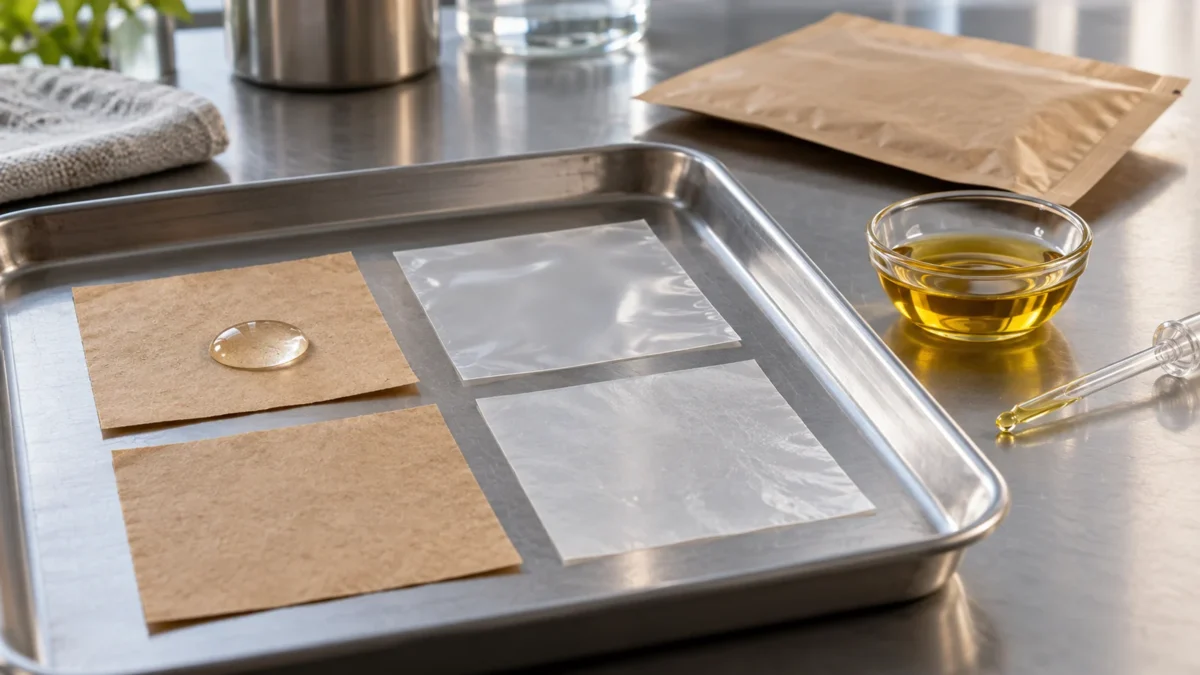
The same logic applies in the other direction: a successful improvised food test does not replace a standardized grease-barrier measurement when comparable material data are needed.

Liquid-water resistance is not WVTR
Liquid water and water vapor interact with packaging differently.
The Cobb test, TAPPI/ANSI T 441, measures the mass of water absorbed by a defined area of paper or board during a specified exposure time. It is a test of water absorptiveness. A lower Cobb value generally indicates that less liquid water was absorbed under those conditions. [S5]
That does not make Cobb a water-vapor transmission test. A sheet can show low short-term liquid-water uptake at the surface yet still allow moisture vapor to diffuse through the structure over time.
Surface contact angle is another different measurement. A high water contact angle can indicate low initial wettability, but it does not by itself prove low water absorption through defects, edges or long exposure, and it does not establish low WVTR.
This is why the phrase “waterproof paper” is often technically unhelpful unless the actual failure mode is defined.
WVTR measures vapor transport, not whether a drop beads on the surface
Water vapor transmission rate measures the rate at which water vapor passes through a barrier under controlled temperature and humidity conditions.
ASTM F1249-25 covers WVTR measurement for flexible barrier materials using a modulated infrared sensor. Its scope includes single- and multilayer polymer films, natural or synthetic polymer structures, foils and coated materials. The standard states that WVTR is important to packaging stability and that the test conditions and acceptance criteria have to be agreed when data are used for comparison. [S2]
Paper and paperboard also have dedicated TAPPI WVTR methods, including T448 and T464. Select the applicable method and report the actual temperature, humidity gradient, orientation and units; a method number alone does not make results comparable.
The exact method therefore matters. “WVTR = 10” without the method, temperature, humidity gradient, specimen side orientation and units is not enough information for a technical comparison.
Humidity can change the barrier itself
Test conditions are especially important for hydrophilic and bio-based coatings.
Many polysaccharides, proteins, cellulose-derived coatings and PVOH-containing structures can interact strongly with moisture. Water can plasticize a hydrophilic polymer, increase molecular mobility and open pathways for gas or vapor transport. A material that performs well at low relative humidity may perform differently at high humidity.
Barrier functions must be evaluated separately. A low transmission value for one substance cannot be converted into a result for a different substance or humidity condition; the identified ASTM scopes and the coating evidence discussed here address distinct questions.
For food packaging, that means a laboratory result should resemble the real service environment closely enough to answer the intended question.
OTR measures oxygen transmission through a specimen
Oxygen transmission rate is the steady-state rate at which oxygen passes through a material under defined test conditions.
ASTM D3985-24 is one current method using a coulometric sensor. Its scope covers films, sheets, laminates, coextrusions and plastic-coated papers or fabrics. ASTM also states explicitly that OTR is an important determinant of package protection but is not the sole determinant of package performance. [S1]
This is a useful boundary. Low OTR can matter for oxidation-sensitive foods such as nuts, coffee, oils or certain dry foods, but shelf life also depends on seals, headspace, package geometry, light, temperature, product chemistry and actual storage conditions.
A coated paper sample with a very good flat-sheet OTR can still become a poor package if cracking occurs at a fold or seal.
OTR is not the same as oxygen permeability
The terms are related but should not be swapped casually.
OTR describes oxygen transmission through the tested specimen or structure. Permeability is a material property that, under appropriate assumptions, also accounts for thickness and the gas-pressure driving force. ASTM D3985 distinguishes OTR, permeance and—only for homogeneous materials—the oxygen permeability coefficient. [S1]
That final qualification matters for paper packaging. Coated paper is a heterogeneous multilayer structure containing a porous fiber substrate, coating, interfaces and potentially defects. Converting its OTR into a single intrinsic “permeability” value as if it were one homogeneous film can be misleading.
For procurement, asking for the OTR of the actual coated construction is often more useful than comparing permeability coefficients taken from neat polymer films.
WVTR and OTR can move in different directions
A coating that is an excellent oxygen barrier is not necessarily an excellent moisture-vapor barrier.
Hydrophilic polymers provide a good example. Dense hydrogen-bonded structures can create a strong dry oxygen barrier, but absorption of water at higher humidity can disrupt that network. Conversely, hydrophobic coatings may provide strong resistance to water and water vapor while offering only moderate oxygen barrier compared with a dedicated high-oxygen-barrier layer.
This is one reason multilayer packaging exists. Different layers can be assigned different functions:
- a fiber substrate for stiffness and printability;
- a grease-resistant layer for fatty food;
- a hydrophobic layer for moisture control;
- an oxygen-barrier layer for oxidation-sensitive products;
- a heat-seal layer for package closure.
Replacing several layers with one coating is possible only if that coating actually meets all required performance targets under relevant conditions.
Creases, pinholes and edges can defeat a good flat-sheet result
Barrier data are often generated on flat, defect-free specimens. Packages are not flat specimens.
Paperboard may be creased, folded, thermoformed, scored, sealed or cut. A coating can crack at the fold. Pinholes can create local grease or gas pathways. Exposed cut edges can absorb liquid even when the coated face performs well.
TAPPI maintains specific procedures for creasing paper specimens before water-vapor testing, which reflects an important engineering principle: converting can change barrier performance. ASTM F119 similarly notes that pinholes affect grease penetration.
If a coated paper will become a cup, tray or folding carton, the validation plan should include the converted geometry—not only a laboratory drawdown on a flat sheet.
Why “high barrier” is not a complete specification
| Specification field | What to record |
|---|---|
| Target substance | Grease/oil, liquid water, water vapor, oxygen, aroma or another defined substance |
| Test method | Exact ASTM, TAPPI, ISO or validated application-specific method |
| Conditions | Temperature, RH or pressure gradient, exposure time and specimen orientation where relevant |
| Construction | Substrate, coating chemistry, coat weight/thickness, number of sides, printed/unprinted state |
| Specimen state | Flat, creased, folded, formed, sealed or finished package |
| Result and units | Actual value with units—not “pass” or “high barrier” alone |
| Application test | Real food/product contact where standardized material data do not fully represent service |
Editorial synthesis of the cited sources. Examples are not product test results; methods, construction and conditions remain part of every claim.
This structure also makes supplier data easier to compare. Two WVTR values are not directly comparable when one was measured at 23°C/50% RH and the other at a high-temperature/high-humidity condition. Two grease results are not comparable when one is a Kit rating and another is a penetration-time test.
Four common claims that need correction
“Kit 12 means waterproof.”
No. A Kit rating addresses grease/oil repellency under the method’s specific test system. It is not a liquid-water absorption or WVTR result.
“Low Cobb means excellent moisture barrier.”
Not necessarily. Cobb measures liquid-water absorptiveness over a defined exposure. WVTR measures vapor transmission under a humidity gradient.
“Low WVTR means low OTR.”
No. Water-vapor and oxygen transport depend on different interactions with the material. Some coatings perform very differently for the two gases.
“A good flat-sheet result proves the container will pass.”
No. Forming, folding, heat sealing, pinholes, coating cracks and exposed edges can introduce new failure paths.
A decision matrix for food-packaging barrier testing
| Packaging problem | First barrier question | Typical evidence route |
|---|---|---|
| French fries / fried chicken / oily takeaway food | Will grease penetrate or wick through during service? | Appropriate grease-resistance method plus finished-container hot-food test |
| Soup / sauce / wet meal | Will liquid water penetrate, soften or leak? | Liquid-water absorption/resistance plus filled-container time/temperature test |
| Dry product sensitive to humidity | How fast can moisture vapor cross the package? | WVTR at conditions relevant to distribution/storage |
| Oxidation-sensitive snack / coffee / oil | How fast can oxygen enter? | OTR plus seal/package-level validation |
| Multifunctional paper replacement for plastic laminate | Which barriers must be delivered simultaneously? | Separate grease, liquid-water, WVTR and OTR data; then converted-package testing |
Editorial synthesis of the cited sources. Examples are not product test results; methods, construction and conditions remain part of every claim.
What to put in the specification
For paper and molded-fiber packaging, the most reliable specification names the target substance, method, conditions, construction, converted state, result and application requirement. That approach also makes PFAS-free and bio-based barrier technologies easier to evaluate fairly: each system has to prove the function the package actually needs, rather than win on one convenient number.
Methodology and editorial note
This technical explainer synthesises the identified official guidance, public standard scopes and research records. Study findings remain specific to their reported materials and conditions. Sources checked 18 October 2026; no product testing, factory inspection or independent certification assessment was performed for this article.
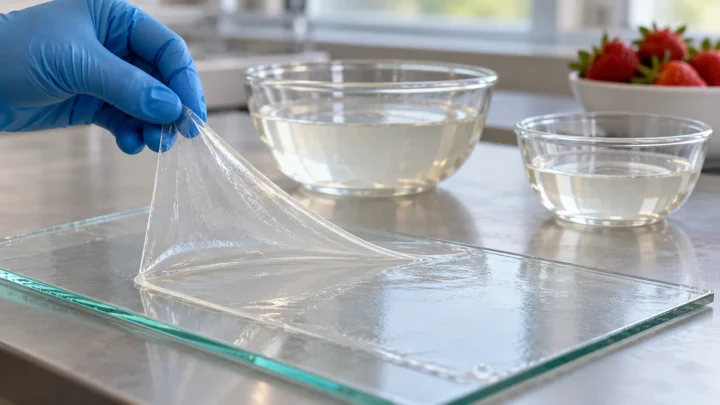
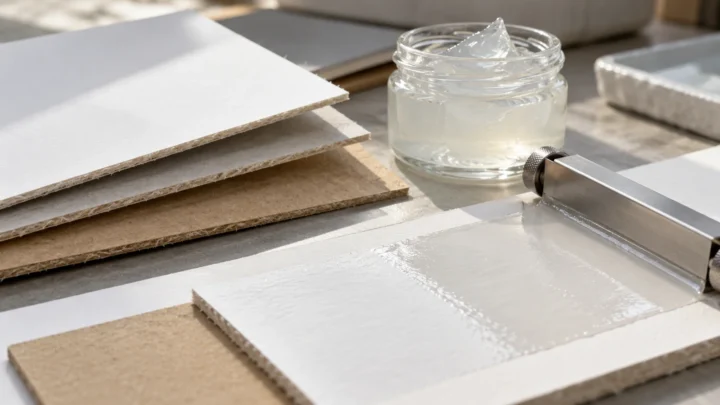
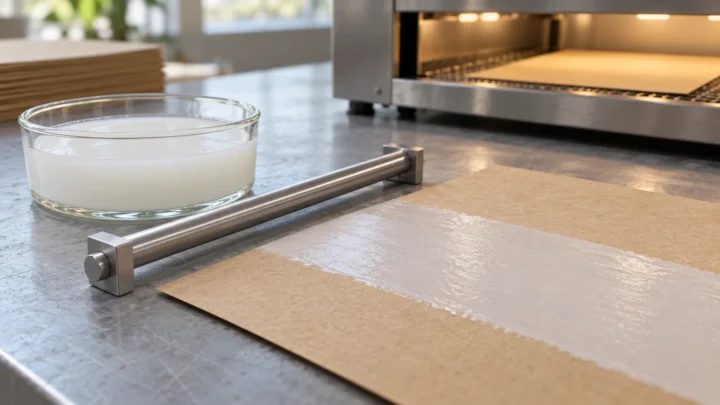
The main image is an AI-generated editorial illustration of an unnamed conceptual scene. The explanatory figure is an original editorial synthesis, not a photograph of an experiment, microscopic structure or measured result.
Official sources and reference notes
- [S1] ASTM International. Standard Test Method for Oxygen Gas Transmission Rate Through Plastic Film and Sheeting Using a Coulometric Sensor. ASTM D3985-24, active. Public Scope 1.1 and method summary: oxygen gas transmission, stated test conditions. Official public description/scope checked; full paid standard not accessed. Not an operational test procedure. Accessed 18 October 2026.
- [S2] ASTM International. Standard Test Method for Water Vapor Transmission Rate Through Plastic Film and Sheeting Using a Modulated Infrared Sensor. ASTM F1249-25, active. Public scope and significance: water-vapor transmission by modulated infrared sensor. Official public description/scope checked; full paid standard not accessed. Not an operational test procedure. Accessed 18 October 2026.
- [S3] TAPPI. Grease resistance test for paper and paperboard. T 559 cm-22. Public Scope 1.2–1.5: fluorochemical repellency and applicability limits. Official public description/scope checked; full paid standard not accessed. Not an operational test procedure. Accessed 18 October 2026.
- [S4] ASTM International. Standard Test Method for Rate of Grease Penetration of Flexible Barrier Materials (Rapid Method). ASTM F119-82(2022), active. Public scope: rate of grease penetration through flexible barriers. Official public description/scope checked; full paid standard not accessed. Not an operational test procedure. Accessed 18 October 2026.
- [S5] TAPPI. Water absorptiveness of sized paper, paperboard and corrugated fiberboard (Cobb test). T 441 om-24. Public description: sized paper/board water absorptiveness. Official public description/scope checked; full paid standard not accessed. Not an operational test procedure. Accessed 18 October 2026.
The public corrections channel is currently inactive. Read our corrections policy.