Short answer: The EU Packaging and Packaging Waste Regulation (PPWR), Regulation (EU) 2025/40, has applied since 12 August 2026, but that does not mean every headline requirement started on that date. Some obligations are already relevant now—such as the general framework for conformity, the food-contact PFAS limits and the baseline recyclability requirement—while major design-for-recycling, recycled-content, minimisation, reuse, labelling and format-restriction requirements phase in later. The correct compliance question is therefore not “When does PPWR start?” but “Which provision applies to this packaging, this operator and this date?”
That distinction matters because PPWR is not one deadline. It is a legal framework with staged obligations, delegated and implementing acts, technical documentation requirements and product-specific exceptions. The European Commission’s 2026 guidance was issued precisely because businesses and national authorities were asking how those timelines interact. [R1]
For packaging companies, the most useful 2026 task is to build a provision-by-provision compliance map: identify the packaging construction, the economic-operator role, the applicable requirement, the evidence already available and the next legal or technical milestone.
For the narrower chronology, read our existing phased-application article. Packaging EPR addresses producer responsibility and reporting as a separate operational task.
What is the PPWR?
Regulation (EU) 2025/40 replaces the former Packaging and Packaging Waste Directive with a directly applicable EU regulation covering packaging design, substances, recyclability, recycled content, compostability, minimisation, labelling, reuse, waste prevention and producer responsibility. It entered into force on 11 February 2025 and applies from 12 August 2026. [R2]
The European Commission describes the PPWR as a harmonised framework for the full packaging life cycle and as part of the EU effort to reduce packaging waste, improve recyclability, expand secondary-material markets and make packaging rules more consistent across the Single Market. [R3]
But “applies from 12 August 2026” is not the same as “every technical obligation is fully operational from 12 August 2026.” Several articles contain their own later dates, “whichever is later” formulas, future implementing acts or delegated acts.
What applies in 2026—and what comes later?
| Date | Provision / milestone | What it means | Important qualification |
|---|---|---|---|
| 11 Feb 2025 | PPWR entered into force | The Regulation became law. | Most provisions did not yet apply. |
| 12 Aug 2026 | General application date | PPWR applies across the EU. | Many individual provisions still have later application dates. |
| 12 Aug 2026 | Food-contact PFAS limits under Article 5(5) | Specified PFAS concentration limits apply to food-contact packaging. | Testing scope and technical documentation remain critical. |
| 12 Aug 2026 | Article 6(1) general recyclability requirement | All packaging placed on the market must be recyclable. | Commission guidance says harmonised design-for-recycling criteria apply later. |
| 12 Feb 2027 | Takeaway bring-your-own-container obligation | Covered HORECA final distributors must provide a system for consumers to bring their own containers. | Applies to the specified takeaway beverages and ready-prepared food uses. |
| 12 Feb 2028 | Certain packaging must be compostable | Specified permeable tea/coffee/beverage bags, soft after-use single-serve units and fruit/vegetable sticky labels must meet Article 9 conditions. | Home-compostability can depend on Member State requirements and future standards. |
| 12 Aug 2028 or later | Harmonised material-composition labelling | Packaging must carry harmonised material information to facilitate sorting. | Article 12 uses a “later of” formula linked to implementing acts. |
| 1 Jan 2030 or later | Design-for-recycling requirements | Article 6(2)(a) harmonised DfR requirements begin. | Applies 1 Jan 2030 or 24 months after the delegated act enters into force, whichever is later. |
| 1 Jan 2030 or later | Minimum recycled content in plastic packaging | Different plastic-packaging categories face defined PCR minimums. | Article 7 also uses a “whichever is later” formula tied to an implementing act. |
| 1 Jan 2030 | Article 25 / Annex V restrictions | Certain listed single-use packaging formats and uses are restricted. | Scope and exemptions are product/use specific; Commission guidance is still important. |
| 2030 onward | Minimisation, empty-space and reuse targets | Several weight/volume, transport-packaging and reuse requirements become applicable. | Some dates depend on implementing acts and exemptions. |
| 2035 or later | Recycled-at-scale element of recyclability | System-scale recycling becomes part of the Article 6 recyclability framework. | Timing is linked to implementing acts and a “whichever is later” formula. |
Editorial synthesis; qualitative comparisons are evidence questions, not measured product rankings. [R1] [R2] [R3]
The table is not a substitute for the Regulation. Its purpose is to prevent the most common timing error: treating every PPWR target as though it became fully enforceable on the general application date.
What changed on 12 August 2026?
The Regulation now applies across the EU
The Commission announced on 11 August 2026 that the PPWR would start applying the next day across the Union. [R3] This means businesses can no longer treat the PPWR as a distant future framework. Packaging compliance work now needs to be structured around the Regulation’s applicable provisions and evidence requirements.
Food-contact PFAS limits are already applicable
Article 5(5) applies three PFAS concentration limits to food-contact packaging from 12 August 2026:
- 25 ppb for any individual PFAS measured by targeted analysis, excluding polymeric PFAS from quantification;
- 250 ppb for the sum of PFAS measured by targeted analysis, where applicable with prior degradation of precursors, again excluding polymeric PFAS from quantification; and
- 50 ppm for PFAS including polymeric PFAS, with additional technical-documentation evidence required where total fluorine exceeds 50 mg/kg.
These are provision-specific concentration limits, not generic marketing definitions of “PFAS-free.” The analytical scope, specimen and documentation must be matched to the legal question. [R2]
The general recyclability requirement is already relevant
Article 6(1) says that all packaging placed on the market shall be recyclable. The Commission’s June 2026 guidance interprets that general requirement as applying from 12 August 2026. [R1]
However, this does not mean the fully harmonised PPWR design-for-recycling scoring system was already operational in August 2026. Article 6(2)(a) applies from 1 January 2030 or 24 months after the relevant delegated act enters into force, whichever is later. The Commission says the delegated act should be adopted by 1 January 2028. [R1]
This is a critical distinction for 2026 compliance: companies need defensible recyclability evidence now, but the original regulation places harmonised DfR criteria in a later implementation phase.
Manufacturers need a conformity and technical-documentation workflow
PPWR is not only a design-target regulation. It also creates a formal conformity-assessment structure.
Article 15 requires manufacturers to place only packaging that conforms with the requirements laid down in or pursuant to Articles 5 to 12. Before placing packaging on the market, manufacturers must carry out the Article 38 conformity-assessment procedure and draw up the technical documentation described in Annex VII. Once conformity has been demonstrated, the manufacturer draws up the EU declaration of conformity under Article 39. [R2]
The Regulation also requires manufacturers to retain that documentation for:
- 5 years for single-use packaging; and
- 10 years for reusable packaging.
Article 16 separately requires suppliers of packaging or packaging materials to provide manufacturers with the information and documentation necessary for the manufacturer to demonstrate conformity. [R2]
What belongs in the technical file?
The exact content depends on the applicable requirement and packaging type, but a practical SKU-level file can include:
- material and layer construction;
- component weights and dimensions;
- supplier declarations and material specifications;
- substances-of-concern evidence;
- food-contact records where applicable;
- recyclability / design-for-recycling evidence;
- compostability evidence where Article 9 is relevant;
- recycled-content calculation records where Article 7 applies;
- reuse-system evidence for reusable packaging;
- test reports and standards used;
- final EU declaration of conformity.
A supplier certificate saying “PPWR compliant” is not enough by itself if the finished packaging construction, applicable provision and evidence are unclear.
Recyclability: the important 2026-versus-2030 distinction
PPWR’s recyclability framework has two layers that should not be collapsed.
| Layer | Legal basis | Timing | Practical implication |
|---|---|---|---|
| General recyclability requirement | Article 6(1) | Commission guidance: from 12 Aug 2026 | Packaging placed on the market must already have a defensible material-recycling route. |
| Design for material recycling | Article 6(2)(a) and 6(4) | 1 Jan 2030 or 24 months after the delegated act enters into force, whichever is later | Harmonised design criteria and assessment methodology become the formal DfR basis. |
| Collection, sorting and recycling at scale | Article 6(2)(b) and 6(5) | Later phase linked to 2035 and the implementing act | Real system performance becomes part of the legal recyclability framework. |
Editorial synthesis; qualitative comparisons are evidence questions, not measured product rankings. [R1] [R2]
The Commission’s June 2026 notice described a transition using PPWD-era requirements and related standards, including EN13430:2004, until the harmonised criteria apply. This is the notice’s dated interpretation, not evidence that every later standard or act has now been audited. [R1]
For packaging developers, the practical response is to begin redesign work now rather than wait until 2030. Labels, sleeves, adhesives, coatings, colourants, multimaterial layers and non-separable components are all features that can affect future design-for-recycling performance.
Plastic packaging faces recycled-content targets from 2030 or later
Article 7 establishes minimum recycled content from post-consumer plastic waste for the plastic parts of packaging. The first-stage targets apply by 1 January 2030 or three years after the relevant implementing act enters into force, whichever is later. [R2]
| Plastic packaging category | Minimum recycled content | Important scope note |
|---|---|---|
| Contact-sensitive packaging with PET as the major component | 30% | Excludes single-use plastic beverage bottles. |
| Contact-sensitive packaging made from plastics other than PET | 10% | Excludes single-use plastic beverage bottles. |
| Single-use plastic beverage bottles | 30% | Calculated under Article 7 methodology. |
| Other plastic packaging | 35% | Subject to the Article 7 scope and exceptions. |
Editorial synthesis; qualitative comparisons are evidence questions, not measured product rankings. [R2]
The percentages are not universal per-SKU minimums in the simple sense. Article 7 says they are calculated by packaging type and format as an average per manufacturing plant and year. Exceptions also exist for specified packaging categories. [R2]
Do not confuse recycled input with recyclability of the finished package.
This is another area where purchasing teams should not ask only for “PCR percentage.” They need the legal category, calculation basis, source of post-consumer plastic and the applicable methodology once finalised.
Compostable packaging is limited to specific Article 9 cases
PPWR does not make all biodegradable or food-service packaging compostable by default.
Article 9(1) requires certain packaging formats to be compatible with industrial composting standards by 12 February 2028. The Commission’s 2026 guidance interprets the provision as material-neutral and says it can cover permeable tea, coffee or other beverage bags and soft after-use system single-serve units, including paper-based versions. Adhesive labels attached to fruit and vegetables are also in scope. [R1]
Member States may also require specified additional packaging categories to be compostable where the conditions in Article 9(2) are met, including suitable collection and treatment infrastructure. [R2]
That makes national implementation important. “Compostable under PPWR” is not a blanket EU replacement strategy for all single-use packaging.
Packaging minimisation becomes a design obligation, not a marketing preference
Article 10 requires manufacturers and importers, by 1 January 2030, to ensure that packaging weight and volume are reduced to the minimum necessary to maintain functionality. The Regulation expressly rejects packaging characteristics whose purpose is only to increase the perceived volume of the product, such as unnecessary layers, false bottoms or double walls, subject to specified exceptions. [R1]
Article 24 adds a separate empty-space rule for grouped, transport and e-commerce packaging: by 1 January 2030 or three years after the relevant implementing act enters into force, whichever is later, the maximum empty-space ratio is 50%. The Commission must adopt the calculation methodology by 12 February 2028. [R2]
For sales packaging, the minimisation question is different: there is no universal 50% sales-pack threshold in Article 24. The Commission guidance says sales packaging must be assessed against the minimisation requirements and existing standards until the updated PPWR framework applies. [R1]
Some single-use packaging formats will be restricted from 2030
Article 25 states that from 1 January 2030, economic operators may not place on the market the packaging formats and uses listed in Annex V. [R2]
Annex V includes, among other categories:
- certain single-use plastic grouped packaging used mainly to encourage multi-unit purchases;
- single-use plastic packaging for less than 1.5 kg of pre-packed unprocessed fresh fruit and vegetables, subject to specified possible Member State exemptions;
- specified single-use plastic packaging for food and beverages filled and consumed within HORECA premises;
- certain single-use plastic portion packaging in HORECA;
- specified single-use hotel accommodation packaging for toiletries and similar products.
The June 2026 Commission guidance discusses paper/plastic composites, but its English explanation uses inconsistent wording at exactly 5% plastic. This article does not assign an inclusion or exemption verdict to that boundary. For a borderline construction, obtain clarification on the applicable provision and its current interpretation; appearance alone does not determine scope. [R1]
This is a scope-sensitive legal point. Businesses should not infer coverage only from whether a package “looks like paper” or “looks like plastic.” Construction and use both matter.
Reuse and refill obligations start before 2030
Some PPWR reuse obligations arrive earlier than the major 2030 targets.
By 12 February 2027, HORECA final distributors offering hot or cold takeaway beverages or ready-prepared takeaway food must provide a system allowing consumers to bring their own container to be filled. The product must be offered at no higher cost and under no less favourable conditions than the same product sold in single-use packaging. [R2]
From 2030, Article 29 introduces reuse targets for several transport-packaging categories. The Regulation states a 40% overall reuse target for specified transport packaging used within the EU, with additional 100% reuse provisions for certain same-company/linked-company and within-Member-State transport cases. [R2]
A separate Commission Delegated Decision (EU)2026/429 concerns pallet wrappings and straps. Its existence and official record were verified, but a complete current exemption assessment is outside this guide. Check the binding decision before relying on an exception; do not infer that every reuse target is waived.
Later measures can change the treatment of a particular format. A compliance register needs those acts alongside the original regulation.
Harmonised packaging labels are a later obligation
Article 12 creates a harmonised EU labelling system for material composition, reusability and certain recycled-content information. But the general material-composition label does not simply become mandatory on the 2026 application date.
Article 12(1) applies from 12 August 2028 or 24 months after the relevant implementing acts enter into force, whichever is later. Reusable-packaging labels use a separate timing rule beginning from 12 February 2029 or 30 months after the relevant implementing act enters into force, whichever is later. [R2]
The Regulation instructed the Commission to adopt implementing acts on harmonised label specifications and material-composition methodology by 12 August 2026. The Commission’s June 2026 guidance also said that several implementing and delegated measures would continue to be developed over the following years and that the digital material-composition methodology was not being prioritised at that time. [R1]
For a current compliance project, the exact status of those implementing acts must be rechecked before artwork or label conversion begins. The Regulation’s original deadline alone does not establish that a specific final label format is already operative.
Environmental claims also need PPWR evidence
Article 14 adds an often-overlooked requirement for environmental claims concerning packaging properties governed by the PPWR.
Such claims may be made only in relation to packaging properties that exceed the applicable PPWR minimum requirements, using the relevant criteria, methodologies and calculation rules, and the claim must specify whether it concerns the packaging unit, part of the unit or all packaging placed on the market by the operator. Compliance must be demonstrated in the technical documentation. [R2]
This means a company should not treat PPWR compliance itself as a differentiating sustainability claim without checking whether the claimed property actually exceeds the legal baseline.

What packaging suppliers and importers should do now
| Action | Why it matters | Evidence to retain |
|---|---|---|
| Map economic-operator role | Manufacturer, importer, supplier, producer and final distributor have different obligations. | Commercial role, contract, placing-on-market flow, Member State destination. |
| Build SKU construction files | Most PPWR requirements apply to the finished packaging construction, not the marketing category. | Material layers, weights, coatings, labels, closures, inks, dimensions. |
| Create Annex VII technical documentation | Manufacturers need evidence supporting applicable Articles 5–12. | Specifications, tests, calculations, declarations, standards, supplier records. |
| Review food-contact PFAS | Article 5(5) is already applicable. | Targeted analysis, broader fluorine evidence where relevant, formulation declarations, SKU traceability. |
| Document current recyclability basis | Article 6(1) applies now, while harmonised DfR comes later. | Existing standards, process compatibility, collection/sorting evidence, construction data. |
| Model 2030 recycled-content exposure | Plastic packaging may need major PCR changes. | Packaging category, polymer, contact-sensitive status, manufacturing-plant calculation basis. |
| Screen Annex V restrictions | Some formats need redesign or replacement before 2030. | Use case, material composition, package mass shares, exemption analysis. |
| Track implementing/delegated measures | Several final technical methods and exceptions are still evolving. | Official Journal updates, Commission guidance, delegated/implementing acts. |
Editorial synthesis; qualitative comparisons are evidence questions, not measured product rankings. [R2] [R3]
Six PPWR mistakes to avoid
- “Everything started on 12 August 2026.” The Regulation applies, but many specific requirements phase in later.
- “Everything starts in 2030.” PFAS limits, the general recyclability requirement and the conformity framework are already relevant.
- “A supplier certificate proves PPWR compliance.” Compliance must be matched to the finished construction, legal provision and technical documentation.
- “Recyclable now means the final 2030 DfR grade already exists.” The harmonised design-for-recycling framework has its own application conditions.
- “Paper packaging is outside single-use plastic restrictions.” Composite-paper constructions can fall within Annex V where plastic content and use bring them into scope.
- “One PPWR article can be read without later acts or guidance.” Delegated decisions, implementing acts and Commission guidance can materially change application details.
What should companies monitor next?
PPWR implementation is now an active regulatory program rather than a finished one-time rulebook.
Businesses should monitor at least:
- Article 6 delegated acts on design-for-recycling criteria and assessment;
- Article 6 implementing acts on recycled-at-scale methodology;
- Article 7 recycled-content calculation and verification methodology;
- Article 12 harmonised labelling implementing acts and their effective dates;
- Article 24 empty-space calculation methodology;
- Article 25 / Annex V guidance and exemptions;
- Article 9 industrial/home compostability standards;
- new reuse exemptions or secondary legislation under Article 29;
- national EPR implementation and producer-registration requirements.
The Commission’s 2026 guidance is useful because it resolves selected questions, but it is guidance, not a replacement for the binding Regulation. Where the legal text, a delegated act and guidance address the same topic, companies should preserve the status of each source instead of merging them into one simplified “PPWR rule.”
Methodology and editorial note
This article is an editorial legal/regulatory explainer based primarily on Regulation (EU) 2025/40, the European Commission’s June 2026 PPWR guidance and later official EU acts identified before the source cutoff. It is not a complete legal opinion or product-specific compliance determination. Only selected provisions material to packaging companies are summarized. Every high-risk obligation should be rechecked against the current consolidated legal text and applicable secondary legislation immediately before publication or commercial use.
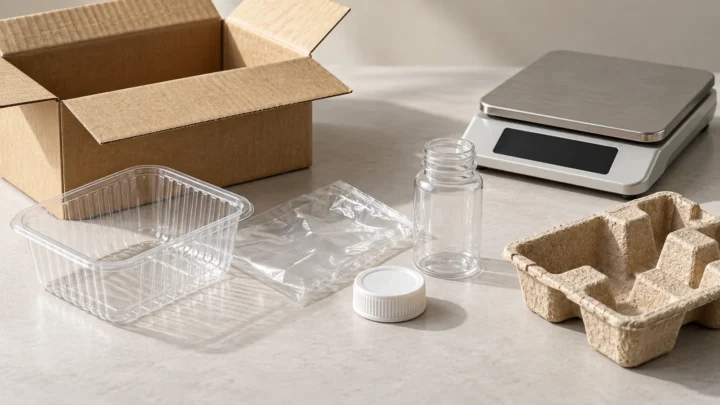
Sources checked 17 October 2026. The main image is an AI-generated editorial illustration; the explanatory figure is an original editorial diagram. Neither is a photograph of an identified product or facility, a laboratory result or an independent environmental assessment.
Legal discussion is limited to the identified provisions and dated source explanations. No product-specific compliance determination, comprehensive audit of subsequent measures or universal laboratory procedure is provided.
Official sources and reference notes
- [R1] European Commission / EUR-Lex. Commission Notice — Guidance document for Regulation (EU) 2025/40 on packaging and packaging waste. 10 June 2026. PPWR applies from 12 Aug 2026; Article 6 interpretation; compostability; minimisation; labels; Annex V composite-packaging interpretation; selected implementation questions. Official indexed extracts only; dated interpretation, not a complete current-law audit. Accessed 17 October 2026.
- [R2] European Union / EUR-Lex. Regulation (EU) 2025/40 on packaging and packaging waste. 19 December 2024; OJ 22 January 2025; applies 12 August 2026. Articles 5–16, 24–25, 29, 32, 38–39, 45; Annexes II, V, VII, VIII. Relevant adopted Council text checked; original OJ rendition was not directly retrievable. Accessed 17 October 2026.
- [R3] European Commission DG Environment. New EU rules on packaging enter into application. 11 August 2026. Current application milestone and policy context. Relevant public text checked; see the stated scope. Accessed 17 October 2026.
The public corrections channel is currently inactive. Read our corrections policy.