Short answer: Recyclable packaging is packaging that can move through a real material-recovery system after use: it can be collected, sorted, processed into a usable secondary material and returned to manufacturing. A package may be designed for recycling or pass a technical recycling test without being recycled in practice where it is sold. Recyclability therefore depends on both the package construction and the recovery system.
This is the distinction that many packaging claims miss. A PET tray may use a polymer with an established recycling process but carry a label, adhesive or barrier that interferes with sorting or reprocessing. A coated paper pack may release usable fibre in a laboratory yet be excluded from local paper collection. A mono-material flexible pouch may be compatible with a PE recycling process but still lack broad collection access.
The U.S. Environmental Protection Agency describes recycling as a loop of collection and processing, remanufacturing, and purchasing products made with recycled material. It also warns that not every material considered recyclable is collected in every community. [R1] The EU Packaging and Packaging Waste Regulation (PPWR) now makes a similar systems distinction in law by separating design for material recycling from collection, sorting and recycling at scale. [R2]
A useful recyclability assessment therefore asks more than “What material is this?” It asks whether the finished package can survive five gates: design compatibility, collection, sorting, reprocessing, and a usable material outlet at meaningful scale.
Recyclable packaging is a system property, not just a material property
Packaging materials have physical and chemical properties that affect recycling, but the material name is only the starting point. Recyclability depends on the interaction between the package and the recovery system.
EPA’s current definition is practical rather than purely theoretical: a recyclable product is one that can be collected, processed and manufactured into new products after use. EPA also notes that recyclable products do not necessarily contain recycled content and that not all recyclable materials are collected locally. [R1]
That leads to a more useful hierarchy of questions:
| Gate | Question | Typical evidence | Common failure |
|---|---|---|---|
| 1. Design compatibility | Can the complete package be processed in the intended recycling stream? | Design-for-recycling guideline, laboratory protocol, compatibility test, construction specification. | The base material is recyclable but labels, barriers, pigments, adhesives or mixed layers disrupt the process. |
| 2. Collection | Will users actually have access to a collection route for the package? | Municipal, commercial, deposit, take-back or dedicated collection program. | A technically recyclable pack is placed in residual waste because the local program does not accept it. |
| 3. Sorting | Can the package be identified and directed into the correct material stream? | MRF or sorting protocol, NIR test, size/shape criteria, operator acceptance. | The pack is too small, too dark, too flat, obscured by a sleeve, or misidentified as another material. |
| 4. Reprocessing | Can the sorted package be converted into a secondary material of useful quality? | Reclaimer or mill test, yield, contaminant level, fibre/plastic quality, process compatibility. | The package reaches a recycler but causes yield loss, contamination, stickies, haze or degraded material quality. |
| 5. Material use at scale | Is the recovered material actually used in a functioning recycling system? | Established reprocessing infrastructure, end markets, recycled-at-scale evidence or equivalent system data. | The material is technically recoverable but has too little throughput, weak demand or no stable downstream use. |
Editorial synthesis; qualitative comparisons are evidence questions, not measured product rankings. [R1] [R3] [R4] [R5] [R7] [R8]
The first gate is mostly about packaging design. The remaining gates depend increasingly on infrastructure, operations and markets. That is why a packaging team cannot establish real-world recyclability from a resin code, paper content percentage or laboratory test alone.
What does “designed for recycling” mean?
Design for recycling means configuring a package so that its components are compatible with the intended recycling process and do not unnecessarily reduce sorting, process yield or recycled-material quality.
RecyClass describes its methodology as the foundation of its Design for Recycling Guidelines, evaluation protocols, online tool and recyclability-certification framework. It addresses compatibility with existing recycling processes; a methodology overview is not a test result or certificate for a particular package. [R3]
The Association of Plastic Recyclers (APR) takes a similar process-specific approach. Its PET thermoform guidance explains how package size, shape, colour, labels, adhesives, inks, barriers and other components can affect PET sorting and reclamation. APR explicitly states that good design is essential but design alone is not sufficient to support a recyclability claim where the packaging format is not accepted for recycling. [R4]
The complete package matters
Design-for-recycling work should evaluate more than the main substrate. Relevant features can include:
- base resin, paper grade, glass or metal type;
- coatings and barrier layers;
- labels and sleeves;
- adhesives;
- inks, pigments and metallisation;
- closures, pumps, lids and valves;
- package size and shape;
- food or product residue;
- whether components separate during the intended recycling process.
For example, APR’s PET thermoform resource notes that high label coverage can affect optical sorting and that certain adhesives can reduce recycled-PET quality. It also identifies PLA as incompatible with conventional mechanical PET recycling, despite PLA itself being a polyester. [R4]
The lesson is not that every complex package is unrecyclable. It is that “same main material” does not automatically mean “same recycling behaviour.”
What is technical recyclability?
Technical recyclability generally refers to whether a package can be processed successfully under a defined recycling method or infrastructure configuration. It is evidence about compatibility with a process, not necessarily evidence that the package is collected and recycled in the market.
Fibre-based packaging provides a clear example. 4evergreen’s current Recyclability Evaluation Protocol uses laboratory methods representing conventional recycling, flotation-deinking and specialised paper-mill processes. The protocol produces a technical evaluation of whether a fibre-based package can be recycled under one or more of those process routes. [R5]
4evergreen separates that technical assessment from collection and sorting. Its broader toolkit includes separate guidance for package design and for improved collection and sorting, reflecting the fact that a technically recyclable paper package can still fail to reach the correct mill. [R6]
A laboratory test answers a bounded question
A good recyclability test can establish useful facts, such as:
- whether fibre disperses during pulping;
- how much usable material is recovered;
- whether a label or adhesive separates;
- whether a package sorts into the intended polymer stream;
- whether a barrier contaminates the recyclate;
- whether recycled-material quality remains suitable for a defined downstream application.
But the result applies to the tested specimen, method and conditions. It does not automatically prove collection access, municipal acceptance, actual recycling rate or compliance with every jurisdiction’s marketing rules.
Why collection is part of recyclability in practice
A package cannot be recycled if it never enters a recycling system.
EPA’s standardized terminology for municipal recycling explicitly tells users to check whether a material is accepted by their local curbside or drop-off program. The agency lists broad material groups and examples, but does not treat inclusion in a material category as universal local acceptance. [R7]
Collection can take several forms:
- household curbside collection;
- commercial or institutional recycling;
- deposit-return systems;
- retail drop-off;
- dedicated cup, film or carton collection;
- business-to-business take-back;
- closed-loop logistics within a factory, venue or distribution network.
The relevant question is not whether somewhere can recycle the package. It is whether the intended user in the target market has a credible route to that process.
Why sortability can decide whether recyclable material is recovered
Modern recycling systems often sort packaging by size, shape, density, colour, optical signature, metal detection or other physical characteristics. A package may contain a valuable recyclable material and still be lost if the sorting system cannot recognize or route it correctly.
APR’s PET thermoform guidance states that accurate sortation is a precursor to later recycling evaluations. Its examples show how size, colour, shape, label coverage and metal components can influence whether a PET pack reaches the PET bale. [R4]
RecyClass also treats sortability as a distinct part of plastic-packaging recyclability assessment rather than assuming that a compatible polymer will automatically enter the correct recycling stream. [R3]
Examples of sorting failures
A few design choices can create sorting problems even before reprocessing begins:
- a full-body sleeve hides the main container from optical detection;
- a very small component falls through size screens;
- a flexible package behaves like two-dimensional paper and is routed away from rigid containers;
- carbon-black or other difficult-to-detect surfaces interfere with optical identification;
- metallic components trigger ejection from a plastic stream;
- a package is visually similar to another polymer and enters the wrong bale.
These outcomes are process-specific. A design that performs poorly in one sorting configuration may perform differently in another, so packaging teams should avoid universal conclusions from one plant or one technology.
Reprocessing quality matters as much as getting into the bin
Collection and sorting are not the end of recycling. The package still has to be converted into a secondary raw material that someone can use.
EPA describes processing as the stage in which recyclables are sorted, cleaned and prepared for a mill or manufacturing facility. [R8] Industry recyclability methodologies then go further by assessing whether specific package components reduce process yield or the quality of the recovered material.
Examples include:
- an adhesive that remains with PET flake and causes contamination;
- a paper coating that forms stickies during repulping;
- a multilayer film that cannot be separated into useful polymer fractions;
- a dark pigment that limits the value of recycled resin;
- a glass colour mix that reduces closed-loop container applications;
- food residue or product contamination that makes recovery difficult.
Recycling therefore involves a quality question: does the recovered material retain enough value and functionality to substitute virgin or primary material in a meaningful application?
Recyclable, recycled and recycled content are different terms
| Term | What it refers to | What it does not prove |
|---|---|---|
| Recyclable | The package has a credible route through collection, processing and remanufacturing, subject to the relevant technical and market conditions. | That the package contains recycled material or that every unit will actually be recycled. |
| Recycled | A material or item has actually passed through a recycling process. | That its original package was designed optimally for recycling or that the resulting product can be recycled again. |
| Recycled content | A defined share of the package material comes from recovered material. | That the finished package is recyclable in the market where it is sold. |
Editorial synthesis; qualitative comparisons are evidence questions, not measured product rankings. [R1]
EPA makes this distinction explicitly: a recyclable product does not necessarily contain recycled material, and a recycled-content product is not necessarily recyclable in the consumer’s community. [R1]
This distinction matters for procurement because the evidence is different. Recycled content needs traceable material-input data. Recyclability needs package-design and recovery-system evidence.

Technical recyclability versus “recycling in practice”
The difference can be summarized as a chain.
| Evidence level | Question answered | Example |
|---|---|---|
| Material compatibility | Can the main material theoretically be recycled? | PET can be remelted into secondary PET. |
| Package design compatibility | Does the finished package avoid features that disrupt the intended process? | Labels, adhesives and barriers are compatible with a PET reclaimer’s process. |
| Technical recyclability test | Does the tested construction perform acceptably under a defined sorting/recycling method? | A fibre package achieves a positive score in a specified 4evergreen recycling route. |
| Recycling access | Can users place the item into an available collection system? | The target municipality or commercial program accepts the format. |
| Recycling in practice | Does the material routinely progress through collection, sorting and reprocessing into a usable output? | An established packaging category is collected and recycled through operating infrastructure. |
| Recycled at scale | Is the route established at a defined scale rather than limited to isolated pilots? | A regulatory or methodology-specific threshold demonstrates meaningful throughput for the packaging category. |
Editorial synthesis; qualitative comparisons are evidence questions, not measured product rankings. [R1] [R3] [R4] [R5]
No single row substitutes for the others. A pilot recycler can demonstrate technical feasibility without creating population-wide access. A municipal collection list can establish acceptance without proving high recycling yield. A laboratory score can inform design without measuring how many units are actually recycled.
The EU PPWR formalizes the difference between design and scale
The distinction is no longer only an industry methodology. In the EU, Regulation (EU) 2025/40 defines recyclable packaging through both design and system conditions.
Article 6 states that packaging is considered recyclable when it is designed for material recycling so that resulting secondary material can substitute primary material, and when, after becoming waste, it can be separately collected, sorted into specific streams without harming other recycling streams and recycled at scale. [R2]
In its June 2026 notice, the Commission interpreted Article 6(1) as applying from 12 August 2026, while explaining that the harmonised design criteria and recycled-at-scale provisions have later dates and act-dependent timing. This reports the dated guidance, not a completed assessment of a particular package or later implementing measures. [R9]
This article is not a PPWR compliance guide. The relevant point is conceptual: European law now explicitly separates design for material recycling from whether the packaging can move through collection, sorting and recycling at scale.
See the existing PPWR timeline for provision-specific context.
Why “recycled at scale” changes the conversation
A package can be technically impressive in a laboratory and still have little circular value if only a few specialist facilities can process it and very little material reaches those facilities.
PPWR’s future recycled-at-scale assessment is intended to add a system-level factor to the design assessment. The regulation describes recyclability performance grades and makes clear that, from the later phase, actual material recycled by packaging category becomes part of the assessment. [R2]
That does not mean one universal global definition of “at scale” now exists. Different jurisdictions and voluntary schemes use different thresholds and methods. The useful lesson is that recyclability claims are moving away from simple technical possibility toward evidence of functioning systems.
What does a recyclable claim mean in U.S. marketing?
In the United States, the FTC Green Guides address the consumer meaning of environmental marketing claims rather than setting a packaging-engineering standard.
The FTC’s current public summary says marketers should qualify recyclable claims when appropriate recycling facilities are not available to at least 60% of the consumers or communities where the product is sold. As access decreases, the qualification should become more prominent. [R10]
This 60% concept is a U.S. marketing-guidance threshold; it is not a scientific definition of recyclability and should not be copied into global technical specifications.
The FTC’s 2022 review request asked about collection without ultimate recycling; it was a consultation, not a final revision. The current public eCFR text checked for this article still gives the 60% access definition. [R11] [R10]
Examples: where a recyclable package can fail
PET bottle or thermoform
The PET base resin may have an established recycling route, but package design can reduce recyclability. APR identifies label coverage, colour, adhesives, metal features and other components as factors that can disrupt sortation or reclamation. [R4]
So “PET” is not the final answer. The finished construction still has to be sortable and compatible with PET reprocessing.
Paper or fibre package
A coated carton, cup or food package may release fibre successfully under a laboratory repulping method. That supports technical recyclability for the tested process. But if the package is not accepted in local paper collection or is routed away from the compatible mill, the fibres may never be recovered.
The paper-cup guide applies this distinction to PE, PLA and aqueous barriers.
4evergreen’s separate technical-recyclability and collection/sorting tools illustrate this distinction directly. [R5] [R6]
Mono-material flexible packaging
Moving from a difficult multi-polymer laminate toward a mono-material PE or PP design can improve compatibility with a target recycling process. But the redesign does not create collection infrastructure by itself. The practical claim still depends on whether flexible packaging is collected, sorted and reprocessed in the intended market.
Small components
A cap, sachet, coffee pod or other small component can use a recyclable material but still be lost in sorting because of its size or shape. “Made from recyclable material” and “this item will be recovered by the system” are different statements.
How should a buyer verify recyclable packaging?
A good evidence request follows the five gates rather than asking for one generic “recyclability certificate.”
| Check | What to request | What it helps establish |
|---|---|---|
| Complete construction | Material layers, component weights, labels, adhesives, inks, barriers, closures and dimensions. | What the recycler actually receives. |
| Target recycling stream | Named polymer, fibre, metal, glass or other material stream and target geography. | Which recovery process the design is intended to enter. |
| Design-for-recycling evidence | Current guideline assessment or test using the appropriate protocol and package variant. | Compatibility of the design with the target stream. |
| Sortability | Sorting assessment where size, colour, label coverage, shape or optical detection may matter. | Whether the package is likely to reach the intended material bale or stream. |
| Reprocessing | Yield, contaminant/reject behaviour, recycled-material quality or reclaimer/mill evidence. | Whether the package can become useful secondary material. |
| Collection access | Current municipal, commercial, deposit or dedicated collection evidence. | Whether intended users can actually enter the package into the system. |
| Claim review | Jurisdiction-specific marketing/legal review and required qualification. | Whether “recyclable” can be communicated in the proposed form. |
Editorial synthesis; qualitative comparisons are evidence questions, not measured product rankings. [R1] [R3] [R4] [R5] [R7]
Seven common recyclability mistakes
- “The material is recyclable, so the package is recyclable.” The complete construction can change sorting and reprocessing performance.
- “It passed a lab test, so it is recycled in practice.” A technical test does not prove collection or market access.
- “The recycling symbol means the local program accepts it.” Symbols and material identification do not replace current collection instructions.
- “Mono-material means recyclable everywhere.” It can improve process compatibility without creating collection infrastructure.
- “Recyclable means recycled content.” End-of-life capability and feedstock history are different claims.
- “Collected means recycled.” Material can still be lost during sorting, reprocessing or because of weak downstream markets.
- “One national rule defines recyclability globally.” Technical methods, marketing rules and legal definitions differ by jurisdiction and material stream.
A better way to write a recyclability claim
The strongest claim is bounded enough that another person can verify it.
Instead of:
“100% recyclable packaging.”
ask what the evidence can actually support:
“Designed for the [named material] recycling stream under [named protocol or guideline]; check local collection availability.”
Or, where stronger evidence exists:
“Accepted in [defined program/geography] and compatible with [named recycling process], subject to the listed preparation instructions.”
The exact wording should follow the applicable jurisdiction and evidence. The principle is to distinguish design, access and actual system performance rather than compressing all three into one adjective.
Methodology and editorial note
This article is an editorial synthesis of official government sources and current industry recyclability methodologies. It does not present an original sorting test, reprocessing trial or recycling-rate study. Voluntary industry methods are used to explain how technical recyclability is assessed; they are not treated as binding law. Legal references to the EU PPWR and U.S. FTC Green Guides are scoped to the cited jurisdiction and should be rechecked before publication.
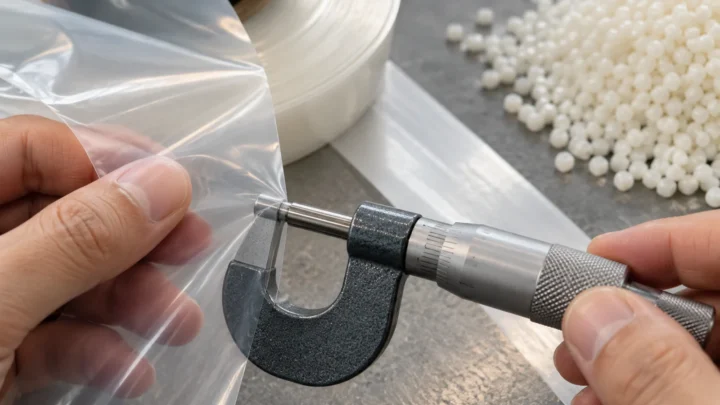
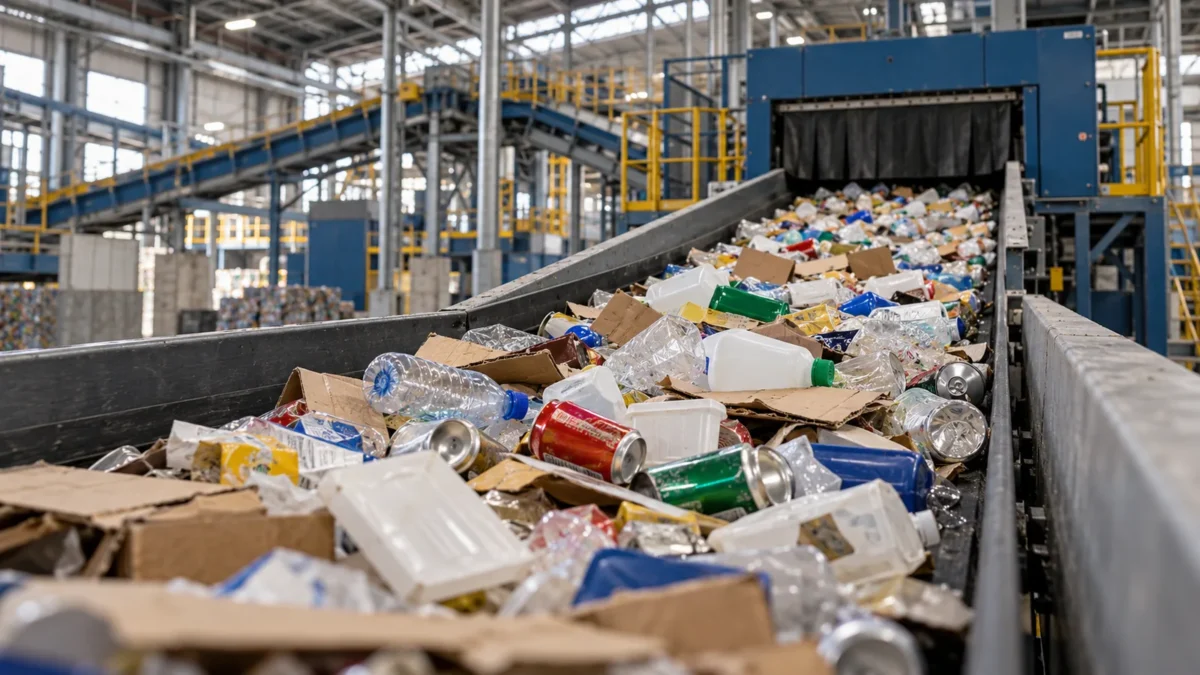
Sources checked 17 October 2026. The main image is an AI-generated editorial illustration; the explanatory figure is an original editorial diagram. Neither is a photograph of an identified product or facility, a laboratory result or an independent environmental assessment.
Official sources and reference notes
- [R1] U.S. EPA. Recycling Basics and Benefits. Last updated 22 June 2026. Recycling definition; collection/processing/manufacturing sequence; recyclable vs recycled-content distinction; local acceptance caveat. Relevant public text checked; see the stated scope. Accessed 17 October 2026.
- [R2] European Union / EUR-Lex. Regulation (EU) 2025/40 on packaging and packaging waste. 19 December 2024; OJ 22 January 2025. Article 6; Recital 28; Annex II Tables 3–4. Relevant adopted Council text checked; original OJ rendition was not directly retrievable. Accessed 17 October 2026.
- [R3] RecyClass. RecyClass Methodology / Resources. Live public source, checked 17 October 2026. Multi-step plastic-packaging recyclability assessment; design/sortability/recycling-stream compatibility. Relevant public text checked; see the stated scope. Accessed 17 October 2026.
- [R4] Association of Plastic Recyclers. PET Thermoform Packaging Design. November 2024. PDF pp. 2–9; especially p. 3 statement that design alone is insufficient for recyclability marketing where format not accepted. Relevant public text checked; see the stated scope. Accessed 17 October 2026.
- [R5] 4evergreen. Recyclability Evaluation Protocol. Current Version 1 / 2025 protocol page. Fibre-based technical recyclability across conventional, flotation-deinking and specialised mill routes. Relevant public text checked; see the stated scope. Accessed 17 October 2026.
- [R6] 4evergreen. 4evergreen Toolkit / Circularity by Design / Collection and Sorting. Live public source, checked 17 October 2026. Separation of design, technical recyclability and collection/sorting workstreams; current toolkit structure. Relevant public text checked; see the stated scope. Accessed 17 October 2026.
- [R7] U.S. EPA. Standardized Terms for Materials Accepted by Municipal Recycling Programs. Live public source, checked 17 October 2026. Local-program acceptance framing and standard material categories. Relevant public text checked; see the stated scope. Accessed 17 October 2026.
- [R8] U.S. EPA. The U.S. Recycling System. Live public source, checked 17 October 2026. Collection → processing → remanufacturing sequence and system complexity. Relevant public text checked; see the stated scope. Accessed 17 October 2026.
- [R9] European Commission. Commission Notice — Guidance document for Regulation (EU) 2025/40 on packaging and packaging waste. 10 June 2026. Section 6 — Date of application of requirement to ensure packaging is recyclable. Official indexed extracts only; dated interpretation, not a complete current-law audit. Accessed 17 October 2026.
- [R10] U.S. FTC. 16 CFR §260.12 — Recyclable claims. Live public source, checked 17 October 2026. §260.12(a)–(b), including the substantial-majority definition. Relevant public text checked; see the stated scope. Accessed 17 October 2026.
- [R11] U.S. FTC. Guides for the Use of Environmental Marketing Claims — Regulatory Review. 2022 request for comments. Recyclable-claims questions. Relevant public text checked; see the stated scope. Accessed 17 October 2026.
The public corrections channel is currently inactive. Read our corrections policy.