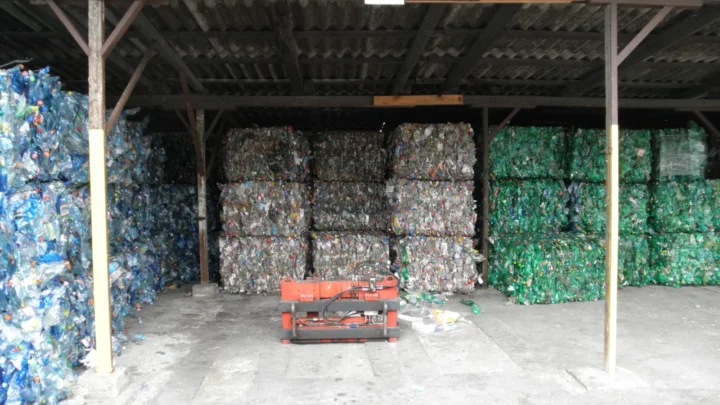
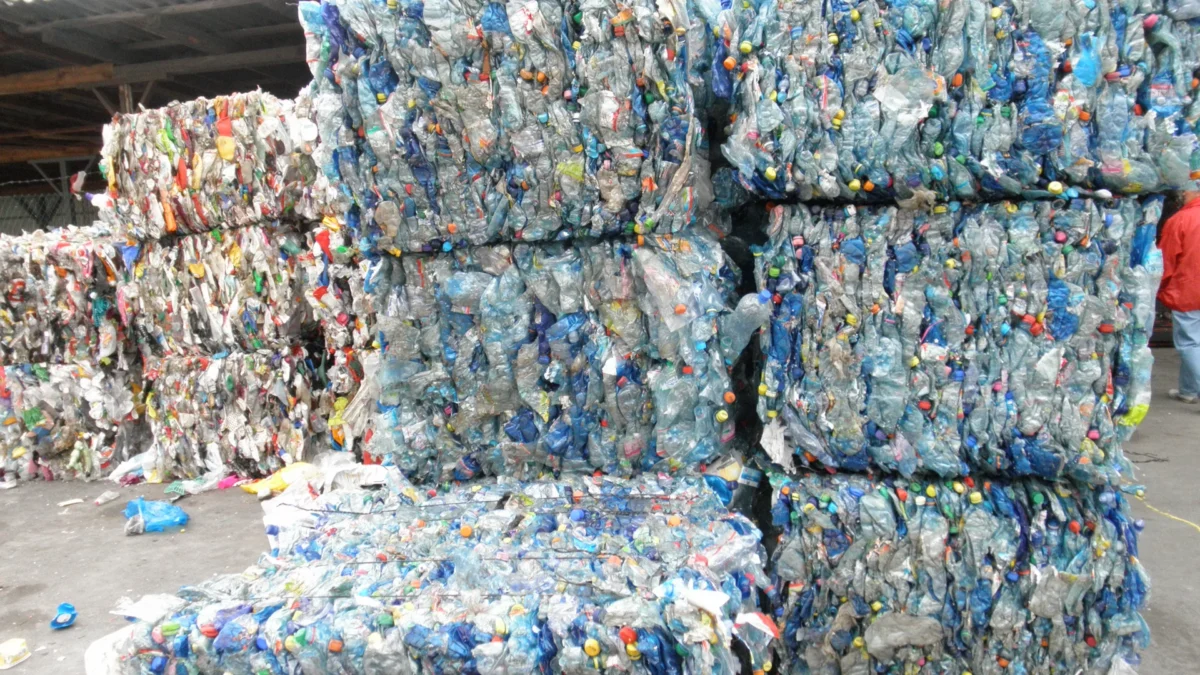
The EU’s plastic waste export ban for countries outside the OECD waste-shipment system began applying on 21 November 2026. The change brings B3011 plastic waste within the prohibition under the revised EU Waste Shipment Regulation. Export routes that previously handled this grade need a fresh review before a shipment is booked. [E1] [E2]
For packaging companies the first question is whether the consignment is classified as waste. Regulation (EU) 2024/1157 governs waste shipments. Trade in packaging products and materials that no longer have waste status calls for a separate legal assessment. [E2]
What changed this week?
Article 39(1)(d) prohibits exports for recovery of B3011 plastic waste to countries where the OECD Decision does not apply. Article 86(3)(c) makes that provision applicable from 21 November 2026. The Commission describes the combined effect of the plastic waste controls as a complete export ban for those destinations. Article 42(4) allows eligible governments to request inclusion on the authorised list for B3011 waste for recycling from 21 May 2029 at the earliest. Any listing would follow Commission assessment and a delegated act under Article 43(4). [E1] [E2]
Exports for recovery to countries where the OECD Decision applies follow a separate route. Article 44(2)(c) requires prior written notification and consent for B3011 waste from the general application date of 21 May 2026. The receiving-facility audit and documentary evidence requirements under Articles 44(2)(a) and 46 apply from 21 May 2027, subject to the regulation’s exceptions. [E2] [E3]
Export teams should confirm classification, route and receiving facility before relying on a bale’s resale value or the buyer’s intended recycling use.
The timeline at a glance
| Date | What it represents |
|---|---|
| 20 May 2024 | Entry into force of the revised Waste Shipment Regulation |
| 21 May 2026 | General application date; prior notification and consent for specified plastic waste exports |
| 21 November 2026 | Non-OECD plastic waste export ban applies |
| 21 May 2027 | Further export and receiving-facility requirements described by the Commission |
| 21 May 2029 | Earliest point identified for non-OECD countries to apply to receive plastic waste |
Sources: European Commission waste shipment guidance and Regulation (EU) 2024/1157. A later application is not an automatic authorisation. Verify transitional and shipment-specific rules separately.
Which historic trade flows are exposed?
The Commission estimates that the EU generates around 40 million tonnes of plastic waste annually and normally exports roughly 1 million to 1.5 million tonnes a year. It reports an approximately even split between OECD and non-OECD destinations in 2025. The five largest destinations it named provide a baseline for checking future route shifts. [E1]
| Destination | EU plastic waste exports in 2025 (tonnes) |
|---|---|
| Türkiye | 510,000 |
| Malaysia | 276,000 |
| Indonesia | 215,000 |
| Vietnam | 137,000 |
| United Kingdom | 108,000 |
Source: European Commission, 20 November 2026. These are reported flows of plastic waste, not plastic packaging waste alone. Türkiye and the UK are OECD members; the other listed countries are outside that group. The table is not an exhaustive destination list or a prediction of post-ban shipments.
The scale matters because a restriction can change the destination options available to waste traders and recyclers. Yet the pre-ban volume cannot be assumed to reappear as domestic recycled resin. Some of the material may need additional sorting or washing; buyers may require specifications that the output cannot meet; and the cost of recovery may differ from the earlier export route.
Implications for packaging recycling and recycled-content supply
A route may close before local facilities can qualify the displaced feedstock. A packaging converter therefore needs both the recycler’s incoming acceptance limits and a specification for the output grade. Compare committed sorting and washing capacity, historical reject rates and the grade the converter can actually use before counting replacement supply. See the separate EU recycled-plastic food-contact checks where the intended use is food packaging.
A recycler may accept mixed feedstock but obtain multiple output streams, including rejects. A producer of clear bottles may require colour and contamination controls that are irrelevant for some non-food applications. Food-contact suitability introduces another layer of requirements. The waste shipment change does not authorise a recycled resin for contact with food.
Consider a supply chain that previously sent sorted film bales abroad. An alternative EU receiving facility must have the equipment, capacity and acceptance criteria to treat the actual material. A purchase contract for the resulting recyclate also needs to work economically. Merely identifying an available waste treatment site is not equivalent to securing a dependable resin supply.
A separate digital paperwork development on 25 November
On 25 November, the Commission reported agreement with Member States to keep electronic exchange of Annex VII documents through DIWASS voluntary until 1 September 2027 for the relevant green-listed waste shipments. The announcement concerns shipments exempt from prior-consent procedures. It says digital use for shipments requiring prior consent remains mandatory. [E4]
Keep the two decisions separate in a dispatch checklist. The DIWASS transition changes how some permitted green-listed shipments can be documented. Legal eligibility for the destination remains governed by the waste shipment rules.
What businesses should verify now
Confirm whether the consignment is waste, the applicable waste entry and the rules for its destination and transit countries. Where a notification and destination-authority acknowledgement predate 21 May 2026, ask the competent authorities to check the transition under Article 85(3). A signed commercial contract alone does not establish that transition. [E2]
Packaging buyers can make the same supply chain more visible by asking recyclate suppliers which recovery facilities feed the proposed grade, how input and output quality are measured, and whether an alternative source has been qualified. Claims about recycled content should be supported with records tied to the relevant material and finished product.
The next evidence to watch is the change in actual waste shipments, processing capacity and qualified recyclate availability. The Commission’s announcement establishes a change in law; it does not yet establish a particular economic outcome. This is a dated regulatory overview, not a determination that any specific shipment is permitted or prohibited.
Sources
- [E1] European Commission, EU bans plastic waste exports to non-OECD countries, 20 November 2026. Application date and historical export baseline.
- [E2] Regulation (EU) 2024/1157 on shipments of waste, consolidated 30 July 2026. See Articles 39, 42–44, 46, 85 and 86.
- [E3] European Commission, Plastic waste shipments. Scope of plastic waste shipment controls.
- [E4] European Commission, DIWASS transition for Annex VII documents, 25 November 2026. Annex VII digital transition for covered shipments.
Found an error? Read our corrections policy and contact the editors.