An EU transport-packaging buyer who reads only the headline “40% reusable by 2030” can make the wrong decision. Article 29 of Regulation (EU) 2025/40, the Packaging and Packaging Waste Regulation (PPWR), contains a general 40% target for specified transport packaging used within the Union from 1 January 2030. It also contains stricter reuse requirements for certain routes, exclusions for particular packaging types and separate rules for grouped packaging. The Commission’s June 2026 guidance clarifies the treatment of international consignments and the economic operator responsible. [S1] [S2]
For related context, read our analysis of the broader phased PPWR framework.
For logistics teams, the unit of analysis should be a packaging type on a defined route under a particular operator, not the loose category “shipping boxes.” An imported goods shipment, an internal transfer and a domestic business-to-business delivery can create materially different questions. This article explains the architecture, not a legal determination for a particular shipment.
The three distinct transport-packaging rules
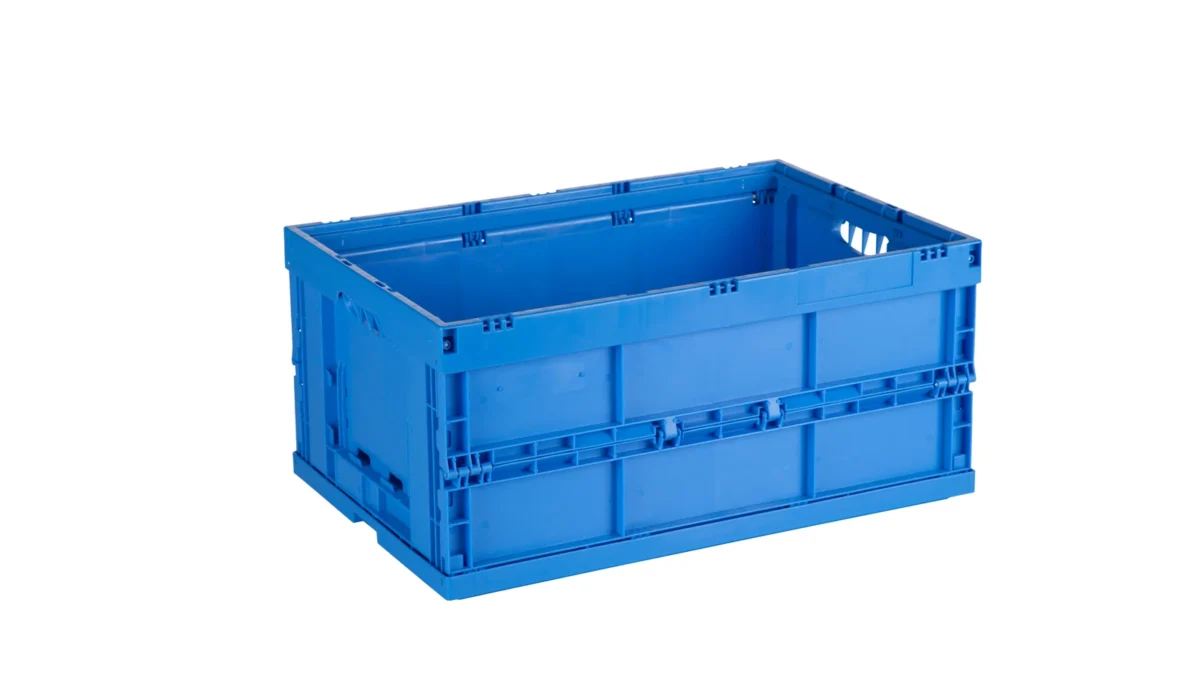
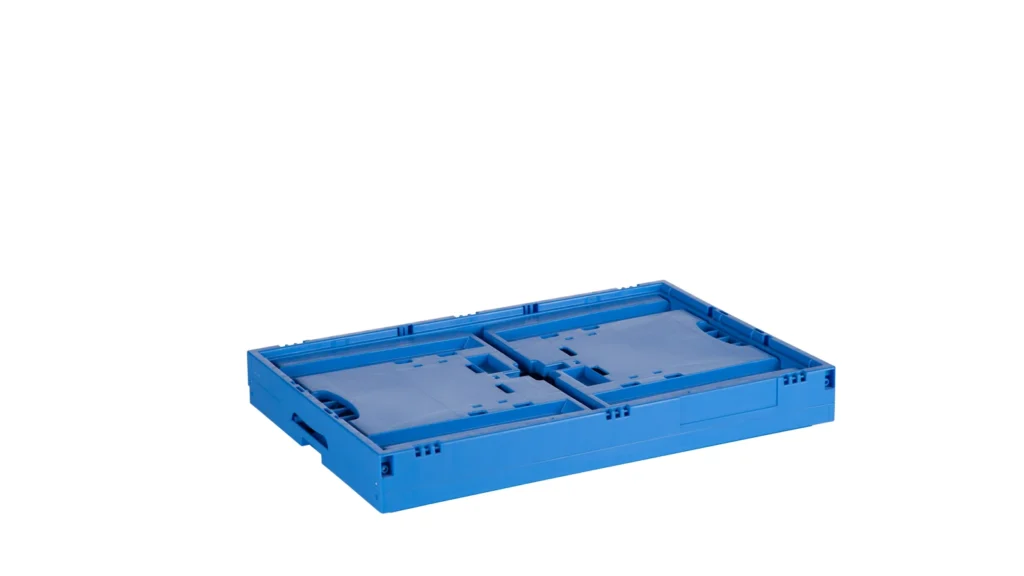
Article 29(1) establishes the general rule for specified formats: from 1 January 2030, operators using transport packaging or sales packaging used for transporting products within the Union must ensure at least 40% of such packaging in total is reusable within a reuse system. The listed formats include pallets, foldable plastic boxes, trays, plastic crates, intermediate bulk containers, pails, drums, canisters and certain flexible formats used in pallet stabilization. The 2040 language is an objective to endeavour to reach 70%, not the same kind of binding minimum as the 2030 figure. [S1]
Article 29(2) concerns relevant packaging moving between sites of one operator or linked enterprises. Article 29(3) concerns deliveries to another economic operator within the same Member State. For the covered formats and subject to exclusions, those routes are required to use reusable packaging within a reuse system from 2030, rather than merely satisfy the general 40% aggregate target. [S1]
A subsequent binding measure changes the treatment of pallet wrappings and straps. Commission Delegated Decision (EU) 2026/429 exempts operators using those formats to stabilise and protect palletised products from the 100% reuse requirements in Article 29(2) and (3). It does not remove the general Article 29(1) 40% framework. Read the route rules with this format-specific exemption, rather than applying 100% reuse to every component. [S3]
| Route or packaging type | 2030 Article 29 reading | Qualification |
|---|---|---|
| Covered transport packaging used within the EU | At least 40% reusable under Article 29(1) | Applies to listed formats and relevant operators, subject to exclusions |
| Covered movements between own or linked sites | Reusable within a reuse system under Article 29(2) | Route-based derogation from general 40% rule Pallet wrappings/straps have the separate Decision 2026/429 exemption. [S3] |
| Covered deliveries to another operator in the same Member State | Reusable within a reuse system under Article 29(3) | Route-based derogation with scope conditions Pallet wrappings/straps have the separate Decision 2026/429 exemption. [S3] |
| Cardboard boxes | Excluded from Article 29(1)–(3) by Article 29(4)(d) | Do not mistake this exception for a general PPWR exemption |
| Grouped non-cardboard boxes | Separate 10% target by 2030 under Article 29(5) | Only the specified grouped-packaging use |
The table is an editorial abstraction of the law. A full compliance conclusion also depends on definitions, exemptions and any later implementing measures. [S1]
Why cardboard boxes are a consequential exception
Article 29(4)(d) explicitly excludes cardboard boxes from the obligations in paragraphs 1 to 3. This is a critical correction to summaries that treat every transport box as subject to 40% or 100% reuse. The exception is packaging-format specific. A plastic crate and a corrugated cardboard box do not have identical reuse obligations merely because both are boxes used to move goods. [S1]
The exception does not mean cardboard is outside the entire PPWR. Packaging minimization, material rules, recyclability and economic-operator obligations may still matter under other articles and their own application schedules. Nor does “cardboard” cover every fiber-based molded tray or composite transport component automatically. Composition, function and legal category must be established rather than inferred from an environmental marketing term.
Article 29(4) also lists exemptions for transport packaging of dangerous goods under specified rules, certain custom-designed packaging for large-scale machinery and equipment, and certain flexible formats in direct contact with food, feed or ingredients. An ordinary food shipment does not automatically fall under the direct-food-contact flexible-packaging exemption; the legal wording and actual packaging construction matter. [S1]
Import shipments: when does the EU journey begin?
For importers, the most useful clarification is in the Commission’s June 2026 interpretive guidance. It describes the transport reuse requirements as applying to use within EU territory. Imported packaged goods are treated as entering the relevant downstream chain after import procedures and placing on the EU market, typically at the first EU warehouse. The guidance distinguishes a warehouse from a final destination. [S2]
A consignment arriving at its first EU warehouse and destined for a single final destination does not have to be unpacked and repacked solely to meet the reuse targets. However, distribution centres and logistics hubs are not automatically treated as final destinations for this purpose. The route and activities of the operator therefore have to be examined. [S2]
This matters for an overseas foodservice-packaging manufacturer shipping cartons to a European distributor. The export palletization at the third-country factory is not necessarily the same legal event as subsequent EU distribution. Once goods are imported, an EU operator may use fresh pallets, crates or stabilization systems for onward movements. Those operations need their own route classification. A blanket statement that all imported pallets must be reusable upon arrival would overstate the Commission’s guidance.
Who is accountable for the percentage?
The Commission guidance states that the reuse targets attach to the economic operator using the specified transport packaging. In its interpretation, that is the operator placing products on the EU market in the relevant transport packaging, potentially a manufacturer, importer or distributor. [S2]
The original packaging material supplier might not be the party responsible for calculating the target in a particular transaction. That supplier can still be essential in providing the construction, dimensions, durability and handling data needed to choose a compliant system.
The word “system” is as important as the word “reusable.” A robust transport container that is thrown away after one journey does not become compliant simply because its manufacturer calls it reusable. The design has to operate within an actual reuse arrangement, with returns, circulation, cleaning or inspection where needed, and relevant tracking. The legal definition and system requirements should be checked alongside Article 29.
How to calculate a real business exposure
Start with an auditable packaging inventory, grouped by the operator and the packaging format. Record the route, the unit or units relevant to the legal calculation, the reuse-system status and any exemption. Do not calculate a percentage until the applicable methodology is confirmed, including any implementing rules.
Article 30(1) identifies equivalent units for the calculations under Article 29(1) and (5). Article 30(3) requires a Commission calculation methodology, and Article 30(4) makes the obligation to demonstrate achievement apply from 1 January 2030 or 18 months after that implementing act enters into force, whichever is later. That demonstration timetable is separate from the target wording in Article 29. [S1]
A distribution company should at least be able to answer these practical questions:
- Which pallets, crates, trays, drums, straps or other transport-packaging formats does it actually use inside the EU?
- Are movements between its own sites, to a linked undertaking, to another operator in the same Member State or across Member States?
- Which items are cardboard boxes and which belong to another material or format?
- Does an item circulate through a documented reuse system, and can that participation be evidenced?
- Where did the packaging first enter the EU distribution chain, and was the first EU warehouse a final destination or a hub?
- What evidence supports any dangerous-goods, large-equipment or direct-food-contact exclusion?
The table and questions are planning tools. They are not the official denominator or methodology for a legal percentage calculation. They make the later legal assessment possible.
A practical choice: returnable crates or single-use cartons?
Consider a hypothetical EU food manufacturer sending frozen goods to a nearby warehouse and then to a retailer. For a relevant reusable plastic crate, the internal-site and domestic-delivery rules may create stronger reuse expectations than the 40% headline. A corrugated cardboard box, however, falls under the paragraph 4 cardboard-box exception for those reuse obligations, while other PPWR rules still require separate attention.
The environmental conclusion is not predetermined. A reusable crate may need return transport, washing, storage and loss management. A one-way cardboard carton may have different material intensity, protection, collection and recycling characteristics. A meaningful comparison must use the same functional delivery, damage rate, distance, reuse count and recovery assumptions rather than deciding by material label.
The regulation is a compliance framework, not a complete life-cycle assessment of which option produces fewer emissions. Confusing those two roles can produce an expensive switch that solves neither the real legal requirement nor the operational problem.
Expert interpretation versus binding text
The European Commission’s 10 June 2026 notice provides specific interpretive guidance on sales packaging used for transport, imports, responsibility and exemptions. Crucially, the notice itself says it does not replace or amend the PPWR, which establishes the legal obligations. The Court of Justice of the European Union retains the role of authoritative interpretation of EU law. [S2]
This is why the careful phrasing is “the Commission interprets” when referring to the first-warehouse rule, and “Article 29 requires” when describing the legislative wording. The two sources work together but are not interchangeable.
The editorial position is that compliance planning should shift away from material-only tables toward route-and-operator diagrams. A manufacturer that knows a crate’s resin and weight but cannot identify its customer’s routes has only half the information needed to assess transport reuse. Conversely, a logistics operator that knows the route but cannot separate cardboard boxes from other packaging may overstate the scope.
A pre-2030 roadmap for EU packaging teams
In 2026–2027, the first practical move is to map transport flows and packaging formats. In 2027–2028, teams can test return logistics, handling damage and record systems rather than buying an entire new pool of reusable assets without piloting it. Before 2030, the relevant implementing measures, national measures within EU-law boundaries and operational definitions should be checked again.
Suppliers should document what they can actually demonstrate: repeated use cycles in a stated application, cleaning or inspection controls, dimensional tolerances, stacking load limits and traceability. None of those individual tests, in isolation, proves full PPWR conformity. Contract terms also need to identify who owns or returns the packaging and who retains the compliance evidence.
The most defensible immediate step is to create a packaging-by-route inventory and classify exemptions provision by provision. A generic demand to replace every transport carton with a returnable crate is not what Article 29 says.
What can still change before application?
The law is in force and broadly applicable from August 2026, while the transport reuse targets discussed here begin on 1 January 2030. Detailed implementation, guidance and any permitted exemptions require monitoring. Before publishing a firm compliance determination for a specific operator, verify the up-to-date consolidated Regulation, subsequent official measures and the exact packaging and route facts. [S1] [S2]
This article’s source cutoff is 16 November 2026. Its central conclusion remains conditional: the 40% target is only one of several Article 29 rules, and cardboard boxes plus international transport require special attention.
Sources / References
- S1. European Union, Regulation (EU) 2025/40 (PPWR), Article 29, Official Journal 22 January 2025. Binding legal text; Article 29(1)–(5) percentages, routes and exclusions; official version to be rechecked at publication.
- S2. European Commission, Guidance document for Regulation (EU) 2025/40, C/2026/3084, Official Journal 10 June 2026. Interpretive notice, especially sections 18–21; full public text; not a legislative amendment.
- S3. European Union, Commission Delegated Decision (EU) 2026/429, 25 February 2026, Article 1. Binding exemption for pallet wrappings and straps from Article 29(2)–(3); official legal text checked on 16 November 2026.
Found an error? Read our corrections policy and contact the editors.