Two factories can buy machines described as “molded fiber equipment” and end up with fundamentally different production systems. Conventional wet molded-fiber manufacturing disperses pulp in water, forms a wet preform and removes moisture through drainage, pressing and drying. A newer dry-forming approach opens fibers, air-lays them into a web and consolidates the web using heat and pressure. The processes share a fiber feedstock and some end-use ambitions, but they do not share the same water handling, forming physics or quality-control priorities. [S1] [S4] [S3]
For related context, read our analysis of molded-fiber wet strength and processing.
The better machine is not the one with the most persuasive sustainability claim. It is the one that can repeatedly produce the specified item at an acceptable yield and cost, with documented product safety and a viable end-of-life pathway. A thin protective insert, an egg carton and a grease-resistant takeaway container can place very different demands on the forming process.
Wet molded fiber: a water-based forming system
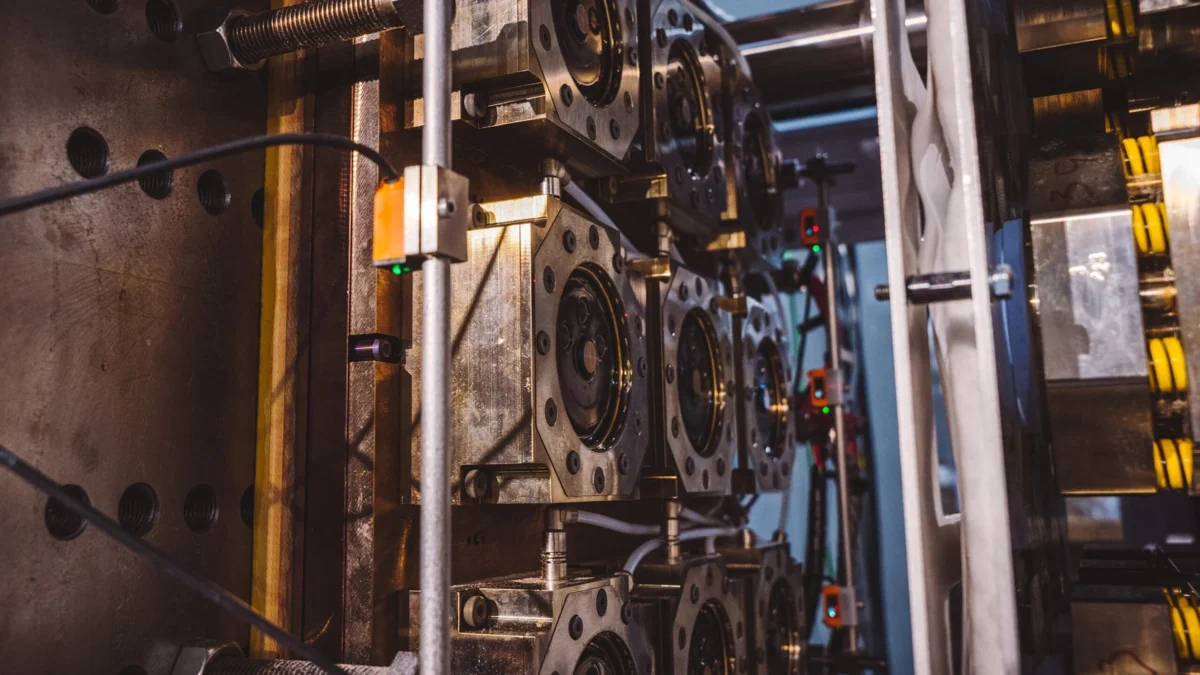
A typical wet process begins by preparing and refining fibers, suspending them in water, depositing the fiber network on a mold or screen, removing water with vacuum or pressing, drying, trimming and inspecting the product. Higher-finish thermoformed products may use heated matched tooling. Machine designs and process order differ, so this is a process model, not the operating instructions for every wet line. [S4] [S4]
Water is useful here because it transports and distributes fiber and helps establish the web structure. It also creates a manufacturing burden: the mill must remove the water again, often using vacuum, pressing, heat and time. The effective drying load depends on the solids level after forming, drainage behavior and product geometry, not just the brand of heater.
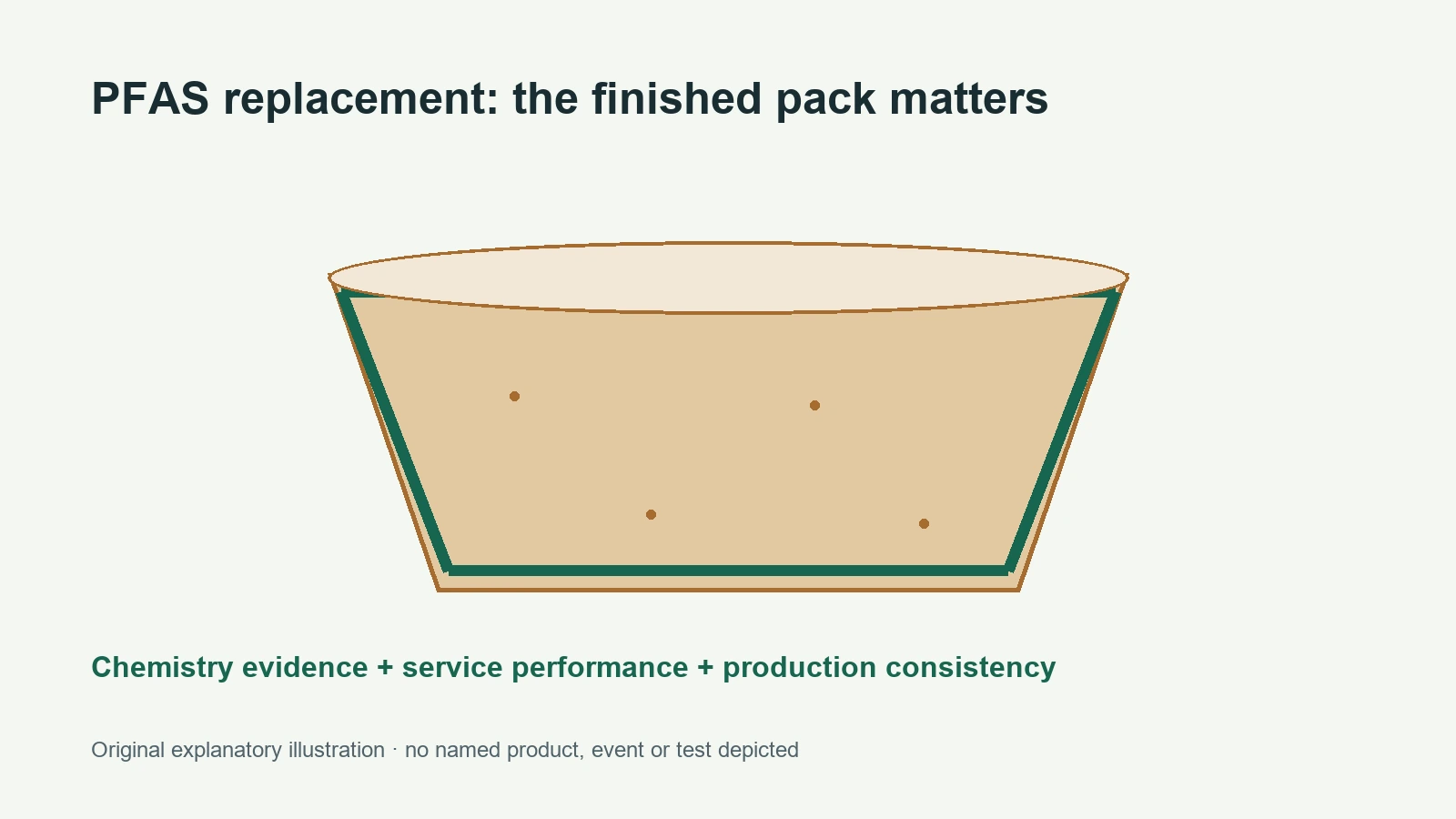
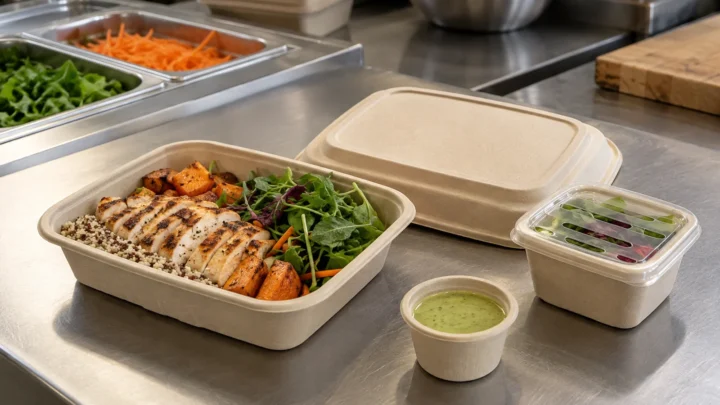
Wet molding is established in trays, protective inserts and foodservice packaging. It can accommodate agricultural fibers such as sugarcane bagasse, but the finished article’s resistance to grease, hot food or moisture depends on its actual fiber blend, geometry and additives or barrier construction. “Made from bagasse” is not a food-contact compliance certificate or evidence of oil resistance.
Dry molded fiber: fiber distribution moves upstream
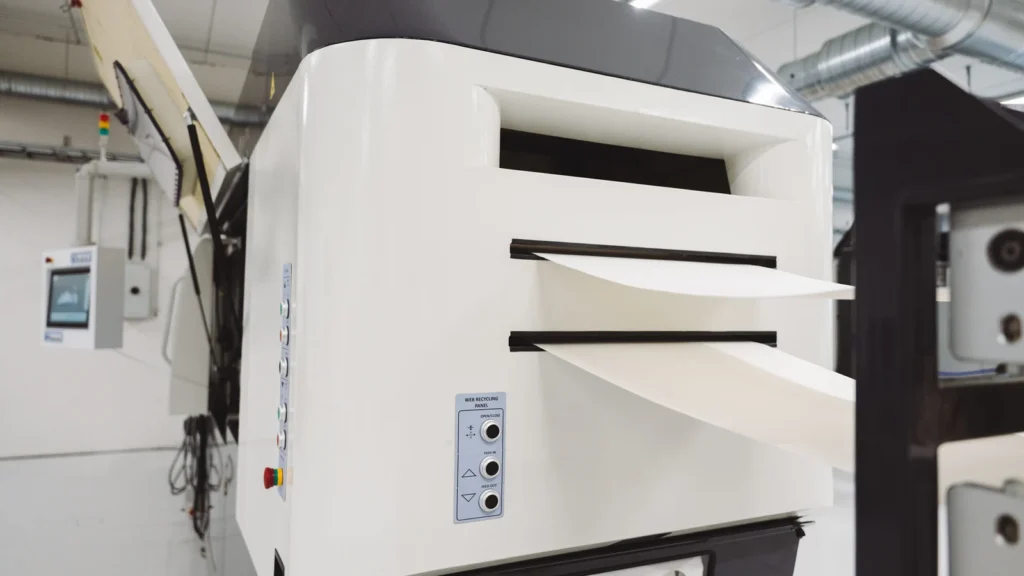
PulPac describes its Dry Molded Fiber process as milling and defibrating commercial pulp, air-laying a dry fiber web, adding barriers where needed and using heated pressure tooling to form the part. The company also describes returning process offcuts to the line. This is an identifiable commercial process, not a universal definition covering every research-scale dry-forming method. Also distinguish dry forming from traditional dry-press molded pulp: a process can press or dry a preform and still start with a wet slurry. The incoming fiber-forming route is the useful distinction. [S1]
Dry-forming approaches reduce or remove the slurry-handling and bulk drying stage typical of conventional wet molding. That can alter energy and water demand, footprint, cycle-time potential and the economics of short- or high-volume runs. The extent of the benefit, however, depends on whether upstream pulp drying, additives, equipment utilities, manufacturing yield and plant boundaries are included. Vendor statements about carbon reductions must not be presented as independently verified comparisons without a like-for-like assessment.
A research study by Eva Pasquier and colleagues at RISE PFI investigated dry forming of CTMP fibers through air-laid web formation and hot pressing. The researchers report that temperature, pressure and fiber composition affected densification and tensile performance under the studied conditions. Their findings are useful for explaining process sensitivity; they do not certify every dry-molded commercial package. [S3]
The publisher issued a 2025 correction to Figure 6 of the Pasquier study. This article uses the qualitative process findings, not an uncorrected Figure 6 value or a cross-process performance ranking. The correction is part of the source record and must travel with any later numerical reuse. [S3]
Where the machine architectures diverge
| Manufacturing step | Wet molded fiber route | Dry molded fiber route |
|---|---|---|
| Fiber preparation | Pulp dispersed in water to form slurry | Pulp mechanically opened/defibrated for dry air-laying |
| Shape formation | Fiber deposited on forming mold or screen; wet preform | Fiber web formed then consolidated in heated tooling |
| Water management | Water circulation, drainage, dewatering and drying central | Avoids high-volume slurry forming; fiber moisture still relevant |
| Primary process sensitivity | Drainage, solids level, vacuum, hot pressing, drying | Web uniformity, density, fiber bonding, heat/pressure and residence time |
| Common defect questions | Thin spots, warpage, wet spots, uneven walls, rim accuracy | Poor web distribution, weak corners, density gradients, cracking |
| Validation requirement | Finished-part performance and production yield | Finished-part performance and production yield |
This table is a qualitative engineering synthesis based on the cited technical research and vendor descriptions. It is not a quantified energy, carbon, cost or speed ranking. [S1] [S4] [S3]
Energy is not a fair comparison until the boundaries match
Dry forming avoids using large volumes of process water to distribute fibers. That can reduce onsite water handling and the thermal duty associated with removing that added water. But the fibers themselves have been processed and dried somewhere in the supply chain; a dry machine’s absence of a wet-forming tank does not eliminate upstream pulp-processing impacts.
Conversely, wet processes may recover heat or water, use efficient pre-dewatering and make products that run at good yield in their specified geometry. Two lines should be compared using equivalent acceptable product output and a measured manufacturing boundary. A machine brochure’s energy figure “per cycle” is not comparable to a different manufacturer’s figure “per kilogram of shipped parts” without conversion and yield adjustment.
The manufacturing comparison should record electrical energy, thermal energy, freshwater intake, wastewater treatment, rejected parts and the downstream operations necessary to make a saleable article. If different pulp input forms are used, the upstream burden needs its own transparent accounting.
Material strength can reverse a simple efficiency argument
In research published in the Nordic Pulp & Paper Research Journal, Kaplan, Johansson and Östlund analyzed mechanical behavior of dry-formed cellulose materials and compared selected properties with wet-formed literature values. The work found that properties depended on density and loading mode, with some tensile and shear-strength measures lower than the wet-formed comparisons. That is a useful caution against assuming that efficient shaping automatically produces equal mechanical properties. [S5]
For a protective insert, the relevant quality target may be compression and cushion response. For a molded bowl it may be stiffness, rim control, oil and water resistance or sealing compatibility. A lab tensile measurement is not a substitute for a filled-bowl test, and a drop test on an insert is not a food-contact assessment.
The US Forest Service’s 2026 research on PFAS-free wet thermoformed pulp trays also demonstrates how much conventional process tuning matters. Jinwu Wang and colleagues evaluated pulp types, refining and selected non-PFAS barrier approaches using a pilot-scale molding sequence with vacuum deposition, dewatering and hot pressing. The observed material and barrier effects apply to the specimens and test settings; they should not be extended to every molded-fiber supplier. [S4]
A manufacturer-side illustration: bagasse food containers
Bioleader, a foodservice packaging manufacturer and a disclosed industry/commercial related party of Degradable Packaging, describes a wet-fiber manufacturing flow for its bagasse containers: pulp preparation, vacuum forming, hot pressing and drying, trimming, inspection and packing. Its published process description emphasizes that fiber mix, mold geometry and process control affect the finished tray. This is an attributed manufacturer account, not an independent comparison of Bioleader’s products against dry-forming competitors. [S6]
The practical insight extends beyond one company: a customer ordering a molded-fiber clamshell is purchasing a finished geometry, lid fit, stiffness and barrier performance, not a forming-process label. Wet or dry manufacturing should be selected against that specification. A lid that fails because the rim varies in shape cannot be rescued by a carbon-footprint marketing claim.
Five commercial tests before selecting a line
1. Define the exact product. Provide drawings, target wall thickness or mass, rim tolerances, stacking height, food-contact scenario, barrier needs and any finish requirements. “Nine-inch tray” is not enough when sealing and lid fit matter.
2. Run realistic raw-material variation. The trial should include commercial feedstock lots rather than a single optimized lab batch. Both slurry formation and dry fiber distribution are sensitive to variation, though for different reasons.
3. Measure good parts, not machine strokes. Establish acceptable units per hour, the rejection categories, startup waste and stable operating period. A nominal short cycle time does not determine shipped output.
4. Test the application. For food packaging, use the relevant food type, holding time and temperature; evaluate seal or lid integrity as a separate requirement. For industrial inserts, measure the loads and drops that correspond to the protected product.
5. Verify recovery and legal claims. A fiber item can include coatings, additives and assemblies that affect recycling or composting. Substrate origin alone is insufficient for a declaration, and a machine purchase cannot supply the necessary certification evidence.
What the cost model must contain
A realistic machinery bid includes capital equipment, tooling, installation, utilities, maintenance, operators, production changeovers, raw-material conversion yield, finishing and quality inspection. For wet systems, utilities for pulp slurry and water handling may be substantial. For dry systems, air-laying consistency, dust management, tooling and feedstock handling deserve specific diligence.
A supplier could present a low energy figure but require an expensive barrier or produce more rejects in a difficult geometry. Another line might consume more energy per cycle yet deliver a lower cost per accepted product because its yield is stable. The useful economic denominator is total verified cost per accepted item under comparable service requirements, not just machine speed.
Editorial verdict: compare systems, not slogans
Dry-forming technology is a meaningful engineering development because it changes fiber formation and reduces reliance on wet slurry processing at the molding stage. Wet thermoforming remains a significant manufacturing route, especially for established fiber foodservice items and applications that benefit from its process characteristics. The available research supports comparing the two; it does not support declaring an unconditional overall winner. [S3] [S4] [S5]
A prospective buyer should request a joint machine-and-material trial, including barrier formulation and finished-package tests, before relying on advertised cycle times or emissions claims. For the next stage of industry reporting, the most informative evidence would be independently documented, line-scale comparisons with matched packaging functions, fiber input boundaries and rejection rates.
Sources / References
- S1. PulPac, Dry Molded Fiber: process description, public company technology overview, accessed 16 November 2026. Manufacturer account of one commercial dry-forming route; not an independent LCA.
- S3. Eva Pasquier, Kathrin Mörseburg, Kristin Syverud and Jost Ruwoldt, Effect of Raw Material and Process Conditions During the Dry Forming of CTMP Fibers for Molded Pulp Products, Journal of Natural Fibers, 2024. Scholarly research; process and mechanical findings under studied conditions. Publisher correction: DOI 10.1080/15440478.2025.2472317 (2025), Figure 6 corrected. Original DOI access was restricted during recheck; repository manuscript and publisher correction record were used for the bounded discussion.
- S4. Jinwu Wang, Seongkyung Park and Colleen C. Walker, PFAS-free molded pulp trays: effects of pulp type, refining level, and cellulose nanofibrils or biowax addition on tray performance, Cellulose, 2026. USDA research record; pilot-scale wet-thermoforming results, not universal product certification.
- S5. Kaplan, Johansson and Östlund, Characterising the mechanical behaviour of dry-formed cellulose fibre materials, Nordic Pulp & Paper Research Journal, 2025. Scholarly comparison of material response; bounded by investigated specimens.
- S6. Bioleader, Dry Molded Fiber vs Wet Molded Fiber, manufacturer-owned technical article, accessed 16 November 2026. Related-party manufacturer process perspective only, not independent validation; candidate link subject to editorial disclosure review.
Found an error? Read our corrections policy and contact the editors.