Yes. Some horizontal flow wrappers already used for chocolate can run paper. For Cadbury’s Energy tablet, Syntegon fitted a forming unit and sealing jaws made for the chosen paper and pack size. For Finland’s Panda Milk chocolate, the work documented by the partners included applying a cold-seal coating in a pattern that the existing wrapper could close. These cases give a factory three questions for its first trial. Can its forming tool fold the chosen paper around the bar? Can the seals close in the right place? How many saleable packs will the line deliver across a shift? [S1] [S3] [S4]
For the broader capital decision, see when to retrofit or replace food packaging machinery.
Cadbury kept the wrapper and changed the parts that touch the paper
In January 2020, Mondelēz Australia listed a Cadbury paper-packaging trial at Claremont. Equipment maker Syntegon describes the work on the existing H-series machine used for the Energy tablet. Its engineers used the dimensions of the Cadbury pack and the characteristics of the selected paper to design the former, which guides the flat web around the tablet, and the jaws that apply pressure at the seal. They tested prototypes that used 3D-printed components, manufactured the tooling and supervised a production run at the Cadbury site. [S1]
A prospective buyer can make a tooling quote more specific by sending the machine builder the intended reel specification, a dimensioned drawing and actual tablets. Ask the builder to identify which former and jaws it would retain, which it would replace and which combinations of tablet and reel the quote covers. If the factory also needs to run the original wrapper material between paper orders, include a change back to that material in the trial. The minutes spent exchanging parts and recovering acceptable packs belong in the production plan.
Syntegon reports that its tests showed no speed limitation. Its account gives no before-and-after figures for acceptable packs per minute, length of the run or reject rate. A buyer can use that account to specify hardware. A contractual output commitment needs a result for the proposed machine, reel and pack. [S1]
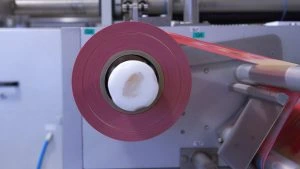
Panda put the seal pattern on the paper reel
In March 2025, UPM described a Finnish retail pilot for Orkla Suomi’s Panda Milk chocolate. The selected base paper was UPM Asendo Pro at 75 g/m². UPM identified resistance to chocolate grease as a reason for the choice. That figure describes the grammage of the specified paper. A buyer calculating packing material per bar would also need the finished, converted reel specification and the area used per pack. [S2]
Walki Westpak printed the wrapper and applied cold-seal lacquer in a frame corresponding to the sealing areas. The partners say this allowed the pack to close on Orkla Suomi’s existing flow wrappers, previously used with plastic packaging. For a new trial, the converter could reproduce the seal pattern and the plant could record its own tooling, settings and changeover time. Those machine details are absent from the partners’ accounts. [S2] [S3]
UPM also reported that the pack underwent shelf-life testing. Orkla later recorded that the six-month pilot had been completed and that the paper wrappers replaced the usual polypropylene wrappers during that period. Six months describes how long the pilot ran. The partners did not publish a shelf-life result in months or announce a change for the full Panda range in those records. [S2] [S4]
Look for the fault where the paper folds and where the seal closes
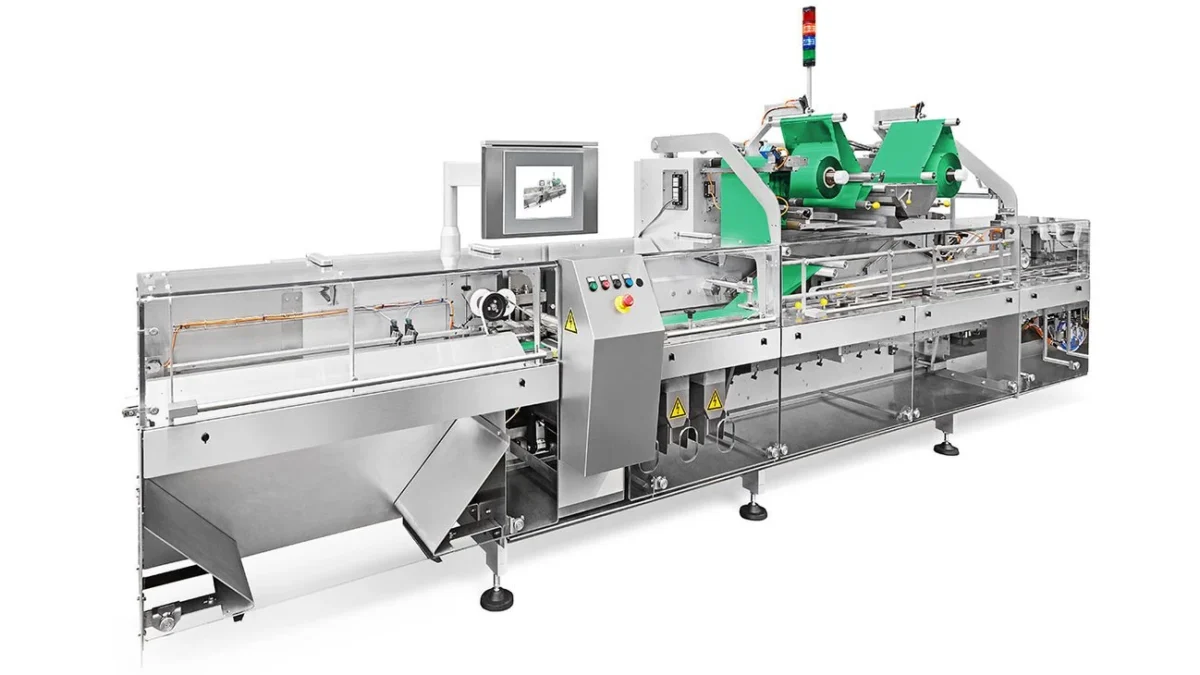
On a typical horizontal wrapper, a continuous web forms a tube around the row of products. The machine closes the lengthwise seam and then seals and cuts across the tube between successive bars. In a cold seal, pressure bonds the facing coated areas without using heat to activate the bond. On a patterned reel, the converter has fixed the position of those areas before the reel reaches the factory. Registration is the alignment that brings the coating, the cut and the product into their intended positions on each pack. [S5] [S6]
Lay a cut length of unused reel beside a finished pack and trace the shoulders of the tablet, the long seam and the two ends. If one face shows a crease or the outside of a corner has torn, mark where the damage first appears as the paper passes the former. If an end opens, unfold it and check whether the two coated areas actually met. Keep a sound pack from the same portion of the reel for comparison. This simple inspection gives the converter and the machine builder a common location to investigate.
Grease resistance and seal integrity answer different questions. For Panda, UPM describes the stock chosen to resist grease and Walki describes the lacquer that closes the pack. A grease mark through a folded corner calls for a different investigation from a gap at an end seam. Record each separately. When the location is uncertain, retain the bar, its wrapper and the associated section of reel so the quality team can trace the mark before assigning a cause.
Measure acceptable packs across a representative run
Start with the plant’s current wrapper on the same tablet size and line. Agree on an observation period for each material and define what counts as an acceptable pack. Use comparable conditions for the trial and the baseline, including how starts and stops are treated. Include a change of reel and a normal stop and restart if the purchase decision depends on shift output. If production can spare only a short run at steady speed, label the result accordingly and leave the shift estimate open.
| Trial question | What to record | What the result can inform |
|---|---|---|
| Does the web form around this tablet? | Reel and tooling identifiers, pack dimensions, positions of creases or tears, counts of rejected packs and total packs inspected. | Whether to try another former, adjust the setup or take a damaged sample back to the converter. |
| Do the seals close in the intended place? | Location of the print, cut and coating pattern. Inspect the long seam and both ends using the plant’s agreed integrity test. | Whether a fault follows the coating pattern, appears at one seal, or recurs after a restart. |
| What output can the shift deliver? | Accepted packs and elapsed minutes, reels used, rejected bars and wrappers, stop durations and reasons. Distinguish sound packs taken for destructive testing from defective packs. | Good packs per elapsed minute and the causes of time or product loss against the existing wrap. |
| Does the packaged bar meet its specification? | Matched trial and control packs, distribution and storage conditions, seal and stain observations, agreed product-quality checks and assessment dates. | Whether this finished pack protects this chocolate over the intended route and shelf life. |
Use the same clock when comparing output. The machine display may show how many cycles it is running per minute while it is moving. To estimate delivered output over the observation period, divide the count of acceptable packs by elapsed minutes, including the agreed stops. For saleable output, exclude sound packs taken away for destructive tests and list them separately. Apply the same sampling rule to the baseline. A trial can then distinguish time lost threading the next reel from losses at a seal after the machine is back at speed.
Keep finished samples from startup, steady running and the next reel. Store matched groups of trial and control bars under the conditions specified for the product and assess them at the same intervals. A sound seal at the machine answers an immediate question. Grease staining after handling, or a product-quality change during storage, may only become visible later. The quality team can release the packaging against the shelf-life specification once those observations are complete.
Use the trial result to decide what to buy
If a converted reel runs with the installed tooling and the finished pack meets the product specification, procurement can ask the converter to document the tested construction, coating pattern and allowable variation. If problems repeatedly start at the former or sealing station, retain marked samples and ask the machine builder for a targeted tooling proposal and repeat run. Where the line runs steadily but the bar later shows grease staining or the seam opens in distribution, the next work belongs with the packaging and quality teams before an equipment order is placed.
The acceptance record should name the machine and tooling, the finished reel revision, the tablet size, the output the team observed and the period of product protection it verified. A buyer can then price a conversion for that pack and identify exactly which evidence must be collected again when the tablet, coating pattern or line changes.
Sources
- S1. Syntegon, Cadbury chocolate tablet flow-wrapper upgrade. The equipment maker’s case study identifies the H-series machine and the forming and sealing tools. Page undated. See also Mondelēz Australia’s press archive, January 6, 2020, on the Claremont trial.
- S2. UPM Specialty Papers, UPM and Orkla Suomi introduce paper packaging for Panda Milk chocolate, March 6, 2025. The release identifies the base paper, coating application and shelf-life test.
- S3. Walki, Fibre-based wrapping for a beloved chocolate bar, April 16, 2025. The converter describes printing the reel and applying the cold-seal pattern.
- S4. Orkla, Annual Report 2025, p. 89, E5-2, “Resource inflows.” The brand owner records completion of the six-month Finnish pilot.
- S5. OMRON, Horizontal flow wrapper, Machine Case Study, “Machine description” and “Machine Function,” p. 2. General machine operation.
- S6. Bostik, Cold Seal Adhesives, technical FAQ, “What is cold seal?” General bonding mechanism.
Found an error? Read our corrections policy and contact the editors.