Georgia confectioner Crown Candy wanted a resealable bag that stood upright on a store shelf. Its packaging supplier fitted new tooling to the bagger it already owned. At Just Born, changing a candy carton raised a harder question. A narrower box used space efficiently, but the candy did not settle fast enough during filling. Just Born ultimately installed a third line and replaced the original two. [S3] [S4]
Those projects illustrate a choice that machinery suppliers are hearing about from customers. In research published on November 11, 2026, PMMI, the Association for Packaging and Processing Technologies, described customers scrutinizing prices, taking longer to reach purchase decisions and looking for ways to extend the lives of installed machines. For a U.S. food plant, the first question worth funding is where the existing line stops meeting the specification. A trial can make the case for a modest tooling change or expose a constraint that follows the pack all the way to the palletizer. [S1]
For a company-level example of the different measures, see our analysis of machinery sales and paper demand.
Where food fits in the U.S. packaging machinery market
PMMI estimated the value of U.S. domestic packaging machinery shipments at $11.7 billion in 2025. Food was the largest end market, with approximately $5.1 billion in shipments, or 44% of the total value. The association reported the figures in September 2026. Food and beverages are separate categories in this estimate. The figures describe the value of equipment shipped. Measuring what factories spent on retrofits would require a separate breakdown. [S2]
The November research gives a different view of the same purchasing environment. Machinery suppliers described more price-sensitive evaluations and demand for equipment that can change over between more products and pack formats. PMMI also identified interest in modular equipment that can accommodate a wider range of packaging materials. Neither report gives a percentage of U.S. food plants choosing an upgrade. [S1] [S2]
For the buyer, one consequence is that a capacity figure in packs per minute leaves a large part of the investment question unanswered. A machine dedicated to a single pack might spend most of a shift running at a steady rate. A line sharing that shift among several products must also stop, change parts or settings, restart and deliver an acceptable first pack for each new run. Those two schedules can give very different values to the same fifteen minutes of changeover time.
One new bag style, one machine to modify
Crown Candy wanted a resealable stand-up bag for retail. According to Phenix Corporation, its packaging and engineering partner, Crown Candy also wanted to keep costs manageable and have its existing crew run the pack. The original pillow bag still had a place in its business. That last detail matters when setting a specification. Producing the new format once would solve only half the problem. The crew also needed to be able to switch back. [S3]
Phenix says it sourced tooling for the existing machine, managed the installation and ran samples in several sizes before the customer committed to printing plates and a full film order. It put the retrofit investment at approximately $20,000–$25,000 and reported that the machine could run both bag styles. The figure belongs to this supplier’s account of a specific installation. The account gives no itemized cost breakdown from which another plant could estimate engineering, consumables or installation on a different machine. [S3]
The purchasing decision hinged on the order of commitments. An unsuccessful sample could be changed before the converter made plates and before the confectioner had to use up a production order of printed film. A buyer evaluating a similar upgrade can specify which pack sizes must be sampled, who approves them and when material purchasing can release the order. Those questions belong in the retrofit quotation alongside the tooling price.
When a narrower carton changes the whole line
Just Born faced a different problem with the theater boxes it uses for Mike and Ike and Hot Tamales candies. In an October 2026 interview with Packaging World, Charlotte Ashcraft, the company’s senior manager of packaging and graphics development, explained that the team wanted a carton that worked at retail, packed efficiently into cases and made good use of pallet and trailer capacity. One narrower design looked promising until the team considered filling at production speed. The Mike and Ike candies had difficulty settling into the carton. [S4]
Ashcraft said the team had originally expected to modify its equipment. The redesign exceeded what the aging lines could accommodate. The company installed a third line first so it could work through design and training questions, then replaced the original two. Its project extended from carton filling through case packing and palletizing. Ashcraft was describing a completed installation that had already operated for nearly three years when she gave the interview. [S4]
For another plant considering a smaller carton, the first test might be whether the product settles fast enough for the flaps to close cleanly. A more compact arrangement on a pallet has an identifiable distribution benefit only if the line can fill and close those cartons at the rate needed to supply orders. Just Born’s account also gives capital planners a reason to price the installation sequence. Bringing a new line up beside the old one requires space, but it lets the crew learn on equipment that is separate from the lines still carrying customer orders.
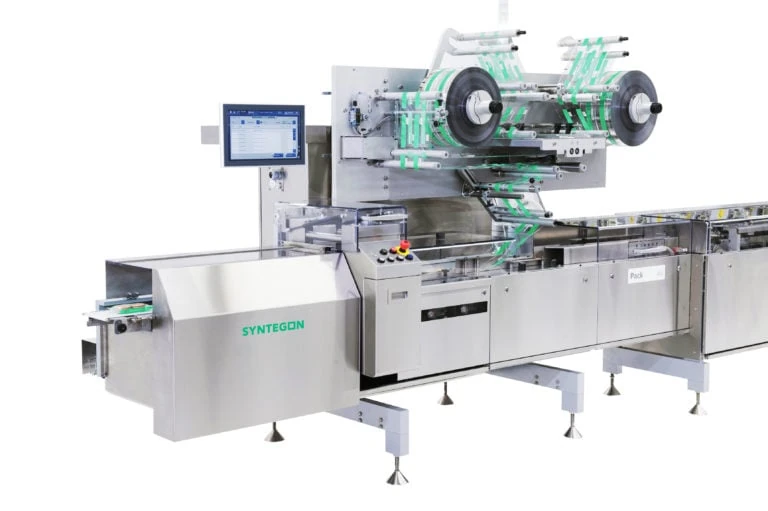
What to put in a retrofit and replacement comparison
Give both bidders the same product mix, pack drawings and production schedule. Identify the pack that causes the most trouble today and the first pack the new design must handle. A quotation for one proven size and a quotation covering the full retail range buy different capabilities. The following questions translate the supplier research and the two installations into evidence a food plant can collect for its own decision. [S1] [S3] [S4]
| Plant finding | Option worth pricing | Evidence to request |
|---|---|---|
| A new pack needs a different forming or closing tool. Other stations already handle it. | A targeted retrofit that retains the current format. | Runs of both packs on the proposed tooling, including the return to the original format. |
| The same format misses its output target when several short runs share a shift. | A quicker changeover on the current machine, priced against a flexible replacement. | Time from the last acceptable pack of one run to the first acceptable pack of the next, plus restart scrap. |
| A change in pack geometry affects filling, closing and case loading. | An integrated replacement or staged rebuild. | A trial using the actual product and carton through the affected stations at the required output. |
| The line has years of mechanical life left, but the controls or drives are approaching the end of supplier support. | A controls upgrade alongside a replacement bid with a comparable service horizon. | Written parts availability, lead times for critical spares and the expected service life of components retained in each bid. |
| An installation will interrupt customer orders. | A planned shutdown for a retrofit, priced against installing a replacement in parallel where floor space allows. | Days without saleable output, time to restart, stock needed to cover orders and who carries the cost of a delayed handover. |
| The present line meets confirmed orders. Demand for the proposed format is uncertain. | A limited trial before either capital commitment. | A sales volume or customer award that would justify authorizing the investment, and a date to revisit it. |
How much production time would a faster changeover recover?
Consider an illustrative plant comparing two options that both make an acceptable pack. Assume its current line changes format 12 times a week and runs 48 weeks a year. If one proposal cuts 15 minutes from each change, the arithmetic gives 144 hours a year of released machine time. The calculation is 12 changes × 15 minutes × 48 weeks ÷ 60 minutes per hour. If the weekly schedule actually involves only four changes, the same improvement releases 48 hours a year. All three inputs are assumptions a planner can replace with figures from the plant.
The planner can check that assumption against the schedule. A switch from a small pack to a large pack may take a different amount of time from the return change. If a flavor change also needs a wash that runs longer than the mechanical adjustment, shortening that adjustment may release no line time at all. Put the proposed change into the sequence the crew actually follows, and count the time when one task would otherwise hold up the restart.
Released hours have an economic value only when the plant can use them. If accepted orders require overtime on the line, the team can investigate how much overtime the change would displace. If the filler can deliver more packs but the case packer is already at capacity, the team needs a plan for those packs before assigning a sales value to the extra time. Record any labor savings, added sales contribution and scrap reductions separately so that the same hour of production does not appear twice in the investment case.
What would show that retrofit demand is growing?
For now, PMMI’s interviews establish buyer interest, and the company accounts show how individual projects took different paths. To measure a shift in spending, watch for suppliers to report booked retrofit work separately from spare parts, routine service and new machinery, on a consistent basis across periods. Inside the plant, a decision can come sooner. A trial of the hardest pack at the limiting station will show whether to buy tooling for one machine or ask for a bid that includes the stations downstream. [S1] [S2]
Sources
- S1. PMMI, 2026 Packaging Machinery Market Trends. Public report summary, November 11, 2026.
- S2. PMMI, 2026 State of the Industry findings. Public release, September 14, 2026. The August report summary identifies the U.S. figure as domestic shipment value.
- S3. Phenix Corporation, Crown Candy retrofit case study. Project partner’s account, August 12, 2026.
- S4. Packaging World, interview with Just Born’s Charlotte Ashcraft. Interview by Elisabeth Cuneo, October 26, 2026.
Found an error? Read our corrections policy and contact the editors.