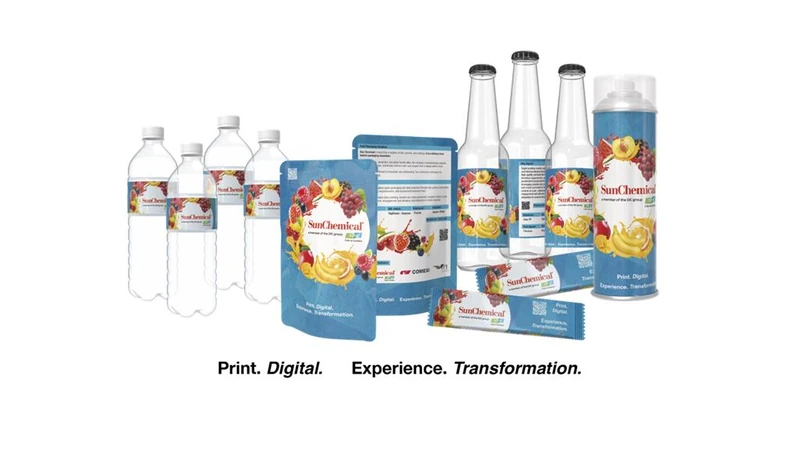
Sun Chemical announced an upgraded SolarFlex FSP UV flexographic ink range on 13 October 2026, describing it as formulated for low-migration label and packaging applications and alignment with German and Swiss ink requirements. The company announcement also reports low odour and customer trials. It does not establish that every package printed with the range is safe or legally compliant under every intended use.
The industry relevance is the connection between ink selection and production conditions. A formulation intended to limit migration still has to work within a particular printed construction, curing process and food application. The announcement concerns an ink range, not an unrestricted approval of finished food packaging.
A formulation and a reported validation programme
Sun Chemical says the updated range meets or surpasses German Ink Ordinance and Swiss Ink Ordinance requirements through raw-material selection and low-migration performance. Those are supplier compliance claims. This report has not examined a formulation dossier or performed a substance-by-substance legal assessment.
The company also reports successful migration testing and odour assessments at European customers at print speeds above 200 metres per minute. That is a stated trial result, not a universal speed setting. The announcement does not disclose all the substrates, deposited ink amounts, curing conditions, foods or exposure conditions necessary to transfer the result to an arbitrary production job.
Its energy-curable packaging product information provides the product-family context. A portfolio description cannot substitute for the documentation of the particular ink and finished construction a converter intends to supply.
Low migration is an application claim
Migration concerns substances moving from a packaging system towards the food under relevant conditions. An ink’s intended use is therefore only one part of the assessment. The substrate, print location, other layers and contact conditions affect what must be evaluated.
UV curing adds a production dimension to the story. A statement that an ink is capable of rapid curing does not establish that every press installation or job supplies the necessary conditions. The relevant evidence connects the formulation with the actual process and resulting printed material. It would be misleading to turn the reported speed into proof that curing cannot be a constraint.
Likewise, low odour and low migration should remain separate descriptions. An acceptable odour observation does not by itself establish migration performance, and a migration result does not describe every aspect of consumer sensory experience. The company’s announcement discusses both; this article does not collapse them into one food-safe label.
A label does not remove the food-contact question
The fact that a print sits on a label rather than a directly printed container does not, by itself, answer the full assessment. The relationship between the label, adhesive, substrate, product and handling conditions still matters. A generic category name is not a substitute for the actual construction.
Our explanation of Why Labels, Sleeves, Adhesives and Inks Can Decide Whether a Package Is Recyclable follows those interacting components from the recycling perspective. Food-contact assessment asks a separate question about the intended use and relevant substances. A pack can raise different issues at those two stages, and evidence for one cannot simply be reused as proof of the other.
This is also why a product announcement cannot establish finished-pack compliance by invoking a regulation’s name. A particular rule may address particular substances, uses or conditions. This report reports Sun Chemical’s positioning without reproducing unverified legal thresholds, implementation dates or exemptions.
What the launch changes for converters
The announcement gives converters another supplier-described option for combining print productivity with migration-related requirements. Its practical value would be demonstrated when the specified ink is evaluated in the converter’s actual application. That is a more useful interpretation than declaring the range a general solution to food-packaging risk.
Comparisons with an earlier formulation would need the earlier specification and equivalent tests. The word upgraded alone does not quantify an improvement in migration, energy demand or printing waste. No such comparative result is claimed here.
The next evidence is application-specific: the relevant supplier declarations, a documented production window and test results that match the finished packaging’s intended service. The reported customer trials are a starting point for that discussion. They do not replace it, and the launch should remain attributed accordingly.
Sources
- Sun Chemical. Sun Chemical launches next-generation GIO-compliant SolarFlex FSP UV flexo inks. 13 October 2026. Dateline; formulation paragraphs; trials paragraph. Sources checked 21 October 2026.
The public corrections channel is currently inactive. Read our corrections policy.