The European Commission opened a public consultation on bio-based feedstock in plastic packaging on 21 October 2026, with feedback due by 13 January 2027. According to the Commission’s announcement, it forms part of its review under Article 8 of the Packaging and Packaging Waste Regulation. This is an evidence-gathering step towards assessing possible policy, rather than an announcement of adopted bio-based content targets. [1]
For packaging suppliers, the useful distinction is between a possible future incentive and an existing basis for a product claim. A consultation can change what evidence a business prepares; it does not itself establish a new exemption, a guaranteed market or preferential treatment for a resin.
What evidence is the Commission seeking?
The Commission identifies technological development and environmental performance as central to its assessment. Its announcement invites evidence on feedstock availability and performance, sourcing and production sustainability, environmental impacts, different regulatory approaches and suitable recycling technologies. It also describes possible demand measures or targets, potentially linked to sustainability requirements, and says feedback may inform a future legislative proposal. [1]
These questions connect feedstock choice with the packaging system in which it operates. A useful industry submission should identify the material and application, explain the conditions behind its performance evidence and make clear which end-of-life route the assessment assumes. A favorable result for one pack or recovery route should not silently stand for every use of the same polymer.
Keep the policy stages separate
| Stage | What it means for packaging decisions |
|---|---|
| Existing PPWR framework | The Commission identifies Article 8 as the basis for its review. The consultation is not a substitute for checking the applicable law. |
| Consultation | The announcement gives a closing date, 13 January 2027. [1] |
| Commission assessment | The submitted evidence will inform consideration of opportunities, limitations and trade-offs. [1] |
| Possible future measures | Demand measures, sustainability conditions and a legislative proposal are possibilities described in the announcement, not completed legal changes. [1] |
A packaging sales brief should preserve those stages. “Under consultation” describes a policy process. “Required,” “exempt” or “eligible to count towards a target” describes a legal consequence that needs its own applicable provision. Replacing one with the other would turn a potential policy direction into an unsupported present-day claim.
Where PLA and CPLA fit into the discussion
PLA and crystallized PLA, commonly called CPLA, can be relevant commercial examples in a discussion of bio-based plastic packaging. They are not the exclusive subject of this consultation. Their inclusion in a supplier’s response would need product-specific evidence rather than an assumption that the Commission’s interest in bio-based feedstock automatically favors them.
Our PLA, PHA and PBAT comparison provides material background. It does not establish any new PPWR status. For a PLA or CPLA pack, keep the feedstock claim, functional specification and proposed recovery route separately documented; the existence of this consultation does not establish recycling acceptance, compostability or exemption from another requirement.
The practical opportunity is to prepare a submission with clear boundaries: supply evidence tied to a stated geography and period; environmental comparisons with explicit assumptions; and recovery evidence matched to the actual pack. The Commission is asking stakeholders to help evaluate these questions. It has not, through this consultation announcement, settled the policy outcome or guaranteed future demand.
Sources / References
- European Commission, Bioeconomy: Commission launches public consultation on bio-based feedstock in plastic packaging, 21 October 2026; announcement rechecked 3 November 2026.
Photograph credit
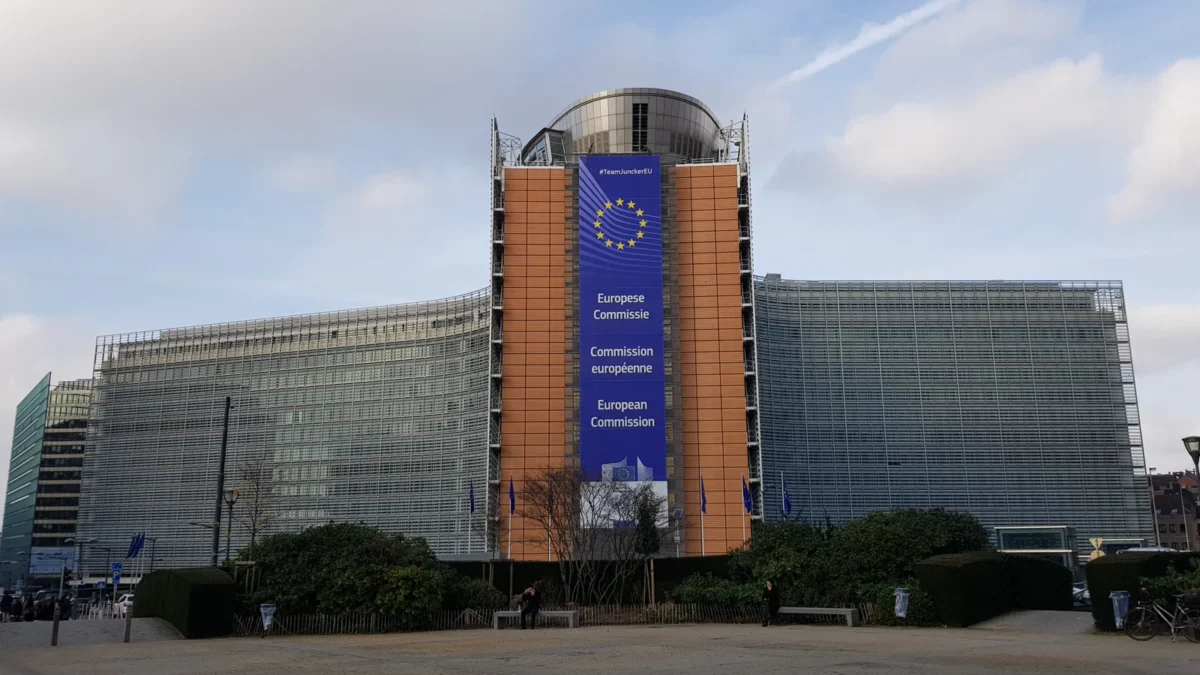
Berlaymont building, Brussels, photographed 30 January 2018. Photo: Romaine / Wikimedia Commons, CC0 1.0. Full-frame image resized and converted to WebP. Archival institutional context, not a photograph of the consultation launch.
Found an error? Read our corrections policy and contact the editors.