Changing a food package from plastic to paper does not remove food-contact obligations. Regulation (EC) No 1935/2004 provides the EU framework for materials and articles intended to contact food, including relevant indirect contact and foreseeable transfer. For paper and board, the absence of one comprehensive harmonised EU material-specific measure is not an absence of regulation. [1][2]
The practical task is to distinguish the framework requirement, any applicable specific EU measures and the destination market’s national provisions. A broad claim such as “EU approved paper” hides those different layers rather than answering them.
The finished construction remains the subject
Article 3 requires manufacture according to good manufacturing practice so that, under normal or foreseeable use, constituents do not transfer in quantities that endanger health, cause unacceptable changes in food composition or deteriorate its organoleptic characteristics. Labelling, advertising and presentation must not mislead consumers. These requirements are not limited to a particular fibre origin. [1]
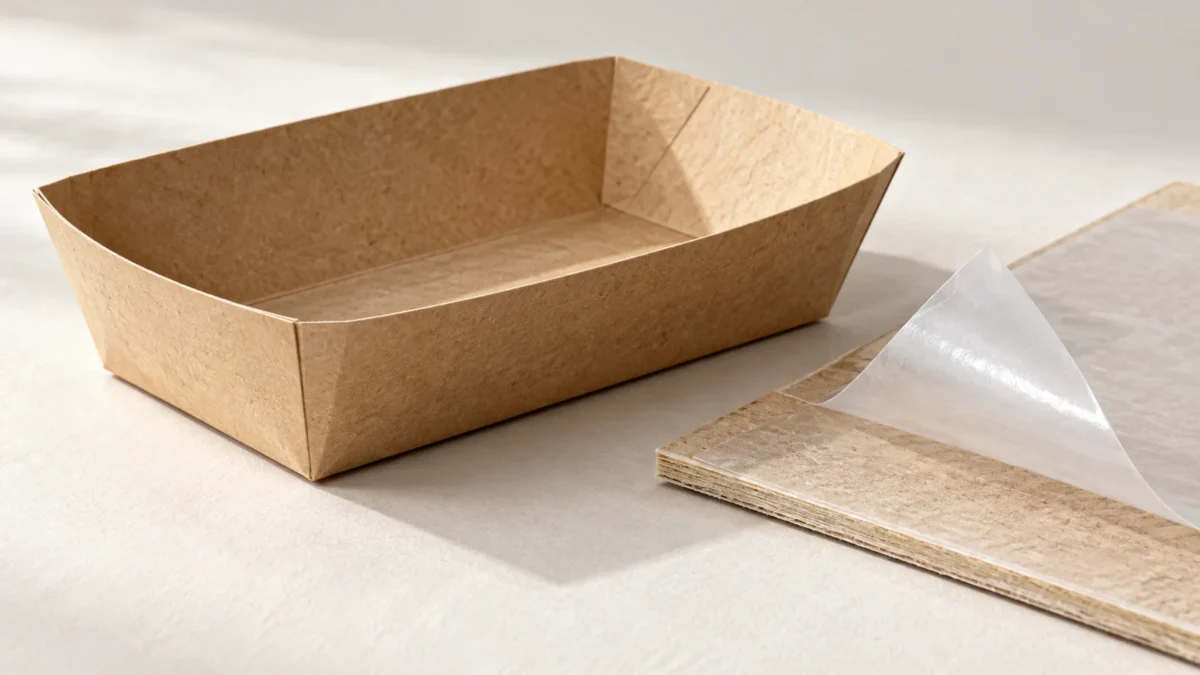
A paper food container can include a barrier, adhesive, ink, coating or plastic layer. The assessment must describe the real construction and intended contact, rather than treating “paper” as the complete formulation. A statement about the base board cannot automatically settle the status of all the converted components.
| Question | Rule or evidence | Important boundary |
|---|---|---|
| General framework | Regulation 1935/2004 | Applies beyond plastic packaging |
| Specific material measure | Determine which measures cover each component | A plastic layer can raise separate plastics-rule questions |
| National provisions | Article 6 permits compatible national rules where EU specific measures are absent | Destination matters |
| Traceability | Article 17 | Connect the supplied article with its records and business chain |
Why the destination country still matters
Article 6 permits Member States to maintain or adopt compatible national provisions where specific EU measures are absent. The Commission’s legislation overview expressly identifies national legislation as part of the food-contact landscape. A single report from one country therefore needs to be read for its legal basis and scope before it is applied across destinations. [1][2]
This does not mean that every national document is a binding legal measure. A recommendation, voluntary test protocol, industry guideline and statutory rule can have different functions. Their issuer and legal status must remain visible when they are used to support a supplier statement.
Documentation must fit the use
The relevant variables include the food, contact surface, duration, temperature and whether the article is intended for repeated use. A dry-food assessment and a hot, fatty-food application ask different questions. These examples identify assessment variables; they are not a substitute for an appropriate migration or risk-assessment programme.
Article 16 connects written declarations to specific measures and preserves national declaration requirements where such EU measures are absent. Article 17 requires traceability through the business chain. A useful documentation file consequently identifies the article and its applicable rules instead of attaching an unexplained laboratory sheet to a generic sales name. [1]
Material substitution changes the questions
The regulatory significance of a paper substitution lies in the new construction and exposure conditions, not in an automatic safety exemption. Recycled fibre, coatings and printing each need to be considered within the actual evidence and applicable rules; their presence alone establishes neither danger nor suitability.
The defensible editorial conclusion is limited: the EU framework continues to apply, and national material-specific provisions may add relevant requirements. Whether a particular pack satisfies them cannot be decided from its paper percentage, appearance or recyclability claim.
Sources
Sources checked 21 October 2026. Legal text, official interpretation and editorial examples are distinguished above. No individual product or business conformity assessment was performed.
- European Parliament and Council / Official Journal via BOE. Regulation (EC) No 1935/2004 on food-contact materials. 27 October 2004; relevant general provisions. Locator: 1935/2004 Articles 1, 3, 6, 16–17; Commission legislation overview, national legislation section. Relevant full original provisions read in the official Spanish rendition; English explanation is an editorial paraphrase, not an official translation.
- European Commission, DG SANTE. Food-contact materials: legislation overview. Current official page checked 21 October 2026. Locator: 1935/2004 Articles 1, 3, 6, 16–17; Commission legislation overview, national legislation section. Relevant official text read; scope is the cited provision or guidance.
The public corrections channel is currently inactive. Read our corrections policy.