Making a package consistently is one task; enabling a person to identify and use it is another. Henkel’s 2025 introduction of NaviLens codes on all free clear MIGHTY PACS Original tubs and pouches provides a concrete example of an added information interface. Its practical lesson is to evaluate the user’s task as well as the manufactured pack. [1]
A code connects a physical format to information
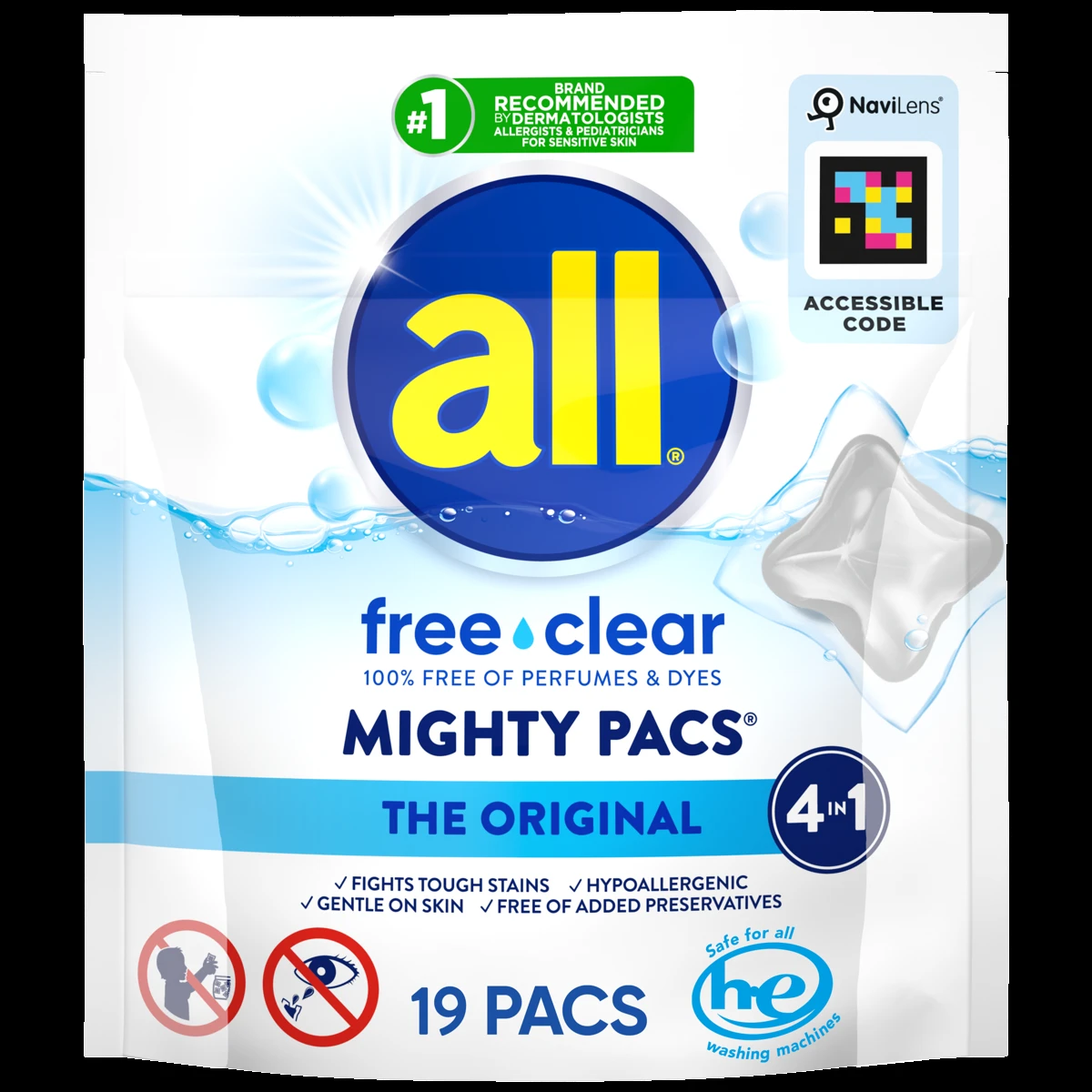
The 14 January 2025 announcement locates the code on the front of the pack and describes app-delivered information including product identity and dosing instructions. RNIB’s separate user guide describes optical-code detection through a phone camera and visual, audio and haptic feedback. Those are descriptions of the interface, not measured results for every user or pack state. [1] [3]
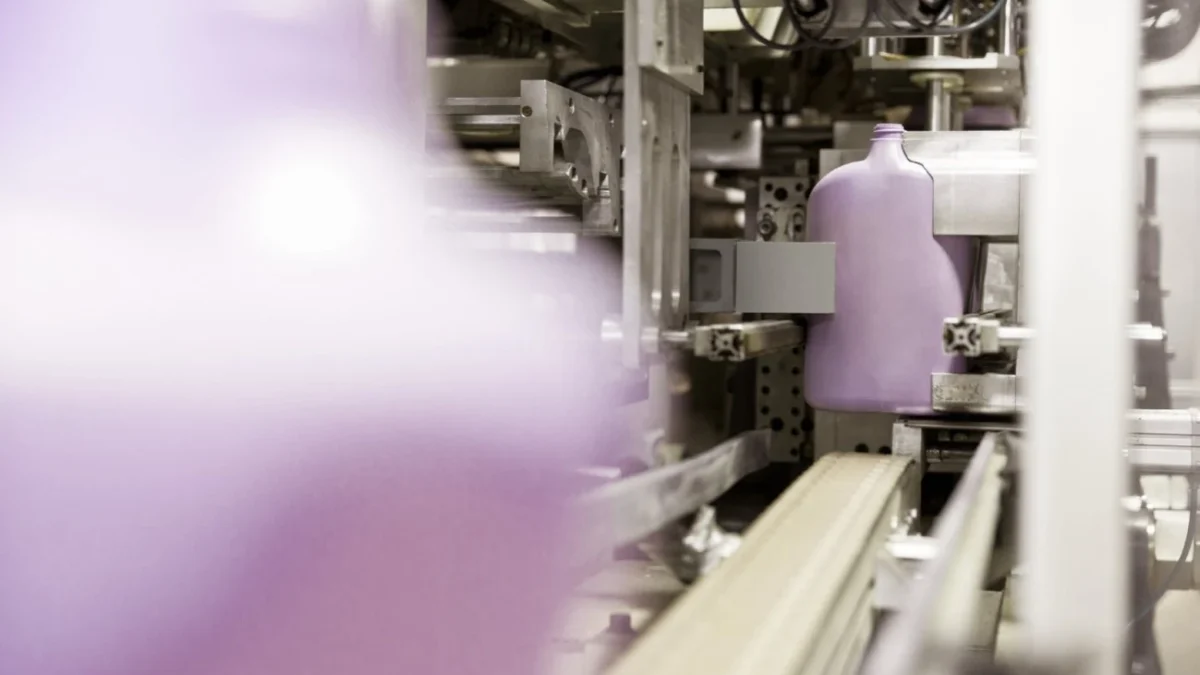
The historical production photograph above shows a different stage: physical bottles moving through machinery before their information interface is evaluated here. A pack can be formed successfully while its eventual instructions remain difficult for a user to find. The supplied pouch image below shows where the later code is placed; neither image demonstrates that a person completed a task independently.
The earlier cereal trial supplies a method, not a transferable score
RNIB’s 2020–2021 involvement report describes its work with Kellogg’s, Co-op and NaviLens on the October 2020 cereal-pack trial. Nearly 100 participants received packaging through the post and completed a survey about accessibility features and independent access to information. Recruitment included RNIB’s Connect Voices network and social channels. [2]
That account is useful because it puts intended users into the evaluation. It is not a representative success rate for all shoppers, nor an independent validation of Henkel’s later detergent pouch. Different product tasks, pack shapes and handling conditions need their own assessment. No scanning-distance or speed figure substitutes for that evidence.
Separate detection, correct content and task completion
A packaging trial can ask three concrete questions: can the user locate the correct variant, can they obtain its correct instructions, and can they repeat the task after the pack has been handled or opened? Record device and app configuration, lighting, pack condition, assistance and errors. These are proposed evaluation questions, not results from a Degradable Packaging test.
The information owner also needs a way to keep the digital content aligned with the physical SKU and its current instructions. Include wrong-variant and outdated-content cases in the review, then assign a correction owner. The next useful evidence is a documented user task and its failure conditions—not simply confirmation that a coloured code appears on the artwork.
Sources and image credit
- Henkel — NaviLens on all free clear Mighty Pacs packaging. 14 January 2025; tubs/pouches, front code and app-provided product/use information. Accessed 24 October 2026.
- Royal National Institute of Blind People — National Involvement Report2020–2021. Printed p9; October2020 Kellogg’s/Co-op trial and nearly100 participants’ mailed-pack/survey involvement. Accessed 24 October 2026.
- Royal National Institute of Blind People — NaviLens user guide. How codes work and app feedback/settings. Accessed 24 October 2026.
- Henkel — Press-image editorial terms. Images; editorial permission, year/company copyright and modifications. Accessed 24 October 2026.
- Henkel — Physical detergent-bottle production photograph. 28 September 2021; press image1344734 labelled detergent bottles in production. Accessed 24 October 2026.
Actual detergent-bottle production image published with Henkel’s 28 September 2021 Toluca announcement; capture date not supplied. © 2021 Henkel AG & Co. KGaA. All rights reserved. Resized and converted to WebP under Henkel’s editorial-use terms. This historical physical-production example is compared with the later information-access task; it does not show a NaviLens pack or an accessibility trial. Image source.
Found an error? Read our corrections policy and contact the editors.