SCA reported on 14 October 2026 that its Östrand fiberline project had completed its final installation work during the annual maintenance shutdown. The company said a 96-hour equipment test was underway and that takeover would follow if the test performed as expected. That is the verified announcement status; the subsequent passage of ten days does not establish the test’s outcome. [1]
A process-stability project, with output still to demonstrate
The work changes chip steaming and impregnation, including a new hot-top arrangement and a lower impregnation temperature. SCA also describes two pressure diffusers in a new washing stage after the digester. The stated objectives include reducing unstable cooking and blow-through risk, improving washing and supporting more sustained production. These are the company’s descriptions and aims, rather than measured improvements reported in the announcement. [1]
For a packaging-paper converter buying pulp, the relevant consequence is the reliability of the supply specification and delivery commitment. The equipment list helps explain what the supplier has changed, but it cannot by itself establish how many additional tonnes of a buyer’s required grade will be available, or when. A purchase plan needs evidence at that commercial boundary.
Keep three milestones separate
Mechanical completion asks whether the work is installed and ready for its next operating stage. Conditional acceptance asks whether the equipment meets the agreed test. Sustained production asks what the mill can repeatedly deliver after ramp-up and adjustment. Those milestones answer different questions; treating the first as proof of the third can put an unsupported supply assumption into a converter’s schedule.
The next request to SCA should therefore be a dated acceptance update, followed by an operating period relevant to the pulp grade being purchased. If a proposed order relies on extra availability, obtain the confirmed quantity and delivery period for that order. An unquantified production ambition should not become a numerical uplift in the buyer’s forecast.
Ask what the result measures
An equipment trial can be informative without answering every supply question. A buyer assessing a reported improvement should ask whether the figure concerns operating time, throughput, saleable pulp, wood yield or washing performance, and what baseline and operating period it uses. A favourable result on one measure does not automatically settle the others. These are proposed verification questions, not results obtained from this project.
The same discipline applies to downstream effects. The announcement supplies no quantified packaging-paper strength, barrier performance, delivery-cost or price result. A converter should retain its own pulp specification and product qualification requirements instead of treating a digester modification as a change already validated in its finished pack.
The useful next signal is a dated operating record
For current procurement decisions, record the announcement date, the later acceptance status when available, and the evidence supporting any changed order commitment as separate entries. If no new commitment is needed, the announcement can remain a supplier-development note. If a production plan depends on it, move the evidence request ahead of the schedule change.
SCA says ramp-up, optimization and fine-tuning follow the test stage. A later statement confirming those steps, with a defined output period and scope, would materially strengthen the supply story. Until then, the defensible reading is a completed installation with a conditional test reported on 14 October—not verified incremental capacity or an industry-wide pulp-supply shift. [1]
Sources and image credit
- SCA — The fiberline project at Östrand has reached the finish line. 14October2026,complete article paragraphs on modifications,test and next steps. Accessed 24 October 2026.
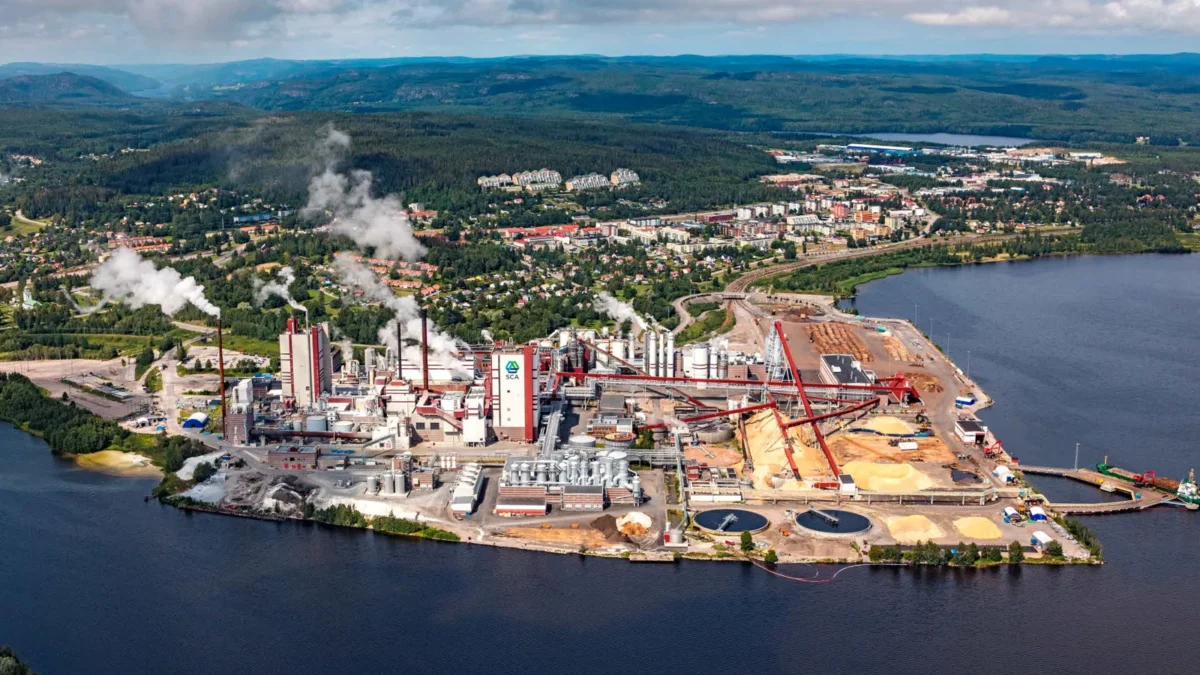
Östrand pulp mill, Timrå, Sweden. Photo: SCA / Bergslagsbild, supplied through SCA’s media image bank. General site view; it does not document the October equipment acceptance test. Resized and converted to WebP. Image source.
Found an error? Read our corrections policy and contact the editors.