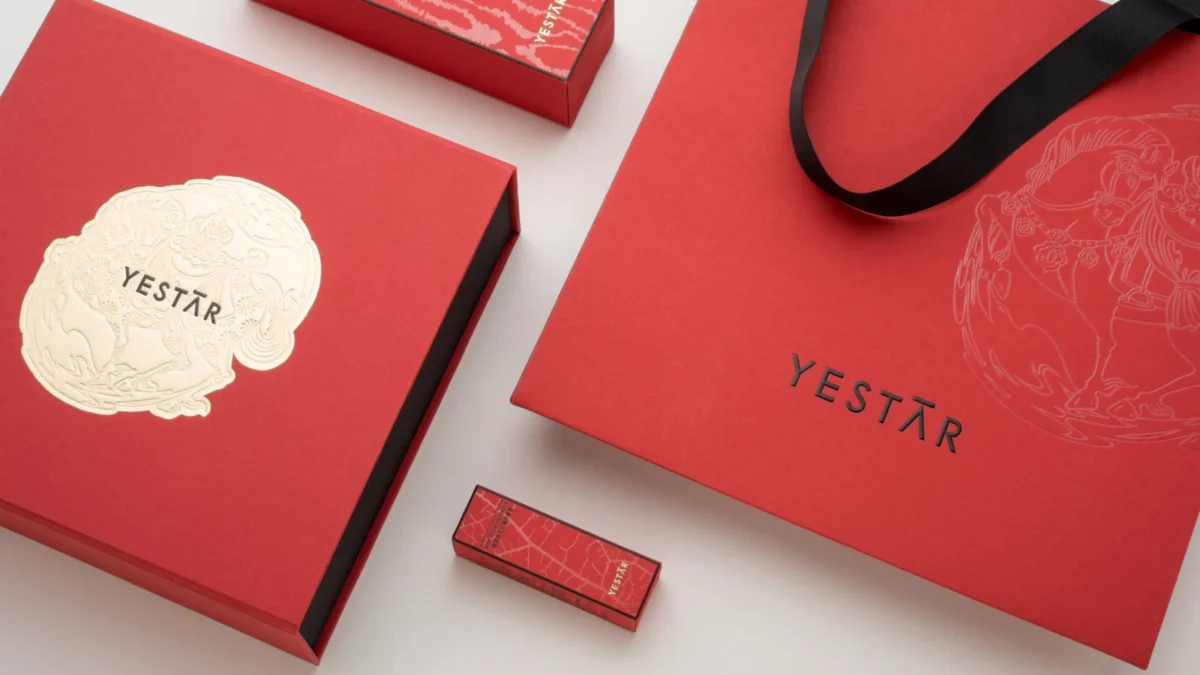
Koehler Paper reported on 14 October 2026 that YESTAR selected ruby-coloured Creative Board from its greenium range for Lunar New Year VIP gift packaging. The named application gives designers a physical example of coloured recycled paper in a premium presentation. It does not establish the composition of every box, insert, adhesive or other component. [1]
A visible material choice, with an undisclosed earlier baseline
The supplier describes the case in terms of colour, surface, printing and finishing. Its accompanying photograph shows several red gift-pack elements. Neither the case text nor that photograph supplies the previous packaging specification or a quantified comparison with it. The announcement date should also be kept separate from an assumed date or volume of gift distribution. [1]
For a brand’s packaging buyer, the useful change is a specified visual substrate entering a named design. The next decision is whether that substrate can reproduce the approved appearance after the actual converting and finishing sequence. A broad claim that recycled paper can look premium does not replace that sample approval.
Ask which part of the pack the fibre claim covers
Koehler describes its coloured recycled-paper portfolio as made from 100% secondary fibres. That is the supplier’s paper-range statement. It is not a measured recycled-content percentage for the assembled YESTAR gift pack, whose complete bill of materials is not published in this announcement. [1]
A procurement specification should identify where the named paper sits in the construction, then list any supporting board, liners, inserts, handles, adhesives and finishes separately. Ask suppliers to attach fibre-content evidence to the material actually supplied, with its grade and version. Do not transfer one material’s percentage to the combined pack without the corresponding construction and mass information.
Approve the converted sample, not just the sheet
The practical comparison is between an approved reference pack and samples made using the intended production sequence. Check the colour and finish on the converted surfaces, the folds and edges that the user sees, and the pack’s ability to hold its intended contents. These are proposed acceptance questions for the converter and brand; the announcement does not publish test results for them.
Likewise, a paper choice does not by itself settle the recovery route for a finished gift pack. The buyer needs to know which components remain attached and what construction will reach the intended collection and processing system. The case provides no whole-pack recovery assessment, so it should not be promoted into a universal recyclability or environmental-benefit claim.
The next evidence belongs to the complete order
For an order based on this design direction, obtain the material specification, the full construction list and an approved converted sample before committing to the final pack. A customer-confirmed quantity, previous-material comparison and documented recovery assessment would make the broader industry lesson stronger. Until those records are available, this is a concrete supplier-reported material-selection case, with useful design questions rather than a demonstrated market-wide shift.
Sources and image credit
- Koehler Paper — YESTAR Chooses Premium Recycled Paper by Koehler Paper. 14 October 2026 case; ruby Creative Board selection and secondary-fibre portfolio statement. Accessed 24 October 2026.
YESTAR Lunar New Year VIP gift packaging, supplied with Koehler’s 14 October 2026 announcement. Image: Koehler press photo / Koehler Group. Resized and converted to WebP; original scene and product details retained. The image shows the design, not an audit of every component’s fibre content. Image source.
Found an error? Read our corrections policy and contact the editors.