The often-quoted PPWR “50% empty space” rule is not a universal present-day maximum for every package. Article 24(1) addresses operators filling grouped, transport or e-commerce packaging and attaches the ceiling to a later-of date: 1 January 2030 or 36 months after the relevant implementing acts enter into force, whichever is later. [1]
Two distinctions change the practical meaning. Sales packaging has a separate minimisation provision, and filler is expressly included in empty space. Replacing air pillows with paper can change the filler material without changing the legal character of the space being filled.
Read the packaging level first
Article 24(3) defines empty space for the paragraph 1 calculation by reference to the outer packaging’s total volume and the volume of the sales packaging it contains. It defines the ratio against that total outer volume. This is different from measuring only the product’s volume or treating every air gap at every level as one combined percentage. [1]
The implementing calculation method must take account of specified practical characteristics, such as irregular products, multiple sales packs, fragile contents and the necessary space for transport labels. A simplified example is therefore useful for understanding the ratio, but not a substitute for the applicable official method.
| Question | Rule or evidence | Important boundary |
|---|---|---|
| Grouped, transport and e-commerce packaging | Maximum 50% empty-space ratio | 1 January 2030 or 36 months after the relevant implementing acts enter into force, whichever is later |
| Sales packaging | Minimise empty space needed for function | Separate Article 24(4) requirement by 12 February 2028 |
| Paper shred, air pillows and similar filler | Counted as empty space | Changing filler material does not erase the void |
| Sales pack used as e-commerce pack; reuse in a system | Article 24(5) exception to paragraph 1 | Article 10 still matters for the specified sales packaging |
Fillers do not turn void into product
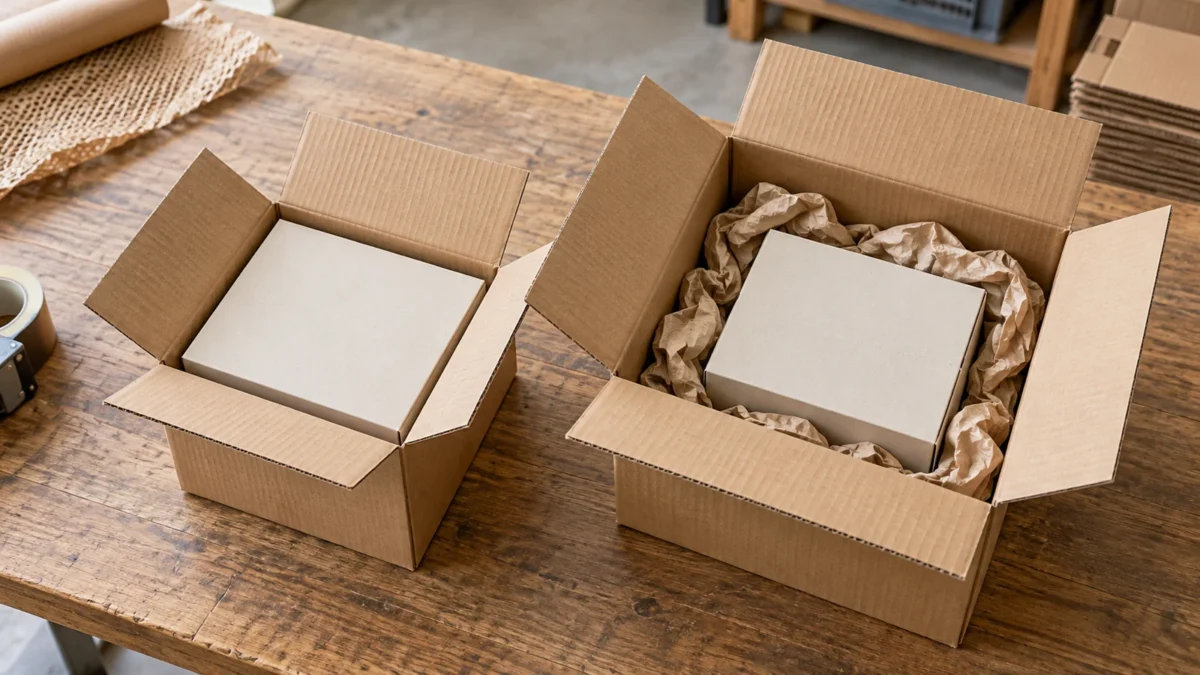
Article 24 lists materials such as paper cuttings, air cushions, bubble wrap and several foam or loose-fill materials as empty space. The central question is the relationship between the outer pack and what it contains; choosing a different void-fill material does not remove the need to examine that relationship. [1]
For an illustrative outer volume of 10 litres containing 6 litres of sales packaging, the simplified empty-space ratio is 4 divided by 10, or 40%. These invented volumes explain the denominator only. They are not a prescribed measurement procedure or a conformity result for a real shipment.
Sales packs have a separate provision
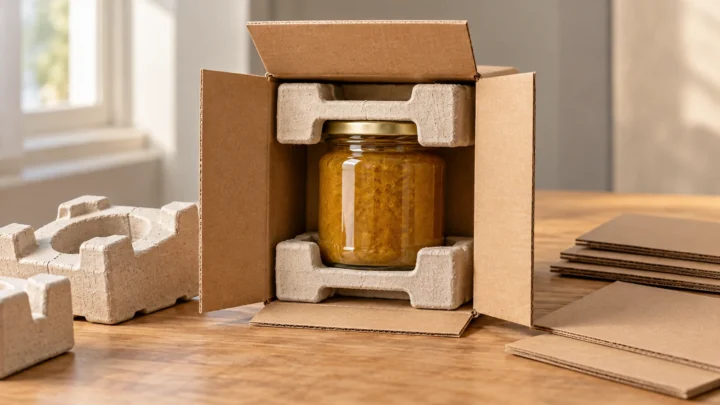
Article 24(4) requires operators filling sales packaging, by 12 February 2028, to reduce empty space to the minimum necessary for functionality, including product protection. It includes special treatment for settling and protective headspace, and distinguishes air within or between packed food and protective gases. [1]
The regulation does not simply apply paragraph 1’s 50% ceiling to every retail package. Substituting that convenient number for the sales-pack provision would erase the different functional test and exceptions.
Preserve the exceptions and the date condition
Article 24(5) exempts operators using sales packaging as e-commerce packaging, or reusable packaging within a system for reuse, from paragraph 1. The provision still requires the specified sales packaging to satisfy Article 10. Calling every reusable-looking box exempt would skip the system condition. [1]
For an implementation plan, identify the packaging level, actor, relevant exception, actual measurement basis and start-date trigger. This article reports the adopted rule’s structure; it does not certify a pack, invent the implementing method or treat a deadline for the Commission to act as proof that the resulting act has entered into force.
The wider implementation context is covered in our PPWR overview; the present guide isolates the provision identified above.
Sources
Sources checked 21 October 2026. Legal text, official interpretation and editorial examples are distinguished above. No individual product or business conformity assessment was performed.
- European Parliament and Council / Official Journal via BOE. Regulation (EU) 2025/40 on packaging and packaging waste. 19 December 2024; OJ 22 January 2025. Locator: Article 24(1)–(6); Article 10. Relevant full original provisions read in the official Spanish rendition; English explanation is an editorial paraphrase, not an official translation.
Found an error? Read our corrections policy and contact the editors.