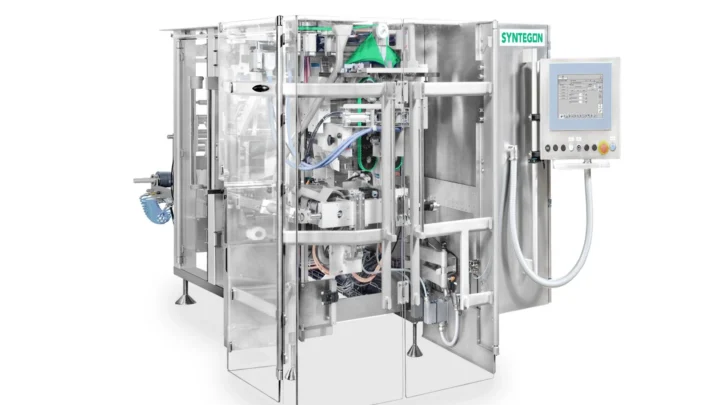
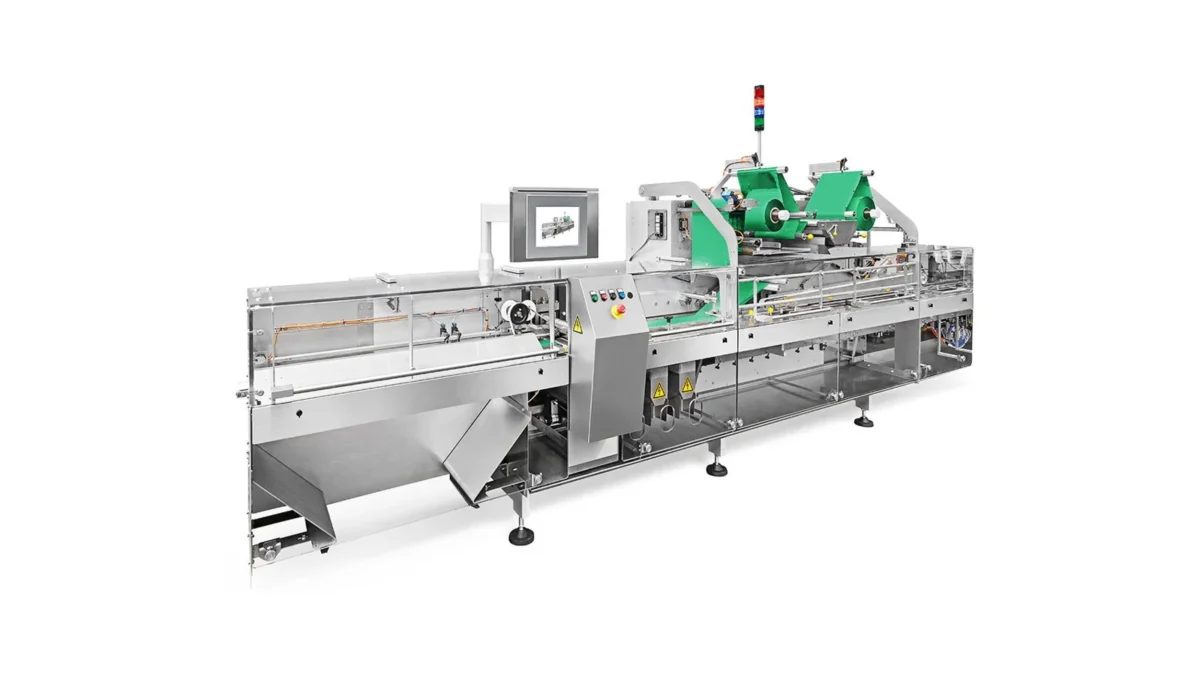
The value of US domestic packaging machinery shipments reached an estimated $11.7 billion in 2025, according to the 2026 State of the Industry research issued by PMMI, the Association for Packaging and Processing Technologies. Food was the largest end market at about $5.1 billion, or roughly 44% of the shipment value. PMMI also projected food-market shipments approaching $7.1 billion in 2031. Those numbers provide a useful market baseline—but not a complete measure of all packaging equipment investment or the value of retrofits. [S1]
The industry question for 2026 is whether suppliers can sell more adaptability into factories whose product assortments change faster than their capital budgets. Shipment value tells us the scale of machines supplied. Vendor interviews describe changing buyer priorities. Neither can tell an individual plant whether it should invest in a new filler, retrofit a bagger or improve maintenance on the equipment it owns.
What the $11.7 billion figure actually counts
PMMI describes the US figure as domestic packaging machinery shipment value in 2025. The term shipment value matters. It is not the total value of machinery installed in the United States, annual aftermarket service revenue, global packaging machinery revenue, or the price of all packaging materials used by US manufacturers. [S1] [S2]
| Reported measure | Value and period | Interpretation |
|---|---|---|
| US domestic packaging machinery shipment value | Estimated $11.7bn, 2025 | Annual equipment shipments under PMMI’s market definition |
| Food end-market machinery shipments | Estimated $5.1bn, 2025 | Equipment for food applications, not food packaging material revenue |
| Food share of US shipment value | Approx. 44%, 2025 | End-market share, not percentage of plants investing |
| Food end-market outlook | Approx. $7.1bn by 2031 | PMMI projection, not observed 2031 sales |
| Canada domestic machinery shipment value | Approx. $1.2bn, 2025 | Separate national measure, not added to US figure |
The table follows PMMI’s September 2026 public release. US shipment values are stated in US dollars. Canadian dollar-denominated figures below are reproduced as shown in PMMI’s public release; that release does not specify a separate currency-conversion basis, so no US/Canada value ratio is calculated. The figures are estimates or projections, not audited sales totals. [S1]
Two related figures deserve care. First, $5.1bn divided by $11.7bn is approximately 43.6%, consistent with a rounded 44% share. Second, the projected $7.1bn food value is a sector forecast, not a promise that manufacturers will receive those orders. Different product mixes, pricing and exchange conditions could change the outcome.
Food is the biggest end market, but not the entire market
Food packaging equipment covers a broad set of functions: filling, forming, wrapping, sealing, labeling, inspection, case packing and palletizing. It is not synonymous with equipment making cups, trays or paperboard packaging substrates. A machine that produces a molded-fiber tray is different from a system that fills that tray and applies a lid.
The distinction helps avoid overstating the relevance of a food-sector market figure to one vendor. A molded-pulp machine supplier, a robotic palletizer integrator and a high-speed bottling-line manufacturer can all sell into food-related applications while facing different replacement cycles, materials requirements and capital-approval logic.
PMMI’s 2026 report also identifies beverage and pharmaceutical markets as distinct demand areas. It does not justify allocating the entire non-food balance to one of those sectors. A market estimate should preserve the source’s segmentation rather than creating a new pie chart from guessed proportions. [S1]
Why 2026 buyer behavior is more important than the headline total
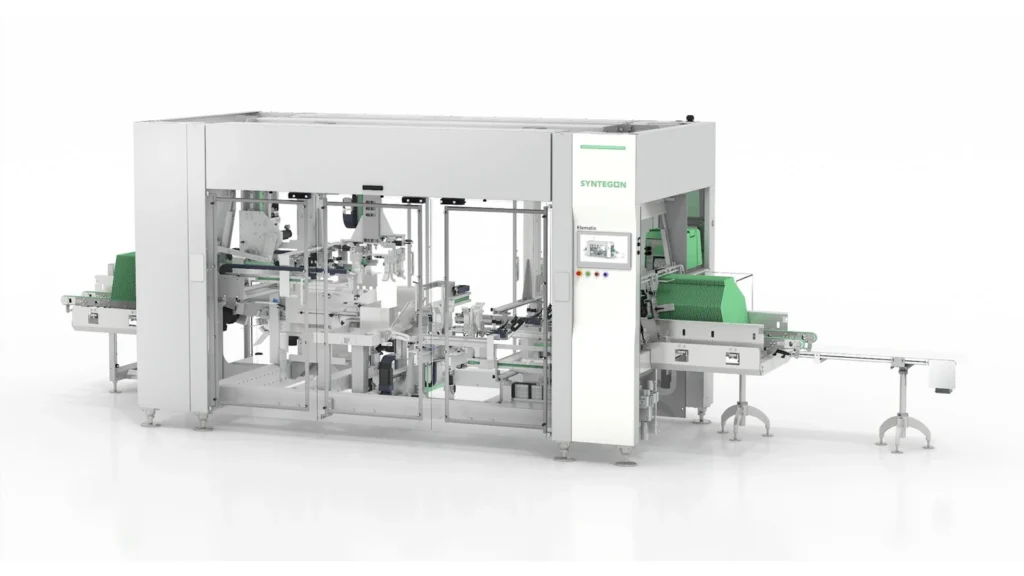
On 11 November 2026, PMMI published a separate machinery market-trends report based on supplier interviews, Interact Analysis benchmarking and supporting market research. The report highlights price-sensitive evaluations, longer and more fragmented sales cycles, rapid SKU proliferation, thinner-material processing and a preference for flexible or upgradeable equipment. [S3]
Those patterns can affect a vendor’s revenue mix even in a market where annual shipment value remains substantial. Some customers may postpone a full-line purchase but spend on tooling, drives, controls or machine integration. Other factories may replace an obsolete line because repeated retrofits are no longer economical. The published summary does not provide a US-wide share for either decision.
The editorial reading is that capital discipline is becoming more specification-intensive. Buyers have to establish which format, material or downstream station actually constrains output before comparing bids. Stronger equipment-market demand does not remove the need for line-level evidence.
A more useful segmentation than “manual versus automated”
Automation is not one purchase. At one end of the process, an operator might install a vision system to verify a date code. Further downstream, a plant might replace manual case packing with a robotic system. Both can be described as automation, but the business mechanisms are different.
A useful machinery-demand framework distinguishes four categories:
- Capacity expansion. New output is needed because stable demand exceeds productive capacity.
- Format flexibility. More products or packaging constructions must run on the same assets.
- Labor and reliability. Automation addresses repetitive work, inspection gaps or unplanned downtime.
- Regulatory and material adaptation. A line must process a revised substrate or retain better production evidence.
The categories overlap, but they help analysts avoid treating every sale as a sign that factories are adding more volume. An inspection station may improve reject accuracy without increasing nameplate throughput. A retrofit may prolong machine life without appearing as a new machine shipment in the same way as a complete line.
Canada supplies a useful regional contrast
PMMI estimated Canadian domestic packaging machinery shipments at approximately $1.2 billion in 2025, up 3.6% versus 2024, and expected the market to approach $1.4 billion in 2027. It also said the US accounted for 30% of Canada’s packaging machinery imports in 2025, while 91% of Canadian machinery exports went to the US. [S1]
Those trade shares describe the origins and destinations of machinery trade in the stated year and national context. They do not show that 30% of all machinery sold in Canada came from US domestic shipments, or that Canadian exporters are unaffected by policy shifts. Domestic shipment and import/export measures have different denominators.
The regional context is relevant because machinery supply chains are cross-border. Buyers may compare local service access, parts inventories, controls standards and currency exposure in addition to equipment purchase price. These are commercial considerations rather than new statistical claims from PMMI.
The retrofit trap in market analysis
Degradable Packaging’s existing report on US food packaging machinery investment examines two factory examples that led to different choices: a tooling retrofit and a multi-line replacement. That article belongs at the plant-decision level. This analysis belongs at the market-measurement level, where the question is what shipment values and demand signals do—and do not—establish. [S4]
It is a mistake to interpret stronger retrofit interest as proof that new equipment sales are collapsing. It is equally mistaken to use a rising shipment-value estimate as proof that buyers are purchasing higher numbers of machines. Price inflation, machine size and mix can alter dollar value without a comparable change in unit count.
To measure a structural shift, analysts would need consistent time series of machine shipments by type, average realized values, order backlogs, retrofit and aftermarket service revenue, and installed-base utilization. Public summaries currently support a more limited conclusion: supplier conversations indicate stronger scrutiny and interest in flexible asset strategies. [S3]
What manufacturers and investors should measure
For an equipment supplier, new opportunities may appear where three buyer needs intersect: frequent format change, tight product-safety or quality requirements and weak engineering resources at the customer site. In those situations the vendor’s ability to provide realistic testing, changeover documentation and service can matter as much as maximum speed.
For a packaging buyer, an investment case should be grounded in good packs per scheduled hour, not only the catalogue rate. The relevant measures are acceptable output, changeover losses, material scrap, energy use, downtime, preventive maintenance and available labor. A capital proposal can then compare the true cash impact of refurbishment, modular upgrades and replacement.
For an industry analyst, the essential rule is to avoid blending three datasets as though they describe the same thing: production or shipment values, factory investment intentions and actual line utilization. A PMMI end-market forecast is one kind of evidence. Surveyed buyer sentiment and documented purchase orders are others.
How to read the 2031 outlook responsibly
PMMI’s projection of roughly $7.1bn in food-sector machinery shipments by 2031 suggests a potentially larger addressable equipment sector, conditional on the report’s assumptions. It does not tell us which technology will capture the growth or how much comes from unit volume rather than price or system complexity. [S1]
A manufacturer deciding whether to expand capacity today should track actual orders, customer qualification cycles and its own equipment utilization. The macro figure can set context but should not override production economics.
The most valuable future update would combine a new annual PMMI shipment benchmark with disclosed supplier order and service revenue, while keeping the definitions separate. Until then, $11.7bn is a credible scale estimate for 2025 US domestic machinery shipments, not a universal proxy for 2026 packaging investment.
Sources / References
- S1. PMMI, 2026 State of the Industry: public findings and US/Canada figures, 14 September 2026. Public release; estimated shipment values, shares, trade percentages and 2031 food projection.
- S2. PMMI, 2026 Packaging State of the Industry report overview, 6 August 2026. Public summary; report method and measurement scope, gated full report not examined.
- S3. PMMI, 2026 Packaging Machinery Market Trends, 11 November 2026. Public summary of supplier-interview trends; not a machine-unit shipment dataset.
- S4. Degradable Packaging, Retrofit or Replace? US Food Packaging Machinery Investment in 2026, 13 November 2026. Existing site analysis; distinct plant-decision search intent.
Found an error? Read our corrections policy and contact the editors.