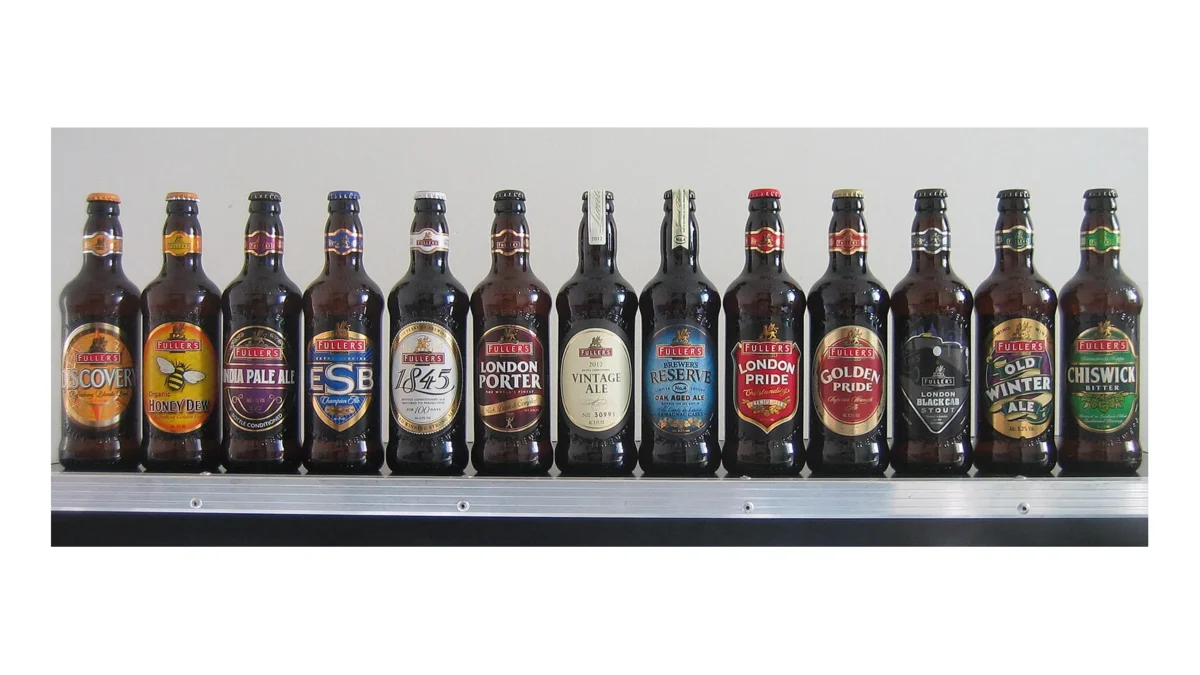
The UK government has announced a targeted change to packaging extended producer responsibility (pEPR) that could remove household-waste disposal fees from most glass drinks containers supplied directly to licensed hospitality premises from April 2027. Announced on 11 November and explained in a parliamentary statement on 12 November 2026, the plan responds to a specific problem: hospitality businesses can pay for commercial waste collection while producers also incur pEPR disposal charges on containers treated as household packaging. The proposed remedy is more precise than a general exemption for glass. [S1] [S2]
For related context, read our analysis of UK packaging EPR framework.
The announcement also brings forward consultation on larger fee discounts for highly recyclable packaging. Neither measure should be described as a final, universal 40% reduction in all glass-packaging bills. The direct-supply classification change still requires implementing legislation, while the broader discounts depend on consultation, fee calculations and the material’s applicable assessment. [S1] [S2]
What the government announced—and what it did not
Defra identified two related but distinct policy moves. First, it plans to change the classification of the majority of glass drinks containers supplied directly to licensed pubs, restaurants and other hospitality venues, so those containers will not attract pEPR disposal cost fees from April 2027. The government says this dual-use measure will cover England, Scotland, Wales and Northern Ireland. Second, it proposes accelerating the discount for packaging assessed as highly recyclable, with consultation and later decisions still to come. [S1] [S2]
The parliamentary statement says indicative analysis suggests green-rated material fees could be roughly 30–40% lower in 2027/28 and 2028/29 than under the previous approach. That percentage is a modeled difference between approaches, not a confirmed price reduction for every bottle, company or reporting year. It is dependent on future packaging placed on the market and the cost of the local-authority system. [S2]
| Development | Announced timing | What is firm on 16 November 2026? |
|---|---|---|
| Direct-supply hospitality glass classification | Intended from April 2027 | Government policy announcement; implementing legislation to be verified |
| Larger discounts for green-rated packaging | Consultation ahead of 2027/28 | Proposal and indicative estimates, not final tariffs |
| PackUK call for evidence on future fee modulation | Early 2027 | Planned evidence exercise, not a regulation |
| Reusable-packaging call for evidence | Following month, per Defra announcement | Planned consultation route, not a reuse mandate |
These different statuses matter to a producer preparing a budget. A policy statement can guide a scenario, but it is not enough to change a declaration or write a new tariff into an invoice. [S1] [S2]
Why the hospitality route matters
A bottle sold through a supermarket and a bottle supplied directly to a licensed pub may be physically identical. Their recovery routes are not necessarily identical. In a pub, emptied bottles typically enter the venue’s commercial collection arrangement. Treating such containers as household packaging can charge the packaging system for a waste stream already paid for commercially. That is the double-charging issue the government says it is trying to correct. [S2]
The boundary is the supply chain, not the chemical composition of the glass. A drinks producer should therefore not apply the proposed treatment to its entire glass portfolio merely because the bottles are recyclable. It must distinguish direct supplies to qualifying premises from supplies to retailers, wholesalers and other channels, and verify the eventual legal definition. This is an editorial records recommendation, not a new reporting obligation.
The government illustrated the potential effect with a pub selling 10,000 beer bottles and 3,700 wine bottles: an estimated saving of up to £870 annually. Its notes clarify that the businesses legally responsible for EPR fees, such as drinks manufacturers, would realize the direct fee saving—not necessarily the pub itself. Whether a pub sees a lower purchasing price depends on commercial pass-through, which the announcement does not establish. [S1]
There is an unresolved arithmetic inconsistency in the government example: 10,000 bottles at 6p plus 3,700 at 10p equals £970, rather than £870. The £870 figure above is Defra’s published estimate, not a calculation validated by this publication. Neither number should be booked as a guaranteed saving; actual eligible tonnage, rates and commercial pass-through must be established. [S1]
Industry reaction is supportive, but it is not independent proof of the savings
Nick Kirk, executive director of British Glass, welcomed the announcement as a move toward a fairer fee system and greater confidence for manufacturers. His reaction is useful evidence of the glass industry’s policy preference. It cannot, by itself, establish the net environmental advantage of glass or the final savings for individual producers. [S1] [S3]
The government also links the package to wider industrial pressures on British glass production, including energy costs and trade-remedy investigations. These matter commercially, but they should not be collapsed into the EPR calculation. A fee discount, an energy-support measure and an anti-dumping investigation are different instruments with different eligibility and legal procedures. [S2]
The editorial question is not whether glass deserves favorable treatment in the abstract. It is whether charges reflect the actual end-of-life route, current costs and verified recycling characteristics without shifting unmanaged costs elsewhere. A fairer fee design should distinguish reusable systems, recyclable designs and measured collection and recycling performance. These attributes overlap, but they are not interchangeable.
The evidence gap behind the 30–40% headline
A modulated fee is not set by recyclability alone. The underlying system needs covered tonnage, cost allocation, material categories, applicable recyclability assessments and a balancing mechanism for discounts and premiums. Changing one component can redistribute costs within the system. A green-rated producer may see a lower rate relative to a previous model while the absolute bill is affected by other factors.
Defra’s 12 November statement explicitly describes the estimate as dependent on packaging volumes and local-authority costs. That qualification is central, not incidental. Companies should resist treating the upper end of the indicated range as a guaranteed annual saving. [S2]
A simple illustration shows why. If a qualifying producer had a hypothetical baseline fee exposure of £100,000 for a particular material grouping, a 30% modeling difference would imply £30,000 less under otherwise unchanged assumptions. But real fees would need a final rate and eligible tonnage. This is arithmetic to explain sensitivity; it is not a forecast, price quote or calculation of the UK scheme.
What producers should separate in their systems now
Packaging teams can prepare without making premature regulatory claims:
- Identify the entity legally responsible for the relevant packaging, rather than assuming the venue or glassmaker is the producer in every transaction.
- Distinguish direct sales to licensed hospitality venues from wholesale, retail and mixed distribution; document the evidence actually available.
- Preserve pack specifications, relevant packaging data and the reporting-year basis used for the current pEPR return.
- Run a provisional fee scenario separately from booked liabilities and paid notices.
- Track the final implementing legislation, the consultation response and PackUK’s confirmed applicable rates before updating the accounting treatment.
The work is especially important for businesses selling the same bottle through multiple channels. An internal item code may describe the container but not the distribution route. If the legal treatment depends on route, the reporting system must be capable of tracing the route without guessing from bottle type.
Will the proposal change packaging choices?
It might change marginal economics, but the direction is not automatic. A green-rating discount may improve the financial case for certain established collection and recycling routes. A direct-to-hospitality carve-out may correct a cost-allocation problem. Neither proves that a heavier glass bottle is always environmentally preferable to a lighter alternative; that comparison requires its own functional unit, supply-chain conditions, transport assumptions and return or recycling route.
The stronger conclusion is about policy design: end-of-life fees are becoming more sensitive to where packaging goes and who already pays to manage it. For packaging producers, the next competitive advantage may be reliable channel and material data as much as material substitution itself.
What to watch before April 2027
As of the 16 November 2026 source cutoff, the test is whether the announced classification change appears in operative legislation with an unambiguous definition of direct supply and licensed premises. For broader green-rating discounts, watch the consultation, the adopted modulation method and final rates. Until those are published, the correct description is announced reform with conditional projected effects, not a completed fee cut. [S1] [S2]
Sources / References
- S1. UK Department for Environment, Food & Rural Affairs, Government steps in to reduce packaging costs for British businesses and pubs, 11 November 2026. Government release; policy announcement and numerical illustration; public full text.
- S2. UK Parliament, Packaging Extended Producer Responsibility (pEPR) Update, written statement HCWS466, 12 November 2026. Minister Emma Hardy’s statement; legal-status distinctions and modeled scenarios; public full text.
- S3. British Glass, British Glass welcomes Government support and move towards fairer packaging fees, 11 November 2026. Industry association reaction; advocacy viewpoint, not independent environmental assessment.
Found an error? Read our corrections policy and contact the editors.