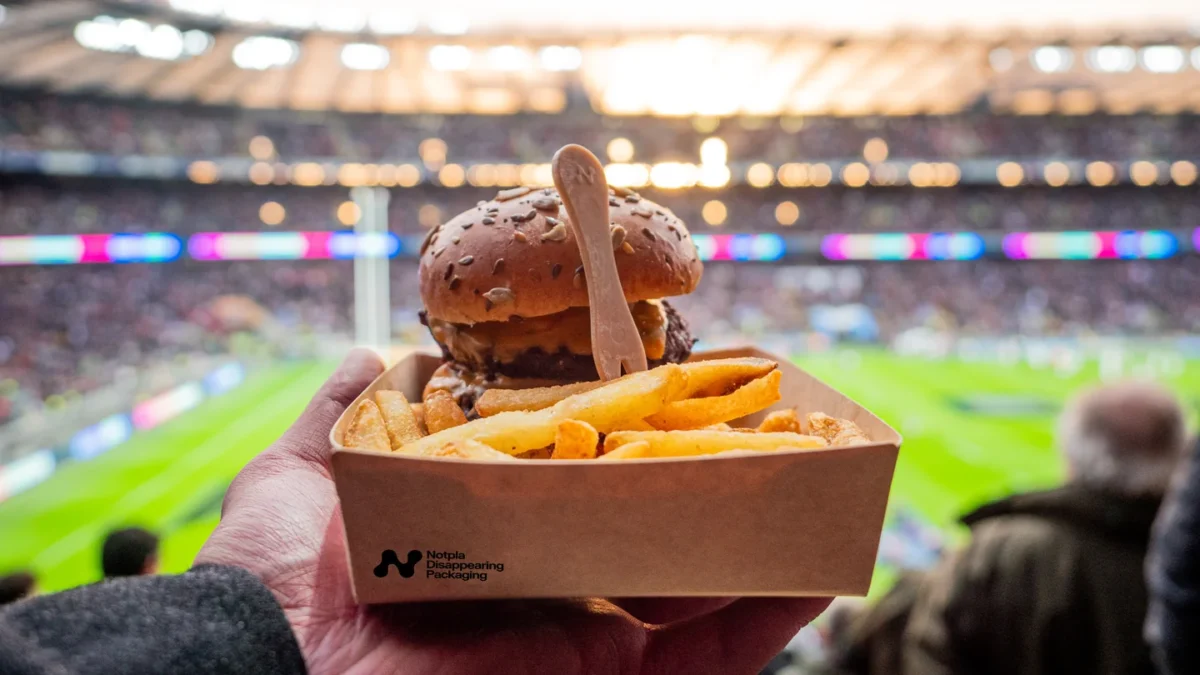
Conpax says Dutch snack chain Kwalitaria switched its paperboard trays for fries and snacks from a thin plastic lining to a seaweed coating. The distributor reported the change in February 2026. In October, coating supplier Notpla described its foodservice packaging as being produced and used at scale. Together, the two accounts give buyers a commercial example for hot snacks and a starting point for deciding which menu items to qualify next. [1] [2]
Start with the food that already fits
The tray body is paperboard. The material being replaced in this case is the thin layer that Conpax says protected that board from grease and moisture. The switch covers fries and snacks. Conpax gives no matched comparison with the previous tray for soup, wet sauces or prolonged delivery. [1]
Our view is that the promising near-term opportunity is a tightly specified menu use. A chain can pick a high-volume item with a known portion and a predictable time from packing to eating, then ask a converter to demonstrate that the finished tray survives that duty. A universal coating specification would make the buyer prove more applications than the commercial case supports.
Compare finished trays at the handoff
Run the current tray and candidate side by side with the same food, portion, pack-out temperature and longest routine hold. Check for grease transfer onto the carry bag, softening when staff lift a loaded tray, and leakage at folds or corners. Include stacked orders if that is how the outlet serves them. If the coating grade, board or tray geometry changes, qualify the finished combination again.
Compare the cost per order that reaches the customer in acceptable condition. Include the tray, any bag or liner it needs, and repacks caused by staining or collapse. A modest tray premium might be viable in a high-volume item that performs reliably. A low unit price can lose that advantage if staff add a liner or double up trays.
What this changes for chain buyers and converters
Our assessment is that the first scalable order is likely to come from a chain that can qualify one tray against a shared service specification. Set pass limits for bag staining, rim strength and leakage before the trial, then compare busy and quiet outlets with the same menu item. If the tray passes at the counter but fails after the longest delivery hold, the chain can specify it for counter service first. For converters, the commercial advantage would be a repeatable finished-tray specification across outlets, supported by lot-to-lot coating consistency and forming yield.
Verify the route after the meal
Imperial College London introduced Notpla packaging in its campus catering in summer 2025. Its disposal instructions direct used containers to general waste for energy recovery by incineration. That campus is a separate case from Kwalitaria, and its guidance describes what happens locally after use. [3]
This is where the material opportunity splits in two. A chain may be able to remove a conventional plastic lining through a procurement change. Collecting food-soiled trays for a different treatment requires a receiving route, staff and customer instructions, and an operator willing to accept the exact finished item. Treat those as separate decisions and update the bin message only when the route is in place.
What wider adoption would look like
The strongest next signal would be repeat orders for the same tray across multiple outlets, paired with results that cover the greasiest menu item and the longest routine hold. For higher-moisture meals, ask the converter to document a distinct construction and compare it with the incumbent. If an operator also has an accepting collection route, that second piece of evidence can support a different disposal instruction.
If a common tray specification survives repeat orders without extra liners or repacks, distributors could stock one format across more outlets. Wet dishes or longer delivery runs would need their own comparison. Changes to collection instructions would follow separate evidence from the receiving operator.
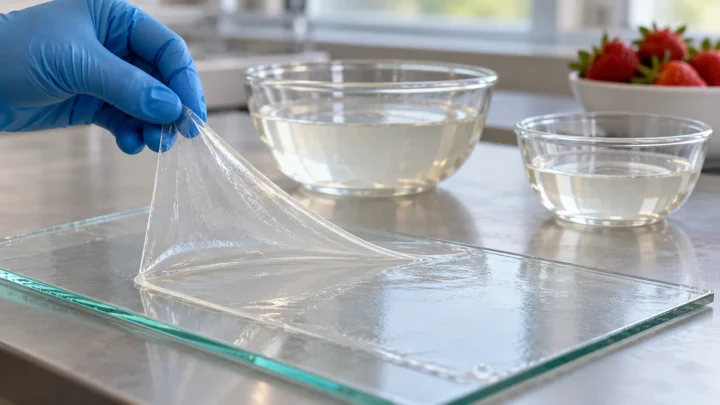
Related reading includes the evidence on standalone seaweed packaging films and the difference between grease, water and other barrier tests.
Update history
9 November 2026. Added the conditions for moving from a menu-item trial to a repeat chain order.
Sources
Found an error? Read our corrections policy and contact the editors.