Paper pallet wrap is not one equipment proposition. Mondi recommends a dedicated wrapping machine for Ad/Vantage StretchWrap; Seaman Paper markets SeaStretch for hand, semi-automated and automated use. The difference is more useful than a generic paper-versus-film comparison: the material and its application route have to be selected together.
Two commercial routes sit behind the same material label
Mondi’s current FAQ says paper behaves differently from plastic film, is not pre-stretched in the same way and needs controlled force, tension and folding. It recommends dedicated equipment for its product and says hand application reduces wrapping quality. That is guidance for a named paper system. [1]
Seaman Paper’s March2024 launch describes SeaStretch as a creped paper compatible with existing hand-wrapping, semi-automated and automated machines. This is a different supplier’s product statement, not a contradictory result from testing the same grade on the same wrapper. [2]
A retrofit claim and a dedicated-machine recommendation can therefore both be true within their own boundaries. The mistake is to detach either statement from its grade and application setup and apply it to every extensible paper. A paper roll should not enter a film-wrapping process merely because it fits the spindle.
The starting asset changes the trial brief
| Starting situation | Commercial route evidenced here | Acceptance question |
|---|---|---|
| Dedicated paper station is feasible | Mondi recommends purpose-suited equipment for its grade | Does the complete wrapping recipe hold the actual load and meet the cycle requirement? |
| Existing equipment must be retained | Seaman describes hand and machine compatibility for SeaStretch | Which exact wrapper, roll format and settings are included in that compatibility statement? |
| Manual application is required | Supplier positions differ between the two papers | Can an operator reproduce the accepted restraint and closure on this load? |
The acceptance unit is a wrapped load, not an unused roll. A material can feed through a machine yet leave an inadequate tail closure or a stack that shifts in handling. Conversely, a controlled demonstration on regular cartons does not qualify every irregular or protruding load. These are the configurations a trial must distinguish, rather than treating feeding and transport restraint as the same result.
Compare the cost of an accepted pallet
Mondi says the cost comparison is case-specific and includes substitution ratios and possible changes in labels, strapping or corner protection. That framing matters because the cheapest material quotation may belong to a route requiring new equipment or a different operating recipe.
A usable business case keeps material consumption, equipment provision, operator time and interruptions alongside the accepted load outcome. The relevant denominator is pallets completed to the agreed requirement. Comparing price per kilogram alone can reward a cheaper roll while leaving the wrapping work or rejected loads outside the calculation. No common cost dataset is available here, so neither route is ranked as cheaper.
A defined route is the boundary of the result
The trial record should name the paper, wrapper or dispenser, closure, load geometry and handling route together. Mondi offers customer-pallet trials with consumption and stability reporting; the useful output is the stated test configuration and its result, rather than a photograph of a brown-wrapped pallet.
Recovery is another boundary. A change from film to paper does not by itself establish what happens to the used assembly, including its labels and closures. Our recyclability systems guide explains why collection and a receiving process remain part of that question. This article does not approve either product’s local recycling claim.
These sources document distinct commercial equipment routes, including a 2024 product launch and current supplier guidance. They are not evidence of a new 2026 launch or a measured industry conversion rate. Their practical consequence is narrower: decide which production asset can change, then compare grade-specific solutions against one load acceptance brief.
Sources
- Mondi — Make the switch to paper pallet wrapping. Current product page: machine/hand-wrapping FAQ, testing and cost sections.
- Seaman Paper — Seaman Paper launches SeaStretch. 19March2024 launch: compatibility and product-use paragraphs.
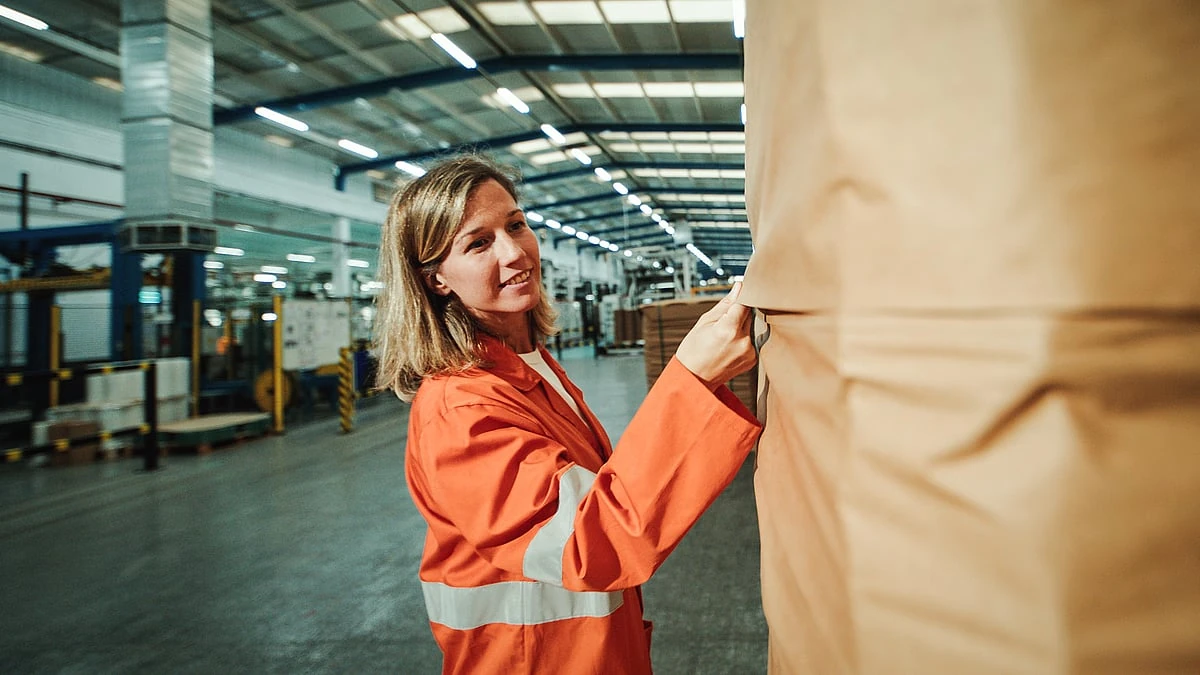
Image: Mondi. Official paper-wrapping application photograph, proportionally resized and converted to WebP. No independent trial or newly commissioned installation is depicted as having been verified by this publication.
Found an error? Read our corrections policy and contact the editors.