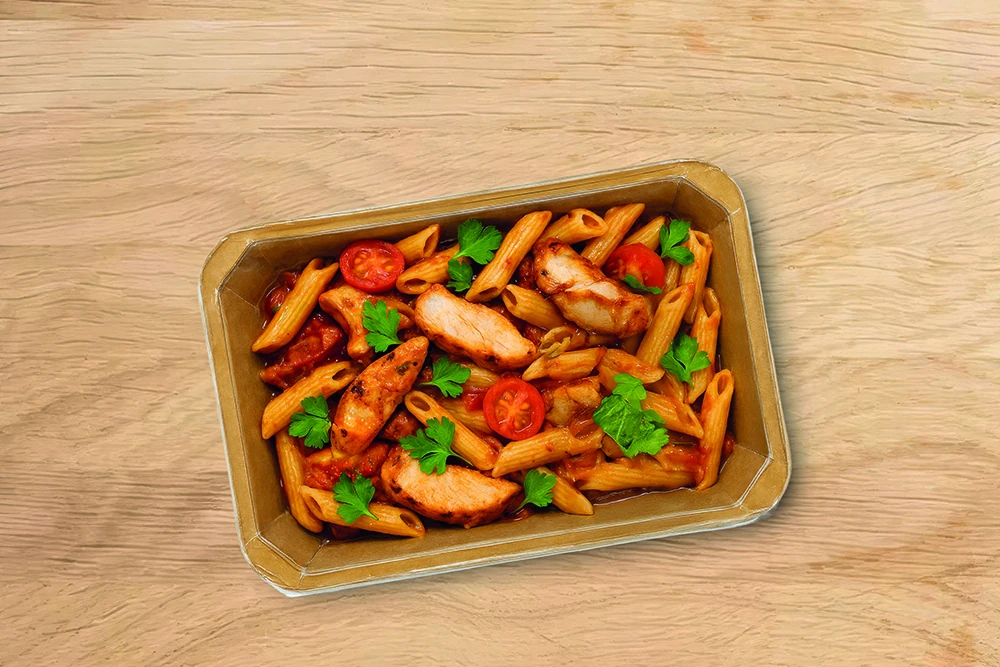
Solidus has introduced Futurline Heat&Eat, a fibre-based modified-atmosphere packaging (MAP) tray range for ready meals. The company describes trays intended for chilled and frozen distribution followed by heating directly in a microwave, conventional oven or air fryer. It also describes compatibility with standard tray-sealing equipment and a barrier film that consumers can separate from the board after use. These are supplier statements about the range, rather than evidence that every recipe and appliance combination has been qualified. [1]
Our assessment is that the most promising first application is one established meal with repeatable production and clear preparation instructions. The buying decision has three connected parts: keeping the meal protected before sale, handling the loaded pack during heating, and providing a credible disposal route afterwards. Success in one part does not settle the others.
The barrier remains central to the pack
The paperboard appearance should not distract buyers from the finished construction. In this format, the board provides the tray structure while the barrier and lidding arrangement support the sealed-pack application. Procurement therefore needs a specification for the complete tray-and-lid combination. A board sample alone cannot answer questions about the finished meal’s shelf life, sealing behaviour or separation after use.
Solidus presents the range as a lower-plastic alternative to conventional plastic MAP trays. To evaluate that proposition, request component weights for the exact tray size and lid being offered, together with the incumbent pack used for comparison. Include any extra packaging needed to deliver the same meal. This makes a reduction claim useful to the buyer without turning a range-level statement into an unsupported claim about a particular SKU. [1]
Choose a first meal that makes comparison possible
A sensible starting candidate is a recipe already packed on an established line and sold through a known distribution route. Keep portion size, ingredients, storage conditions and customer instructions consistent when comparing the incumbent pack with the proposed tray. A stable product makes it easier to investigate a change in seal rejects or handling damage.
For example, a producer considering a pasta meal could begin with that one recipe and its actual sauce, portion and preparation method. Approval would apply to that tested specification. Extending the decision to a heavier portion, a wetter sauce or a different heating instruction should trigger a review of what changed. This is our proposed trial approach; we have not tested a Heat&Eat meal or observed a customer production run.
First test: protection from packing line to consumer
The supplier’s reference to standard tray sealers gives a buyer a starting question, rather than a guarantee of a drop-in changeover. Confirm the tray geometry, tooling, lid and operating window supported on the actual line. Record line speed, changeover time and seal rejects across repeat runs. A successful demonstration at reduced speed would leave a different commercial question from successful operation at the producer’s normal throughput.
Follow filled packs through the intended chilled or frozen route. Inspect seals, corners and tray condition after routine handling and distribution. Where condensation or a freeze-and-thaw step is part of the real route, include it in the qualification plan. The relevant result is the condition of the saleable meal at the end of that route.
Shelf-life evidence must also concern the food and finished pack. Ask the responsible food team and supplier to agree how protection will be assessed for the proposed recipe, gas conditions and storage regime. A generic barrier statement cannot by itself establish a shelf-life period. The public announcement does not provide the product-specific test record needed to make that decision.
Second test: the filled tray during heating and serving
A microwave, an oven and an air fryer are distinct intended uses. Ask which are supported for the exact finished SKU, including the appliance settings, duration, starting condition and instructions for the lid. Use the limits supplied and validated for that pack; the range name does not supply universal cooking settings.
Handling deserves its own observation. After the instructed heating cycle, can the loaded tray be removed and placed on a surface as intended? Does the rim remain usable, do corners leak, and does the base retain enough stability under the actual meal load? Any need for a supporting plate or other handling step belongs in the qualified instructions.
The customer experience also includes opening the lid and identifying which layer to remove. A pack can appear satisfactory in a controlled demonstration while leaving the household instruction unclear. Review the final artwork with the physical pack present, so that the wording describes the component the consumer will actually see.
| Decision | Evidence for the exact application | Question left open by the launch announcement |
|---|---|---|
| Run on an existing line | Tray/lid specification, repeat line runs, seal rejects and changeover records | Will the proposed combination sustain the required output? |
| Sell with direct-heating instructions | Filled-pack results for each advertised preparation method | Which settings and handling instructions are supported? |
| Describe component disposal | Used-pack separation check and local acceptance for tray and film | Can the intended customer actually use the stated route? |
Third test: a used tray and a real receiving system
Solidus describes separating the film from the fibre tray and recycling the components through their respective streams. A buyer should check what that means in each intended market. Ask local operators about the actual board construction, remaining food residue and separated film. The existence of a plastic collection system does not establish acceptance of every small film component. [1]
Try the separation step on used packs under the intended instructions. Record whether consumers can identify the layer and remove it adequately. If separation is inconsistent, that is a design or communication question to resolve before relying on it in disposal claims. A clear instruction supported by a local receiving route is more useful than a broad recyclability message.
Where the commercial opportunity lies
The potential opportunity is to offer a fibre-based format within a ready-meal operation that still needs sealed protection and convenient preparation. For converters and food producers, this shifts the discussion from the price of an empty tray to the performance of a complete meal pack. Compare cost per accepted meal, including lid, tooling, changeovers, rejects and distribution damage. Plastic reduction and operating cost should remain separately visible in the decision.
There is also a useful contrast with seaweed-coated trays for hot takeaway food. A takeaway tray used for a short service period and a sealed ready-meal tray moving through a cold chain have different jobs. Evidence from one application should not be transferred to the other without examining that difference.
We would look for repeat orders tied to a named meal specification, demonstrated line performance and market-specific preparation and disposal instructions before drawing a broader adoption conclusion. The launch establishes a product proposition. Those operational results would show where it can become a repeatable purchasing choice.
Sources
- Solidus — Futurline Heat&Eat announcement. Supplier description of construction, intended applications, sealing compatibility and component separation.
Found an error? Read our corrections policy and contact the editors.