
Editorial company profile
TIPA
TIPA develops compostable films, laminates and converted flexible packaging for food and other markets. Its portfolio also includes produce-label materials, while the SEALPAP acquisition extends the group into coated paper. Certification applies to particular products and conditions; industrial composting, home composting and actual local acceptance remain distinct questions.
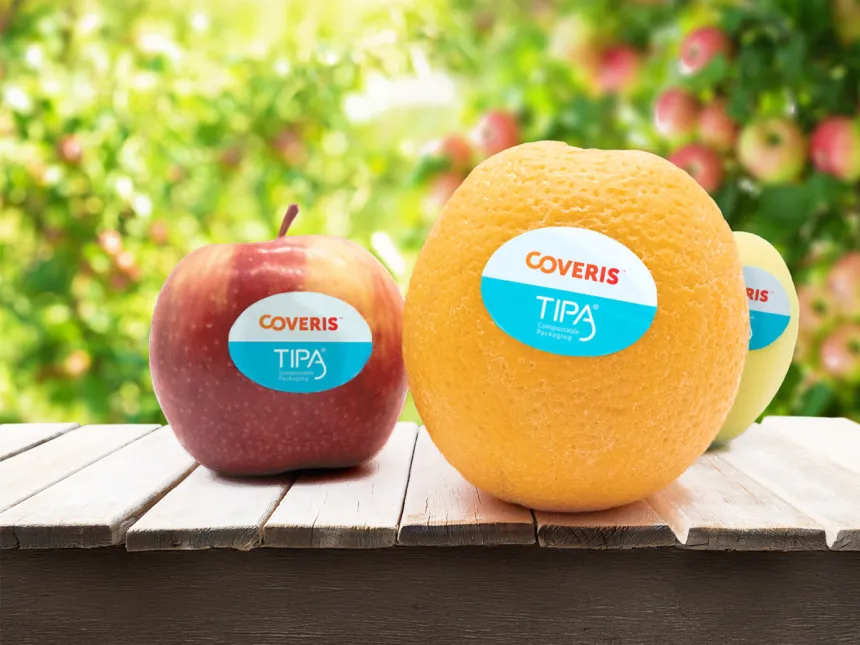
Official websiteImage: Coveris / TIPA. Produce-label application; certification and adhesion claims concern the specified label construction.
Featured packaging
TIPA — produce-label application
Compostable flexible packaging
The photograph shows produce labels from TIPA’s collaboration with Coveris. The partners announced a UK manufacturing and marketing agreement in September 2025. Label material, adhesive and certification scope need to be checked together for the intended fruit and handling conditions.
Explore product rangeCompany overview
TIPA develops flexible packaging materials and works with converters and brands to turn them into usable packs. The Israel-based business supplies films and laminates as well as converted formats for food and other applications. Its role spans polymer-based material development, conversion relationships and finished packaging. A reel of certified material and a completed pouch are therefore different points in the value chain, with different documentation needs.
The company's core packaging proposition is compostable flexible structures that retain the protection and processing functions needed by a product. Its own overview specifies that certifications apply to particular products and may concern home or industrial composting. This is a narrower and more useful statement than saying every TIPA package belongs in any compost bin. Local collection and treatment acceptance remain operational questions.
TIPA's recent activities also broaden the profile beyond a single film platform. A produce-label agreement with Coveris links material development to a specific converting and distribution route. The SEALPAP acquisition adds coated-paper capabilities through the group. These developments should not be collapsed into a claim that compostable films and recyclable papers have the same end-of-life instructions.
Packaging portfolio
| Area | Packaging role | Qualification boundary |
|---|---|---|
| Film and laminate reels | Application-specific compostable flexible materials | Qualify barrier, sealing and printing for the actual product. |
| Converted packaging | Pouches and other flexible formats | Include closures, inks and adhesives in certification checks. |
| Produce labels and coated paper | TIPA label material; SEALPAP group capability | Keep label certification and paper-recycling claims separate. |
Materials and technologies
Flexible packaging combines barrier, seal and mechanical requirements. A laminate may behave differently from a single film, and a printed pouch adds components that a resin or film certificate may not cover. A produce label adds another interface: adhesive, fruit surface, moisture and handling. These distinctions make construction-level documentation essential. [1], [2], [3], [4]
Sustainability and circularity position
TIPA states that specific films and laminates carry home and/or industrial composting certifications. That statement should not become a universal promise about all products or real-world disposal. A compostable film is not automatically suitable for a conventional plastic-recycling stream. Coated papers added through SEALPAP need their own recovery assessment rather than inheriting the film portfolio's instructions. [1], [2], [3], [4]
Why this company matters
TIPA is useful to follow as a test of whether flexible materials, converters and waste routes can work as one packaging system. The produce-label application targets a component that can accompany organic waste, while food pouches face broader shelf-life and collection questions. Successful adoption depends on the specific use and treatment pathway, not simply on the word compostable.
Recent developments
- 17 September 2025 — Coveris announced an exclusive agreement with TIPA to manufacture and market home-compostable produce labels in the UK. The partners' performance statements remain attributed claims.
- Q4 2025 — TIPA reported the SEALPAP acquisition with its European subsidiary Bio4Pack. Supplier-authored text republished by Packaging World on 3 December describes the expansion into coated paper alongside compostable flexible materials.
What packaging teams should verify
- Identify film or laminate code, thickness, barrier requirements and intended shelf life.
- Obtain certification for the complete printed package, including adhesive and closure; distinguish home from industrial conditions.
- For produce labels, validate wet-surface adhesion and the complete label construction, then confirm local organics acceptance.
Sources / References
Sources checked on 27 October 2026 with AI assistance. Company statements are attributed; no independent product testing is claimed. Post-publication human review by the Degradable Packaging Editorial Team is pending.
- [1] TIPA, corporate overview and sustainability pages, accessed 27 October 2026; product-specific certification and portfolio. https://tipa-corp.com/ab
out/overview/ - [2] Coveris, TIPA label agreement, 17 September 2025; UK converting/marketing scope. https://www.coveris.com/
en/news/coveris-and-tipa -enter-exclusive-agreeme nt-to-deliver-home-compo stable-produce-labels - [3] TIPA supplier-authored acquisition announcement republished by Packaging World, 3 December 2025; explicitly labelled supplier-submitted, not independent performance verification. The original corporate page was blocked to direct reading. https://www.packworld.co
m/sustainable-packaging/ bio-based/news/22955994/ tipa-compostable-packagi ng-tipa-acquires-sealpap -delivering-fullservice- sustainable-packaging-fo r-a-circular-future - [4] SEALPAP, company news, February 2026 entry; joint exhibition with Bio4Pack and TIPA, corroborating the operating-group context. https://sealpap.com/news
/
Disclosure
Editorial company profile. Inclusion does not constitute a product endorsement, membership statement or commercial partnership.