

Editorial company profile
Faerch
Faerch supplies rigid food packaging for fresh and prepared foods, linking tray development with recycling capabilities and named recycled-material platforms.
Official websiteLogo: Faerch; source: official company site.
Featured packaging
Evolve recycled PET food trays
Recycled PET
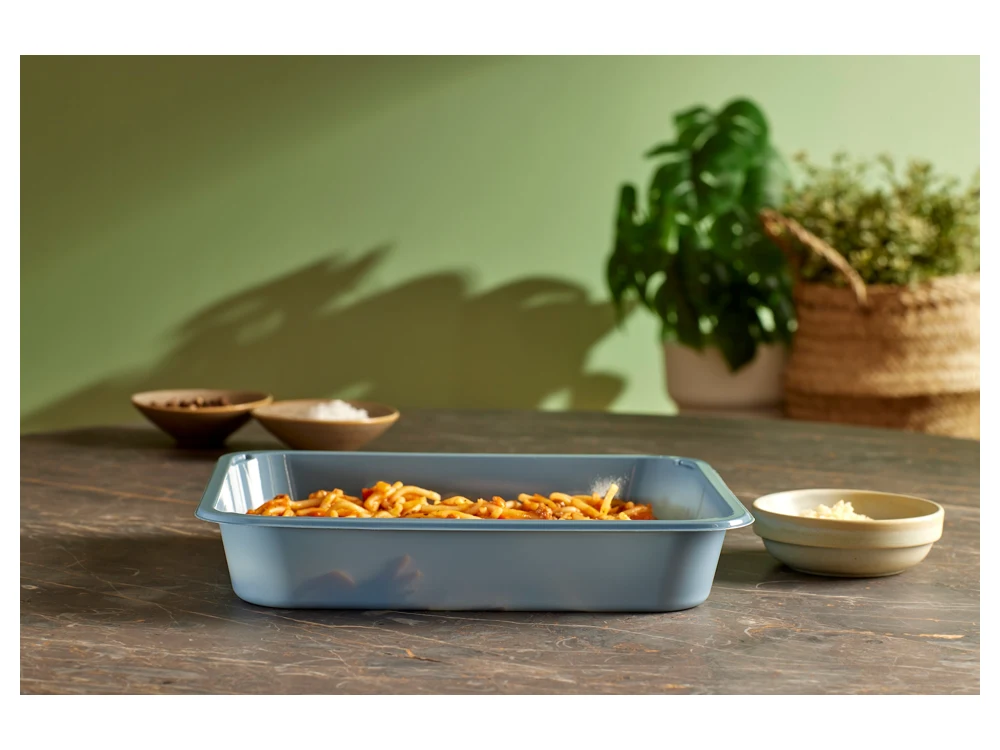
Faerch’s Evolve range uses recycled PET for food trays, including CPET formats for prepared meals. The pictured blue tray with spaghetti bolognese illustrates one application. The range’s naturally varying colors reflect recycled material inputs. Evolve belongs to the recycled-plastic side of packaging development; recycled PET should not be confused with a biodegradable material.
Explore product rangeCompany overview
Faerch supplies rigid food packaging and describes integrated recycling capabilities as part of its business. Its public range includes trays and containers for food-to-go, fresh food and dairy applications. The company therefore connects package development with material recovery, rather than describing its offering only through an empty tray catalogue.
Named platforms help explain the business more precisely. Its official material discusses CIRPET+ as material produced from recycled former food packaging and presents Evolve trays in customer applications. Other case accounts concern changes to APET tray structures. Those examples identify particular material and customer projects; they do not establish the composition of every Faerch product.
For a food producer, the useful distinction is between the tray's functional brief and the sourcing route of its material. A pack for fresh meat and one for food-to-go can have different sealing, presentation and handling needs. Recycling capability is relevant to the company profile, but the exact product specification and the available collection system still define the practical proposal.
Packaging portfolio
| Packaging area | Examples | Main applications |
|---|---|---|
| Fresh-food trays | Trays for fresh meat and other foods | Protection, presentation and specified sealing systems |
| Food-to-go | Rigid containers and tray formats | Prepared-food service and retail |
| Dairy packaging | Rigid formats for dairy applications | Product-specific containment and presentation |
| Material platforms | CIRPET+ and Evolve examples | Identified recycled-material and customer applications |
Materials and technologies
Faerch's technical positioning joins rigid-container design with recycling. Its customer examples include a move to mono-material APET, while other material platforms concern input from former food packaging. Those are different technical claims: one concerns structure, another the source of material. A buyer needs both made explicit when relevant. The tray geometry, lid or sealing film and intended product conditions also belong to the specification, even when the base material is described through a named circularity platform.
Sustainability strategy and packaging direction
Faerch describes a circular model intended to keep packaging materials in use and reduce reliance on virgin fossil-based inputs. Its climate material also identifies renewable energy, efficiency, logistics and supplier engagement as areas of action. These are corporate priorities and reported activities. A named recycling capability should not be treated as confirmation that every used tray returns to the same system, and a product's recycled-content claim needs the version and documentation of the item actually supplied.
Why this company matters in packaging
Faerch is relevant because it links a familiar food-packaging format with the recycling stage that can supply material for subsequent packaging. That makes it useful for examining the difference between a design change, recovered input and an actual collection outcome. Its customer examples also show that a rigid tray is not one uniform technical product. Following the identified material platform and food application provides a clearer picture of packaging development than applying the word circular to every tray in the catalogue.
What packaging buyers should verify
- Confirm the tray polymer, complete structure and intended food/temperature conditions.
- Validate the tray and sealing film or lid together on the proposed packing equipment.
- For CIRPET+, Evolve or another material claim, obtain the product-specific input statement and distinguish it from the destination market's collection capability.
Disclosure
Editorial company profile. Inclusion does not constitute a product endorsement, membership statement or commercial partnership.