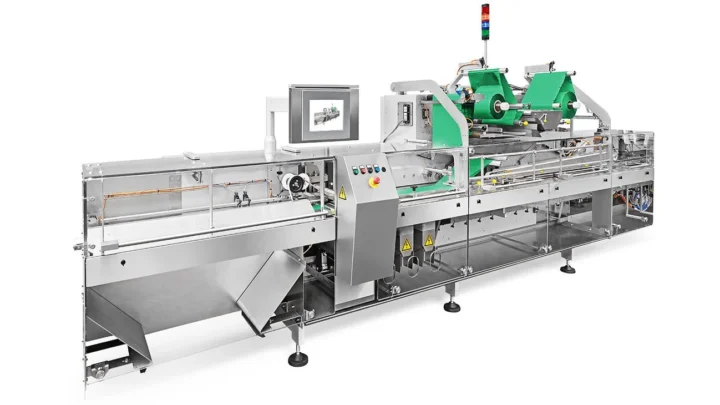
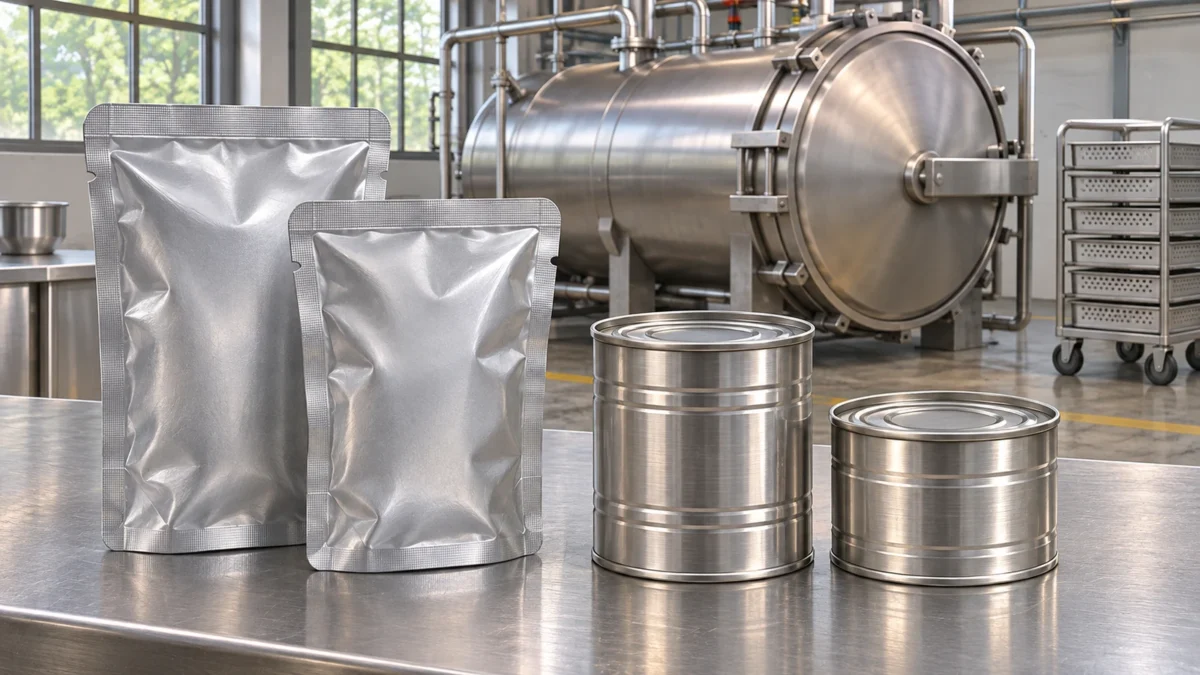
A retort pouch and a metal can can both support shelf-stable foods, but they reach that result through different package mechanics. A retort pouch is a flexible laminate that must be sealed and thermally processed under controlled conditions. A metal can is a rigid container whose seams, coatings and thermal process have their own controls. Both need a validated combination of product formulation, container, fill conditions and commercial-sterility process. Replacing one with the other is therefore not a simple artwork or material change. [S1] [S2]
Related analysis: how to read packaging life-cycle comparisons.
The Canadian Food Inspection Agency’s flexible-retort-pouch manual stresses container integrity throughout manufacture, filling, sealing, thermal processing and handling. The US Food and Drug Administration’s inspection guidance likewise treats pouch-sealing parameters and residual gas as significant controls. These government technical sources point to the real engineering question: Can the finished pack protect the food reliably through processing, distribution and storage, not merely survive a demonstration run? [S1] [S2]
The basic engineering difference
Rigid metal cans retain a relatively defined shape under processing conditions. Flexible pouches change profile with filling, gas content, pressure and loading. Their flat geometry can shorten the distance heat must travel to reach the slowest heating zone, under appropriately designed and validated conditions. That can help certain foods experience less severe thermal exposure than in a thicker pack; it is not a universal rule for every pouch and can size. [S1] [S2]
A pouch’s flexibility also creates risks. Wrinkles, trapped product in the sealing area, inadequate heat-seal conditions, excessive residual gas and mechanical damage can compromise a hermetic closure. A pouch that looks intact may still require appropriate container-integrity evaluation.
| Engineering factor | Retort pouch | Metal can |
|---|---|---|
| Container form | Flexible; geometry changes with product and processing | Rigid; dimensions and seams are closely specified |
| Closure | Heat-sealed laminate edges or formed seals | Double seam or other designed rigid closure |
| Typical processing concern | Pouch thickness, residual air, seal strength, restraint and pressure | Heat penetration, closure integrity, vacuum and corrosion control |
| Package protection | Requires appropriate puncture, flex and distribution protection | Strong crush resistance but dents and seam damage matter |
| Recycling pathway | Laminate composition and infrastructure often complicate recovery | Can-recycling route depends on metal type, coating and local collection |
These are functional differences, not performance scores. A pack that works for ready-to-eat rice may not be appropriate for a bone-in product, highly acidic sauce or another application without further trials.
Thermal processing is a food-safety system, not just a temperature setting
A common marketing description of retort packaging is that it can withstand ‘high temperature’. This is inadequate for a commercial food operation. The scheduled thermal process depends on product properties, initial temperature, fill amount, container size and shape, heat distribution and other critical factors. For processors subject to the US low-acid canned-food rules, FDA guidance explains that scheduled-process information must be filed and account for the relevant container and processing conditions. [S4]
A flexible pouch must also be managed during the retort cycle. If the product expands, the pouch can bulge. Excessive pouch thickness can alter heat penetration, while internal pressure can stress seals. FDA’s filing guidance calls maximum thickness a critical factor and recognises processing with overpressure or physical restraints; it also states that pouches can be processed without physical restraints. The validated method determines the controls. [S5]
It follows that two pouches made from nominally the same laminate may not behave equivalently if their filled thickness or product formulation differs. A supplier’s generic ‘retortable film’ specification is not a substitute for the food processor’s validated commercial process.
Seal integrity is often the critical production challenge
FDA inspectors are instructed to consider heat-seal temperature, pressure and dwell time as interdependent parameters, as well as contamination in the seal area. When food or grease is trapped between seal surfaces, the package may have a weak or defective seal even though the line was running at its target speed. [S2]
For this reason, increasing throughput should not automatically mean shortening sealing dwell time. The available process window must be demonstrated using the actual laminate, equipment and food environment. Production teams need controls for jaw condition, temperature distribution, pressure, cooling and inspection. Product residues, folds and side-seal intersections deserve specific attention.
Tests such as burst, dye penetration, vacuum decay or other validated integrity methods can play different roles. The right combination depends on the package and the detection question. An occasional laboratory test is not evidence that an entire production lot has zero defects. Where test sampling is used, its representativeness and detection limits should be stated.
The CFIA defect manual also underscores that damage can occur after filling. Cases, conveyor transfers, sharp product edges and distribution handling can affect pouch integrity. Packaging engineers should therefore evaluate the combined packing and logistics system rather than the empty film alone. [S1]
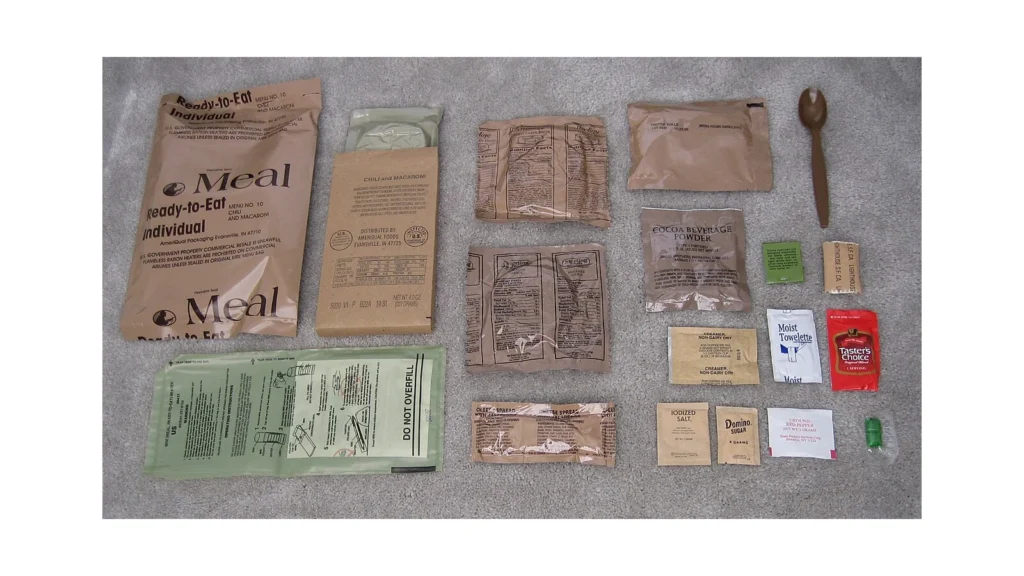
A documented ration-packaging example shows why the engineering controls need to follow the actual production method. In a December 2025 US Army account, Combat Feeding Division packaging laboratory manager Wes Long describes testing packages to locate failure points. The report also notes that automated filling can thin pouch material at corners and seals. This is a specific military-ration engineering example, rather than a defect rate for all commercial retort pouches. [S6]
Barrier performance and shelf life must be matched
Many traditional retort pouches use layered polymers and, in some constructions, aluminum foil. The barrier system controls oxygen, light and moisture exposure. Replacing a foil-containing structure with another laminate may improve one recovery-related characteristic but alter oxygen protection, puncture resistance, seal quality or shelf-life stability.
Some products are more sensitive to oxygen or light than others. A high-fat sauce, fruit product and pet-food formulation may require very different packaging decisions. A useful specification should define the finished laminate, barrier tests under relevant conditions, retained performance after retorting, food-contact suitability and expected product shelf life.
This also helps explain why ‘mono-material retort pouch’ cannot be evaluated from its material name alone. Even if a new structure is nominally more compatible with a recycling stream, it must still protect the food under the intended process. A design-for-recycling claim does not validate commercial sterility, and a shelf-stability result does not establish actual recycling.
Could the pouch be more sustainable than the can?
A pouch often uses less packaging mass and may take up less space before filling. Its flexible profile can have thermal-processing advantages in certain cases. But those observations are not enough to establish lower total impact for every product. The comparison needs a functional unit: the same protected food quantity and shelf-life requirements, with matched transport and disposal assumptions.
Metal cans have established collection and recycling systems in many markets, while multilayer retort pouches can be difficult to recover. The energy required to make a can, the metal recycled content, the pouch’s barrier construction, the product’s spoilage rate and local end-of-life conditions all affect the result. Comparing kilograms of pack alone would conceal these differences.
The responsible environmental question is: Which complete packaging system delivers the required safe food service with the lowest evidenced impacts under the specified route? It is possible for the answer to vary by product, market and recycling access.
A qualification pathway for a brand considering conversion
- Document the existing product’s formulation, low-acid or acidified status, commercial process and shelf-life specification.
- Define the candidate pouch structure, food-contact materials, nominal dimensions, fill weight and maximum processed thickness.
- Validate sealing conditions with actual production equipment and account for contamination and seal-junction defects.
- Have a qualified process authority establish the applicable scheduled thermal process and critical factors; do not infer them from a film brochure.
- Test container integrity and mechanical resistance after retort, cooling, packing and relevant distribution simulations.
- Run appropriate shelf-life and food-safety verification before changing commercial labels or release conditions.
- Assess the target recovery route and environmental claims separately from the food-process validation.
These are planning steps, not a replacement for a process authority, regulatory filing or HACCP-based food-safety system.
Editorial assessment: packaging conversion is process conversion
The industry sometimes describes retort pouches as simply a lighter alternative to cans. That framing is incomplete. The more accurate description is a different container-and-process system. A lighter format may offer distribution and heating advantages, but a weak seal, uncontrolled pouch profile or inadequate barrier can undermine the entire food-protection function.
The strongest decision is not the one with the smallest empty pack. It is the one with a validated thermal process, robust closure, appropriate shelf life, practical distribution performance and an evidence-based recovery plan. That standard applies whether the chosen package is flexible or rigid. [S1] [S2] [S4]
Sources / References
- [S1] Canadian Food Inspection Agency — Flexible Retort Pouch Defects Manual, official technical inspection guide, publicly accessible relevant full text. Supports container-integrity issues and defect categories, not a blanket approval of a package.
- [S2] US Food and Drug Administration — Guide to Inspections of Low Acid Canned Food Manufacturers, Part 3, official inspection guidance. Supports pouch sealing and gas-control factors.
- [S4] US FDA — Guide to Inspections of Low Acid Canned Food, Part 8, official requirements and scheduled-process inspection guidance.
- [S5] US FDA — Instructions for Form FDA 2541d, low-acid retorted method, official filing guidance, especially flexible pouch definitions and thickness considerations.
- [S6] US Army — The engineering behind MRE freshness, Katie Lange, Pentagon News, 23 December 2025. Attributed account of Combat Feeding Division packaging tests and statements by laboratory manager Wes Long; no independent verification of commercial pouch processes implied.
Found an error? Read our corrections policy and contact the editors.