
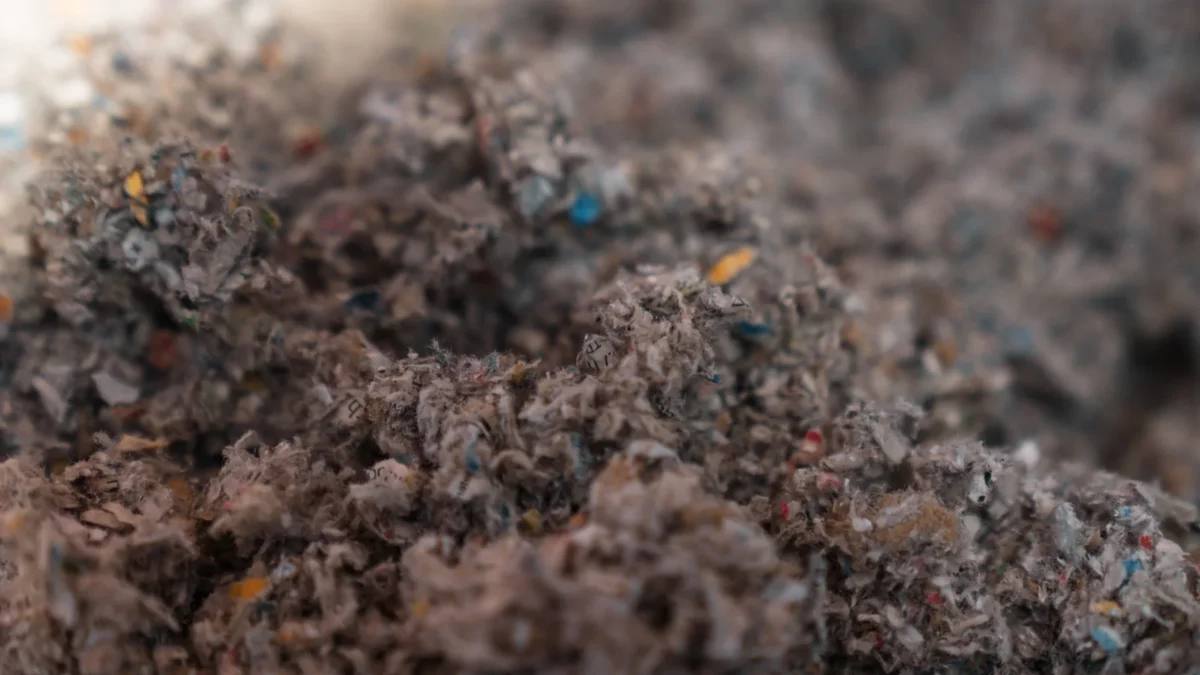
Mixed recycled paper pulp displayed at the Minnesota State Fair in 2018. An example of the material discussed. Photo: Tony Webster. Resized and encoded as WebP. Original photograph · CC BY 2.0.
China’s revised recycled-pulp standard, GB/T 43393-2026, took effect on 1 October 2026. It is a recommended national product standard. The import obligation comes through a separate joint notice, in effect since 18 October 2025, which requires imported recycled pulp to meet GB/T 43393. For mills buying recycled fibre for packaging paper, the distinction matters when a purchasing specification or a supplier’s test report still references the earlier edition. [1] [2] [3]
The revision follows the pulp back to its feedstock
The regulator’s explanation identifies sorted recovered paper, board and paper products as the permitted feedstock and excludes contaminated sources such as discarded household tissue and medical paper. The revision sets out processing controls for both dry and wet pulp and adds sterilisation and microbiological testing requirements. A supplier file that says only “recycled fibre” leaves the origin and production method unresolved. [2]
Keep the customs procedure and product standard separate
The joint notice describes customs inspection and provides for assessment where imported material is suspected of being solid waste. Customs separately issued inspection procedure SN/T 5939-2026 under Announcement No. 141 of 2026. It also took effect on 1 October 2026. Record both identifiers in the import file because one specifies the pulp and the other governs the inspection procedure. [1] [3] [4] Customs Announcement No. 144 also adds checks on key microbiological indicators for imported recycled pulp from that date. Importers can request current microbiological test evidence with the shipment records. [5]
What to request for the next lot
A mill can ask for three linked records before confirming a recycled-pulp order: the recovered-paper feedstock description, the declared dry or wet processing route, and test results with the applicable edition and lot identifier. Align the testing and acceptance plan with the actual consignment. Finished packaging requires its own specification and any use-specific documentation. The pulp file covers the input that goes into it. [1] [2] [3]
Sources
- SAMR and SAC — GB/T 43393-2026, Recycled pulp
- SAMR — Explanation of the revised recycled-pulp standard, 28 September 2026
- GACC and five other authorities — Joint Announcement No. 200 of 2025, as reproduced by Fujian Commerce
- GACC — SN/T 5939-2026, Inspection procedure for imported recycled pulp
- General Administration of Customs — Announcement No. 144 of 2026, additional microbiological checks
Found an error? Read our corrections policy and contact the editors.
