Ringmetall has agreed to acquire Rapak, a North American producer of bag-in-box bags and filling systems. Its 29 October announcement schedules closing for 2 November 2026. The deal therefore puts an equipment capability alongside a packaging-material expansion; it is an agreement awaiting the stated closing, rather than a completed integration. [1]
The distinction matters for liquid-packaging buyers: purchasing a bag is different from qualifying the bag, its connection and the filling operation as a working combination. Bringing those activities into one group may change the supplier interface, but it does not by itself change an approved pack specification.
What the agreement covers
Ringmetall says it is acquiring all shares in Rapak, whose two US locations are Indianapolis, Indiana, and Woodridge, Illinois. The announcement describes packaging for liquid food, beverages and industrial applications, together with associated filling technology. The purchase price is undisclosed.
The relevant expansion is consequently broader than an additional source of flexible bags. A prospective customer can ask whether the same organisation will support both consumables and the filling interface. That is a question about responsibility for a system, not evidence that different products already work interchangeably.
Ownership and qualification run on different clocks
The release places integration after closing and describes synergies as potential. Buyers should keep that sequence attached to any promised change in support, supply or product range. An announced transaction cannot establish that an existing order, service arrangement or approved component combination has already migrated.
The decision-changing record is the link between the supplied bag configuration and the equipment using it: who owns the specification, which combination was accepted, and who will handle a change or fault after the transaction. Until a supplier confirms those points for the actual installation, the announcement supports an ownership watch item, not an instruction to substitute a bag or revalidate an unchanged line.
The next dated signal is confirmation of closing, followed by any specific integration or customer-support notice. Those would establish a different stage from the agreement reported here. The announcement does not supply measured customer savings or an independently tested performance improvement.
Sources
- Ringmetall SE via EQS/WebDisclosure — Ringmetall acquires Rapak and enters the North American bag-in-box market. 29 October2026 announcement, acquisition/operations/integration paragraphs.
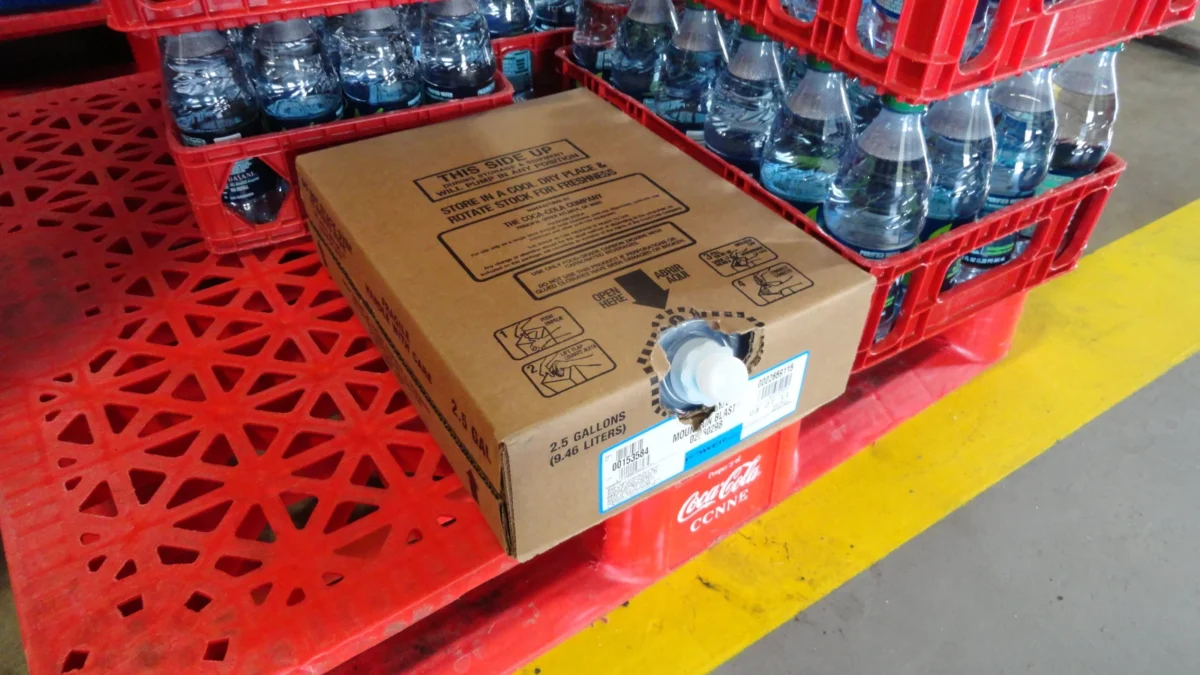
Photo: Kevin Rutherford, Bag-In-Box closeup, 2011. CC BY-SA 4.0. Full composition resized and converted to WebP; derivative under the same licence. Archival format context, not a Rapak product.
Found an error? Read our corrections policy and contact the editors.